






























Noah wants a dawn walk; Joanne wants coffee and celebrity gossip. In the third season of Nobody Wants This, moving in together gives the rabbi and the relationship podcaster ample opportunity to discover how differently they understand a pleasant morning. His willingness to accommodate hers matters. Romance has often made the attentive man an expert in what a woman ought to want, supplying improvements disguised as gifts. Here, Noah’s attentiveness requires accepting a pleasure he does not share. Adam Brody makes his eagerness charming without entirely disguising the managerial impulse beneath it. Kristen Bell’s Joanne already has a morning routine. Love must find room inside it.
Their repeated delight in announcing “We live together” gives this domestic negotiation an affectionate counterweight. They even wake each other to celebrate the fact, briefly making sleep less urgent than shared residence. Joanne’s open cupboards and hazardous dishwasher arrangement turn compatibility into something messier than agreement about the future. Bell and Brody are particularly appealing when their characters can enjoy each other without performing another defense of their relationship. An evening spent happily at home allows the surrounding ensemble to carry the episode’s activity. Peace has a texture here, and the actors know how to inhabit it.
The thinner stretches of the season emerge when that texture must supply all the movement. Some middle episodes resolve their modest disturbances without uncovering much beneath them. Another separation would be an especially tiresome remedy after the previous seasons’ reversals. The useful question is what commitment makes newly visible. Cupboard doors reveal habits; the decision to convert to Judaism touches identity, family authority, and Noah’s professional future. The series gives the domestic adjustments considerable comic precision while treating the larger transformation with surprising haste.
Joanne’s enrollment in conversion classes changes the practical circumstances of the relationship. Noah’s former synagogue becomes willing to offer him a trial return once reassured about his partner’s intended conversion. His mother, Bina, played by Tovah Feldshuh, can redirect her energies toward preparing a prospective rabbi’s wife. One woman’s decision therefore becomes several people’s solution. Noah regains an opening in his vocation; Bina acquires a recognizable place for Joanne within the family. Joanne’s own understanding of that place needs space to develop, especially once her choice begins relieving everyone else’s anxieties.
There is no need to deny her sincerity to notice this imbalance. Her willingness to attend classes gives the relationship a welcome sense of action after prolonged uncertainty. Yet the classroom, with Sarah Silverman as Rabbi Eden and Andrew Rannells as fellow student Sebastien, frequently functions as another setting for personality clashes. Joanne’s explanation that she is drawn to the “cozy vibes” is a credible beginning for someone attracted to community before she can articulate belief. It also creates an obligation for the writing: curiosity needs experiences through which to become understanding. The season is much clearer about the social consequences of her decision than its intellectual or spiritual development.
Bell supplies some of that missing weight in a late speech about purpose and meaning. Her performance makes Joanne’s investment feel personal, giving substance to a choice that can otherwise resemble the next item on the couple’s shared calendar. The speech deserves its emotion, though it also exposes how rarely the season lets her think at comparable depth. Christmas traditions receive an elaborate episode treatment while Jewish religious life remains comparatively sketchy. The issue is the difference in dramatic attention. A holiday can be rendered through particular pleasures and awkwardness; the faith Joanne is choosing too often remains an agreeable destination.
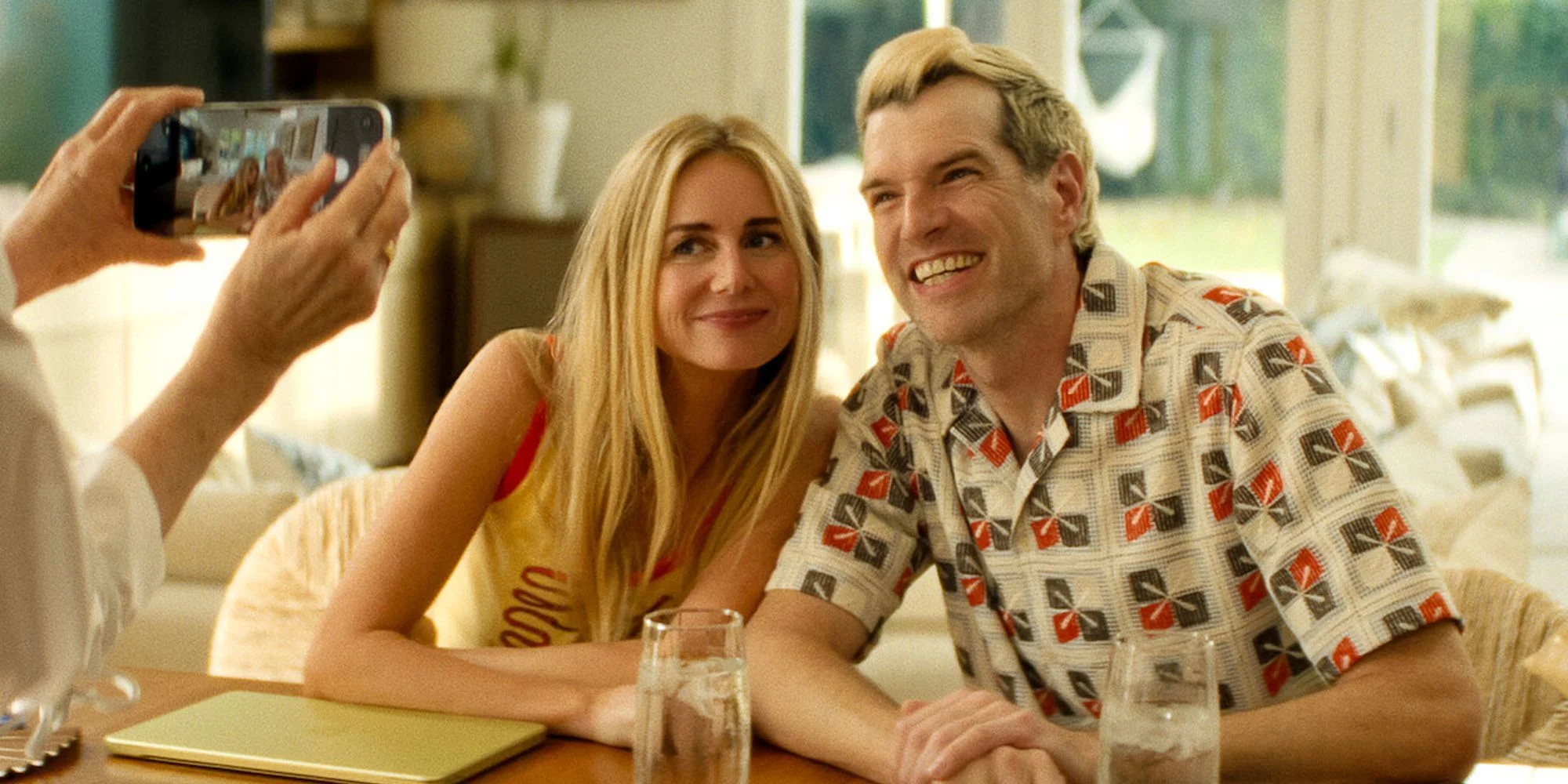
Bina’s involvement preserves some friction within that agreement. Joanne wants to include her without surrendering authority over the couple’s plans, while Noah remains less effective at challenging his mother than at accommodating his girlfriend’s mornings. This unevenness usefully complicates his romantic competence. He can be generous within the home and hesitant when generosity requires confronting family expectations. The season has material for a searching account of partnership here: the person making the largest cultural adjustment can also become responsible for managing everyone’s feelings about it. Its brisk resolutions leave that pressure only partially explored.
Outside the central couple, Joanne’s generosity encounters a different test. Morgan, her sister, gains an independent public profile when a podcast episode recorded without Joanne goes viral. Justine Lupe gives Morgan’s self-absorption enough comic assurance to make the changed hierarchy pleasurable. Joanne’s passive-aggressive responses are less easily absorbed into affectionate sibling rivalry. Her security with Noah has not made her comfortable with a sister succeeding beyond her supervision. The writing acknowledges the jealousy but moves lightly over its sting, allowing Bell’s charm to soften behavior whose recipient receives little time to register the injury.
Morgan’s success also gives her something to pursue beyond Sasha, Noah’s recently separated brother. Their attraction has a persuasive foundation in friendship: he offers relief from judgment, while she provides companionship outside the seriousness his marriage demanded. Lupe and Timothy Simons make their teasing feel like a language developed through repeated use. An episode largely carried by them demonstrates how readily that rapport can sustain attention. Yet Sasha’s separation from Esther was unwanted on his side, and his romantic availability arrives before the marriage’s emotional aftermath has received equivalent development. Chemistry makes the new possibility attractive without settling what remains unfinished.
Esther’s treatment sharpens that concern. Jackie Tohn retains a comic force that the character’s new circumstances only partly employ. A real estate license and a wealthy, dull boyfriend give Esther activity, but limited access to what independence means to her. The series is right to release her from the narrow role of an obstructive wife. Its replacement is still lightly furnished. Sasha’s uncertainty benefits from an established intimate friendship through which it can be expressed; Esther’s new life receives fewer opportunities to turn circumstance into feeling. Her continued presence matters, though presence alone cannot do all the work of characterization.
Joanne’s assurance that Esther will retain a place in their lives opens a more demanding possibility for the shared home. As relatives and newer friends gather there, the couple’s happiness begins to support relationships beyond their own. Keeping Esther included would require this affectionate circle to survive a change in its organizing loyalties. She would arrive carrying a history that Sasha’s attraction to Morgan cannot tidy away. The promise gives Joanne something less flattering, and potentially richer, to practice than being a successful romantic partner: maintaining an attachment that no longer fits neatly into the family arrangement.
Nobody Wants This Season 3 premiered globally on Netflix on October 22, 2026. Created by Erin Foster, the acclaimed romantic comedy series follows unconventional couple Joanne and Noah as they move in together, navigating the humorous daily frictions of cohabitation, family expectations, and Joanne’s ongoing conversion classes.
Where to Watch Nobody Wants This Season 3 Online


Full Credits
Title: Nobody Wants This Season 3
Distributor: Netflix
Release date: October 22, 2026
Rating: TV-MA
Running time: 25–30 minutes per episode (10 episodes)
Director: Erin Foster, Hannah Fidell, Lawrence Trilling, Karen Maine
Writers: Erin Foster, Ryann Werner, Ron Weiner, Barbie Adler, Noelle Valdivia, Niki Schwartz-Wright, Pat Regan, Julianne Sando
Producers and Executive Producers: Erin Foster, Kristen Bell, Steven Levitan, Craig DiGregorio, Sara Foster, Danielle Stokdyk, Jeff Morton, Jack Burditt, Oly Obst
Cast: Kristen Bell, Adam Brody, Justine Lupe, Timothy Simons, Jackie Tohn, Sarah Silverman, Andrew Rannells, Keyla Monterroso Mejia, Avan Jogia, Tovah Feldshuh, Paul Ben-Victor
Director of Photography (Cinematographer): Cedric Martin, Ben Kutchins
Editors: Daniel Haworth, Susan Vaill, Hugh Ross
Composer: Jonathan Sadoff
The Review
Nobody Wants This Season 3
Season 3 gives Joanne and Noah’s happiness an appealing domestic texture, sustained by Bell and Brody’s warmth. Its curiosity becomes less reliable when accommodation involves faith, family authority, or the aftermath of a marriage. Joanne’s conversion receives less development than its consequences for Noah, while Esther’s independence remains thinly sketched. Lupe and Simons bring persuasive affection to the expanding ensemble, though attraction cannot resolve every unfinished attachment.
PROS
- Bell and Brody make domestic contentment engaging.
- Morgan and Sasha’s rapport grows from credible friendship.
- Commitment supplies comedy without another forced breakup.
CONS
- Joanne’s religious development receives limited attention.
- Esther’s separation and independence remain underexplored.
- Some middle episodes lack meaningful movement.