






























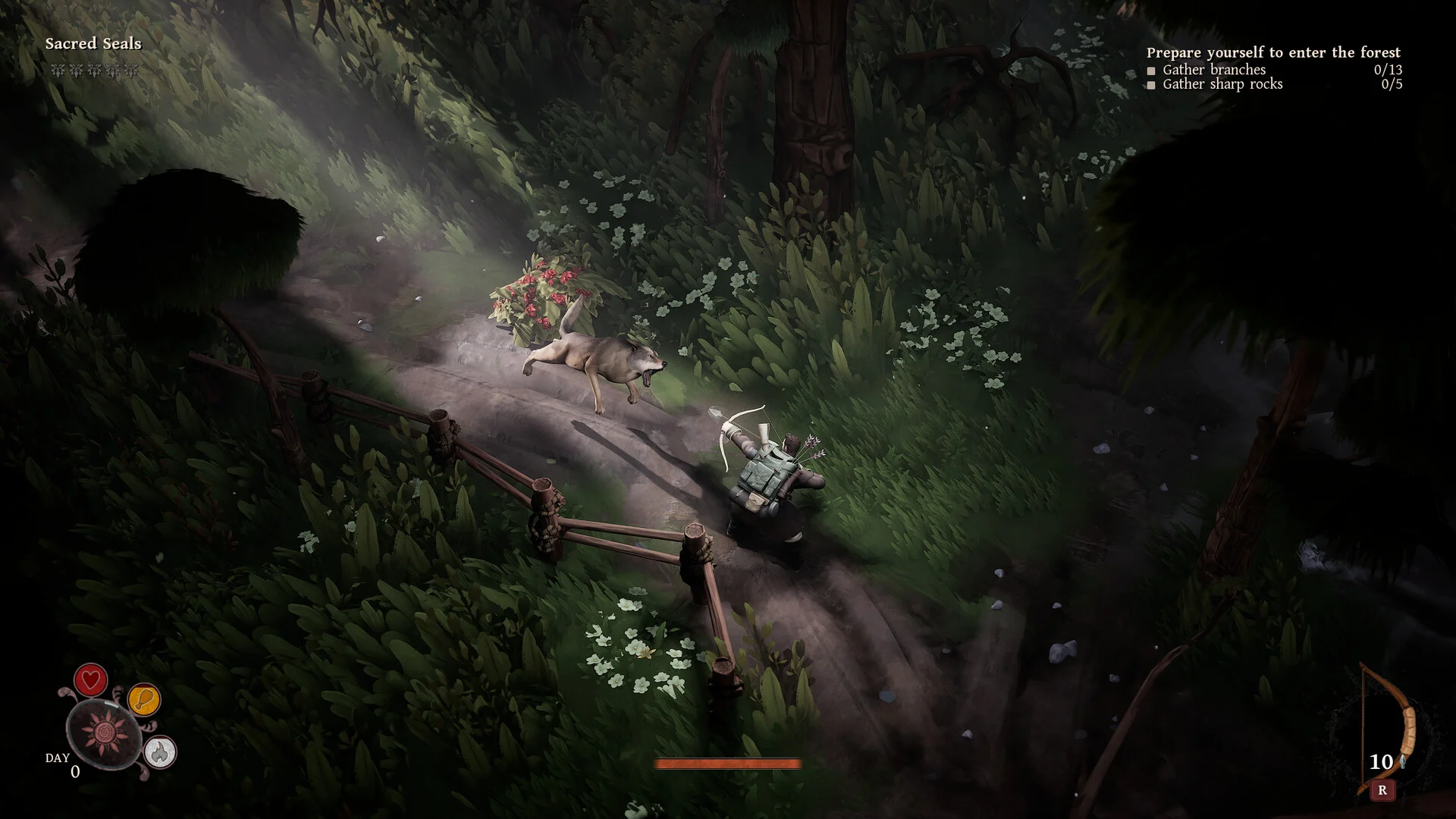
Finding dinner in Peregrino starts with listening. Rabbit calls suggest something you can hunt; a wolf’s growl makes the same patch of forest feel considerably less welcoming. With an isometric camera offering a limited view of your surroundings, those sounds give you reasons to hesitate before moving farther. There is an appealing intimacy to learning a hostile place through its animals. For a while, searching for food feels like getting acquainted with somewhere that would happily kill you.
The trouble begins when that attention stops paying off. The music can become intensely threatening without any immediate danger to justify it, making its warnings harder to trust. Camera angles sometimes conceal an enemy during combat, so listening carefully cannot always compensate for what you cannot see. These problems change the feeling of vulnerability. A growl gives you information to act on; an attacker hidden by the view can leave you struggling to understand an encounter already going badly.
There are flashes of pleasure in fighting back. Bow hunting gives the forest a satisfying exchange between noticing an animal and taking the shot, though trees and walls can make aiming awkward. Melee is harder to enjoy, with slow swings and cumbersome movement making close encounters feel uncertain. Early wolves and bandits hit hard enough to make retreat attractive, which suits the setting. Yet escaping a fight should leave you relieved that you survived your decision to engage. Too often, the sluggish response leaves irritation mixed into that relief.
Inverge Studios places this struggle inside a search for New Eden, with a lone protagonist working out of a wagon camp in a cursed wilderness. Separate forest areas provide materials, food, and the runes needed for the camp altar. That destination offers a reason to explore, but hunger quickly becomes the more persuasive instruction. Berries and rabbit meat need replenishing, cooking requires a return to camp, and starvation gives little room for recovery. Your attention contracts from wondering what another area might contain to checking how soon you will need another meal.
Gathering makes that contraction particularly noticeable. Actions such as chopping trees push time forward, eating into an already short day and bringing the more dangerous night closer. Tree cutting and animal processing also involve timing or precision minigames, while the surrounding world keeps running.
Being exposed while skinning a rabbit gives an ordinary task some immediate tension. Repeating the interaction across routine supply trips gradually drains its appeal. The option to disable these minigames is welcome, though it leaves the larger rhythm intact: acquire supplies, replenish yourself, and spend part of the next expedition replacing what the previous one consumed.
Faith adds another demand without giving the pilgrimage much additional feeling. It falls during exploration and can be restored through certain objects, which are difficult to find early on. Alongside hunger and health, it encourages caution, but its religious significance remains faint. The immediate relationship is between a declining meter and the need to refill it. With little narrative development around that process, faith becomes another reason to interrupt an expedition rather than a convincing expression of the protagonist’s attachment to New Eden.
The camp deserves credit for making those interruptions relatively manageable. Crafting requirements are clear, materials can be drawn directly from storage, and dismantling items lets you recover resources. Automatic unloading also spares you some inventory handling after a trip. These are thoughtful conveniences in a game that already asks for considerable repetitive work. They give preparation a welcome sense of clarity: you can understand what an item needs and make practical use of what you brought home, without repeatedly moving everything between containers.
Bells extend that convenience into the forest. They provide saves, teleportation, and a way to send gathered resources back to camp, making them valuable points of relief during an expedition. Easy retreat has a place here, especially with such punishing early damage. The difficulty is what follows the escape. Once the immediate threat has passed and your supplies are sorted, another outing often means resuming the same narrow set of tasks. The bells reduce the fear of losing progress, while the surrounding encounters do too little to make continuing feel exciting.
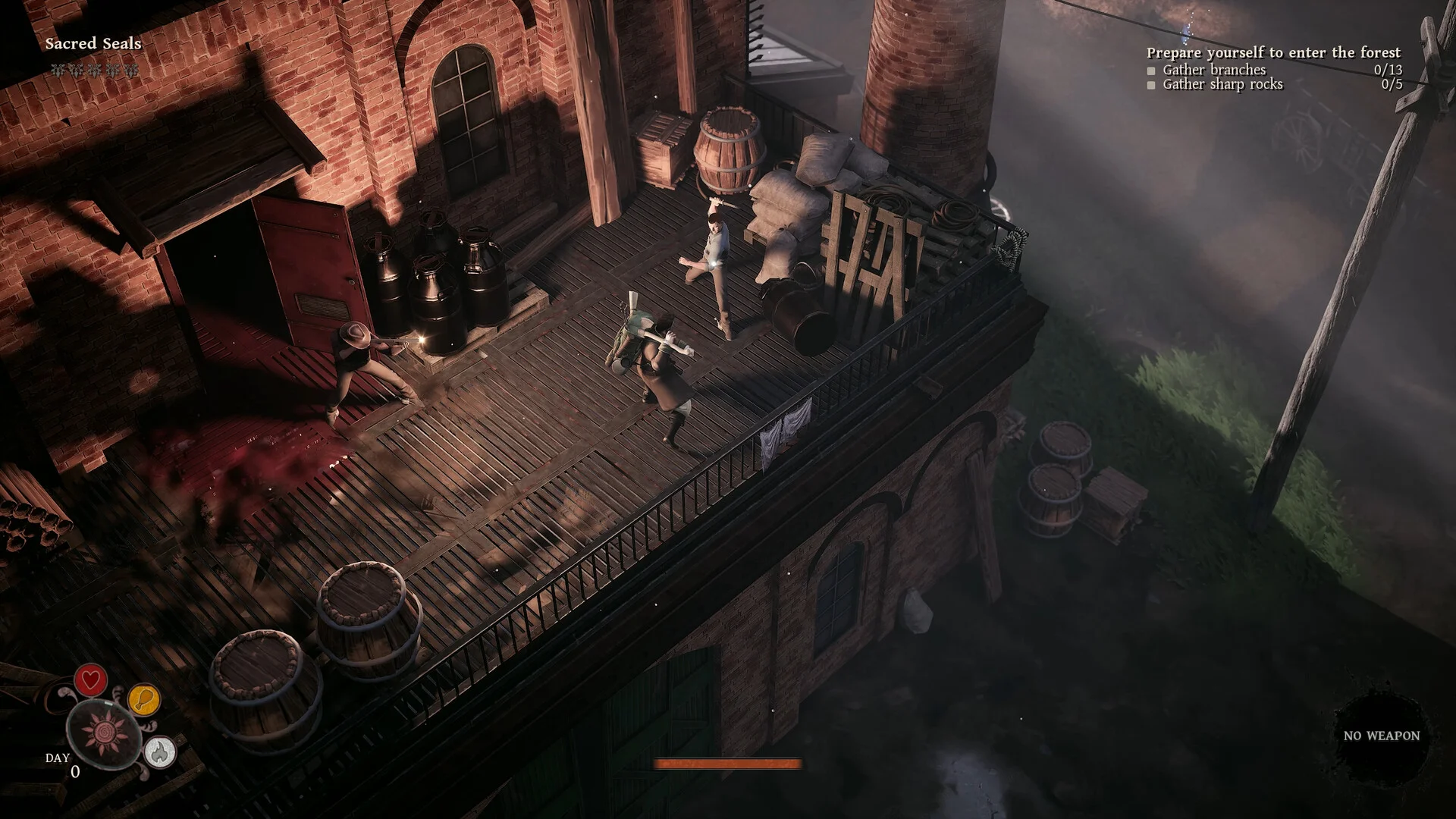
Repeated wolves, armed humans, and tentacled creatures further weaken that invitation. Learning a threat can be rewarding, but this small enemy pool leaves the forest with diminishing opportunities to surprise you. Frequent loading screens between its separate areas interrupt the effort to settle into the place, too. Technical reliability carries a further caveat: crashes and a creature-loot error have been reported, with the latter withholding materials needed for certain crafting recipes. Where those faults occur, an already repetitive hunt can become wasted effort.
The people encountered along the way could have given that persistence a different purpose. Instead, interactions largely consist of trading, text, and collection errands, with little sense of relationships developing through the work you do.
A solitary survival game can make isolation meaningful, and Peregrino’s animal calls initially suggest a forest worth attending to. Its human encounters offer fewer reasons to pay that kind of attention. Searching for the altar’s runes keeps an objective ahead of you, but helping a stranger rarely changes how it feels to return to the woods. The next expedition still competes with the practical need to find food, and there is little personal investment to make that interruption feel worth resisting.
The Review
Peregrino
Peregrino makes you want to listen to its forest, then gives you too few reasons to keep exploring it. Animal calls and dangerous early encounters create genuine unease, while clear crafting makes preparation satisfying. Relentless hunger, cumbersome combat, and thin human encounters gradually replace curiosity with routine. Returning safely to the wagon offers relief, but the next expedition rarely promises enough discovery to make that relief feel earned.
PROS
- Animal calls make the forest feel inhabited and threatening.
- Convenient storage handling and bell travel.
- Clear crafting requirements and useful material recovery.
CONS
- Hunger and gathering turn exploration into repetitive upkeep.
- Cumbersome melee and obstructed views frustrate combat.
- Limited enemy variety weakens sustained tension.
- Reported crashes and loot errors undermine reliability.
- NPC errands provide little emotional investment.