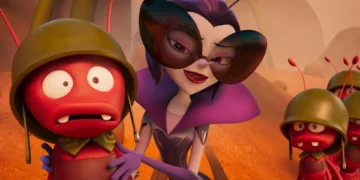
















The ants have given themselves speaking parts in a cosmic adventure before anyone has entrusted them with useful work. A flying heroine carries a small pig and a precious droplet through space; pursuers close in; Arnie and Barney interrupt to explain their role as narrators. Then the adventure gives way to its audience, a platoon listening to the pair’s invented story. This opening gives Arnie & Barney an appealing understanding of childish fantasy. The two recruits can inhabit heroic fiction with complete confidence, even while their colleagues find them difficult to employ.
Such imaginative borrowing suits the history of the world they inhabit. Maya the Bee passed from a German novel into Japanese television animation, then into European computer-animated features. Each transformation supplied a different way of making the insect world accessible beyond its original home. Here, superhero comics provide the shared language. Arnie and Barney admire the mosquito heroine SzzKeat and repeatedly imagine themselves participating in adventures. The significant change is one of aspiration: supporting characters from an established children’s franchise now picture themselves through the extravagant conventions of global action entertainment.
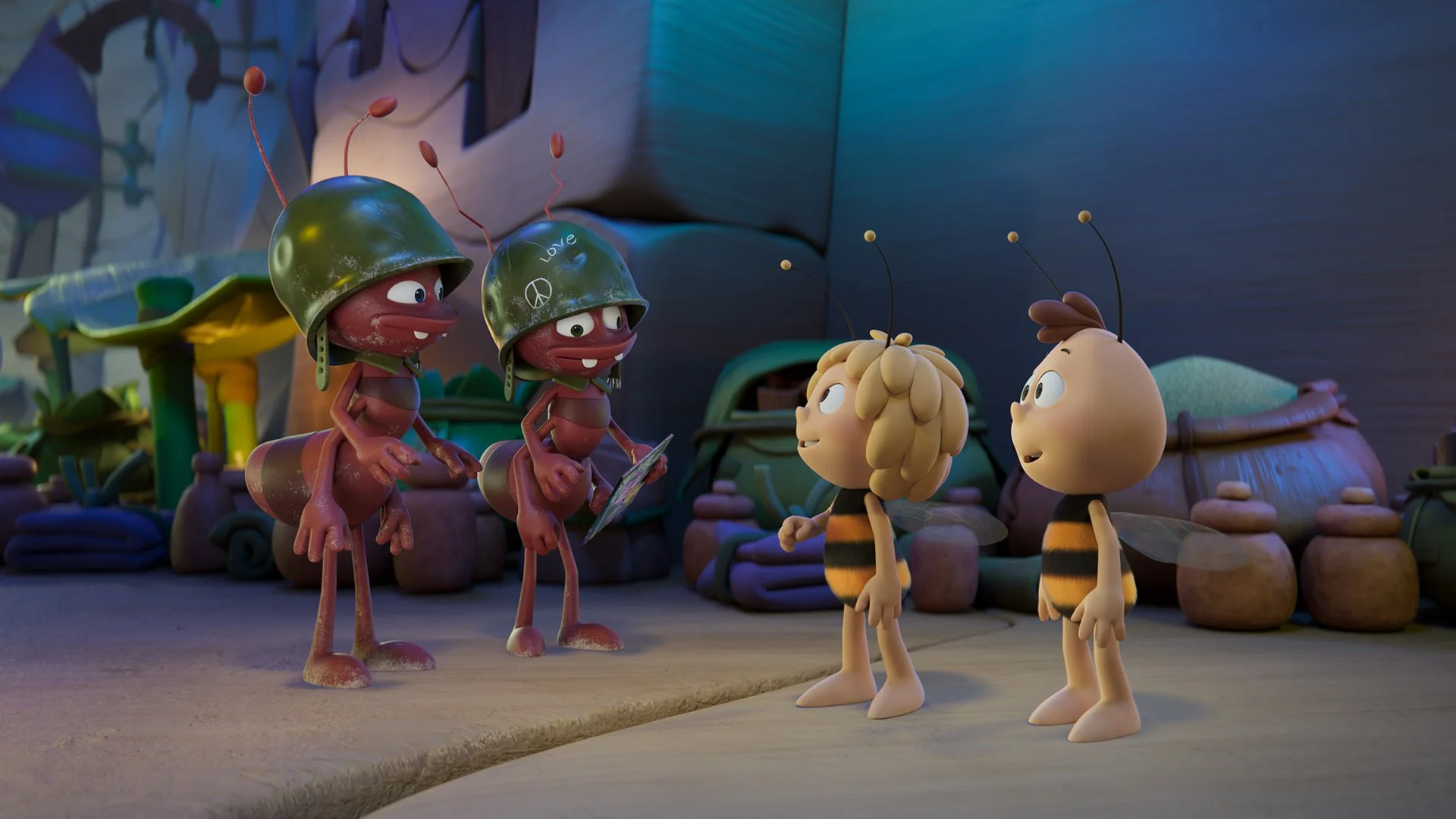
The opening’s playful interruption makes better use of those conventions than the film’s visual presentation does. Its comedy comes from the ants claiming authority over a story grand enough to dwarf their ordinary lives. The simple meadow environments offer comparatively little visual discovery, and the computer animation gives this inherited setting a serviceable rather than particularly expressive new form. Elaborate effects would hardly guarantee a better film. Still, the shift into space promises an imaginative freedom that the familiar surroundings and repeated heroic fantasies only intermittently deliver. The ants dream expansively; the film containing them remains cautious.
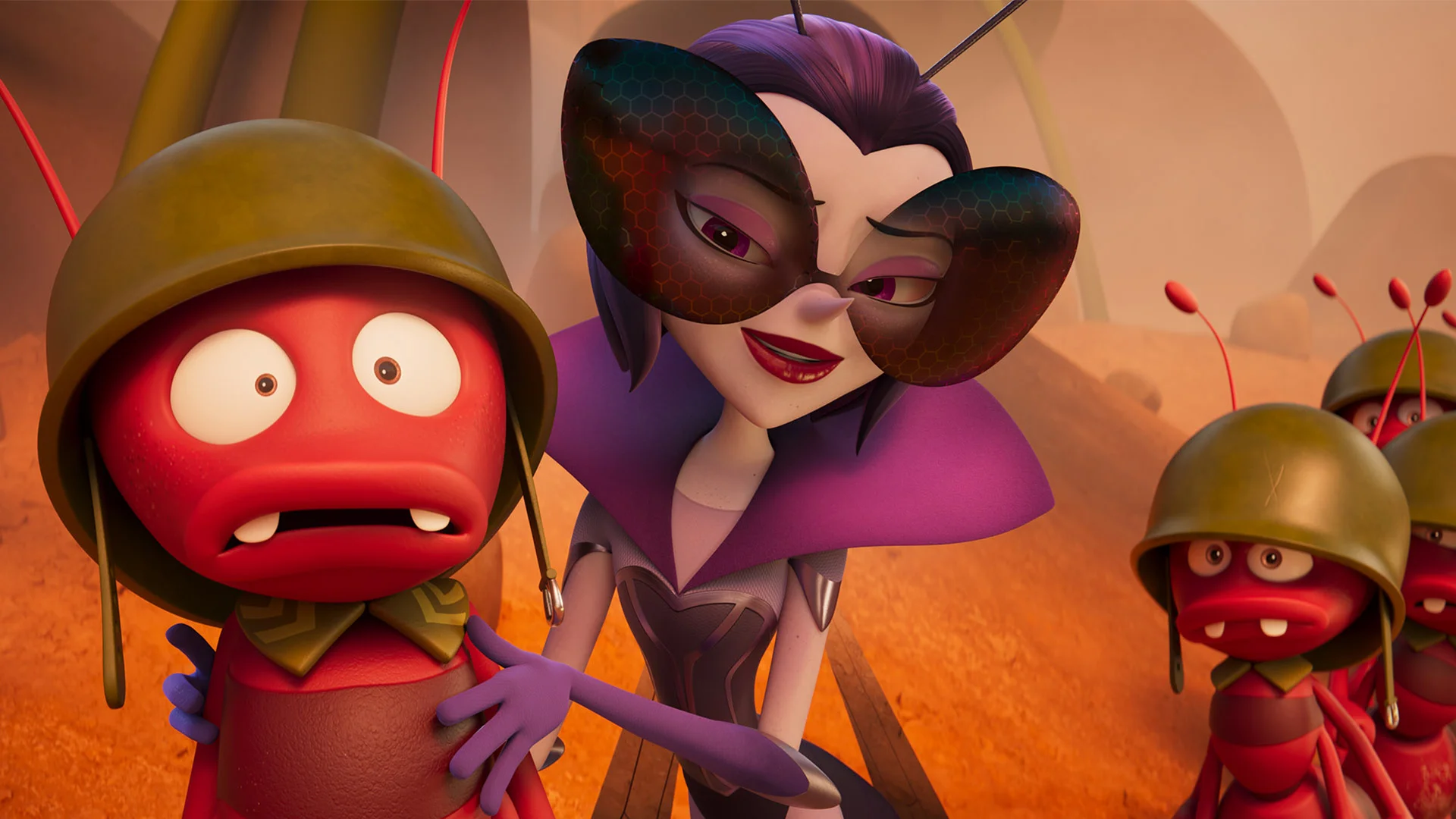
Their actual assignment is considerably less glamorous. Heat and absent rain have left the meadow desperate for water, and the ant squad must locate a supply. Arnie and Barney’s clumsiness and distractions make them liabilities, so their commander orders them to dig a hole and guard it. It is a good joke about an organization running out of uses for its least reliable members. The task combines physical effort with perfect futility, giving the recruits something to obey while ensuring they accomplish nothing. For a young viewer accustomed to being corrected, their decision to leave that hole has an understandable attraction.
That small rebellion acquires an unexpected political shape when they discover the other ants hypnotised and building a dam. The disciplined workforce has become useful to the wrong people, while the unwanted recruits retain the freedom to notice something amiss. The film does not develop this into a sustained argument against authority, and it need not. The arrangement already gives its celebration of misfits a concrete basis. Following instructions has failed to protect the squad. The ants excluded from productive work can investigate precisely because they have stopped performing the pointless duty assigned to them.
The difficulty lies in how often luck helps turn that freedom into achievement. Their persistence deserves affection, and the connection to SzzKeat and her creator, Bertha, allows storytelling itself a place in their adventure. These characters take imaginative lives seriously. Yet stumbling upon the right trail offers limited proof that the recruits’ supposed shortcomings contain useful abilities.
The screenplay repeatedly assists the pair without making their distinct contributions equally clear. A child can enjoy heroes who get things wrong, but the pleasure becomes thinner when the story keeps arranging success around them. The hole assignment defines their predicament with greater precision than the ensuing coincidences define their growth.
The water conspiracy supplies a firmer idea. Gianni, a centipede with a comic criminal-businessman persona, hoards the supply for bottling and sale. The distinction between drought and exploitation matters. The weather creates hardship; someone’s control of water converts that hardship into an opportunity to charge for survival. The dam and the hypnotised labor force make the process visible enough for children to understand without a lecture. Bottled water becomes an especially effective detail because it turns something the meadow needs collectively into discrete goods that one figure can possess.
There is a limit, though, to expressing that problem through a familiar gangster. Gianni’s recognizable criminal identity makes his conduct easy to condemn before the economics require much thought. A European children’s production drawing on internationally familiar superhero fiction also reaches for a well-travelled comic villain type, and the latter borrowing is less fruitful.
His mild menace keeps the adventure approachable, while Hypnita’s sympathetic shading prevents the opposition from remaining entirely uniform. Neither choice demands greater darkness. The missed opportunity concerns the relationship between ordinary commerce and predation, which becomes simpler once the seller arrives already marked as a crook.
For the youngest viewers, that clarity may be useful: a stream has dried up, workers are being manipulated, and someone intends to profit. They can follow the unfairness through objects and actions. Yet identifying the offender so easily leaves a question outside the adventure’s reassuring moral map. A child taught to distrust Gianni has been given fewer tools for recognizing the same bargain when the person selling the water looks respectable.
Arnie & Barney premiered in April 2026 before its theatrical release on October 30, 2026. Directed by Sean Heuston, this animated slapstick comedy follows two clumsy ants from the popular Maya the Bee franchise who stumble into a grand adventure to save their meadow from a severe drought.
Full Credits
Title: Arnie & Barney
Distributor: Studio 100 Film, Port au Prince Pictures
Release date: April 16, 2026 (World Premiere), October 30, 2026 (Theatrical)
Running time: 1 hour 15 minutes (75 minutes)
Director: Sean Heuston
Writers: Fin Edquist, Antoine Marbach, Sean Heuston
Producers and Executive Producers: Thorsten Wegener, Antoine Marbach
Cast: Shane Dundas, David Collins
Editors: Sean Heuston, Antoine Marbach
Composer: Christoph Zirngibl
The Review
Arnie & Barney
Arnie & Barney gives Maya’s internationally travelled world an affectionate superhero detour. Its unruly recruits offer young viewers permission to be imperfect, and the water-hoarding plot makes exploitation easy to grasp. Yet coincidence does too much of the heroes’ work, while serviceable animation and a familiar gangster villain limit the invention. The film finds a clear image for a shared resource becoming private merchandise, then settles for an easier adventure than that idea promises.
PROS
- Playful opening connects storytelling with heroic ambition.
- Misfit heroes challenge the value of blind obedience.
- Water conspiracy makes exploitation accessible to children.
CONS
- Coincidences weaken the heroes’ achievements.
- Visually cautious treatment of an imaginative premise.
- Gangster shorthand simplifies the economic conflict.