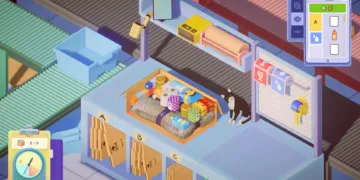





























Switching off the timer in Packing Life changes what counts as a good shift. Normal mode asks you to complete warehouse orders against a clock, with slow work reducing your earnings. Relaxing mode gives you time to rotate products, reconsider their positions, and fit them into the required box. Both modes use the same basic activity, but they reward different habits: quick execution in one, patient arrangement in the other.
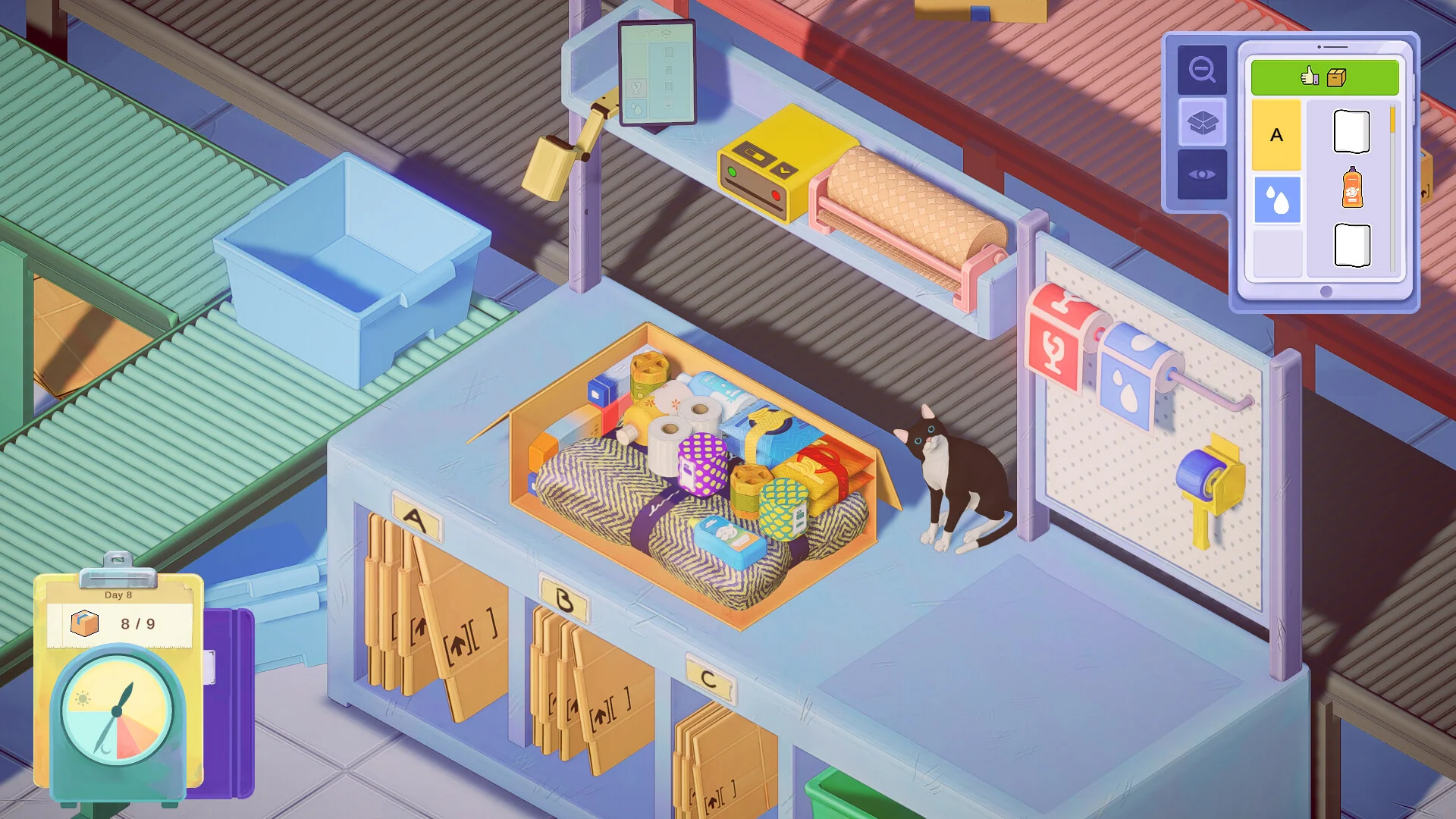
The paperwork survives the change. Fragile products and liquids still need their handling labels, and the price tag still belongs inside the package. You can solve the spatial problem and leave the order incomplete. Packing Life sits between a fitting puzzle and a workplace simulator, drawing satisfaction from both efficient arrangement and remembering the small obligations surrounding it. Removing the deadline lets those two kinds of attention coexist without constantly competing.
The Tetris comparison explains the appeal of turning shapes until the available space makes sense, though packing three-dimensional products requires a different kind of inspection. A small monitor specifies the box size, leaving you to work out how its contents should occupy it. The pleasure comes from adjusting an awkward object and seeing the arrangement become manageable. Handling individual products also gives the task an everyday familiarity that abstract blocks would lack. You understand what you are packing before you understand how it will fit.
The presentation supports that clarity. Pastel colors soften the workstation, while recognizable objects keep the contents of an order easy to distinguish. Packing, scanning, and taping produce restrained sounds, accompanied by quiet music. Those small noises give each stage a little acknowledgment without making routine work feel like a succession of celebrations. For a game built around repeating hand movements, keeping those sounds pleasant matters: the tape and scanner remain part of the activity rather than becoming something to endure between puzzles.
Unfortunately, the view of the workstation makes those movements less comfortable than they should be. Zooming in prevents you from seeing the full work area, so transferring products from the unloading space to the box requires repeated camera adjustments. Close inspection is useful for placement, yet gaining that detail sacrifices awareness of the surrounding table. The awkward camera movement and occasionally fussy positioning interrupt the sequence of selecting, rotating, and placing. A game about making efficient use of space needs an easier way to inspect that space.
Scanning creates a separate irritation. A product can pass through the pricing device without registering, requiring another attempt. Forgetting a fragile label is an understandable mistake within the job; repeating a scan because it failed to register asks you to compensate for the interface. Fixed controls compound the inconvenience by preventing you from arranging the inputs around a repetitive task. These problems do not erase the pleasure of a neat pack, but they make its interruptions unusually noticeable. Under the timer, every extra adjustment also competes with the speed the mode expects.
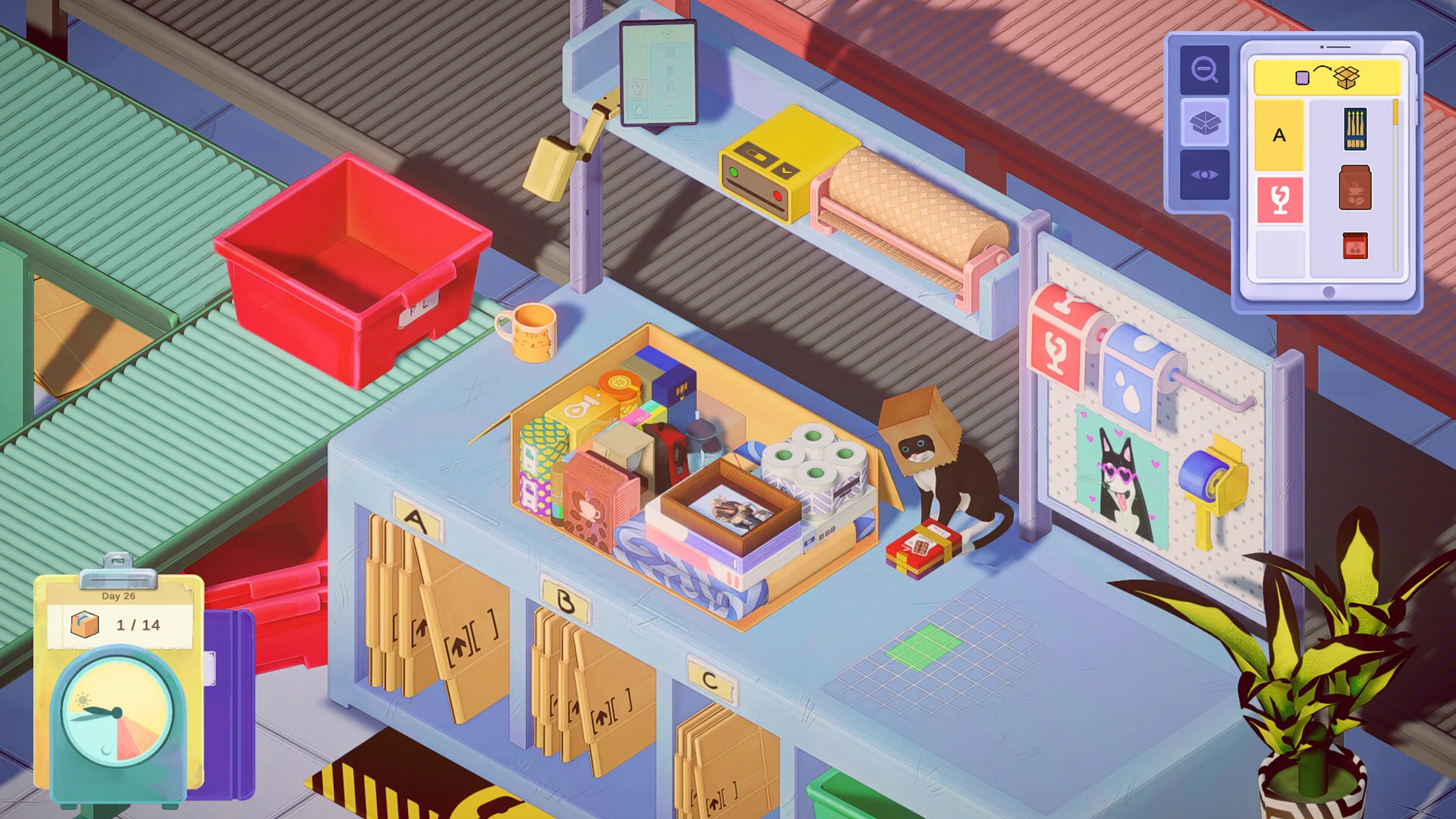
Relaxing mode is the more comfortable fit for this handling system, though comfort does little to expand the underlying activity. Familiar products return, and successive working days offer limited mechanical development. Tougher orders can ask for greater care within the existing routine, but the packing does not acquire enough new demands to substantially change how you approach it. Compared with a puzzle game that develops a small set of interactions through increasingly different problems, Packing Life relies heavily on the continued appeal of performing those interactions.
That reliance is reasonable up to a point. Repetition can be the attraction in a gentle work simulator, especially once the sequence of scanning, arranging, and checking becomes familiar. The difficulty is sustaining attention after recognition begins replacing discovery. Shift earnings buy decorations such as a mug, a poster, or a new workstation color. These provide modest reasons to complete another day and make the surroundings feel personal, but their contribution is decorative. The next order still asks you to return to the same procedures.
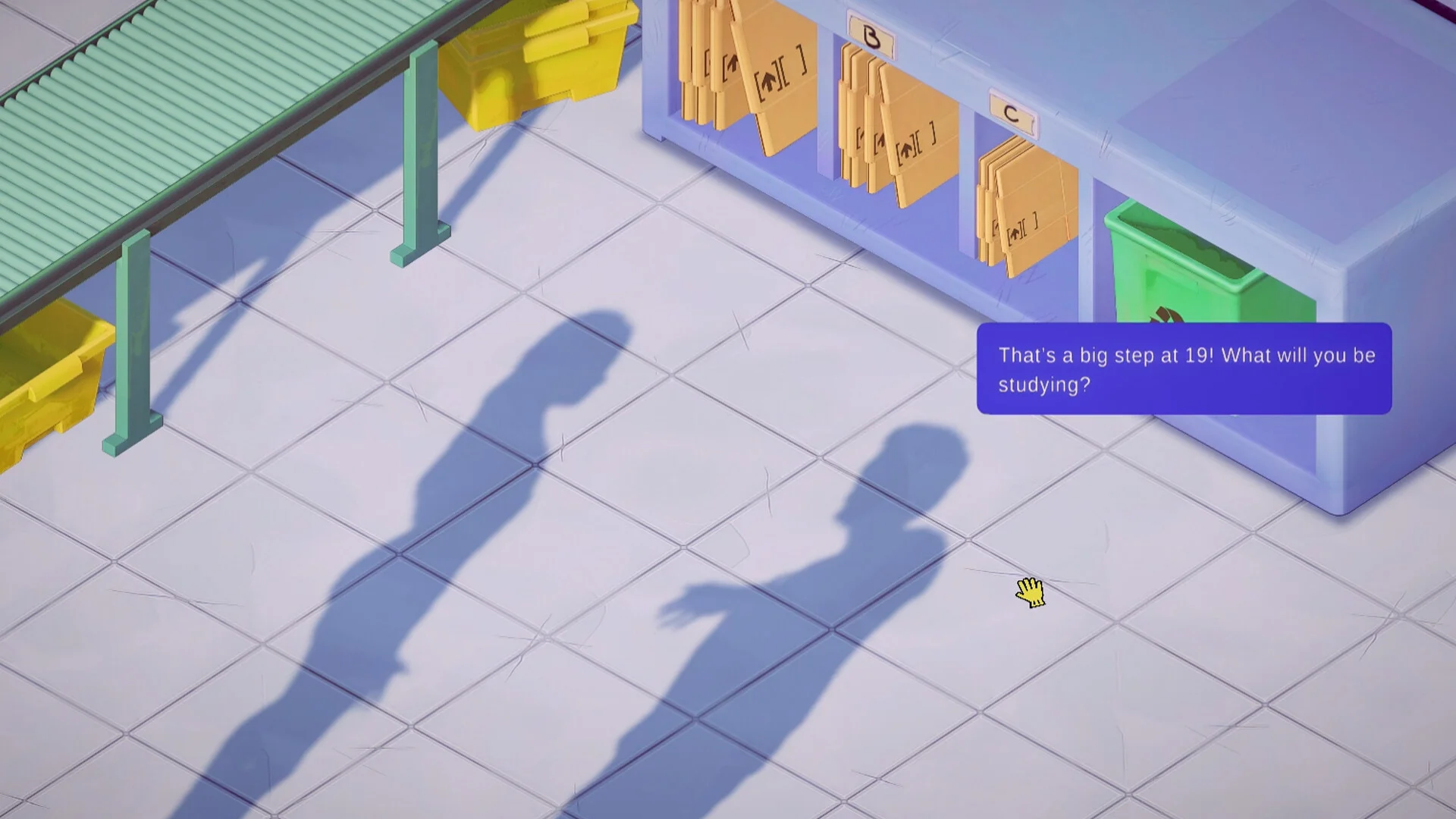
Lily’s circumstances could give that return greater significance. She has moved to a new city for university and works part-time to cover tuition and daily expenses. It is a practical, sympathetic reason to spend hours preparing other people’s purchases. Yet the story is delivered through exchanges between shifts, with much of her life outside the warehouse left off-screen. The job receives detailed treatment through its individual requirements, while the education and independence it supports remain comparatively lightly sketched.
Her relationship with coworker Alex supplies some continuity. Casual conversations develop into a connection in which she seeks his advice about her life and interests. That change gives the exchanges a purpose beyond filling the gaps between working days. Still, the dialogue carries too much of the responsibility for establishing her experiences. Talking about life outside work can be effective, but these conversations offer limited dramatic development to match the premise of someone establishing herself in an unfamiliar city.
The Review
Packing Life
Packing Life works best as a gentle workplace puzzle, with satisfying object arrangement and soft packing sounds making individual orders pleasant to complete. Relaxing mode gives that appeal room to breathe. Awkward camera handling and unreliable scanning interrupt the routine, while repeated products and limited mechanical development weaken its staying power. Lily’s lightly sketched life outside work offers little compensation. There is pleasure in getting a box right, but fewer reasons to keep returning for another shift.
PROS
- Satisfying three-dimensional packing puzzles.
- Relaxing mode allows patient arrangement.
- Clear objects and restrained, pleasant audio.
CONS
- Awkward handling and inconsistent scanning.
- Repeated products with limited mechanical development.
- Thin development of Lily’s life outside work.