


















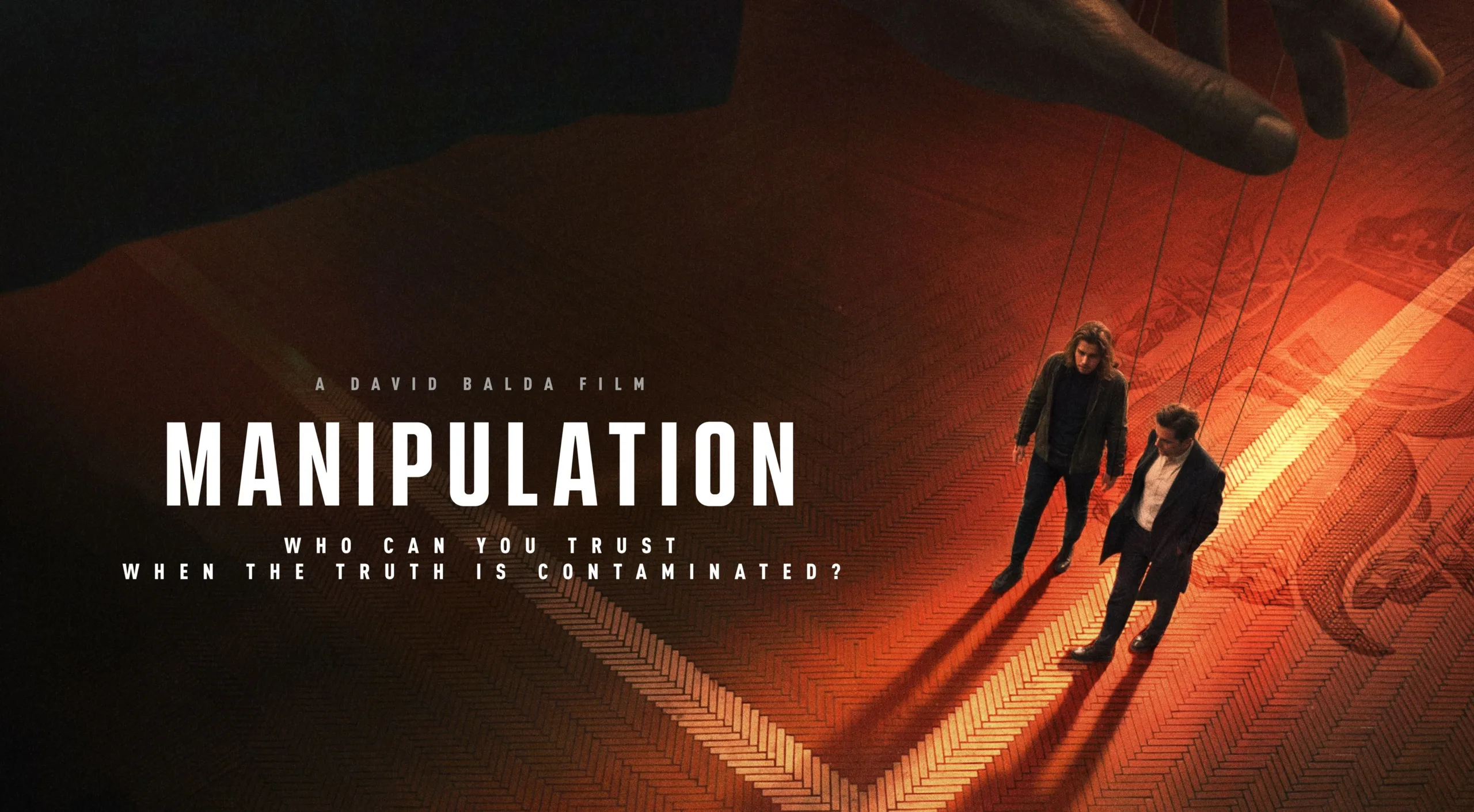

The men on the committee in David Balda’s Manipulation keep coming back to the same word, “enemies.” They give it the weight you’d expect from people discussing a threat they take seriously. For anyone outside that room, though, the word could point almost anywhere. Matteo (Radoslav Gavlas), a young recruit to the secret society his father belongs to, is given a name to work with.
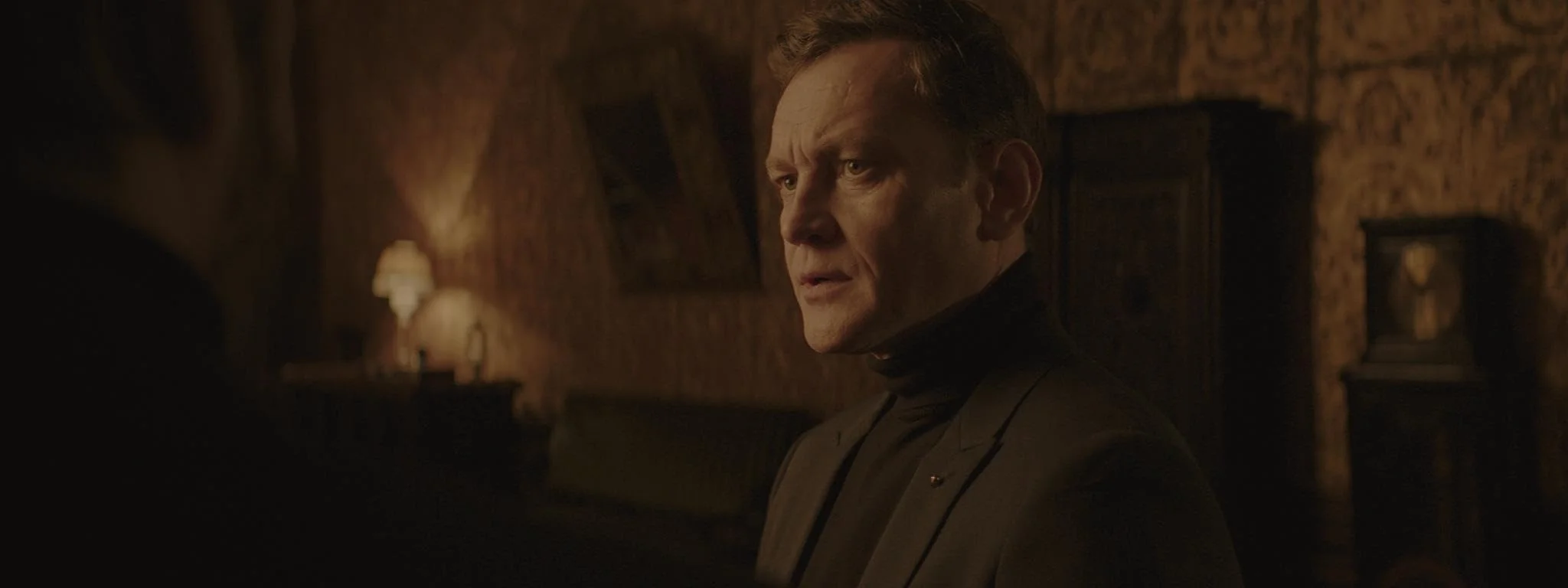
His assignment puts him in contact with Father Vitus (Heino Ferch), a priest who matters to the order’s plans for the Catholic Church. Having a name gives us somebody to watch. What we could use at that point is a better idea of what Matteo needs from him.
Balda makes the order’s authority easier to read in the way it welcomes Matteo. The robes and candlelight make his induction feel like something the men in charge have done many times before. Their authority appears to come with the room, and the young man is being invited to take his place in it. Balda gets a similar effect from the Renaissance architecture across the film’s European locations.
The buildings lend the people who occupy them a sense of permanence. If you’re trying to understand why Matteo would take this society seriously before he understands what it does, the ceremony gives you a better answer than the men talking about their enemies.
Under the Master, the order collects information it can use to blackmail influential people. Matteo gets a closer look at its methods when he sees his father (Predrag Bjelac) threaten a defector’s children. We can follow the pressure in that scene all the way from the person applying it to the people who might suffer for somebody else’s decision.
Matteo has been brought into the society through his family, and here his father shows him what the order can do with another family’s loyalty. His doubts have a sharp edge after that. Leaving an organization capable of making such a threat would carry its own risk, even before he has worked out how far its influence reaches.
The film asks for a different kind of attention in Bologna, where a lecture and a conversation with a professor fill in some of the order’s history. The professor suspects the Master is after alchemical knowledge associated with Holy Roman Emperor Rudolf II.
There’s a pleasure in hearing a theory that might put some of the scattered pieces together. Its timing limits what it can do for the suspense. An explanation can send you back through earlier scenes, seeing things you missed, or it can make you look ahead differently because a character now has a choice to make. The film gives the professor room to develop the theory. It gives us much less reason to anticipate how Matteo might act on it.
Anna (Anna Čtvrtníčková) could make that question personal again. Her father, a church librarian, is removed from a council after trying to warn it about a priest. Matteo has good reason to listen to someone whose family has seen the cost of speaking up from inside the Church.
There’s also a risk in trusting her when he has obligations of his own. The film moves from friction between the two to romance without giving their change of feeling much room to develop. I wanted to see what Matteo learned about Anna that made it possible to confide in her. That would have given their scenes a tension of their own, with each of them deciding how much to say to someone whose loyalties could complicate the relationship.
The late reversals briefly give the rival factions some momentum. The attempt to expose the order through the local Prague Times raises a question that can’t be answered with another change of allegiance. What would somebody outside this circle be able to do with the information?
A local newspaper is a sensible place to start asking that. Its readers might include the people who deal with the institutions the order seeks to influence. Giving those people a reason to pay attention could be a genuine threat, even to an organization accustomed to operating across borders.
There’s a good political thriller in the possibility that people can know about corruption and still find themselves living under the same arrangements. A church librarian trying to warn his council has a seat to lose. The newspaper takes the accusation outside the room, where the screenplay gives us little idea who might be in a position to act on it. I wanted to spend some time with the person who could read that story over breakfast and have to decide what to do at work that morning.
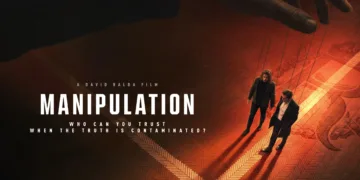
Manipulation releases in UK and Irish cinemas on November 6, 2026, through Blue Eyes Film & Distribution. Directed by David Balda, the international conspiracy thriller follows an investigation into an omnipresent European shadow network that challenges modern perceptions of free will and political authority.
Full Credits
Title: Manipulation
Distributor: Blue Eyes Film & Distribution
Release date: November 6, 2026
Running time: 1 hour 56 minutes (116 minutes)
Director: David Balda
Writers: David Balda, Marketa Hrubesova, Vladimir Koubenec
Producers and Executive Producers: David Balda, Marketa Hrubesova
Cast: Paweł Ławrynowicz, Féodor Atkine, Heino Ferch, James Faulkner, Arnaud Binard, Paweł Deląg, Predrag Bjelac, Pavel Kříž
Director of Photography (Cinematographer): David Balda
Editors: Olina Kaufmanová
Composer: Jakub Kudláč
The Review
Manipulation
The candlelit initiation in Manipulation makes it easy to see why Matteo would take the order seriously. His father’s threat to a defector’s children makes it just as easy to see why he’d want out. David Balda gets real tension from those moments. The professor’s late explanation gives us history without sharpening Matteo’s choices, and the attempt to expose the order leaves its public stakes hazy. I could believe in the order’s authority. I had a harder time seeing what anyone could do about it.
PROS
- Candlelight and robes give the initiation a sense of inherited authority.
- Renaissance architecture makes the order feel firmly established.
- Matteo’s father gives him a concrete reason to question his loyalties.
- Late reversals briefly give the rival factions momentum.
CONS
- Father Vitus gives Matteo someone to approach, but the goal of the assignment stays vague.
- The professor’s theory fills in history without clarifying Matteo’s next move.
- The romance skips over how Matteo and Anna learn to trust each other.
- The newspaper subplot leaves it unclear who could act on the revelations.