



























The episodes have grown longer, but the quiet moments still have to fight for their place in Percy Jackson and the Olympians. Season three gives its teenagers extra time to be awkward, frightened, and stubborn, then sends enough mythological trouble their way to occupy most of the extension.
That extra time does make a difference. The first four episodes, which are the basis of this review, offer an energetic, emotionally involving reason for returning viewers to stay aboard. Adapting Rick Riordan’s The Titan’s Curse, the season gets considerable mileage from disrupting the established trio. The problem is that its appetite for new companions and elaborate encounters sometimes outpaces its interest in letting those additions settle.
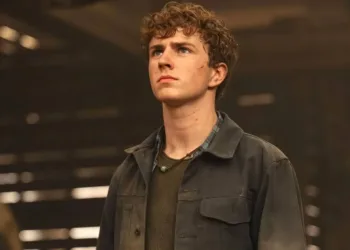
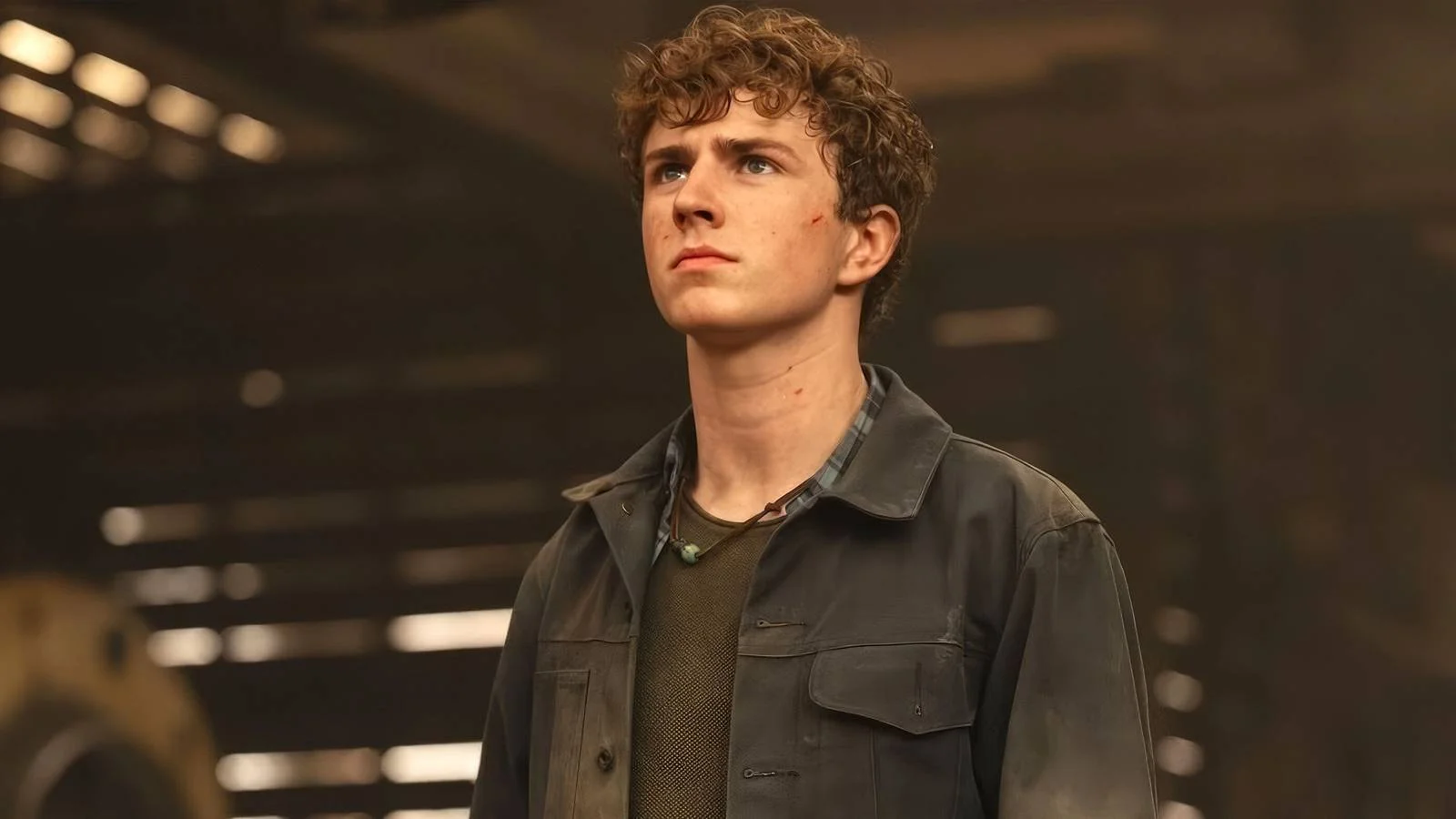
The premiere’s school dance makes a good case for lingering. Walker Scobell’s Percy and Leah Sava Jeffries’s Annabeth have reached the age where standing near someone can require as much nerve as confronting a monster. Unfortunately for Percy, his mother and various gods have noticed. Immortality apparently leaves plenty of time to monitor a teenager’s love life.
The awkwardness gives their attachment an everyday texture before a mission to retrieve young demigods Bianca and Nico di Angelo ends with Annabeth captured. Percy’s determination to find her has something immediate behind it: we have just spent time with the person he misses. Then the series removes her from the familiar trio and asks a less comfortable combination of personalities to keep the quest moving.
Tamara Smart’s Thalia is the best argument for that disruption. Where Percy and Annabeth’s teasing carries affection close to the surface, Percy and Thalia can seem ready to abandon the rescue long enough to finish their argument.
Their abrasive exchanges change the group’s rhythm, with Grover, played by Aryan Simhadri, remaining a familiar presence amid the new configuration. Scobell and Smart make the transition from hostility to shared fear especially effective. Concern for Annabeth interrupts the rivalry before it becomes an exhausting succession of insults. The dramatic beat works because they acquire a reason to cooperate before they acquire a reason to like each other. They have to work together to rescue Annabeth.
There is substance behind the friction, too. Both have difficult relationships with the gods, and the Great Prophecy gives those grievances an alarming personal dimension. Percy distrusts Thalia’s readiness to defy divine authority, which is an amusing position for someone whose own relations with Olympus hardly suggest a satisfied customer. Smart makes Thalia’s resistance feel like a conviction Percy must contend with. Their arguments complicate the practical business of getting their friend home.
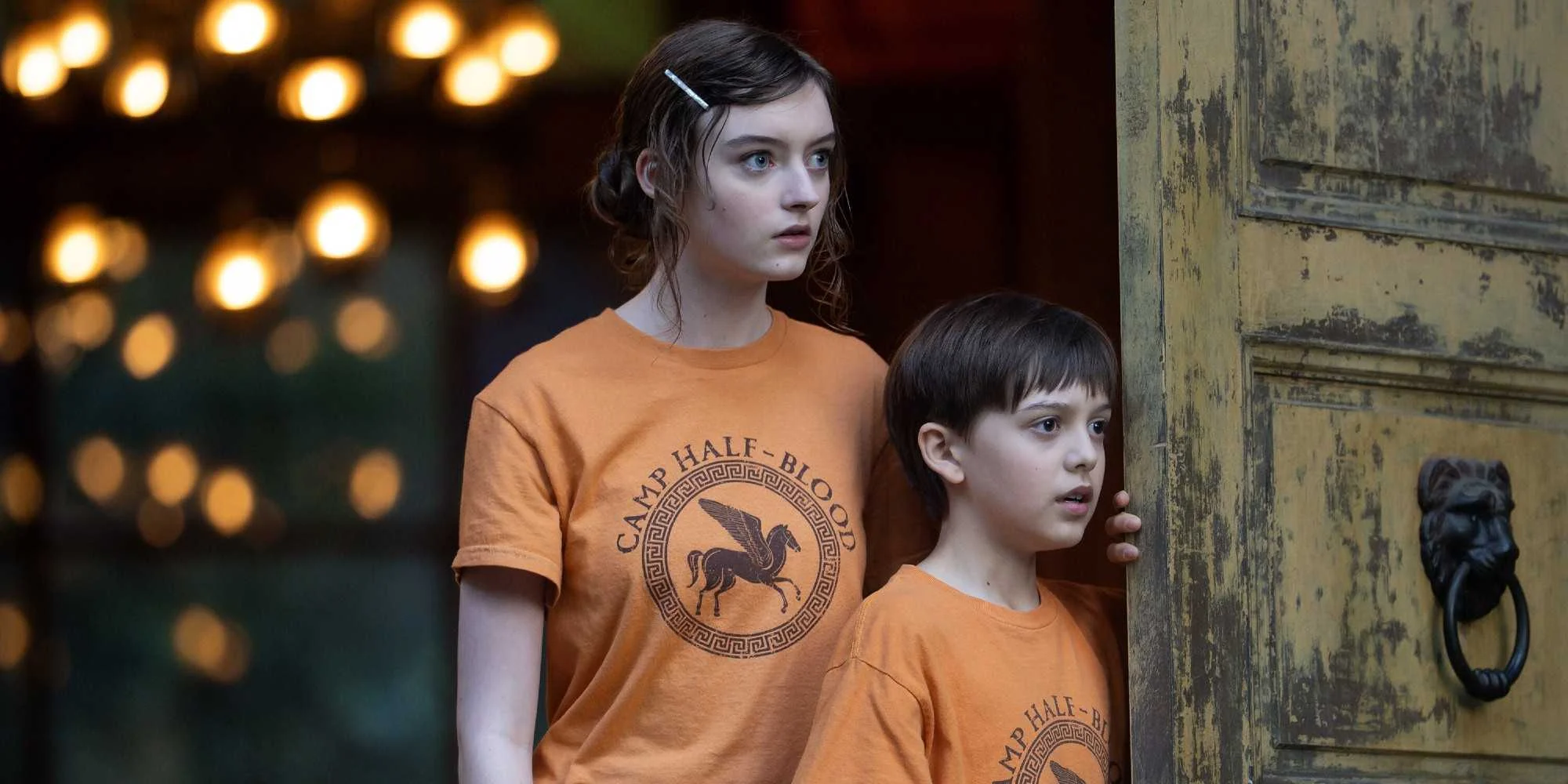
Percy’s attempts to mentor Nico provide a different test of his maturity. Having survived the discovery that he is a demigod, he now has to help someone else through it. He has become the experienced person in the room. Management has made a questionable appointment.
Scobell lets Percy’s concern carry these exchanges, and Levi Chrisopulos gives Nico a mixture of fascination and fear that keeps the responsibility specific. The boy is excited by this extraordinary world and frightened of being separated from Bianca. Olive Abercrombie’s Bianca arrives with someone already depending on her, a relationship that needs attention alongside the expanding rescue party.
The captivity thread extends this pressure beyond Percy’s group. Charlie Bushnell’s Luke serves Kronos, yet his attachments to Annabeth, Thalia, and Grover remain. Moving outside Percy’s viewpoint allows the adaptation to put Luke’s allegiance beside the imprisonment of someone he cares about under Atlas. Some of the novel’s detours have been sacrificed for relationship material, and this is a persuasive use of that space. Luke has chosen a side; Annabeth’s captivity makes that choice harder to keep abstract.
Kate McKinnon’s Aphrodite gives the season’s interest in attachment its funniest expression. Explaining that love can start and end wars, she slips into an aside about Ares’s attraction to her. The exchange changes register within the same subject: a warning about destructive power becomes an opportunity for romantic self-advertisement. Olympus has apparently mistaken a dating profile for a foreign policy.
McKinnon’s comic assurance suits a goddess who enjoys knowing what Percy would rather leave unacknowledged. His feelings become another thing an immortal can prod for amusement. That encounter also puts language to conflicts already playing out elsewhere. Percy’s attachment to Annabeth sends him into danger; Luke’s surviving loyalties complicate his commitment to Kronos.
Aphrodite gets the joke, but the teenagers have to deal with the consequences. The show is good at letting embarrassment sit beside danger here. It keeps its young characters recognizably young, even as their responsibilities grow. Percy can attempt leadership, worry about Annabeth, and wish everyone would stop discussing his feelings. The gods’ interest in him offers no protection from humiliation.
The action creates a harder scheduling problem. The Nemean Lion confrontation at the Air and Space Museum becomes such a substantial centerpiece that it narrows the episode’s available emotional range. A prolonged encounter supplies momentum, but the group must also make room for relationships that are still being established. Watching the quest occupy so much of an episode, I wanted another exchange that might change how these companions understood one another.
This is the familiar machinery of the quest serial: reach a destination, confront its danger, proceed to the next trial. Undead soldiers and a metal giant in an Olympian junkyard keep the threats varied.
The need for those quieter intervals becomes urgent when the fourth episode brings a tragic turn after a victory. The reversal hurts because these children have begun to accept responsibility for one another, and the series now makes that responsibility frighteningly fallible. Nico’s youth and attachment to his sister have already made vulnerability difficult to overlook. The darker register earns its place here, but it also makes the shortage of time with some newer characters more noticeable. When a victory ends this badly, how quickly should an adventure series be allowed to move on?
Percy Jackson and the Olympians Season 3 is set to premiere on November 20, 2026, streaming on Disney+ and Hulu (with two episodes launching at debut ahead of the December 11 finale). Adapting Rick Riordan’s The Titan’s Curse, the third season follows Percy and his allies on a perilous quest to rescue Annabeth as rising threats from the Titans endanger Mount Olympus.
Where to Watch Percy Jackson and the Olympians Season 3 Online




Full Credits
Title: Percy Jackson and the Olympians (Season 3)
Distributor: Disney+, Hulu
Release date: November 20, 2026 (2-episode premiere; finale December 11, 2026)
Rating: TV-PG
Running time: ~40–46 minutes per episode
Director: James Bobin
Writers: Rick Riordan, Jonathan E. Steinberg, Dan Shotz, Craig Silverstein
Producers and Executive Producers: Rick Riordan, Jonathan E. Steinberg, Dan Shotz, James Bobin, Zoe Neary
Cast: Walker Scobell, Leah Sava Jeffries, Aryan Simhadri, Charlie Bushnell, Dior Goodjohn, Daniel Diemer, Tamara Smart, Levi Chrisopulos, Olive Abercrombie, Dafne Keen, Kate McKinnon, Ming-Na Wen, Lin-Manuel Miranda, Adam Copeland, Jason Mantzoukas
Director of Photography (Cinematographer): Pierre Gill, Jules O’Loughlin, François Dagenais, Stephen Maier
Editors: Stewart Schill, Colleen Rafferty, Curtis Thurber, Nicholas Emme, Brian Cerrillo
Composer: Bear McCreary, Sparks & Shadows
The Review
Percy Jackson and the Olympians Season 3
Season three’s first four episodes make a lively, affecting return, with Scobell and Smart turning a difficult alliance into the strongest new dynamic. McKinnon’s Aphrodite supplies divine mischief, and the rescue plot gives Percy’s growing attachments real urgency. The expanded ensemble needs quieter exchanges, especially when the museum action monopolizes an episode. Olympus has plenty of monsters on standby; someone should reserve a slot for a conversation. Returning viewers have good reason to stay.
PROS
- Scobell and Smart’s prickly, persuasive chemistry.
- Romantic awkwardness gives the rescue emotional urgency.
- McKinnon’s mischievous Aphrodite.
- Luke’s divided loyalties benefit from the expanded viewpoint.
CONS
- The museum action dominates its episode.
- Some newer relationships need further development.