



























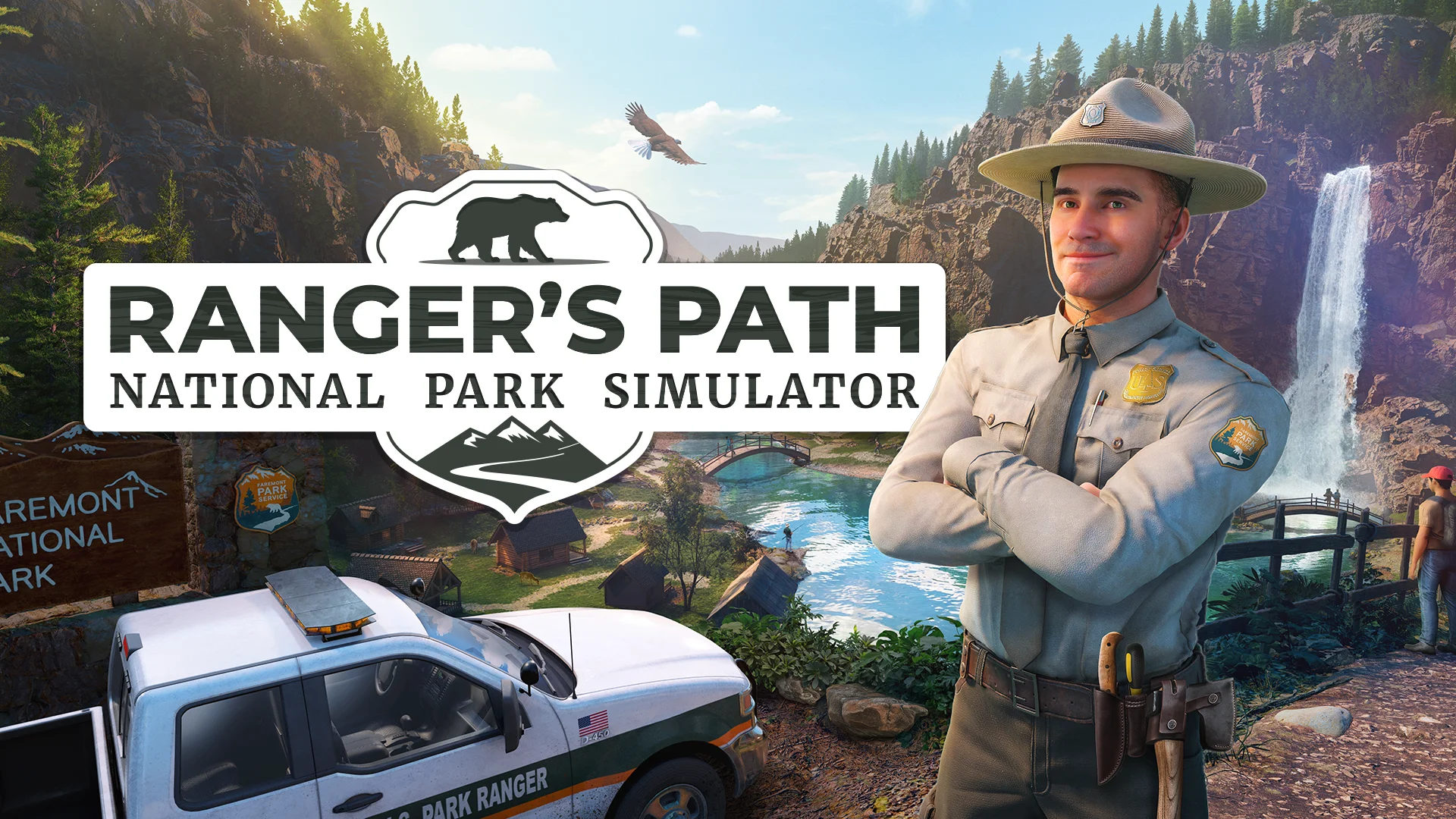

Putting Faremont National Park back in order is satisfying until the same maintenance problems return soon afterward. The appeal of a cleaning simulator depends partly on seeing what your repetition has accomplished, and Ranger’s Path: National Park Simulator sometimes makes that difficult. Its opening trail work establishes a convincing reason to care: repairing signs and picnic facilities, clearing fallen trees, and collecting litter eventually lets visitors use a previously closed route.
That is a good reward for an unglamorous job. To-Go Games gives those early repairs a purpose beyond completing an isolated task, because a restored trail becomes somewhere people can actually go. The small interactions involved are less persuasive. Selecting an axe, screwdriver, or paint supplies leads into simple minigames whose familiar inputs soon require little thought.
Timing a repair provides an initial point of engagement, but repeated maintenance offers limited room to improve your technique. When facilities need attention again shortly after being restored, the routine starts consuming the achievement that made it attractive.
I would recommend this to players who enjoy gentle work simulators and want a pleasant outdoor setting, particularly for shorter sessions. The park supplies enough reasons to stay interested between chores. Anyone expecting a demanding simulation of ranger expertise will find its visitor interactions and repetitive repairs much less rewarding.
Compared with its Early Access form, the full release offers a wider range of duties, and that improvement matters. Finding missing hikers, helping injured wildlife, identifying invasive plants, and planting flora give the ranger responsibilities beyond keeping picnic furniture intact.
Experience earned through work introduces further missions, tools, vehicles, and trails, so career progression keeps extending the job description. Animal care also develops the role beyond observation. If you’re returning from Early Access, the broader schedule is the reason to take another look; it should not be mistaken for evidence that every familiar interaction has acquired new depth.
The strongest connection between duties comes through wildlife knowledge. Photographing animals and plants builds information that can help with visitors’ questions. There is a pleasing logic to learning something on patrol and then using it to assist someone, even if the conversation itself amounts to choosing an answer and receiving green or red feedback.
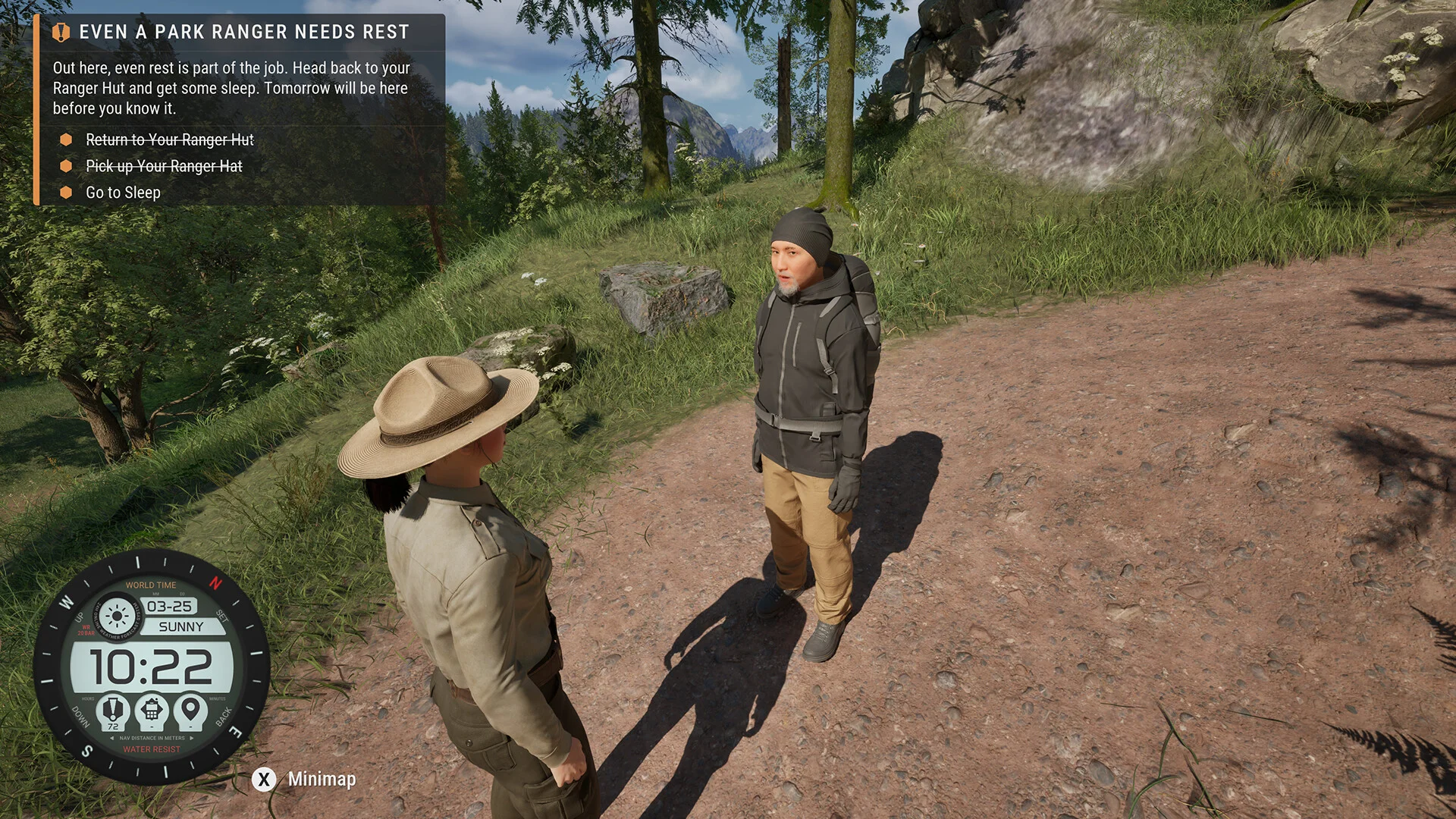
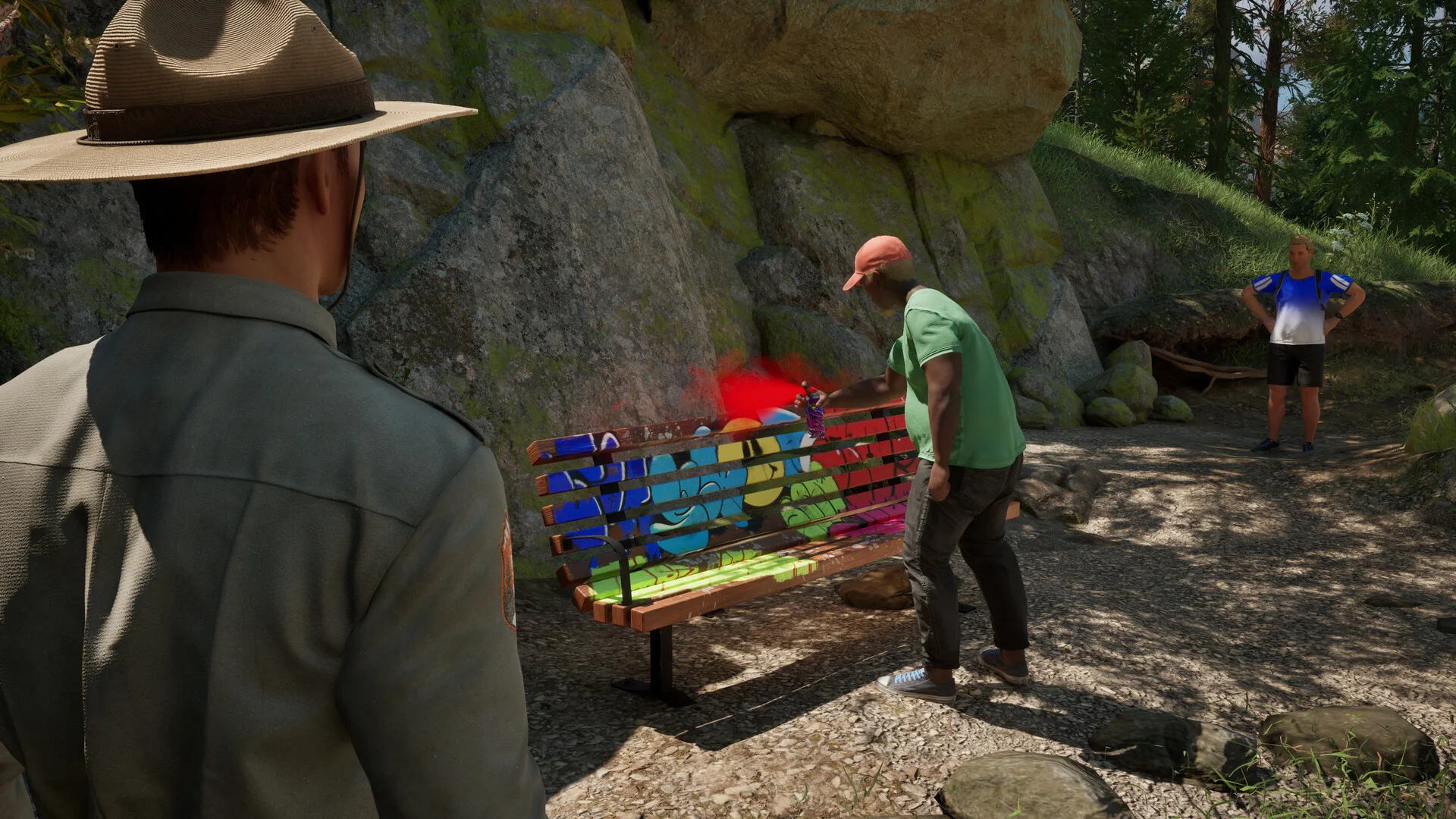
Visitor enforcement makes a less convincing case for the ranger’s authority. You can check permits, search suspicious visitors’ bags, and respond to an invalid permit or prohibited item with a warning or removal from the park. Loud music and drone use also supply reasons for intervention.
Those options give the role some welcome specificity, but there is little sign of sustained consequences that would make one response especially significant later. Permit checking becomes another familiar procedure. Missing-hiker assignments change the situation, yet escorting a visitor along a preset route offers a limited test of rescue skills.
For newcomers, it helps to think of this as a fieldwork simulator. Much of your involvement comes from walking to a problem, selecting the appropriate tool, and completing a manageable interaction.
Faremont gives that walking an attraction of its own. Against the cleaning-sim benchmark of a visibly restored worksite, Ranger’s Path offers a setting worth looking at between jobs: forests open into meadows, riverbanks provide different scenery, and waterfalls and viewpoints give an outing somewhere to pause.
Changing weather and the day-and-night cycle alter the light across those spaces. That helps explain why simple assignments can remain agreeable here longer than their inputs suggest. You have a reason to take an interest in the route as well as the task waiting at its end. Animal calls and wind in the trees support those stretches away from conversation or radio traffic.
Photography makes particularly good use of that setting. Documenting an animal or its behavior asks you to pay attention to something other than the next damaged sign. Positioning the camera and establishing exactly what the assignment wants can be frustrating, though. Unclear targeting turns an observation task into repeated attempts to satisfy the game’s recognition of the subject.
The patrol rhythm also has some awkward interruptions. Radio callouts can be declined, which gives you control over the day’s workload, but accepting them helps career progression. That creates a persistent incentive to leave your current activity for another assignment. The daily clock can add pressure to hurry between duties, cutting into the unstructured wandering that makes Faremont attractive. A player content to postpone a request may find a restful pace; someone trying to keep up with every opportunity has good reasons to spend the afternoon running.
Getting around adds smaller irritations to that pressure. The pickup is useful for covering longer distances, but substantial portions of the job still happen on foot. Awkward movement and terrain restrictions make some apparent shortcuts unavailable. In a landscape that invites exploration, having to work around those restrictions becomes especially noticeable when the radio is asking you to be elsewhere.
Technical reliability is a sharper concern than the occasional inconvenience of a restricted route. Reported problems include getting stuck in the environment, awkward spawning, and an animal-tracking assignment that required a restart. The performance picture varies: Xbox Series X exploration has been reported as largely steady, with minor stutters in dense foliage during heavy rain, and severe disruption is not universal.
For this kind of simulator, the report of a crash erasing considerable progress deserves particular weight. These jobs ask for a willingness to repeat small actions, often after travelling some distance to reach them. A manual save system with a single slot puts extra importance on remembering to preserve that work. Returning to an earlier save can mean clearing the same obstruction or repairing the same facility again, this time because the completed job was lost.
The Review
Ranger's Path: National Park Simulator
Compared with its Early Access form, Ranger’s Path offers a fuller ranger role, with wildlife care and visitor assistance helping to break up trail maintenance. If you enjoy gentle job simulators, Faremont’s scenery makes short patrols worthwhile. Repetitive repairs, shallow enforcement, and awkward movement keep that broader schedule from becoming a particularly rewarding test of expertise. Reported crashes and lost progress also undermine the satisfaction of completing those small jobs.
PROS
- Attractive landscapes enhanced by changing weather and light.
- Wider range of ranger duties than in Early Access.
- Wildlife knowledge connects observation with visitor assistance.
- Restoring trails opens them to the public.
CONS
- Repetitive repairs and rapidly recurring maintenance.
- Limited depth in enforcement and rescue interactions.
- Awkward movement and restrictive terrain traversal.
- Reported faults include crashes that erase progress.