























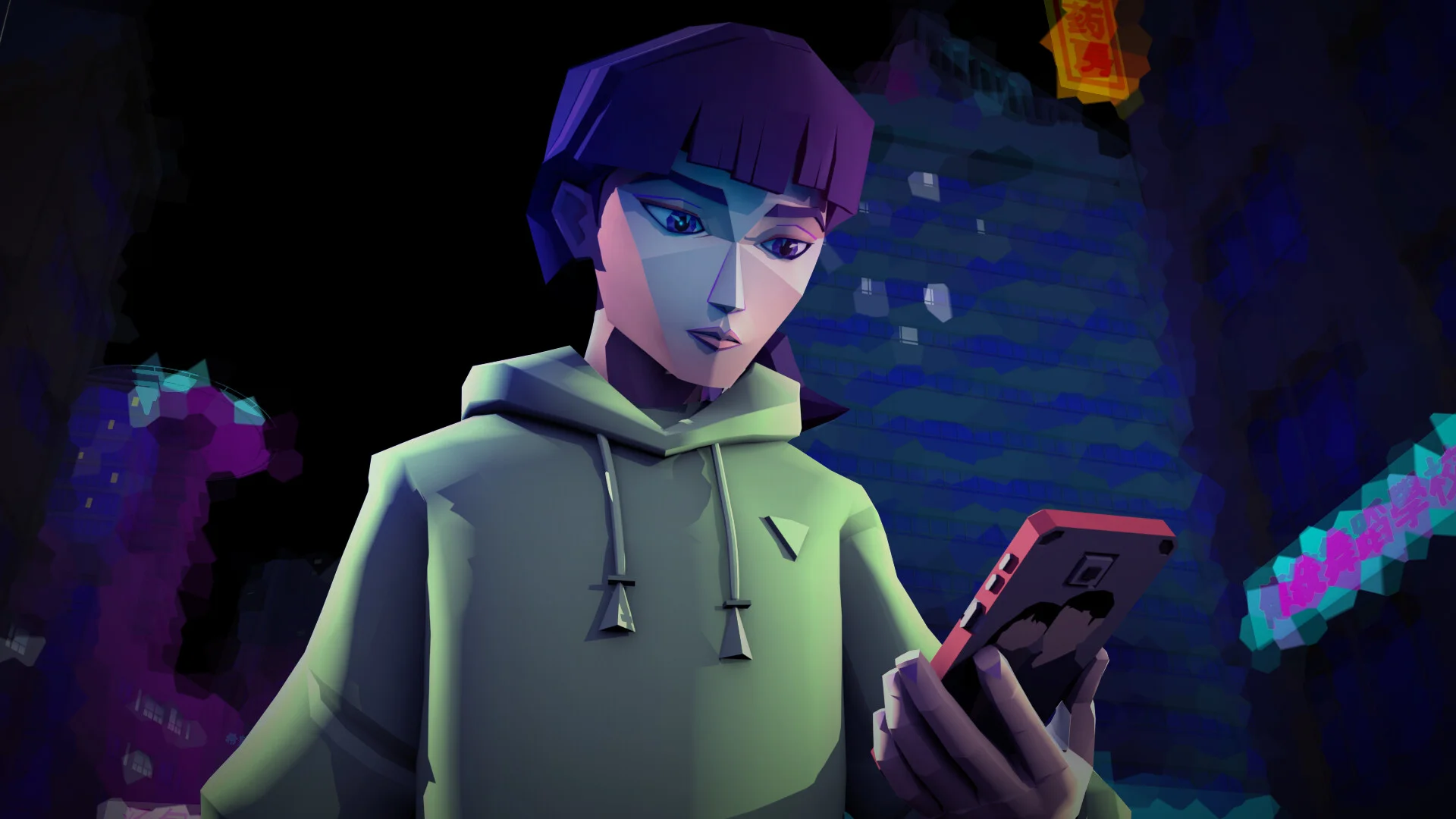

A page in Hope Song’s notebook transforms an angular three-dimensional environment into delicate lines and watercolor impressions. The perspective comes from a digital model, but the drawing belongs to a teenager who sees the world through an artist’s eyes. It is a revealing detail in Hope in the City, a narrative adventure developed by Toronto-based Lofty Sky and set in Shenyang, China. Its protagonist dreams of studying art in Canada, and the game itself approaches contemporary Chinese life from an international creative perspective. That relationship between place, personal identity, and the act of observation shapes almost everything worthwhile about the experience.
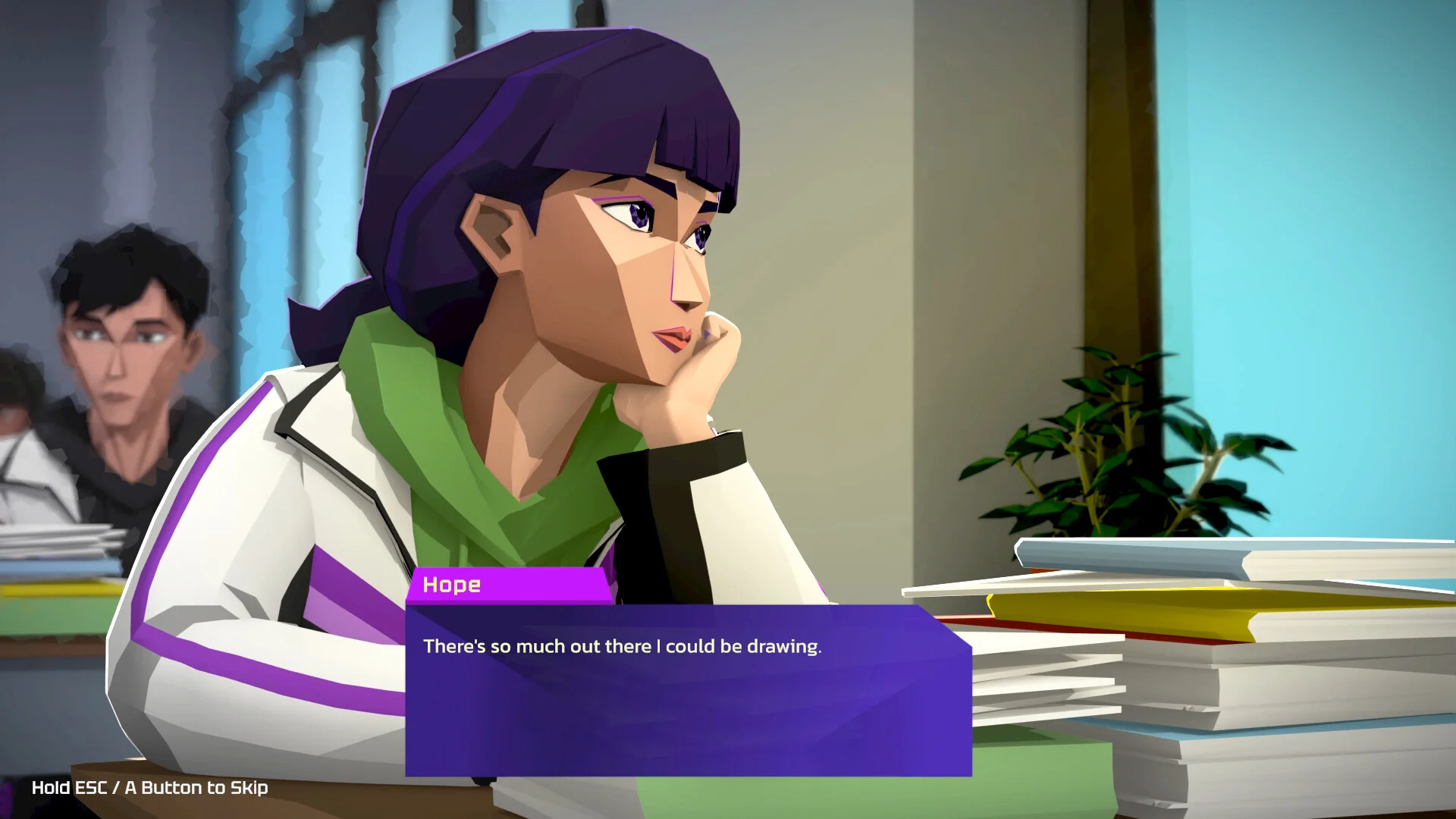
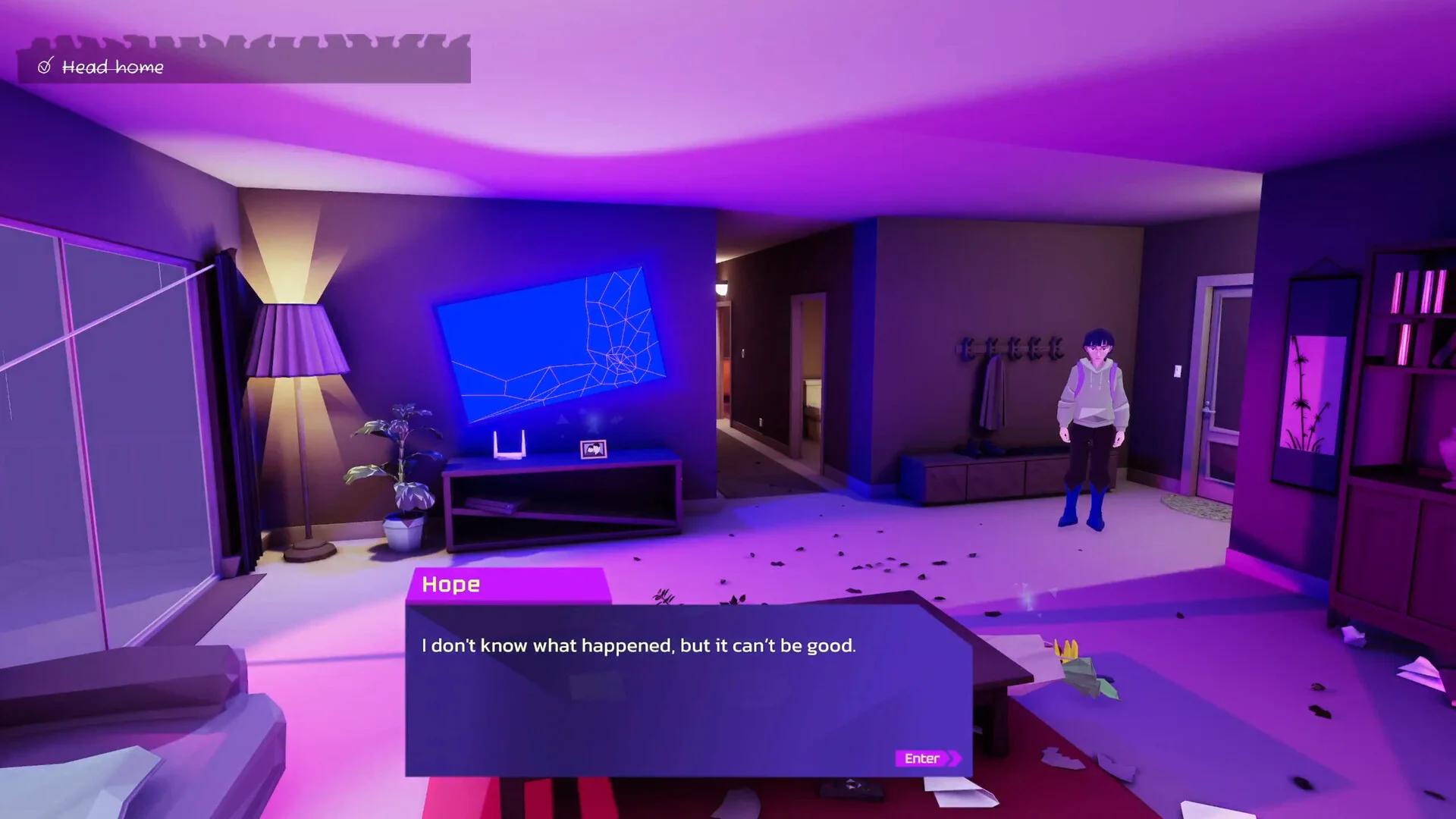
Hope is seventeen, approaching the end of her school years, and apparently destined for an artistic future abroad. Her father works as a surgeon, although tensions between her parents have made home increasingly uncomfortable. Returning from school, she discovers their apartment ransacked and both parents missing. Evidence suggests her father has been keeping secrets, leaving Hope to investigate circumstances she barely understands. The familiar missing-person mystery gradually develops into an examination of political repression, with the ordinary surroundings of Shenyang becoming increasingly important to what the story reveals.
The result is an affecting adventure that I would readily recommend to players interested in culturally specific storytelling. Its approximately two-hour duration and accessible investigation mechanics make it easy to approach, although anyone expecting a demanding detective game will find the puzzles rather elementary. The narrative and its eventual political implications give this small production a significance its technical execution cannot consistently match.
The most immediate comparison is Life is Strange, whose American setting provides the stage for adolescent uncertainty, personal relationships, and discoveries made through conversational exploration. Lofty Sky adopts a similarly approachable rhythm but places that familiar structure in a different social environment.
Hope’s concerns about school, family, and her future initially belong to an internationally recognizable coming-of-age story. Her search for her parents gradually places those concerns against questions of political authority and individual vulnerability. The geographical shift changes how the familiar adventure-game routine reads, particularly when an ordinary observation acquires implications beyond the family mystery.
That process depends on the Thought Web, the game’s central investigative mechanic. Exploring apartments, streets, shops, and other locations allows Hope to collect information through conversations and environmental examination. Significant discoveries become Thoughts in her notebook. Combining related Thoughts produces Insights, which can then connect with further evidence to create Breakthroughs. These deductions open new investigative possibilities and push the story forward.
The system’s most successful feature is its treatment of unsuccessful associations. Combining observations that do not directly advance the investigation can still produce individualized comments from Hope. Such responses suggest how she interprets the details around her, bringing personality into a system that might otherwise resemble a conventional clue inventory. Early Breakthroughs can also change as additional evidence emerges. Hope’s understanding is provisional, fitting the perspective of a teenager confronting an unfamiliar situation.
There is an interesting comparison here with the British detective tradition associated with Sherlock Holmes. The classical investigator commands a scene through experience, specialist knowledge, and the confidence to interpret evidence. Hope has none of these privileges.
Her sketchbook gives her a personal method of making connections, but it cannot grant her authority over the institutions and adults surrounding her. That reversal makes the mechanics thematically appropriate, even though the design never approaches the intellectual demands of its literary predecessors. Players frequently succeed through straightforward associations or trial and error, and the story offers limited branching. The game asks us to observe carefully, then rarely tests how carefully we have been observing.
This restricted agency becomes particularly noticeable in Shenyang. Streets illuminated by neon signs and storefronts give the city a recognizable modern character, and its residential buildings and commercial spaces provide a welcome departure from the settings frequently reproduced across Western-oriented adventure games.
There is value in encountering a contemporary Chinese city through ordinary domestic routines instead of an exoticized historical setting. Yet the environments rarely offer much life beyond the investigation. Conversations and objects mostly exist to provide relevant information, and opportunities for independent exploration are limited. The city becomes a succession of places to examine when its cultural specificity invites a fuller sense of daily existence.
The visual presentation reinforces this unevenness. Bold geometric forms establish a recognizable aesthetic, but several environments look sparse, and the character animations reveal the production’s technical limitations. Nighttime illumination lends certain streets an atmospheric quality that the plainer interiors cannot sustain. Ambient urban sounds help establish a sense of place, although the environments still lack the density that could make Shenyang feel fully inhabited. Hope’s voice performance gives the protagonist a recognizable personality, even if the supporting dialogue performances are less consistent.
The notebook is considerably better realized. Artist Calista Antonio created over a hundred illustrations using 3D models as references for perspective and poses before developing the images through digital line work and watercolor. The technique creates an effective connection between the world the player explores and the world Hope records. The drawings preserve details, but their handmade appearance suggests that observation is always personal. An object becomes meaningful partly because Hope has chosen to notice it.
Antonio’s own background deepens that artistic decision. Of Chinese descent, she moved to China at seventeen to pursue her artistic interests, and aspects of her experience informed Hope’s characterization. The parallel gives the notebook a personal creative foundation. It would be excessive to treat an individual’s drawings as an authoritative portrait of Chinese life, especially within a production created in Canada. Their achievement lies in offering a particular way of seeing rather than claiming to represent an entire society. Hope’s drawings communicate an intimacy that the game’s comparatively impersonal environments struggle to establish.
This relationship between individual perspective and cultural representation becomes increasingly significant as the mystery develops. The game establishes early that its story draws inspiration from real events, but the implications of that declaration emerge gradually. What appears to be a family investigation eventually confronts the subjects of internet censorship and political imprisonment in China. The latter becomes especially important in the final portion, where the narrative assumes a gravity that its uncomplicated investigative mechanics might initially seem incapable of supporting.
The progression works because the political material emerges through Hope’s attempts to understand her parents’ disappearance. Players initially share her limited knowledge, collecting fragments of information through conversations and environmental clues. Shenyang’s seemingly familiar streets acquire a different significance once the circumstances surrounding the family begin to expose the relationship between private lives and political authority.
Here, however, the audience’s cultural position matters. Players unfamiliar with the political issues addressed may experience the revelations as an unexpected confrontation with a disturbing reality. Those who already know about censorship and political prisoners in China may be less surprised and more attentive to how the game presents its subject. Neither response should determine the judgment on its own. Surprise can produce a powerful emotional reaction, but a work addressing real suffering carries responsibilities beyond making an audience feel shocked.
The game’s short duration complicates that responsibility. Its direct storytelling keeps the central mystery moving and avoids prolonged stretches of repetitive investigation. The same economy restricts opportunities to examine the political questions in sustained detail. As the story grows in significance, the mechanics remain relatively unchanged, offering little additional freedom to question discoveries or explore their implications. The linear structure gives the developers control over the revelations, but it also means that the player’s understanding is shaped by a prescribed sequence.
The most consequential formal decision comes when the fictional experience is connected to documentary testimony. A video featuring a man discussing experiences related to the story introduces a human account that belongs outside the invented investigation. Additional documentary materials become available through the main menu after completion. The change of medium carries particular weight in a game where the protagonist has spent her time transforming observations into drawings and deductions.
The player’s interpretive activity gives way to listening to someone whose experiences demand attention on their own terms. A fictional mystery can draw people toward an unfamiliar subject, but approximately two hours cannot provide the historical depth that subject deserves. Lofty Sky’s decision to include documentary material gives interested players somewhere to continue, beyond the boundaries of Hope’s investigation.
The Review
Hope in the City
Hope in the City transforms a familiar detective adventure into a moving encounter with contemporary Chinese political realities. Its beautifully illustrated sketchbook gives Hope's investigation a personal identity, and the shift from fictional mystery to documentary testimony carries considerable emotional weight. The simplified puzzles, restricted exploration, and uneven technical presentation limit its ambitions as a game. Yet Lofty Sky's Canadian perspective on a Chinese story creates an accessible experience whose cultural specificity deserves attention. For players interested in narrative adventures that extend beyond entertainment, this is an easy recommendation.
PROS
- Beautiful hand-drawn sketchbook illustrations
- Emotionally affecting, politically significant narrative
- Distinctive contemporary Chinese setting
- Thought Web reinforces Hope's personality
- Meaningful documentary material
CONS
- Simplistic deduction mechanics
- Limited exploration and player agency
- Sparse environments and dated animations
- Short runtime restricts thematic depth