


















Blade Runner 2099 is a visually extraordinary, intellectually uneven continuation that has a better idea about revolution than it initially seems to understand. Its central reversal is simple: replicants have conquered humanity, and the beings once hunted by Blade Runners now wear the badges themselves. I was suspicious of this premise.
Reversing an injustice can be an effective way of exposing its mechanics, but it can also become a shortcut to saying that power corrupts everyone, an observation humanity has had several millennia to consider. Silka Luisa’s eight-episode series occasionally looks headed for that shortcut. Then it begins asking what victory means to creatures whose bodies still obey the instructions of their former masters.
Fifty years after Blade Runner 2049, Los Angeles has emerged from a violent uprising with its hierarchy inverted and its institutions largely intact. Humans endure restrictions, degrading work, and the possibility of being sent off-world. Replicant officers police them under a title that once announced their own persecution. The revolution has apparently kept the stationery.
There is a sharper historical intuition in this than simple revenge: institutions can outlive the ideology that justified them, especially when their new owners discover how useful they are. The police force remains recognizable, the city remains divided, and the people who once suffered under an oppressive system have learned to administer it with remarkable efficiency (one suspects the transition required surprisingly little retraining).
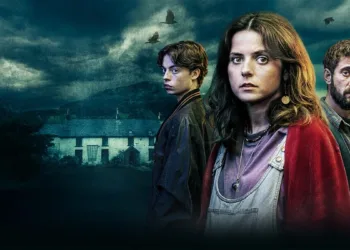
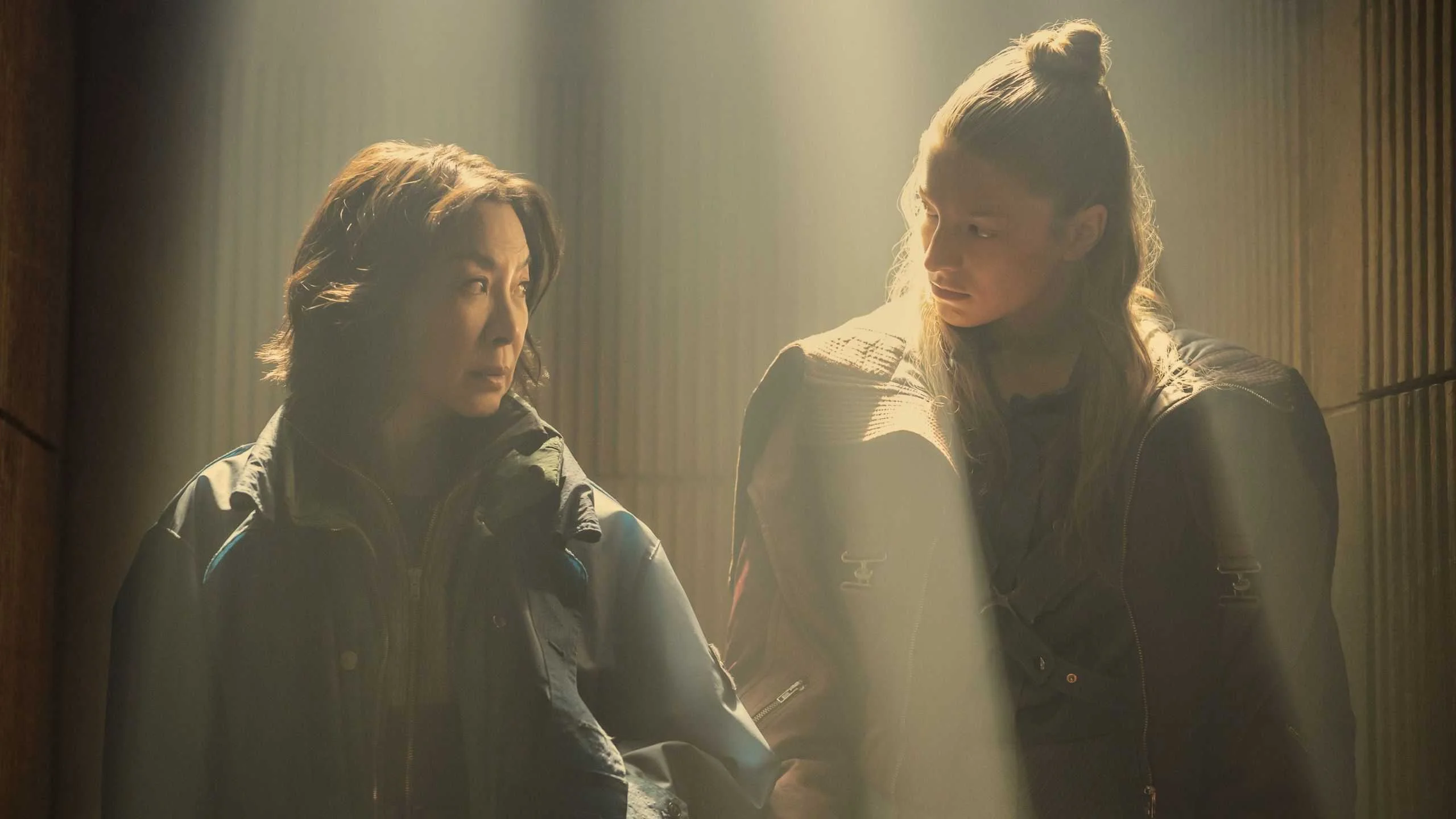
The series is worth watching, even when its plotting thins, because it gives that predicament two contradictory faces. Cora (Hunter Schafer) is a human fugitive desperate to protect her ill brother Elias (Lewis Gribben). Her chance of escape depends on impersonating a replicant and entering the LAPD to acquire an object that could secure passage out of the city. Olwen (Michelle Yeoh), the Blade Runner she comes to work beside, has the authority to hunt people like Cora and approximately eight days before her programmed lifespan expires.
One woman must hide her humanity to remain alive; the other holds power over humans but cannot negotiate with her own death. I like the symmetry, perhaps too much. It threatens to make the characters into philosophical illustrations rather than people. Cora’s frantic flight through the industrial city in the first episode gives Schafer a physical urgency that complicates her outward coldness, and Yeoh is exceptionally good at letting fear disturb Olwen’s controlled bearing by degrees.
Yet Cora’s disguise depends on an implausible level of professional obliviousness. She betrays too much emotion and uncertainty for someone meant to pass as a Blade Runner, even when Olwen begins questioning her behavior. A story about distinguishing humans from replicants should probably make its own detection procedures a little harder to fool.
My objection survived until Body Body.
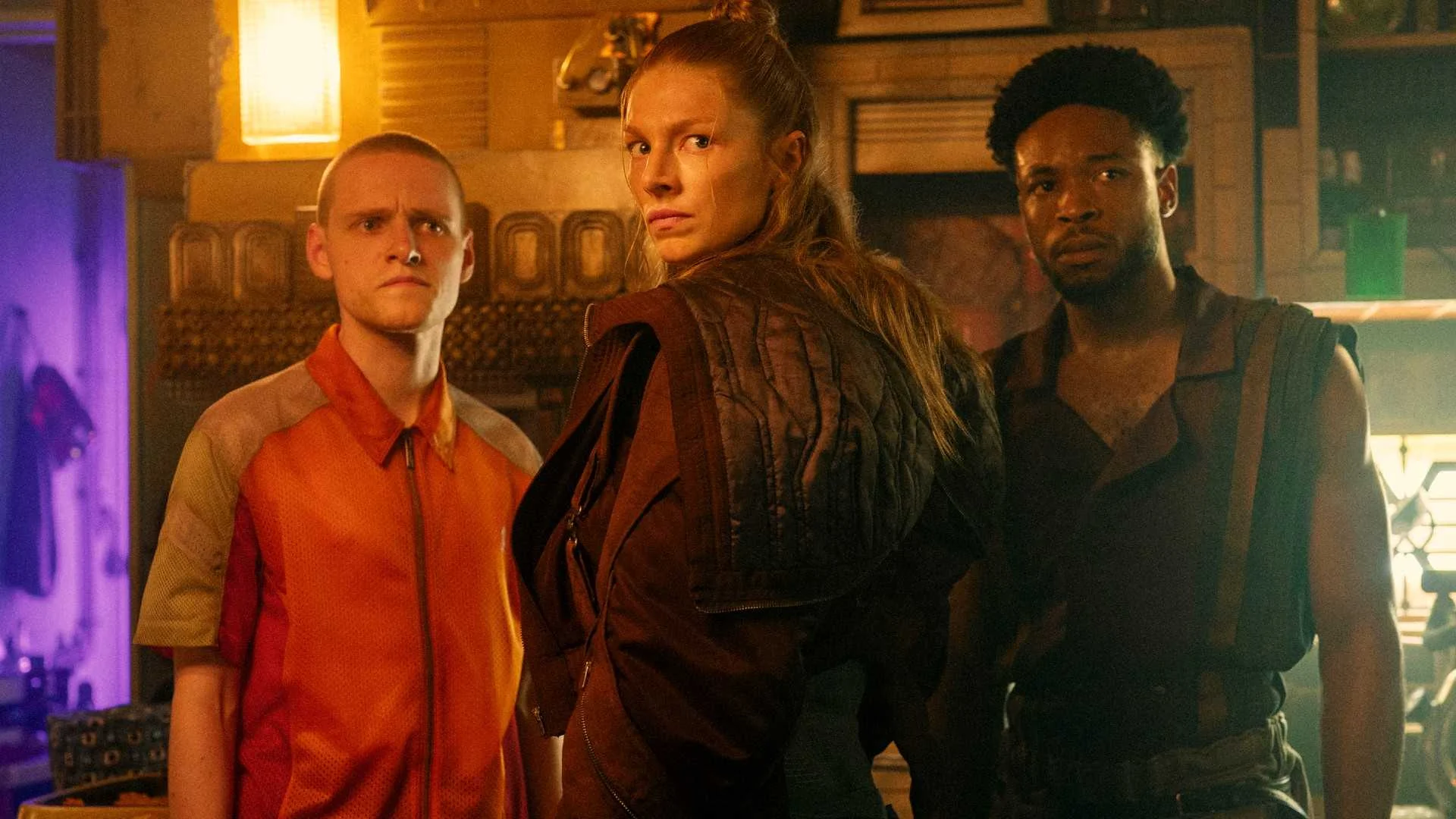
This establishment allows replicants to purchase simulations of human experiences they cannot naturally possess. Customers strap on artificial pregnancies, touch swollen prosthetic bellies, and cradle mechanical infants. It sounds ridiculous when described plainly (which is part of why the scene is so upsetting). These are the new rulers of the world, purchasing an imitation of an experience their creators once regarded as ordinary.
Political supremacy has failed to erase the old standards of personhood. Instead, those standards have become merchandise. The establishment’s proprietor, Muller (Arben Bajraktaraj), questions the assumption that replicants should measure their existence against human capabilities. His objection forced me to reconsider the uprising. What initially appeared to be an unimaginative exchange of oppressors becomes a stranger proposition: the victorious population has inherited the desires of the civilization it defeated.
Call this victor’s captivity, the condition of conquering those who defined your inferiority, then continuing to measure your life against their definition of success. A Tyrell Corporation representative’s pride in having denied replicants familial attachments gives this predicament an ugly history.
Their emotional possibilities were restricted to make them easier to control. Now some of those possibilities can be purchased in simulated form. The club’s artificial pregnancies also acquire a curious significance after 2049 established the possibility of replicant reproduction, a discovery whose implications this series largely leaves unexplored.
There is a recognizable social phenomenon here, even if the science-fiction circumstances are extreme. Industries regularly sell substitutes for experiences that existing economic and social arrangements make difficult to obtain. The replicants’ desperation for parenthood, aging, and ordinary familial intimacy makes their victory feel incomplete. But their longing cannot simply be dismissed as artificial because their creators shaped it. Human desires have histories too, many of them considerably less voluntary than we prefer to admit.
Olwen’s mortality gives these abstractions a pulse. Yeoh can register a lifetime of exclusion in the small act of encountering a goat, letting curiosity and regret share the same expression. Her attachment to the missing Blade Runner Marek (Johnny Harris) further unsettles the assumption that synthetic life is governed chiefly by calculation.
Schafer plays Cora’s desperation with a rawer energy, especially during the early pursuit and her uneasy attempts to maintain her cover. Their partnership works best when the differences between them become uncomfortable rather than neatly explained. A child administering the Voight-Kampff test provides a related, quietly grotesque reversal: the authority to certify another being’s humanity has become disturbingly easy to inherit.
The physical world offers another kind of evidence. Under Jonathan van Tulleken and the series’ other directors, Los Angeles is still packed with grimy machinery, cramped rooms, and obsolete-looking screens. The familiar rain and neon now coexist with scorched daylight and polluted yellow skies. Light strikes through grates in narrow bands; a beach appears sick under its exhausted sun.
Production designers Paul Inglis and Chloe Arbiture make the city persuasive as a place that has undergone political catastrophe yet remains materially recognizable. Even the extraordinary environments beyond Los Angeles, including an arched memory bank in Mexico, suggest a civilization accumulating new ways to preserve experience rather than finding better ways to live it. Helen Huang’s exaggerated leather shoulders for Cora and layered coat for Olwen give the protagonists sharply different silhouettes, making their identities legible even within the oppressive visual density of their surroundings.
There is, however, a risk in making continuity look this beautiful. The series occasionally mistakes the preservation of Blade Runner’s visual vocabulary for the development of its ideas. A magnificently dressed detective can still spend an awfully long time looking for the next clue.
Leopold Ross’s mournful jazz, orchestral passages, and synthesizers lend quieter scenes a loneliness their dialogue does not always earn. Some fights fare worse: shaky framing and choppy cuts make substantial physical choreography difficult to follow, a counterproductive choice in a production otherwise devoted to the pleasures of looking.
The longer the investigation continues, the harder it becomes to ignore the distance between the society being imagined and the mystery being told. Cora and Olwen pursue Marek, the coveted object, and a succession of people who may know something about either. Much of the middle stretch proceeds through withheld information rather than decisions that reveal new dimensions of the regime.
Elias’s illness keeps Cora moving, but his independent existence receives limited attention. Greta (Katelyn Rose Downey), a human girl forced into working for the LAPD, suggests an everyday history of coercion that the series scarcely examines. Eight episodes ought to provide room for the people who must live under this government. Instead, the investigation repeatedly takes priority over the political reality that made it interesting.
I hesitate to call that a failure of ambition, since the central partnership periodically restores the urgency of the ideas surrounding it. Olwen’s impending death makes each delay intolerable to her, and Cora’s disguise turns ordinary professional exchanges into occasions for danger.
Yet by the finale, the writing seeks emotional release through a convenient intervention and leaves parts of the characters’ subsequent circumstances inadequately accounted for. The problem is especially pronounced in a story that has spent so long insisting actions carry moral weight. Victor’s captivity remains an unresolved condition beyond the protagonists’ immediate predicament, and the series has spent relatively little time examining how people like Greta might escape the institutions they are forced to serve.
Blade Runner 2099 premieres on Prime Video on November 25, 2026, with all eight episodes of the limited series releasing simultaneously for streaming on the platform. Created by showrunner Silka Luisa and executive produced by Ridley Scott, the sequel is set 50 years after Blade Runner 2049 in a Los Angeles where Replicants hold power, following fugitive Cora (Hunter Schafer) as she assumes the identity of a Blade Runner and teams up with aging Replicant Olwen (Michelle Yeoh) to track down a runaway harboring a city-shattering secret.
Where to Watch Blade Runner 2099 Online
Full Credits
Title: Blade Runner 2099
Distributor: Prime Video, Amazon MGM Studios
Release date: November 25, 2026
Rating: TV-MA
Running time: ~60 minutes per episode (8 episodes, limited series)
Director: Jonathan van Tulleken, Ariel Kleiman, Marcela Said, Karena Evans
Writers: Silka Luisa, Tom Spezialy, Kirsa Rein, Monika Revilla, CK Kiechel, Ryan Willison, Philip K. Dick (novel)
Producers and Executive Producers: Silka Luisa, Ridley Scott, Andrew Kosove, Broderick Johnson, Ben Roberts, David W. Zucker, Clayton Krueger, Tom Spezialy, Richard Sharkey, Michael Green, Cynthia Yorkin, Frank Giustra, Isa Dick Hackett, Jonathan van Tulleken, Steven Johnson
Cast: Michelle Yeoh, Hunter Schafer, Dimitri Abold, Lewis Gribben, Katelyn Rose Downey, Daniel Rigby, Johnny Harris, Amy Lennox, Sheila Atim, Matthew Needham, Tom Burke, Maurizio Lombardi, Francis Lovehall, Wil Coban
Director of Photography (Cinematographer): Rob Hardy, Ula Pontikos, Vanja Černjul, Damián García
Editors: Fiona Colbeck, Leo Trombetta, Henk Van Eeghen
The Review
Blade Runner 2099
Blade Runner 2099 imagines a revolution that changes its rulers while preserving the machinery of oppression. Its greatest achievement lies in examining replicants who have conquered humanity yet remain imprisoned by human definitions of existence. Michelle Yeoh and Hunter Schafer give this contradiction emotional weight, supported by extraordinary production design and a haunting score. Unfortunately, an increasingly conventional investigation, thinly developed supporting characters, and a convenient finale prevent the series from fully exploring its strongest ideas. It is an impressive continuation, even if its philosophical ambitions occasionally exceed its narrative courage.
PROS
- Provocative examination of power, identity, and liberation
- Excellent performances from Michelle Yeoh and Hunter Schafer
- Extraordinary production design and atmospheric cinematography
- Haunting score and memorable philosophical moments
CONS
- Middle episodes rely excessively on repetitive investigative plotting
- Cora's undercover identity strains credibility
- Supporting characters receive insufficient development
- Convenient finale weakens earlier moral consequences
- Shaky camerawork and choppy editing undermine some action scenes