



















A grandmaster, the opening definition explains, holds the highest title awarded by the International Chess Federation, FIDE, and keeps it for life. It is a revealing place for director Liza Mandelup to begin. Before introducing the personalities who have transformed competitive chess into an increasingly theatrical public affair, she establishes the institution responsible for deciding who receives its most prestigious recognition. That authority will soon be challenged by a businessman, a restless champion, and an entertainment model that treats centuries of sporting tradition as an obstacle to attracting new customers.
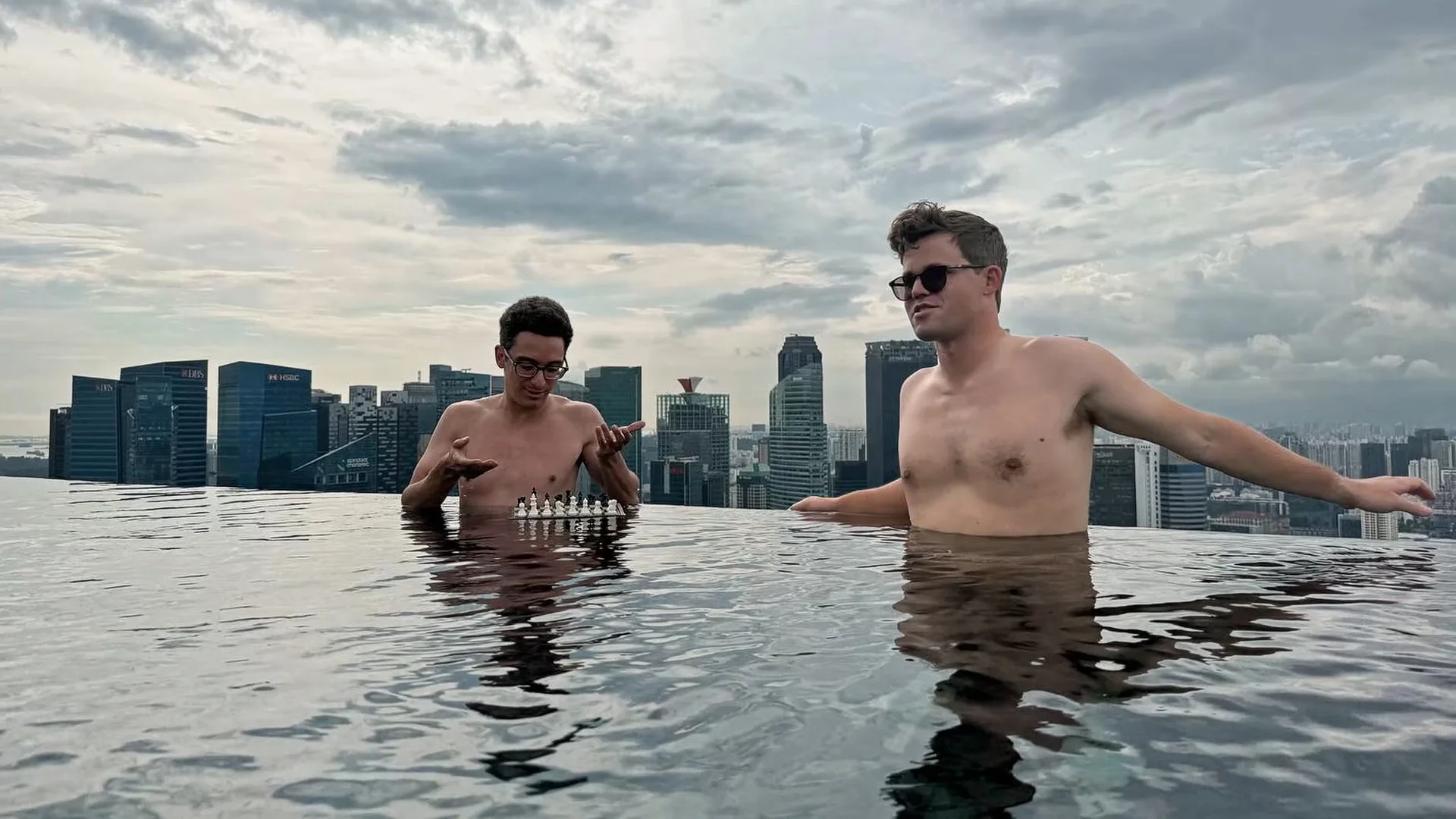
Grandmasters arrives at a moment when professional chess is reconsidering how it presents itself to the public. Magnus Carlsen, the Norwegian superstar who dominated the World Championship for a decade, has declined to defend his classical title. German entrepreneur Jan Henric Buettner sees an opportunity.
With Carlsen as his principal attraction, Buettner develops a Freestyle Chess competition intended to transform the sport into an international spectacle resembling Formula 1. The format rearranges the pieces on the back rank, reducing the influence of memorized openings and placing greater emphasis on improvisation.
Mandelup turns this institutional confrontation into an absorbing documentary that deserves an audience beyond dedicated chess enthusiasts. Its personalities are fascinating, its access frequently revealing, and its treatment of a specialized sporting culture remarkably accessible. The nearly three-hour theatrical presentation, assembled from a three-part television production, is less disciplined. Its fascination with celebrity sometimes overwhelms its examination of the sport.
Buettner provides an especially useful example of how thoroughly sporting competition has become entangled with entertainment economics. His ambition is to make chess fashionable, attracting audiences and commercial opportunities that its traditional presentation supposedly discourages. Carlsen supplies the credibility that money alone cannot purchase.
FIDE, meanwhile, is determined to protect the authority of its established championship system, with its president describing the emerging conflict as war. The organization also maintains dress regulations strict enough to produce controversy over Carlsen wearing jeans. For a federation defending the intellectual dignity of chess, an extraordinary amount of institutional anxiety appears to concern trousers.
Freestyle Chess changes the influence of preparation and what elite players are rewarded for mastering. Yet Buettner’s proposed revolution concentrates attention around a familiar celebrity. Mandelup captures this contradiction through his dependence on Carlsen, whose participation becomes increasingly complicated as their ambitions diverge. The film offers little evidence that the new commercial structure will distribute opportunity or influence differently from the organization it seeks to challenge.
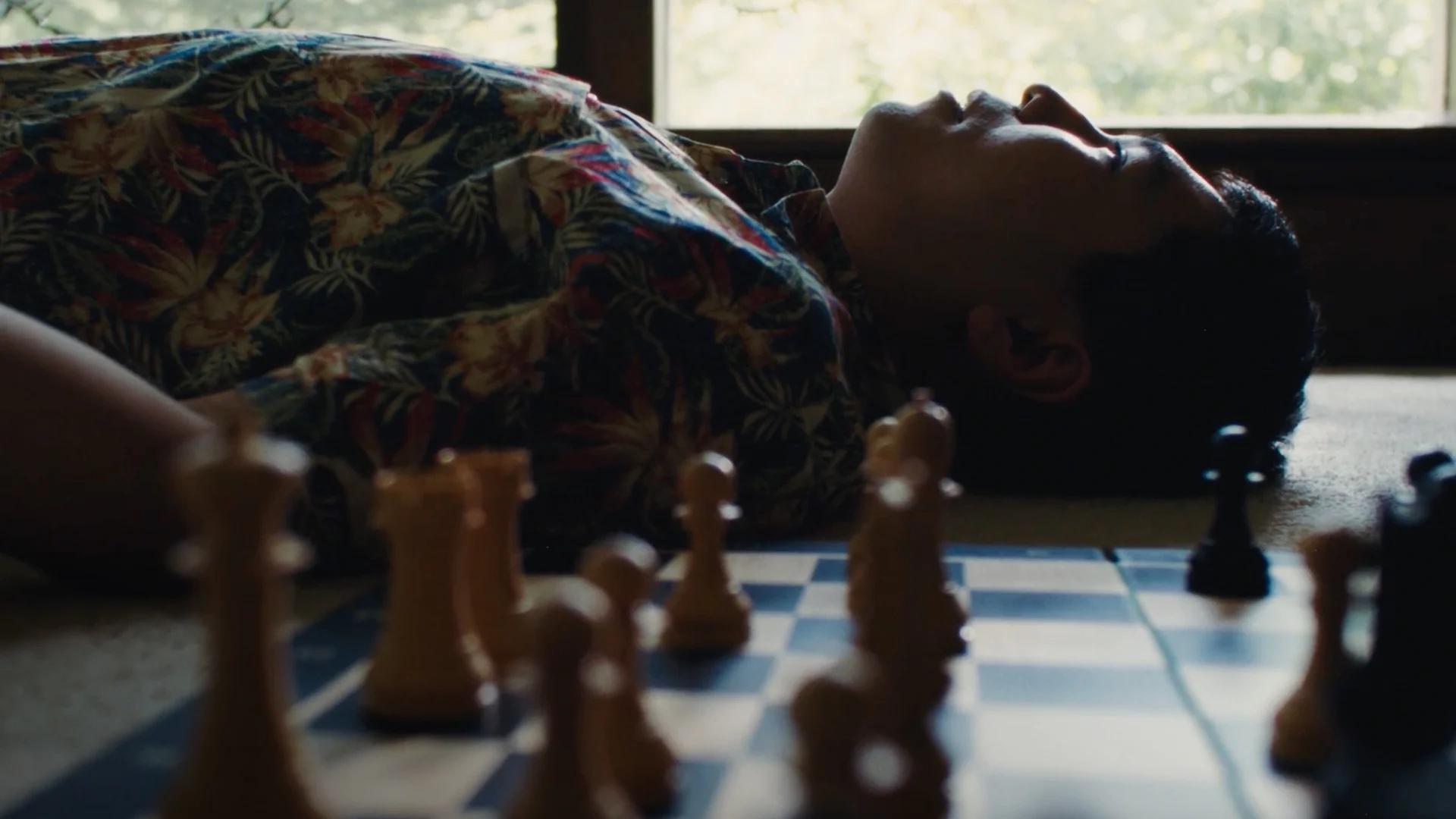
Carlsen is ideally suited to a television culture that recognizes confidence and controversy as immediately marketable qualities. His extraordinary achievements have given him sufficient standing to confront institutions that other players must accommodate. Hans Niemann offers another variety of celebrity, built partly around public hostility and scandal.
Their dispute following Carlsen’s 2022 cheating accusation became notorious enough to generate speculation about an alleged vibrating device used to receive assistance during matches. The allegation is distinct from the sensational rumors that followed it. The attention demonstrates how easily a sporting dispute can become internet entertainment, and how readily the documentary turns to it.
Wesley So provides a welcome departure from that assumption. The Filipino-American grandmaster possesses exceptional competitive credentials, yet his personal life appears remarkably removed from the glamorous professional image Buettner hopes to cultivate. Mandelup follows him shopping at a thrift store with his family, where his adoptive mother, Lotis Key, explains the requirements governing his clothing. Patterns and stripes are discouraged, jackets must fit properly, and shoes must be black. The conversation has the peculiar intimacy of an ordinary family errand, complicated by the fact that the person receiving these instructions is an internationally accomplished adult.
The relationship between So and Key invites scrutiny. She frequently speaks for him, explaining his reluctance to participate in certain interactions, and his adoptive sister provides transportation. The arrangements suggest a household where care, authority, and dependence overlap in complicated ways. So’s religious beliefs introduce another dimension to his competitive life, with victories understood through answered prayers and defeats sometimes interpreted as divine punishment.
One of its most revealing scenes brings So and Key together with a social media manager to discuss the commercial opportunities available through Instagram. Here, the machinery of contemporary sporting celebrity arrives in miniature. An accomplished chess player is encouraged to consider how his public identity might generate additional income, yet his own ambitions are strikingly modest. He would appreciate a partnership with Purina because it might provide free food for his cats. The humor belongs to the distance between an industry searching for marketable influence and an individual expressing an ordinary personal wish.
There is, however, a significant problem with the community the documentary chooses to represent. Female chess competitors are absent from its central narrative, despite its considerable running time and stated interest in the sport’s changing identity. Women appear largely through their relationships with the featured men, as family members, partners, or professional support figures. The Freestyle Chess competition itself also lacks female participants, making the absence part of the sporting environment being examined.
The decision to construct such an expansive portrait around these men restricts the documentary’s examination of the future they claim to represent. Key receives substantial attention, but primarily because of her influence over So. The perspectives of women competing within the same sporting culture remain unexplored. The film offers access to women without granting them comparable authority over the story being told.
The film’s television origins help explain both its accessibility and its frustrating excesses. Mandelup organizes the competitive world around recognizable personalities and shifting allegiances, frequently returning to events through different participants’ accounts. Information arrives gradually, encouraging viewers to reconsider their sympathies.
The first chapter establishes the relationships necessary to sustain interest and leaves genuine anticipation for the next installment. Dramatic framing during disputes surrounding Carlsen and the emerging Freestyle competition lends urgency to a sport with little visible physical movement. But relatively little time is devoted to observing chess matches in meaningful detail. The sporting intelligence responsible for these players’ reputations often receives less attention than their public behavior.
The soundtrack exposes a related problem. Its insistent dramatic energy can make institutional confrontations feel urgent, but similar musical intensity becomes distracting around quieter material involving So. Interviews and personal detours further complicate the rhythm. Material involving Carlsen’s wife, for instance, interrupts a developing institutional struggle without contributing comparable insight into its central tensions.
At approximately 170 minutes, the theatrical presentation struggles to justify the material retained from its serialized construction. Repeated perspectives have value when new information changes our understanding of an event. Elsewhere, accumulating interviews dilute conflicts already clearly established. The invitation to watch another episode becomes exhausting when the chapters are presented as a single feature. The film keeps escalating during passages that need reflection.
The move from television series to theatrical documentary shows where nonfiction production is heading: stories built around rivalries and distributed revelations can be repackaged for different platforms. Grandmasters demonstrates the appeal of that flexibility, along with its editorial costs. Buettner wants chess to compete for attention in a crowded entertainment market, and Mandelup frequently adopts the same methods: recognizable celebrities, heated confrontations, sensational allegations, and continuous dramatic stimulation. The film questions Buettner’s ambitions when he must reconsider his dependence on Carlsen.
Near the end, So is seen learning to drive and bagging groceries, activities far removed from the ambitions of professional sporting promoters. These scenes return attention to the independence that his earlier family interactions had placed in question. After nearly three hours of arguments over championship prestige, commercial expansion, and global recognition, Mandelup finds one of her most revealing subjects practicing ordinary tasks that other adults perform without attracting a camera crew.
Grandmasters premiered at the Tribeca Festival in June 2026 before opening in US theaters on October 11, 2026, and is available digitally on platforms including Apple TV. Directed by Liza Mandelup and featuring Magnus Carlsen, Wesley So, Jan Henric Buettner, and Hans Niemann, the sports documentary goes behind the scenes of elite competitive chess as an eccentric German entrepreneur teams up with Carlsen to launch a disruptive new league aimed at modernizing the game and challenging its traditional governing body.
Where to Watch Grandmasters Online
Full Credits
Title: Grandmasters
Distributor: Boardwalk Pictures, Chess.com, William Morris Endeavor (International Sales)
Release date: June 2026 (Tribeca Festival world premiere), October 11, 2026 (US theatrical release)
Rating: PG-13
Running time: 2 hours 50 minutes (170 minutes; also structured as a 3-episode docuseries)
Director: Liza Mandelup
Producers and Executive Producers: Max McGillivray, Christian Vazquez, Andrew Fried, Jordan Wynn, Lana Barkin, Patrick Altema, Liza Mandelup, Alex Leibow, Adam Ridley
Cast: Magnus Carlsen, Wesley So, Jan Henric Buettner, Hans Niemann, Danny Rensch, Levy Rozman, Lotis Key, Lea Makhloufi
Director of Photography (Cinematographer): Benjamin Whatley
Editors: Alex O’Flinn, Eric F. Martin, Rejh Cabrera
Composer: Greg Tripi
The Review
Grandmasters
Liza Mandelup's Grandmasters transforms professional chess's institutional power struggle into absorbing entertainment, with Wesley So's intimate family portrait providing its most revealing material. The documentary makes a specialized sporting world accessible through fascinating personalities and shifting rivalries. Yet its nearly three-hour theatrical presentation suffers from repetitive interviews, intrusive musical cues, and excessive attention to celebrity scandal. The absence of female competitors further limits its examination of chess's changing culture. An engaging documentary whose storytelling occasionally succumbs to the same commercial spectacle it seeks to scrutinize.
PROS
- Fascinating institutional conflict between FIDE and Freestyle Chess
- Wesley So's revealing personal story
- Accessible storytelling for non-chess audiences
- Effective use of shifting perspectives and rivalries
CONS
- Bloated theatrical presentation with repetitive interviews
- Female chess competitors excluded from the narrative
- Too little attention to actual chess competition
- Overdramatic music occasionally undermines quieter moments