

















Adapted from Max Porter’s haunting novella, the film presents a world where the intangible weight of sorrow assumes an unexpected physical form. Its narrative combines the penetrating intensity of psychological drama, the unsettling echoes of horror, and the spectral qualities of dark fantasy.
Set against the backdrop of a modest London apartment that mirrors the inner disarray of its residents, the story follows a father whose existence has been irreversibly altered by the abrupt loss of his life partner. The absence is embodied in a startling figure—a giant, anthropomorphic crow—that roams the home as both a silent witness and an unsettling presence echoing his internal strife.
Within these confined walls, familial bonds are marked by the father’s muted struggle and the subtle responses of his two young sons, each caught in the unspoken weight of shared loss. Shadows and light merge on surfaces that have witnessed moments of happiness now overshadowed by grief.
The film invites contemplation of how a single, profound loss can fracture reality, transforming everyday spaces into stages for an expression of internal void. Each scene raises questions about the form that suffering may assume when the familiar becomes a mirror of despair.
Temporal Fragmentation and Narrative Disquiet
The film unspools its narrative in segments that echo the fractured psyche of a man overcome by loss. Divided into chapters marked as Dad, Boys, Crow, and Demon, these sections serve as solitary windows into the scattered realms of memory and despair.
Each fragment captures a slice of the protagonist’s inner disarray, exposing the deep fissures wrought by sudden bereavement. This chaptered structure turns the unfolding events into a series of isolated yet resonant portraits, each bearing its own weight of sorrow and uncertainty.
Within this fragmented design, flashbacks emerge like ephemeral apparitions. They surface with little warning, appearing as fragile echoes of a past steeped in regret and muted anguish. Alongside these reminiscences, dreamlike sequences drift in—a collision of surreal images and the tangible pain of the present.
Such interludes intensify the texture of the narrative, their unpredictable nature stirring thoughts on the fluidity of time and memory, as if the viewer is left to sift through layers of consciousness that refuse to remain linear.
Amid the steady cadence of domestic grief, the film oscillates with sudden bursts of disquiet. Moments of intimate familial strife are punctured by abrupt intrusions of dread, where the startling presence of horror shatters the quiet introspection.
These unforeseen jolts disrupt the measured pace, creating a rhythm that mirrors the unpredictable cadence of human sorrow. The oscillation between the familiar struggles of everyday loss and the stark, almost unbidden shocks of terror crafts an experience that is at once disturbingly raw and thoughtfully mysterious.
Haunted Embodiments: The Tormented, the Tender, and the Avian Oracle
Benedict Cumberbatch inhabits the role of an unnamed father with a presence that burns in the dim light of mourning. His performance sketches the contours of guilt and despair, every measured gesture speaking of a burden that sits heavy upon his shoulders. In his eyes, one sees a deep conflict—an internal struggle that refuses to be neatly resolved, a constant oscillation between duty and an overwhelming sense of loss.
The two young sons, portrayed with an unsettling honesty, mirror the quiet devastation that has taken hold of their world. Their interactions, often wordless and fraught with the weight of an unspoken grief, transform fleeting moments into meditations on absence. A shared look or a gentle touch carries the memory of what has been lost, each silent exchange hinting at the invisible ripples of sorrow that pervade their daily lives.
At the heart of this familial disquiet soars the imposing figure of the crow. Its presence looms not only as an unrelenting specter of torment but as a mysterious force that might signal a route toward a hesitant form of healing. Crafted with meticulous care, the creature’s form strikes a discordant balance between menace and mystique.
Its voice—a sound both harsh and strangely tender—raises questions about the nature of suffering and whether pain might, in its raw state, offer a passage to something unforeseen. The crow’s ambiguous role, at times a mirror reflecting the father’s inner despair and at others a strange guide through the murk of grief, leaves the viewer suspended in uncertainty, inviting endless interpretation on the interplay of loss, responsibility, and the search for meaning in the silent corridors of the heart.
Shadows of Sorrow: The Language of Loss
The film casts grief as a relentless tide that saturates every crevice of existence, transforming familiar spaces into silent monuments of absence. Scenes unfold with an almost tactile intensity, where the act of mourning becomes a daily confrontation with an overwhelming, internal force. The portrayal of loss is marked by a persistent tension—a struggle between the natural, slow process of healing and a spiraling descent into despair that seems to claim the very soul of the bereaved.
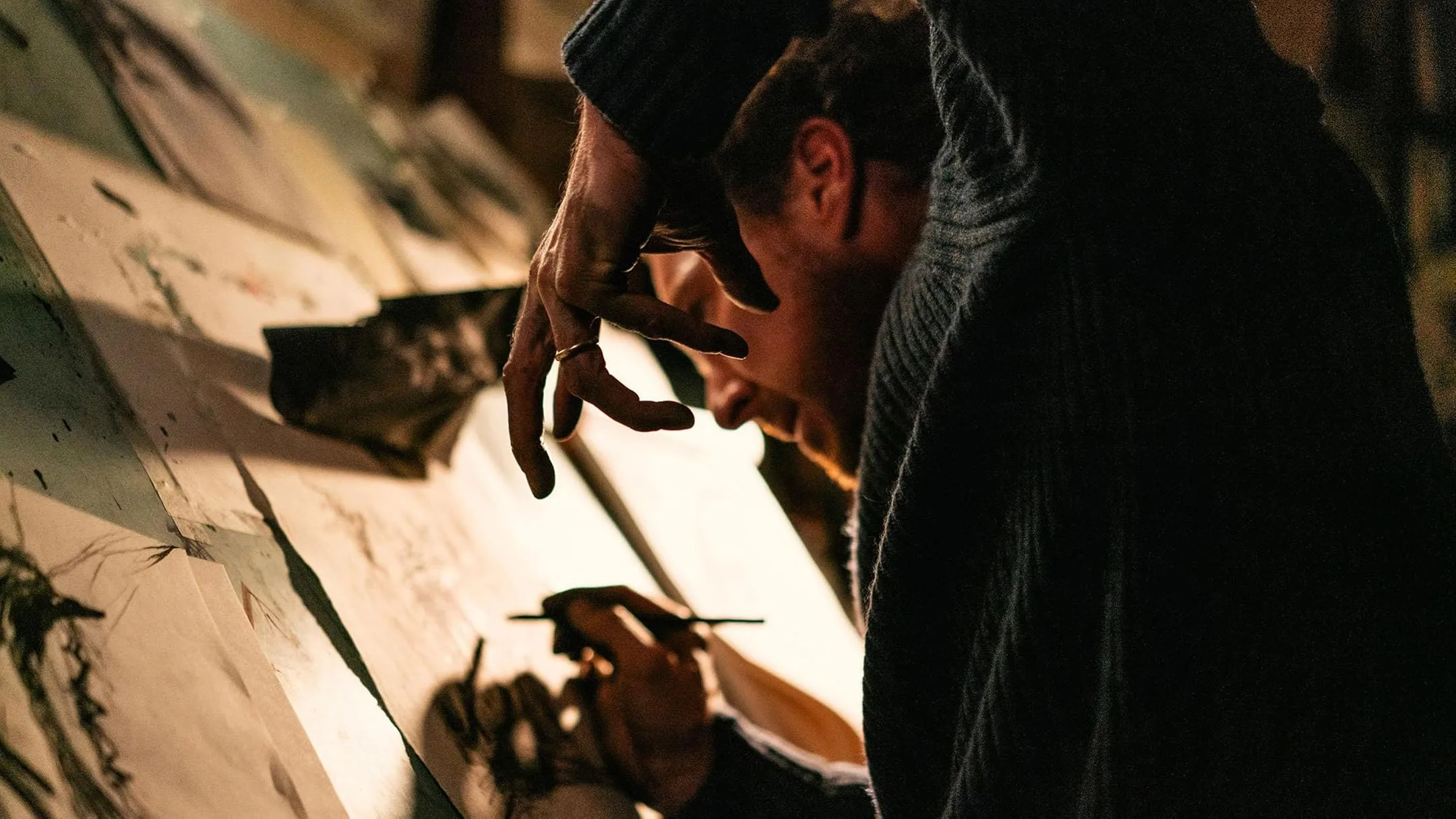
Central to this exploration is the figure of the crow, rendered with a stark, unsettling clarity. Its presence emerges not merely as an ominous specter but as a living emblem of inner turmoil and lingering guilt.
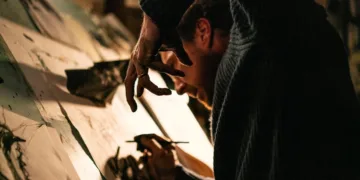
The crow hovers like a shadow over moments of domestic decay and the scattered remnants of the protagonist’s creative endeavors, each frame offering a glimpse into a world where art mirrors anguish. The decaying environment—a once-stable home now fractured by sorrow—and the raw, almost desperate sketches of the father speak to a silent dialogue between beauty and decay, a visual conversation about the cost of loss.
The narrative also lays bare the delicate nature of masculine vulnerability. Here, strength is not measured by stoic endurance but by the quiet admission of pain that disrupts the expected armor of manhood.
The father’s burden of responsibility intertwines with a reluctant openness, challenging long-held notions of resilience. His struggle questions how personal tragedy can rewrite the rules of emotional engagement, leaving him to reconcile the weight of societal expectations with the intimate, often disordered reality of his grief.
Chiaroscuro of Loss: The Aesthetic Disquiet of Mourning
Dylan Southern’s pivot from his documentary past finds new expression in a language of visual poetry. His approach transforms abstract sorrow into a tangible realm where every image functions as a verse in a silent elegy. The poetic source material is reimagined through a style that marries careful composition with an unguarded exposure of inner torment, crafting a cinematic canvas marked by a persistent, somber vibrato.
Lighting and framing orchestrate the emotional cadence here. A solitary shaft of light cuts through pervasive gloom, sketching textures of decay upon surfaces that suggest neglect and abandonment.
The London apartment, rendered with deliberate austerity, serves as a microcosm for a fractured soul—its narrow corridors and shadowed corners evoking the claustrophobic nature of grief. The camera lingers on small, telling details: a faded photograph on a mantel, the tremor of a curtain in a still breeze, each captured moment echoing the silent narrative of loss.
At the center of this visual composition stands the crow—a figure forged from shadow and metaphor. Its design exudes a raw, unsettling clarity, emerging as a specter that both haunts and, ambiguously, offers a passage through despair.
Sudden visual shocks scatter the deliberate calm—a flash, a distorted angle—each rupture in the scene unsettling the viewer with an abrupt reminder of mortality. These jolts, interwoven with languid, meditative sequences, mirror the capricious nature of mourning, where fleeting moments of stillness are too often fractured by the unexpected.
The auditory landscape reinforces this interplay of light and dark. A score laden with somber chords oscillates with intrusive, almost jarring bursts of sound that mark the narrative’s emotional peaks. In certain sequences, the music asserts itself with such clarity that it imposes a palpable weight upon the unfolding drama.
At other moments, a hushed soundscape permits the silence to speak volumes about the desolation at hand. Through this measured yet unpredictable auditory framework, the film crafts a cumulative atmosphere—a realm where each technical decision resonates with the stark, unvarnished essence of human grief.
Transmutation of Text into Image: The Written Soul of Grief
Max Porter’s original work unfolds as a layered lament, a composition of voices that the film arranges into a more disciplined form. The adaptation reorders its inherent musicality into segments that, while coherent in sequence, bear the mark of a literary spirit striving to persist.
The screenplay reshapes the polyphonic nature of the source into measured scenes, where the spontaneity of verse is tempered by the demands of a visual narrative. This reordering of emotion into structure presents a curious tension—one where the wild, unfettered expressions of sorrow must submit to the clarity of scripted time.
The text carries its own burden through dialogue that is sparse and deliberate. Each line seems carefully chosen to evoke a spectrum of feeling—from the palpable pain of loss to the fleeting hints of hope buried in quiet pauses. Phrases are set with a cadence that calls forth the intimacy of raw, unadorned confession, while moments of silence fill the spaces between words with their own eloquence.
At the heart of the film lies a challenge: presenting tangible actions alongside visions that mirror the ineffable depths of despair. Routine acts and mundane struggles are interlaced with images that serve as emblems of internal torment—a misplaced item, a soft shadow cast across a room—each contributing to a portrait of grief that is as exacting as it is mysterious. This interplay of literal happenings and symbolic signs crafts a narrative that is both firmly grounded and wistfully abstract.
Final Reflections and Lasting Impact
The film’s ambition unfolds as a mosaic of personal agony intertwined with eerie terrors, merging an intimate family saga with elements that unsettle the familiar. Its narrative unfurls in a manner that transforms private despair into a tangible presence—a dark, avian oracle that looms as both a mirror and a mediator of inner strife.
There exists a raw, unsettled space on screen where the contours of grief are rendered in uncompromising detail, provoking a quiet reckoning with the self amid the shadows of loss.
A visual language of shifting silhouettes and transient light paints each scene with an air of fragile melancholy. The setting—a confined London apartment marked by subtle decay—serves as a physical echo of a fractured inner world, where every overlooked detail seems to murmur the secrets of bygone days. The film leaves behind an imprint that lingers like a half-remembered dream, inviting contemplation on how suffering redefines the core of human identity.
Its voice, unyielding yet tender, poses questions that unsettle the viewer: What remains when familiar comforts crumble, leaving only the raw residue of absence? The work provokes thought about the endurance of loss and the quiet persistence of hope amid an existence shadowed by unremitting sorrow.
The Review
The Thing with Feathers
Transcribing loss into a visual elegy, the film offers a raw portrayal of a soul fractured by absence. A spectral crow and a decaying home mirror the deep wounds borne by a grieving father, capturing a struggle that is as enigmatic as it is visceral. The movie probes the contours of human suffering with an unflinching eye, its scenes both startling and tender. It leaves an imprint that forces one to confront sorrow’s weight in a striking, often disquieting manner.
PROS
- Exceptional performance by Benedict Cumberbatch
- Striking visual style and potent symbolism
- Thought-provoking exploration of grief and loss
- Atmospheric cinematography that amplifies the mood
CONS
- Uneven narrative pacing with sudden tonal shifts
- Secondary characters lack full development
- An overabundance of metaphor may obscure clarity