

























![Kingdom Hearts Collection [I-III] Review](https://gazettely.com/wp-content/uploads/2026/10/Kingdom-Hearts-Collection-I-III-1-360x180.webp "Kingdom Hearts Collection [I-III] Review: KHII Holds Steady as Newer Entries Fluctuate 37")



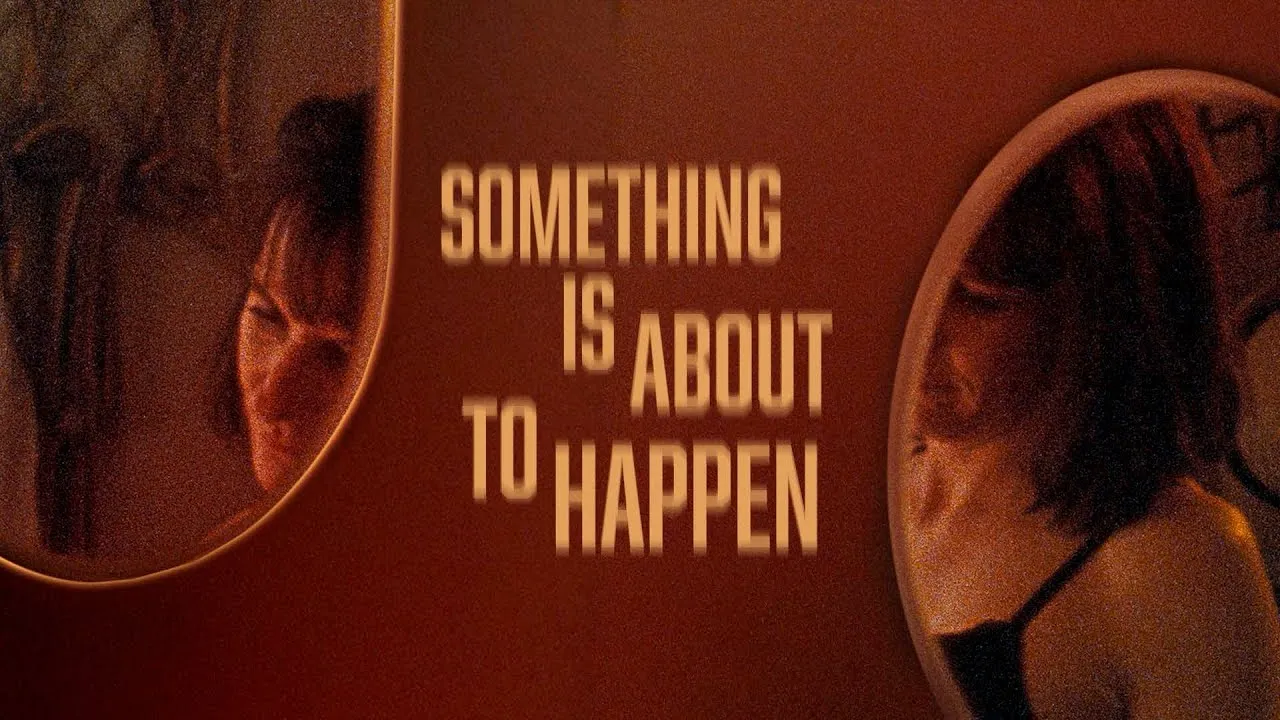

Something Is About to Happen finds Antonio Méndez Esparza returning to his native Spain after a career in U.S. indie cinema to bring Juan José Millás’s novel Que Nadie Duerma vividly to life. At its center is Lucía (Malena Alterio), a forty‑year‑old IT support worker whose world collapses when corporate fraud costs her job—and, with it, the stability she thought she’d earned. In a restless act of self‑reinvention, she trades cubicles for the driver’s seat of a Madrid taxi, traversing both the city’s neon‑lit boulevards and its quieter, neglected edges.
Alterio’s performance anchors this transformation, shifting from subdued caretaker to audacious night‑owl with just a glance or a tightened jaw. The film weaves dark comedy and social satire into episodic vignettes—passengers become character studies, each ride revealing a facet of urban alienation or defiant joy.
A sly revenge thriller pulse emerges as Lucía pursues the mysterious neighbor whose apartment resonates nightly with Pavarotti’s “Nessun dorma,” the aria lending both the Spanish title Que Nadie Duerma and a cross‑border operatic weight to the narrative.
Shot on grainy 16 mm stock, the visuals evoke both Madrid’s gritty periferia and the tradition of European art‑house realism, while Zeltia Montes’s layered score fuses local street sounds with classical flourishes. Having premiered at Valladolid’s Seminci 2023, the film now reaches global audiences on Film Movement+ and Amazon Prime, buoyed by Alterio’s award‑winning turn and Esparza’s transnational cinematic vision.
Narrative Cartography: Mapping Reinvention Through Madrid’s Streets
The film opens in a claustrophobic office cubicle where Lucía’s days dissolve into data tickets and hushed apologies to her ailing father. This everyday routine, steeped in familial duty and work‑life stasis, echoes the domestic dramas of Spanish social realism. When the dental‑clinic fraud surfaces and Lucía is unceremoniously laid off, the narrative jolts like the sudden unlock of a new game level—a shift from passive observer to active protagonist.
Her impulsive purchase of a taxi license functions as both plot engine and cultural signpost: Madrid’s winding cab routes become a stage for self‑rediscovery. The first night behind the wheel recalls Scorsese’s Taxi Driver, yet Esparza refracts that American template through the lens of Spanish peripheral neighborhoods, where graffiti‑scrawled façades and neon bars whisper local histories.
In gameplay terms, each fare is a discrete “mission,” from late‑night commuters seeking solace to a reclusive novelist whose monologues slip between reality and fantasy. These episodic vignettes layer Lucía’s worldview with incremental stakes, much like side‑quests in narrative‑driven games that reward character development over simple progression.
Midway, the ever‑present hum of Pavarotti’s “Nessun dorma” through thin apartment walls introduces the romantic obsession subplot. Lucía’s silent courtship—filled with one‑sided glances and taxi‑borne gestures—blurs diegetic sound and emotional subtext, akin to how interactive sound cues guide player empathy in immersive games. Yet when her “Eat, Pray, Love” fantasy collides with corporate and personal betrayals, the story pivots sharply into a revenge thriller: a moral boundary crossed, reminiscent of classical tragicomedy.
The climax marries operatic grandeur and street‑level grit as Lucía confronts her betrayers beneath pulsing city lights. In the aftermath, she stands at an unfamiliar crossroads—liberated, yet marked by her own transgressions. This open‑ended final frame lingers like a paused cutscene, inviting viewers to chart Lucía’s next move across the map of modern Madrid.
Performative Interfaces: Lucía’s Transformative Arc in Context
Malena Alterio’s Lucía begins life on screen as a study in controlled restraint: shoulders rounded beneath drab office attire, eyes cast downward, every movement measured by routine. These early scenes echo the passive protagonists of Spanish neorealism, where subtle shifts in posture carry as much weight as dialogue. Alterio’s mastery emerges in her use of silence—pauses that ring like unspoken commands in a stealth‑game cutscene, forcing viewers to inhabit Lucía’s inner code of ethics.

Across the two‑hour runtime, Lucía’s psyche reconfigures itself against Madrid’s nightscape. Her transformation from devoted daughter and dutiful employee into a risk‑seeking taxi driver mirrors the progression systems of role‑playing games: each fare unlocks a new facet of her personality, and with every shift, a hidden skill surfaces—whether it’s flirtatious boldness or a pointed moral reckoning. Yet this “leveling up” carries consequences; Alterio allows brief flickers of ferocity—an abrupt tightening of the jaw, a flash of defiant eye contact—that remind us these advancements come at a cost.
Lucía’s father, struggling with dementia, functions as both emotional anchor and thematic foil. His disintegrating memory parallels her self‑reinvention: while he loses grasp of the past, she is determined to rewrite her future. Their shared scenes ground the film’s speculative impulses in lived history, much as how narrative‑driven games tether fantastical plots to real‑world stakes.
The silent neighbor, never uttering a word yet central to Lucía’s obsession, operates like a non‑playable character whose questline remains tantalizingly out of reach. His muteness underscores how desire can be scripted in absence, and how projection becomes a form of interactive storytelling—Lucía’s fantasies fill the gaps he leaves.
Even minor passengers feel deliberately coded: a theatre producer riffing on metafiction, a novelist whose fragmented monologue refracts Lucía’s own narrative. On the opposite end stand the corporate fraudsters and opportunistic elites—antagonists whose actions vampirize ordinary lives for spectacle. Their presence raises the possibility that all of Lucía’s adventurous arcs may themselves be subject to a higher design, inviting us to question who really holds the controller.
Metaphorical Engines: Identity, Story, and Urban Mechanics
At its core, Something Is About to Happen invites us into a modular narrative where Lucía’s taxi becomes both a literal and figurative vehicle for identity crafting. Her mid‑life metamorphosis mirrors the “second act” trope found in Japanese RPGs like Persona, where characters redefine themselves through daily rituals and side‑quests. Here, each fare unlocks a fragment of Lucía’s psyche—what begins as a pragmatic job evolves into a self‑discovery system, coded in the language of urban exploration.

The film constantly toggles between layered performances and surface reality, evoking the metafictional play of Latin American magic‑realist literature. Lucía’s imagined scenarios—dreamlike cab rides scored by “Nessun dorma”—collide with the starkness of 16 mm visuals, recalling how interactive narratives like The Stanley Parable toy with player expectations. These moments of blurred boundary underscore how stories can be rewritten by the storyteller’s wishes.
A nightly mantra, “something is about to happen,” channels the urgency of a countdown timer in survival horror games, urging characters (and audiences) to seize fleeting opportunities. The opera’s triumphant refrain amplifies Lucía’s defiance against routine—and against the corporate greed she abandons. Yet Esparza’s satirical eye spares no one: the film’s portrait of Madrid’s workaday drudgery and media‑driven vampirism echoes investigative journalism exposés on financial scandals, weaving social critique into its mise‑en‑scène.
Against this backdrop, the juxtaposition of Lucía’s forward momentum and her father’s slipping memory becomes a poignant commentary on time as both game resource and narrative device. Finally, by recasting a middle‑aged woman as equal parts vulnerable and formidable, the film recodes gender and age dynamics—transforming Lucía into an unexpected heroine whose power lies in subverting expectations rather than conforming to them.
Who, then, truly controls the narrative code—Lucía herself, or the society that scripted her first act?
Mechanics of Style: Game-Like Cinematic Techniques
Méndez Esparza toggles between unvarnished neorealist textures and bursts of operatic spectacle, sustaining a tonal ambivalence that recalls hybrid game genres shifting from stealth to action. His direction treats each scene like a playable level: familiar office corridors feel claustrophobic, then open up into nocturnal cityscapes that invite exploration.

The 16 mm cinematography evokes European art‑house tradition and the grainy palettes of indie game pixel shaders. Tight framing inside Lucía’s cab contrasts with wide shots of Madrid’s periferia—an intentional clash, as if swapping between first‑person and third‑person perspectives to alter player (or viewer) agency. The color scheme underlines these shifts: drab office grays and muted street tones give way to Lucía’s kimono in deep red, echoing how a character skin unlock might signal a new ability or narrative arc.
Sound design functions like an adaptive music system. Ambient traffic, distant chatter and engine hum anchor diegetic reality; when Pavarotti’s “Nessun dorma” filters through thin walls, it transforms into a thematic leitmotif, akin to a score trigger that marks a boss encounter. Composer Zeltia Montes layers non‑diegetic strings over city noise much like dynamic audio engines that respond to player actions.
Editing alternates between lingering observational takes and sudden thriller‑style cuts, replicating tension spikes familiar in survival horror mechanics. Production design populates the taxi interior with worn meters, scattered coins and personal trinkets, creating a tactile interface. Lucía’s wardrobe evolves from muted office wear into bolder, theatrical pieces—visual feedback on her shifting confidence, as though her character sheet has been upgraded.
These strategies draw on cross‑cultural influences—from Italian neorealism to Japanese auteur cinema—highlighting how film and game design share common tools for guiding audience perception, even as they diverge across media formats.
Cartography of a City in Flux
Madrid itself feels coded into the film’s DNA, its periferia—Usera’s shantytowns, vacant lots edged by crumbling walls—playing like map zones in an open‑world title. These margins contrast with neon‑soaked nightlife districts, setting up a tension between urban anonymity and the close‑quarters warmth of Lucía’s cramped apartment block.

Taxi routes thread through downtown plazas and industrial outskirts under stark sodium lights, each shift revealing secret alleys and forgotten façades—much as exploratory game mechanics reward curiosity. The neighbor’s flat, where Pavarotti drifts through paper‑thin walls, becomes a threshold space for Lucía’s boldest emotional gambit.
Production design embeds narrative clues in every corner: the collapsed corporate office strewn with folder debris, her father’s home littered with photo albums and pill bottles, the taxi’s dashboard cluttered with coin stacks, rosary beads and personal talismans. Costume choices mirror Lucía’s internal code update, transforming her from muted office grays into vibrant kimonos and theatrical scarves.
By rooting story beats in tangible environments, the film asks whether a city’s hidden corners can rewrite a life’s programming—and what secrets lie just beyond the next turn.
Lasting Impressions and Cultural Echoes
Lucía’s journey carries her from a subdued IT caretaker into an unexpected anti‑heroine, her taxi transforming into both vessel and mirror across Madrid’s social tapestry. Esparza shifts effortlessly between earthy neorealist frames and bursts of operatic drama, while Alterio’s subtly charged performance propels the film’s core theme of self‑reinvention. By weaving everyday vignettes with sudden thriller‑style tension, the story captures Spain’s urban rhythms and invites parallels to interactive narratives where player choice defines identity.
The film’s aesthetic playbook—grainy 16 mm imagery, layered soundscapes that marry Pavarotti and street clamor, rhythmic editing reminiscent of level‑based pacing—reveals how cinema and game design share immersive tools. As Lucía navigates the collision of memory and desire, the narrative probes the constructed nature of modern lives, echoing global conversations on agency, belonging and mid‑life liberation.
Adapted from a Juan José Millás novel, it converses with international art‑house traditions and indie game conventions alike, challenging preconceived notions of form. This is a title for those drawn to character‑first drama, incisive wit, and works unafraid to blur genre lines—an open‑ended quest that haunts long after the credits fade.
Full Credits
Director: Antonio Méndez Esparza
Writers: Antonio Méndez Esparza, Clara Roquet (based on the novel by Juan José Millás)
Producers: Pedro Hernández Santos, Miguel Morales, Vlad Radulescu, José María Morales, Álvaro Portanet Hernández, Amadeo Hernández Bueno
Cast: Malena Alterio (Lucía), Aitana Sánchez-Gijón, Rodrigo Poisón, José Luis Torrijo, Manuel de Blas, Mariona Ribas, Mariano Llorente, Íñigo de la Iglesia, Federico Pérez Rey
Director of Photography (Cinematographer): Barbu Bălășoiu
Editor: Marta Velasco
Composer: Zeltia Montes
The Review
Something Is About to Happen
Something Is About to Happen delivers a bold, genre‑fluid exploration of identity and urban solitude, anchored by Malena Alterio’s quietly explosive performance and Esparza’s deft tonal shifts between neorealism and operatic flair. Its episodic structure and immersive sound design invite you into Madrid’s hidden corners while challenging expectations of mid‑life reinvention.
PROS
- Malena Alterio commands every scene with nuance
- Layered soundscape immerses you in Madrid’s nights
- Bold shifts between realism and thriller heighten suspense
- Taxi‑ride vignettes reveal the city’s hidden textures
- Themes of reinvention and agency feel fresh
CONS
- Episodic structure sometimes disrupts momentum
- Key coincidences can stretch believability
- Genre swings may feel abrupt
- Neighbor’s silence limits emotional connection







