
























Yuiga Danzuka’s Brand New Landscape unfolds as a quietly resonant family drama set against Tokyo’s ever-evolving skyline. Two siblings—Ren, now a measured young orchid courier, and Emi, on the brink of marriage—must confront Hajime, the father whose career-driven absence fractured their childhood. This feature debut, arriving three years after Danzuka’s 2022 short Far, Far Away, balances hushed observation with a sudden drift into the surreal, inviting viewers to reconsider what “home” means when city blocks shift overnight.
Through long takes and expansive 2:1 framing, the film situates private grief within public redevelopment—each gallery exhibit or redeveloped park echoing the siblings’ struggle to map guilt, abandonment and the faint promise of reunion. As Tokyo’s street-level bustle and quiet domestic interiors collide, Danzuka asks whether reconnection can emerge from spaces that once felt irreparably empty—an open question that encourages reflection on how personal histories intersect with the global forces reshaping our shared environments.
Weaving Time and Space: Narrative Architecture
Danzuka opens with a prologue that places his characters at a distance—both visually and emotionally. The long-shot in a highway rest stop food court recalls the observational style of Japanese slow cinema, where space itself carries subtext. Parents framed at opposite edges of the frame suggest an impasse born of competing duties: familial presence versus professional obligation.
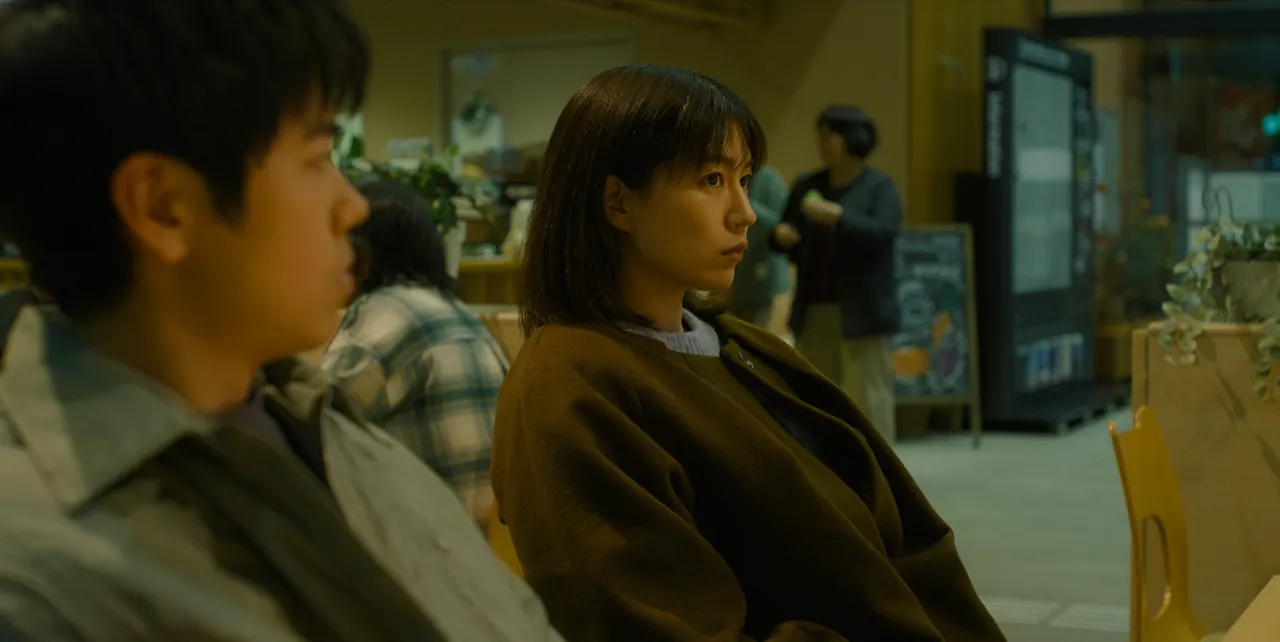
The vacation sequence tightens this tension. Emi’s absorbed reading and Ren’s playful isolation underscore generational perspectives on leisure: one rooted in introspection, the other in youthful spontaneity. Hajime’s nocturnal exit, captured in a smooth tracking shot, reframes parental obligation as a quiet betrayal. In a cultural context where collective harmony often outweighs individual ambition, this secret departure registers as a rupture that will echo for a decade.
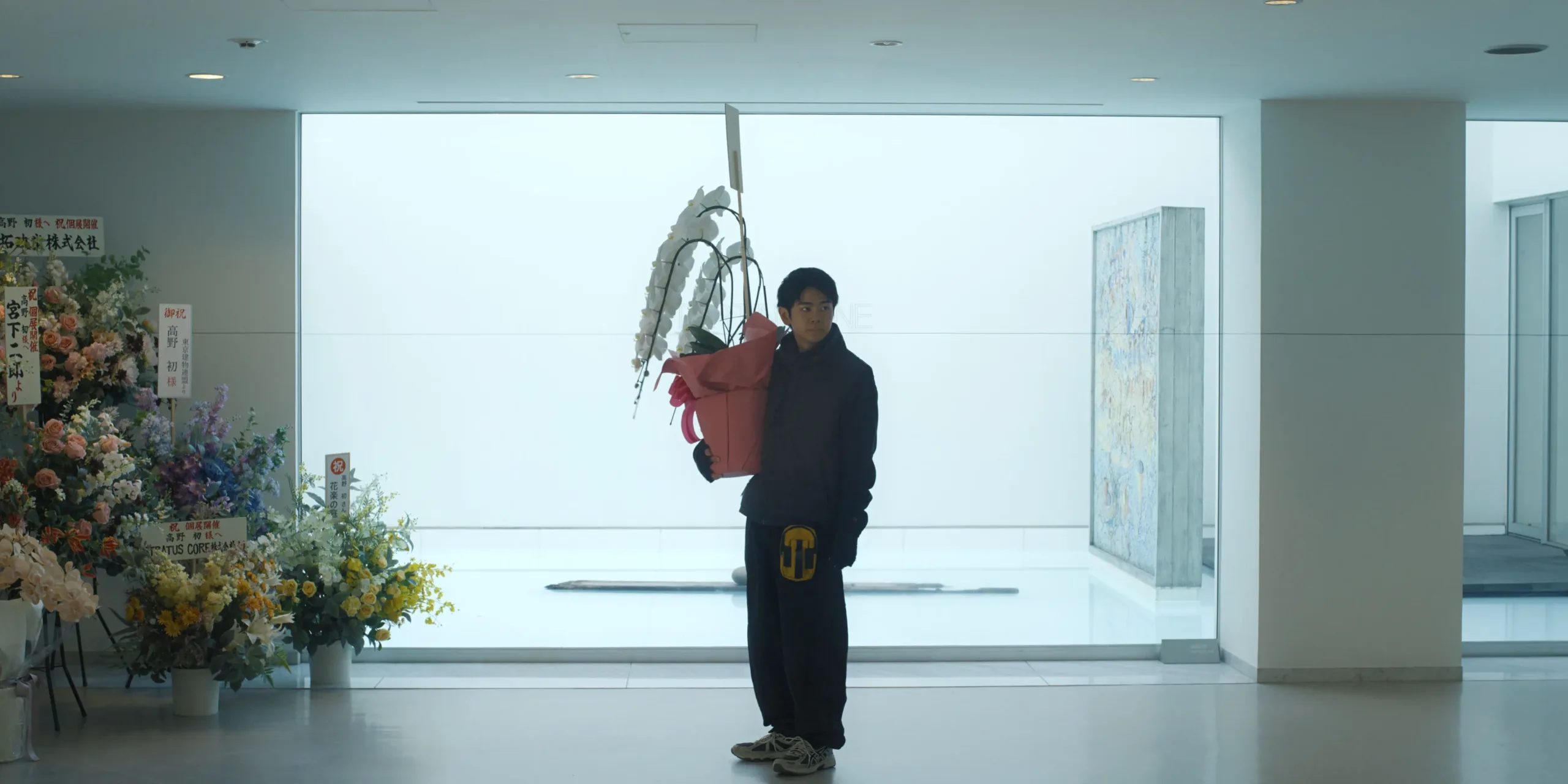
Ten years later, Danzuka shifts continuity with minimal fanfare. Ren’s orchid delivery business, with its ritual of naming and gifting, echoes rituals of reciprocal social bonds in East Asian traditions. Emi’s wedding announcement, delivered in the gallery’s echoing halls, turns a space of public acclaim into a site of private reckoning. The exhibition becomes a structural crossroads, where narrative momentum pivots on personal history rather than plot contrivance.
The third act surprises with a fantasy-tinged direct-camera interlude. Its contrast to earlier still frames and extended takes mimics the sudden mechanic shifts in narrative-driven games that challenge player expectations. This tonal detour reframes the film’s contemplative rhythm, asking whether emotional truths might be accessed through surreal interruption.
Pacing balances measured observation with moments of kinetic urgency. Extended shots give viewers time to inhabit characters’ internal geographies, while selective edits propel the story through time jumps without disorientation. By aligning visual storytelling techniques with cultural traditions of spatial awareness, Danzuka forges a narrative design that feels both rooted and restless—an invitation to ask how family and city might reshape one another.
Faces of Disconnection: Character Embodiments
Kenichi Endo’s Hajime embodies a cultural tension between duty and intimacy. His initial portrayal as a driven landscape architect draws on archetypes of Japanese work ethic, where professional success often demands personal sacrifice. As the narrative progresses, Endo shifts from stern focus to quiet bewilderment, his eyes conveying regret that transcends dialogue. This subtle transformation echoes performance styles in international slow-burn dramas—recalling, for example, Leos Carax’s restrained protagonists—yet remains rooted in a distinctly Japanese reserve.
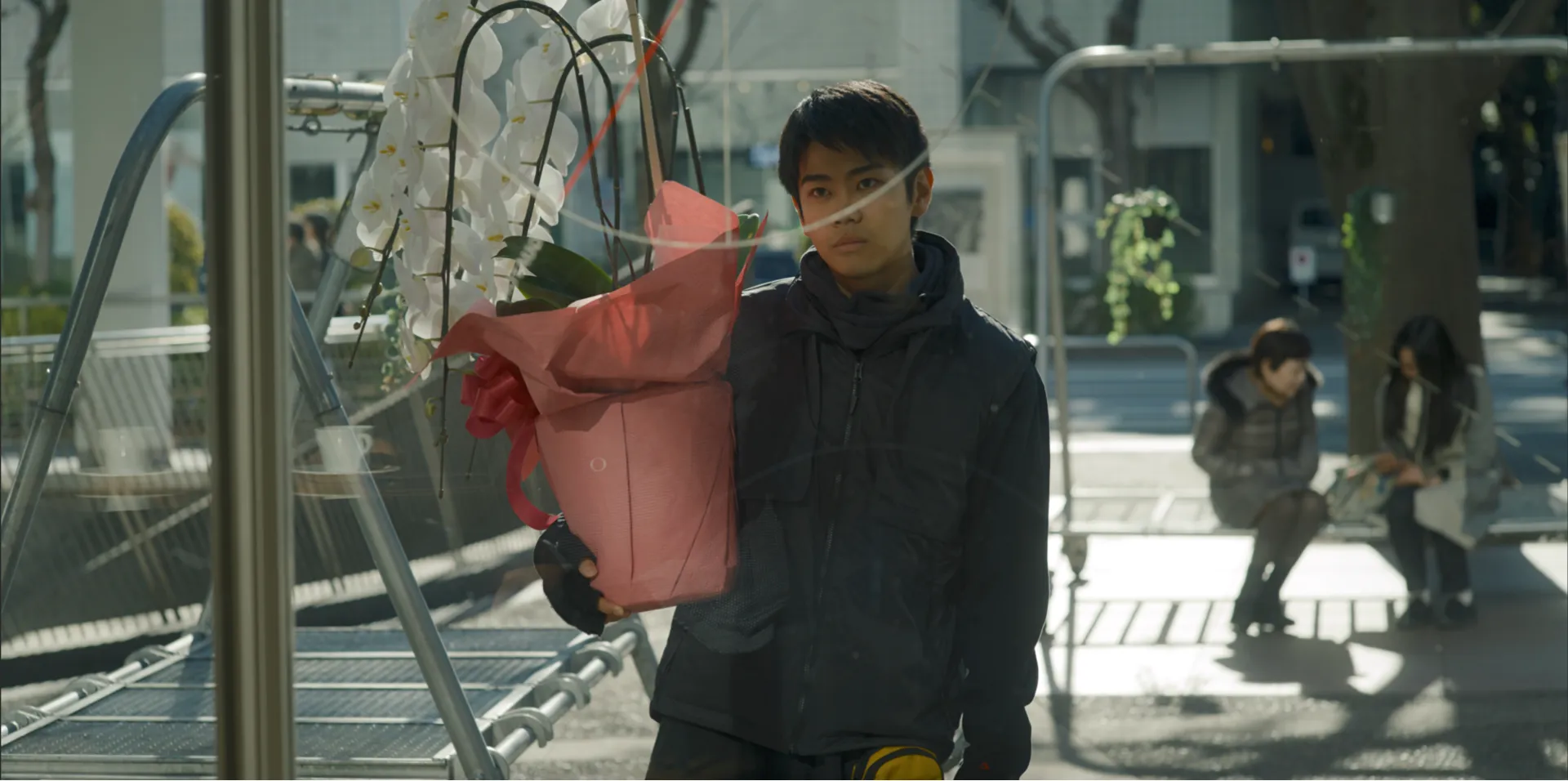
Arao Rintaro’s childlike Ren contrasts sharply with Kodai Kurosaki’s adult iteration. Young Ren’s spontaneous play under wide-framed skies evokes the improvisational energy of children in Miyazaki’s early scenes, reflecting freedom within urban confines. Kurosaki, by contrast, conjures a studied aloofness during the gallery reunion. His pauses and controlled gestures mirror the stillness of his father’s exhibition, reinforcing cross-generational echoes of unspoken emotion.
Ishida Riko’s teenage Emi brings an analytical poise to her scenes, highlighting how young women in contemporary Tokyo negotiate tradition and emerging independence. Mai Kiryu’s portrayal of adult Emi adds layers of guarded resolve when announcing her engagement—her clipped inflection and direct gaze subtly challenge patriarchal expectations. In these moments, Emi’s performance bridges Japanese melodrama’s emphasis on internal conflict and Western realism’s penchant for frank emotional disclosure.
Supporting figures enrich this tapestry. Gallery staff and background characters inhabit Danzuka’s world with their own silent narratives, suggesting lives beyond the protagonists. Misaki Hattori’s brief quitting-scene cameo stands out as a thematic echo: her whispered departure in a single prolonged take reminds viewers that chance intersections can reshape any storyline.
Through these layered performances, Brand New Landscape demonstrates how culturally specific acting traditions can resonate universally, inviting audiences to contemplate how identity and place converge in every gesture.
Visual Composition and Cinematography
Danzuka employs a 2:1 aspect ratio that alternates between broad city panoramas and tightly focused interiors. Wide frames of Tokyo streets evoke open-world game design, where players survey vast environments yet can zoom into intimate quest locations. In the prologue’s distant long shots, the family appears minuscule against a bustling food court—a visual reminder of individual stories lost in urban scale, similar to how players can feel anonymous in multiplayer maps.

Long takes anchor key emotional beats. The factory firing scene unfolds in a single unbroken zoom, letting tension build without editorial interference. As the supervisor storms off, lingering on the forlorn worker mirrors mechanics in narrative-driven games where a sudden camera shift signals a new interactive sequence. Sustained framing here forges viewer empathy, inviting reflection on workplace hierarchies across cultures.
Still-frame sequences punctuate the film’s rhythm. Family arguments and quiet corridor exchanges hold static, each frame resembling a paused dialogue box awaiting player input. Such pauses underscore emotional stakes, much like cutscenes that let gamers absorb story details without action prompts.
Muted urban tones dominate, punctuated by bursts of color: Ren’s orchids and the gallery’s spotlit installations. This contrast recalls how color palettes guide exploration in titles like Journey or Gris, where selective hues signal narrative significance. The exhibition lights gleam against Tokyo’s subdued backdrop, situating personal reconnection within communal spaces.
Camera movement shifts from fluid pans in the Takano home—tracing corridors as characters navigate memory—to abrupt handheld work in the fantasy-leaning third act. That jarring transition mirrors adaptive difficulty systems that recalibrate player perspective. Through these techniques, Brand New Landscape merges visual storytelling traditions with game-like immersion, prompting questions about how framing shapes emotional engagement across media.
Emotional Topography and Symbolic Resonance
Family in Brand New Landscape functions like Tokyo itself—constantly under construction, its emotional terrain shifting beneath characters’ feet. The siblings’ bond mirrors redevelopment projects that promise renewal yet uproot existing communities. Ren’s orchids, delivered with ritual precision, stand in contrast to the city’s sporadic demolition and reconstruction, suggesting that personal care can replant hope in neglected spaces.
Absence and presence intertwine through a simple phone buzz. In office scenes, Hajime’s constant alerts echo through silent chambers, each ring a reminder of obligations that keep him distant. When that same tone punctuates a gallery corridor, it measures time spent apart, turning technology into both barrier and beckon. These moments recall how mobile notifications in narrative games can interrupt immersion, forcing players—and characters—to reconcile virtual duties with lived experience.
Guilt and forgiveness play out in sibling counterpoints. Emi approaches her father with measured formality, framing her own life decisions as shielded by propriety. Ren’s stunned reaction at their first encounter conveys raw confusion, his body language evoking a game avatar caught between programmed responses and player impulses. Their divergent paths evoke cultural dialogues on duty: one shaped by communal expectation, the other by hesitant autonomy.
Public and private spheres collide around Miyashita Park’s redevelopment. A passing reference to displaced unhoused people casts urban progress as a contested mechanic, much like resource management in strategy games that balance growth against human cost. The gallery becomes an intimate arena where private reckonings unfold amid public acclaim, each exhibit panel echoing personal histories on view.
Then arrives the surreal detour—fantasy imagery interrupting the film’s measured pacing. This tonal pivot suggests that genuine reconnection might require rewiring familiar playbooks, inviting audiences to consider how imagination can rebuild bridges when linear narratives falter.
Urban Landscape as Emotional Mirror
Tokyo itself emerges as a silent participant, its shifting skyline tracking the Takanos’ fractured bonds. The film’s opening highway rest stop, captured in widescreen expanse, feels less like a waypoint and more like a crossroads where family tensions linger. Later, the seaside vacation house’s muted light contrasts with the city’s neon pulse, highlighting how memory can feel sheltered yet precarious.
Shibuya’s gallery space operates as a connective hub. Its glass walls reflect both art and audience, suggesting that private grief and public display can occupy the same plane. In these scenes, the camera mimics a player’s free-roaming viewpoint in open-world games, inviting exploration of emotional undercurrents hidden within architectural form.
Danzuka contrasts Ren’s orchid delivery routes—carefully mapped and repeated—with the harsh reality of park displacement debates. Orchids symbolize delicate roots in a metropolis that often uproots the vulnerable, echoing debates over Miyashita Park’s redevelopment. Such parallels recall strategy titles where city planning choices carry human consequences.
Architecture shapes mood: sterile office corridors amplify Hajime’s isolation, while the Takano home’s narrow corridors evoke intimate proximity fraught with unspoken distance. The film’s sound design—ambient traffic hum, distant construction clang—underscores these emotional gaps. Listeners become attuned to broken connections between spaces and souls, prompting reflection on how cities can mirror our own patterns of belonging—or absence.
Sonic Architectures and Temporal Cuts
Naturalistic sound design grounds each scene in lived experience. Quiet domestic interiors juxtapose with a constant city hum, echoing how Japanese ambient noise—train clatter, distant announcements—seeps into private moments. This layering mirrors how open-world games blend environmental audio to signal hidden narratives.
Phone rings recur as a motif, its tone slicing through silence much like a quest-notification sound in role-playing titles. In the gallery, hushed whispers glide through corridors, inviting viewers to lean in as a player might scan for subtle audio cues.
Editing employs slow dissolves during sibling flashbacks, allowing emotions to bleed between past and present. Then, the fantasy-sequence shifts with abrupt cuts, a jolting pivot akin to a game’s sudden mechanic change that reorients player attention.
Minimalist musical flourishes underscore poignant beats without overwhelming them. Prolonged silence punctuates moments of reckoning—a technique familiar to narrative designers who use quiet to heighten tension before a pivotal revelation. Through these choices, Danzuka crafts a sonic tapestry that resonates across cultural and media divides.
Full Credits
Director: Danzuka Yuiga
Cast: Mai Kiryū, Haruka Igawa, Kodai Kurosaki, Kenichi Endō
The Review
Brand New Landscape
Brand New Landscape delivers a quietly powerful family drama that uses Tokyo’s shifting cityscape as an emotional canvas. Danzuka’s measured pacing, 2:1 compositions and empathetic performances by Endo, Kurosaki and Kiryu anchor the story in lived authenticity, even as its surreal third act detour surprises. This confident debut reveals a director attuned to narrative and visual nuance, inviting reflection on absence and the possibility of reconnection.
PROS
- Empathetic performances that capture subtle emotional shifts
- Striking 2:1 framing reflecting both alienation and intimacy
- Nuanced interplay between urban setting and family dynamics
- Quiet pacing that allows key moments to linger
- Surreal third-act turn that recontextualizes earlier scenes
CONS
- Fantasy sequence feels tonally abrupt
- Certain narrative threads remain underexplored
- Slow pacing may challenge some viewers
- Supporting characters receive limited development
- Sparse musical accompaniment occasionally underwhelms