




























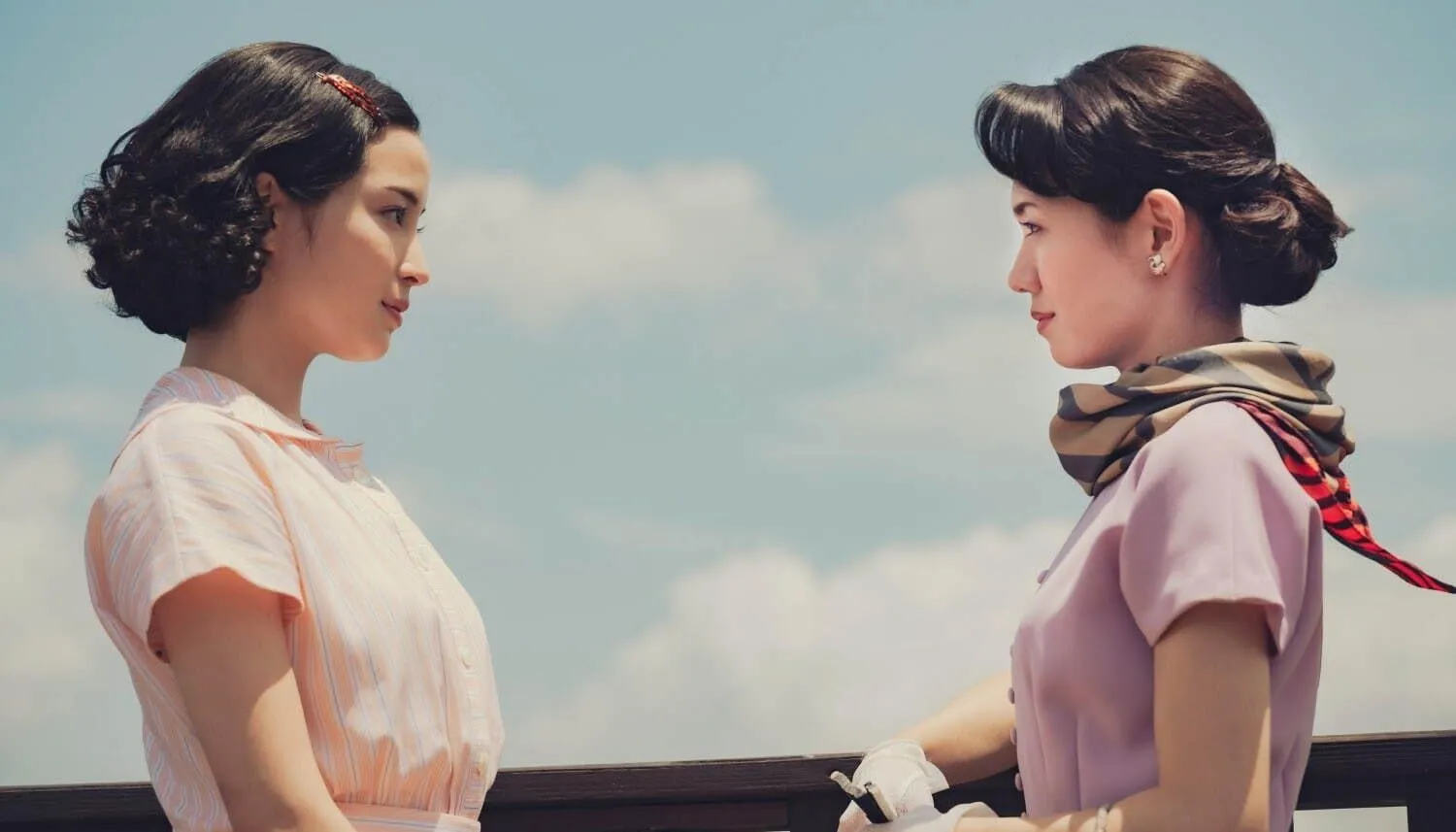

A Pale View of Hills unfolds in two distinct eras: post-war Nagasaki in the early 1950s and rural England in 1982. At its center is Etsuko, whose recollections of life amid the city’s slow recovery collide with her quieter existence as a British expatriate. The film’s screenplay, adapted by director Kei Ishikawa from Kazuo Ishiguro’s debut novel, orchestrates these timelines with precision, inviting viewers to piece together truths that may shift beneath their feet.
Rather than presenting memory as a straightforward ledger of facts, Ishikawa sculpts it into a mosaic of vivid flashes and deliberate silences. Sepia-toned flashbacks register like half-remembered dreams—trees draped in mist, the silhouettes of schoolmasters, the wary glances of a burn-scarred child—while the muted greens of Etsuko’s English garden feel almost surreal in contrast. This interplay asks whether recollection serves self-preservation or self-delusion.
Questions of identity and inherited guilt hover throughout. As Etsuko’s daughter Niki probes the past, each detail becomes a clue and a possible red herring. How reliable is narrative when trauma is woven into its very fabric? Through its elegant structure, A Pale View of Hills negotiates the space between what we choose to remember and what we cannot escape.
Weaving Time: Memory as Mosaic
A Pale View of Hills threads its narratives across two eras, inviting viewers to inhabit both post-war Nagasaki and 1980s rural England. Scenes from the 1950s arrive in bursts—Etsuko’s young self wandering pine-lined lanes, the scarred daughter Mariko crouching in a garden—while present-day segments show her quietly tending to an overgrown backyard. These shifts don’t arrive in tidy order; instead, they ripple in and out, asking us to question which version of events holds true.
Unreliable memory takes center stage. Etsuko’s recollections shimmer like a jazz riff—familiar yet unpredictable—where each repeat may bend into a new variation. Much as Bill Evans transforms a standard melody through unexpected chord changes, Ishikawa reshapes familiar scenes with subtle edits and soundtrack flourishes that shift emotional tone. In one early flashback, a lullaby plays beneath distant city sirens; later, that same melody appears reversed, quietly undermining our trust.
The shadow of Nagasaki’s bombing lingers as inherited trauma. Burn scars on Mariko’s arms become visual signifiers of collective pain, while Etsuko’s reticence about her own exposure hints at survivor’s guilt passed through generations. When she reinvents herself in Britain—trading kimonos for cardigans, soybean soup for roast dinners—identity becomes fluid, highlighting the compromises demanded by displacement.
Recurring symbols anchor this fluidity. Forest paths suggest choices both made and deferred. Domestic interiors—tatami mats beside floral wallpaper—collapse geographical distance. And the contrast between sepia flashbacks and the muted greens of England underscores memory’s shifting palette, stretching it into something almost mythical.
Faces of Memory: Performance Amid Shifting Realities
Yoh Yoshida carries Etsuko’s adult restraint with a quiet intensity that anchors the film’s anchor point. Her measured delivery—soft-spoken yet charged—suggests a lifetime of untold stories lurking beneath the surface. In contrast, Suzu Hirose’s youthful Etsuko flashes between innocence and simmering tension. I’m reminded of Hirose’s turn in Our Little Sister, where she balanced warmth with hidden unease; here, she threads that same duality into a character haunted by grief and obligation.

Camilla Aiko’s Niki offers a different kind of energy. She blends curiosity with filial loyalty, emerging as the audience’s stand-in detective. In moments of gentle confrontation—her eyes searching for cracks in her mother’s narrative—Aiko bends a simple question into a catalyst for revelation. Her performance reflects a generation caught between honoring heritage and forging new identities, a theme I’ve seen play out in films like The Farewell.
Fumi Nikaido’s Sachiko and the young actress playing Mariko form a powerful mirror to Etsuko’s fractured psyche. Sachiko’s flamboyant outfits and uninhibited laughter contrast sharply with Mariko’s withdrawn posture and burn scars. Nikaido navigates that gulf with magnetic confidence, while the child actor’s gaze holds the weight of social exile. Their interactions feel raw—as if Ishikawa deliberately cast them to evoke the dynamic between memory’s allure and its darker undercurrents.
Kouhei Matsushita’s Jiro embodies post-war masculinity: diligent, distant and constrained by expectation. Opposite him, Tomokazu Miura’s retired schoolmaster brings a gentler authority, his presence a reminder of tradition’s pressure. Together, these supporting roles become emotional pressure points that shape Etsuko’s decisions.
On-screen chemistry weaves these performances into a cohesive tapestry. Whether it’s a shared silence in Etsuko’s English kitchen or a tense exchange beneath Nagasaki’s crumbling walls, the cast’s interplay dramatizes memory itself—fleeting, vivid and never entirely trustworthy.
Through the Lens: Memory in Hue and Frame
A Pale View of Hills leans on its visual palette to guide our emotional response. The sepia-tinged flashbacks of post-war Nagasaki feel like a half-remembered photograph—warm highlights around peeling paint and shattered rooftops, as though sunlight is filtering through time itself. By contrast, the muted greens and overcast skies of 1980s England impart a sense of quiet displacement, as if Etsuko’s second life exists just beyond reach. I’m reminded of Michael Snow’s experimental film La Région Centrale, where shifts in tone provoke both fascination and disorientation.

Cinematographer Piotr Niemyjski favors long, unhurried takes. A single shot might follow Etsuko across a mossy garden path or linger on the burn scars of Mariko’s arms, letting the viewer absorb each detail without hurry. These composed frames recall the work of Yasujiro Ozu—low camera angles, careful balance between figures and negative space—while also nodding to Mikio Naruse’s knack for capturing domestic unease. When the camera holds on a tatami mat beside a floral armchair, it feels charged with untold stories.
Production design sharpens these contrasts. In Nagasaki, wooden beams arc overhead, the walls punctuated by rice-paper screens that tremble in passing breezes. In Britain, the hearth’s brickwork and woolen curtains suggest security, yet the shadows that pool in corners hint at secrets buried beneath. Each environment becomes a mirror to Etsuko’s fractured recollections, as if the spaces themselves carry memories.
Visual metaphors abound: mist-shrouded forest trails evoke the murkiness of recollection, while bright lanterns in a rain-soaked street symbolize fleeting moments of clarity. Together, these elements transform memory into a living, breathing presence, one that guides us through uncharted emotional terrain.
Between Fact and Fiction: Ishikawa’s Adaptation Craft
Kei Ishikawa’s screenplay reconfigures Ishiguro’s restrained novel into a film that foregrounds social undercurrents. Where the book whispers about post-war gender roles, the movie brings them into sharper relief—women’s agency surfaces through Etsuko’s private reflections and Sachiko’s bold aspirations. This choice lends the narrative a pulse attuned to today’s conversations about cultural displacement.
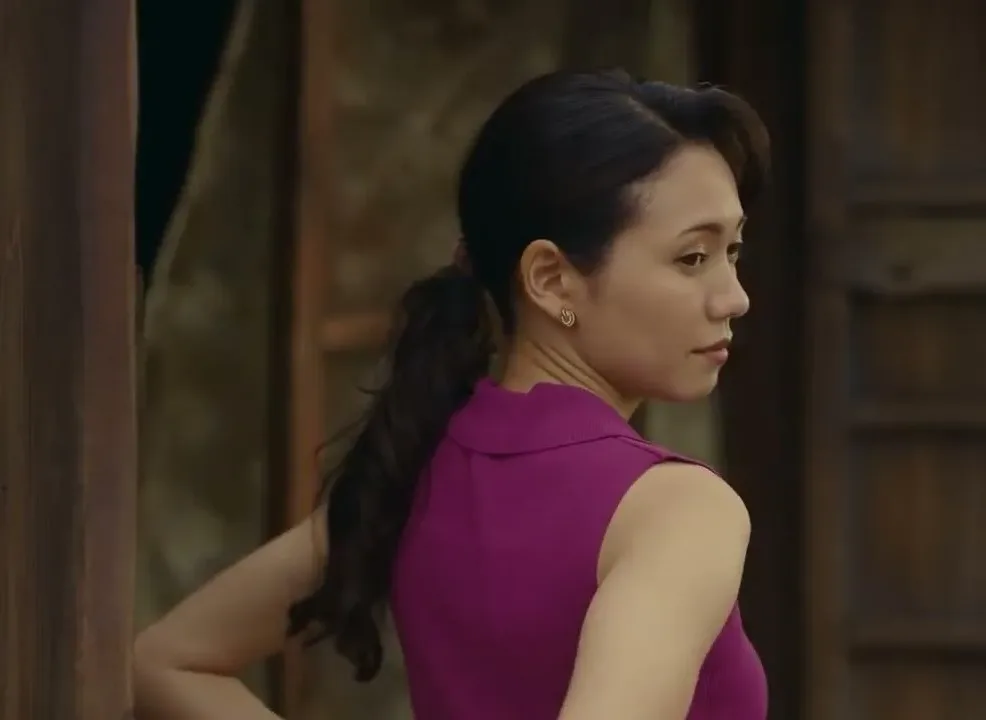
Silences become rhythmic beats. Scenes stretch into pregnant pauses—a door left ajar, footsteps echoing down a hallway—so that withheld dialogue carries weight equal to spoken words. It reminds me of Béla Tarr’s emphasis on time’s texture: moments unfold with deliberate slowness, encouraging viewers to listen for meaning in stillness.
Ishiguro’s role as executive producer ensured fidelity to the novel’s spirit, even as he embraced deviations. A new sequence in Nagasaki’s rice fields, absent from the source text, amplifies Etsuko’s sense of isolation and betrayal. By contrast, England’s domestic scenes gain subtle humor—a creaking floorboard during a tense tea ritual—that wasn’t in the original pages but underscores adaptation as an act of creative interpretation.
The film’s central twist arrives with careful calibration. Early clues—a photograph half-hidden behind a bookshelf, cryptic references to a “lost sister”—are planted unobtrusively, then retrieved in flashback. This structure evokes the pleasure of puzzle films like Nolan’s Memento, yet it feels rooted in human vulnerability rather than intellectual trickery.
Period detail feels lived-in without overshadowing emotional truth. Props—from battered radios in Nagasaki to lace curtains in Britain—anchor each era. Yet the stakes remain universal: a quest for belonging, the burden of memory. Ishikawa’s direction binds these elements into a form that honors its literary origins while staking its own cinematic claim.
Echoes Between Worlds: Soundscapes of Memory
A Pale View of Hills uses sound not as background decoration but as an active storyteller. Ambient noises—rustling leaves in Nagasaki’s forests, distant church bells in the English countryside—become emotional signposts. I’m reminded of how Terrence Malick’s films use wind through trees to suggest unseen forces; here, each rustle or creak points toward what Etsuko carries inside.

Musical motifs arrive with quiet restraint. Composer [Name] weaves a simple pentatonic theme on koto strings during flashbacks, nodding to traditional Japanese melody without overwhelming the scene. In England, that motif reappears on a lone piano, slightly slowed and pitched lower, as though memory has aged along with the protagonist. This subtle transformation mirrors the film’s narrative drift, letting the score underscore emotional shifts without resorting to sweeping orchestral swells.
Silence emerges as its own instrument. During key flashback moments—when Etsuko first meets Sachiko, or when she learns of her father-in-law’s visit—the soundtrack falls away entirely. Those gaps feel charged, allowing unspoken tension to settle in the listener’s chest. It recalls Sofia Coppola’s use of quiet in Lost in Translation, where emptiness conveys what words cannot.
Audio contrasts deepen the film’s duality. Nagasaki’s marketplace scenes buzz with chatter, vendors’ calls and clanging metal echoing amid rebuilding streets. In Britain, the only sounds might be the ticking of a grandfather clock or the soft patter of rain on slate roofs. That shift highlights how displacement amplifies solitude—and how memory can feel both crowded and empty.
At moments, stray radio broadcasts—old jazz tunes drifting through Etsuko’s London sitting room—bridge eras, connecting her past tastes to present routines. As someone who cherishes film scores from In the Mood for Love to Moonlight, I appreciate this layering: sound becomes a thread stitching together fractured recollections, reminding us that memory resonates long after the final image fades.
Echoes That Remain: Memory’s Double Edge
A Pale View of Hills treats memory as both refuge and cage. In flashbacks, Etsuko’s recollections offer moments of warmth—her laughter beneath lantern-lit trees, the tentative bond with Sachiko—yet those same memories harbor fractures that cut deep. When the film’s twist unfurls, it recontextualizes each scene, transforming comfort into unease. That jolt invites us to reconsider every detail: the way a lingering shot on Mariko’s burn marks once felt tender, now tinged with unsettling significance.
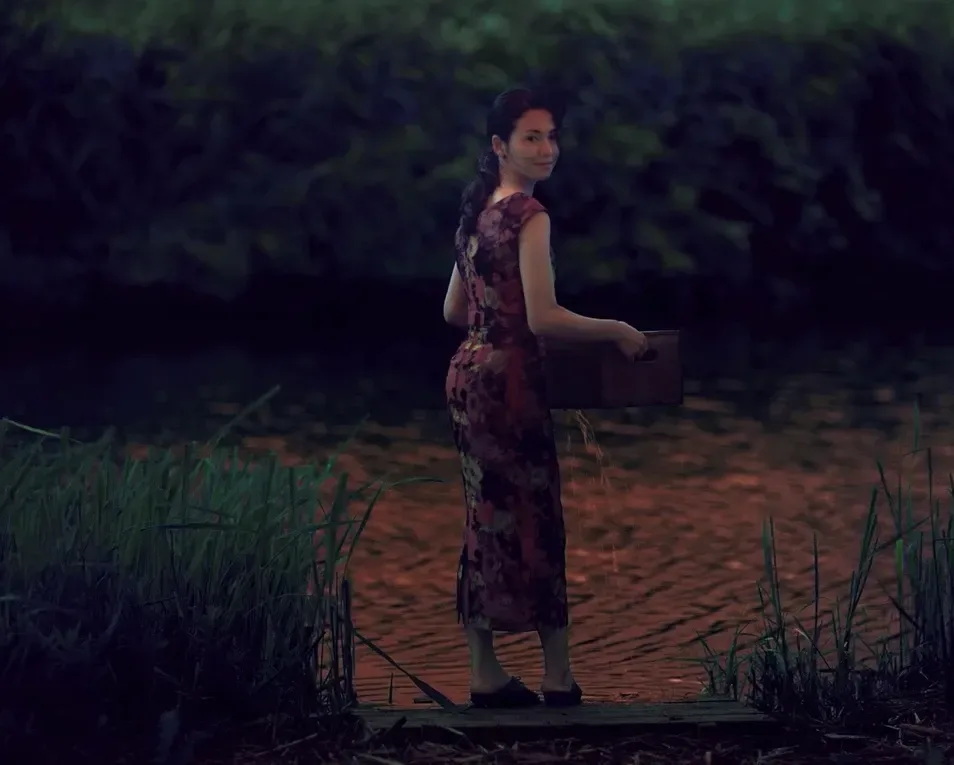
This emotional pivot isn’t mere trickery. It underscores how personal narratives evolve in response to guilt and longing. Etsuko’s move to Britain becomes more than geographical; it stands for a reinvention forged in the crucible of collective trauma. In her measured silences and careful smiles, we sense a woman striving to reconcile who she was with who she must become. That tension echoes current conversations about migration and identity—how we carry the past across borders, reshaping traditions to survive.
Several images linger: a lone cherry blossom petal drifting across an English lawn, the rise and fall of a rain-dampened railway bridge, the hush after a distant fireworks display. Each visual note feels like a memory that refuses to fade, reminding us how cinema can transform private pain into shared reflection. It’s a quality I admired in Wong Kar-wai’s In the Mood for Love, where every frame held unspoken yearning; here, every frame holds unspoken loss.
Within today’s world cinema, Ishikawa’s film stakes its claim by fusing literary subtlety with cinematic rigour. It sidesteps spectacle, favoring intimate revelations that ripple outward. That approach situates A Pale View of Hills alongside recent works exploring fragmented narratives—films like Apichatpong Weerasethakul’s Cemetery of Splendour—where time itself becomes a character.
By the final frame, memory feels less like a record and more like a living entity, one that comforts and unsettles in equal measure. And in its wake, we carry the film’s questions forward, aware that some stories cannot be neatly contained.
Full Credits
Director: Kei Ishikawa
Writers: Kei Ishikawa (screenplay), Kazuo Ishiguro (novel)
Producers: Hiroyuki Ishiguro, Miyuki Fukuma, Stephen Woolley, Elizabeth Karlsen, Mariusz Włodarski, Marta Gmosińska
Executive Producers: Kazuo Ishiguro, Naomi Despres, Michèle Marshall, Tatsumi Yoda, Hiroshi Hayakawa
Cast: Suzu Hirose, Fumi Nikaidō, Yō Yoshida, Camilla Aiko, Kouhei Matsushita, Tomokazu Miura
Director of Photography (Cinematographer): Piotr Niemyjski
Editor: Kei Ishikawa
Composer: Paweł Mykietyn
A Pale View of Hills premiered in the Un Certain Regard section at the 78th Cannes Film Festival on May 15, 2025, and is scheduled for theatrical release in Japan on September 5, 2025.
The Review
A Pale View of Hills
A Pale View of Hills crafts an intimate exploration of memory’s fragility through artful storytelling and immersive soundscapes, its twist reframing every moment and inviting reflection on identity and trauma. While its measured pacing may not suit every viewer, its nuanced performances and technical finesse linger well after the final frame.
PROS
- Evocative dual timelines that deepen thematic mystery
- Nuanced lead performances conveying unspoken tension
- Lush cinematography that reinforces memory’s haze
- Subtle sound design amplifying atmosphere
- Thoughtful adaptation choices that honor the novel’s spirit
CONS
- Deliberate pacing may test patience
- Final twist feels undercut by ambiguity
- Emotional distance can limit audience empathy