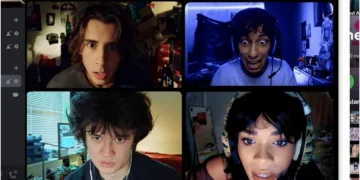
























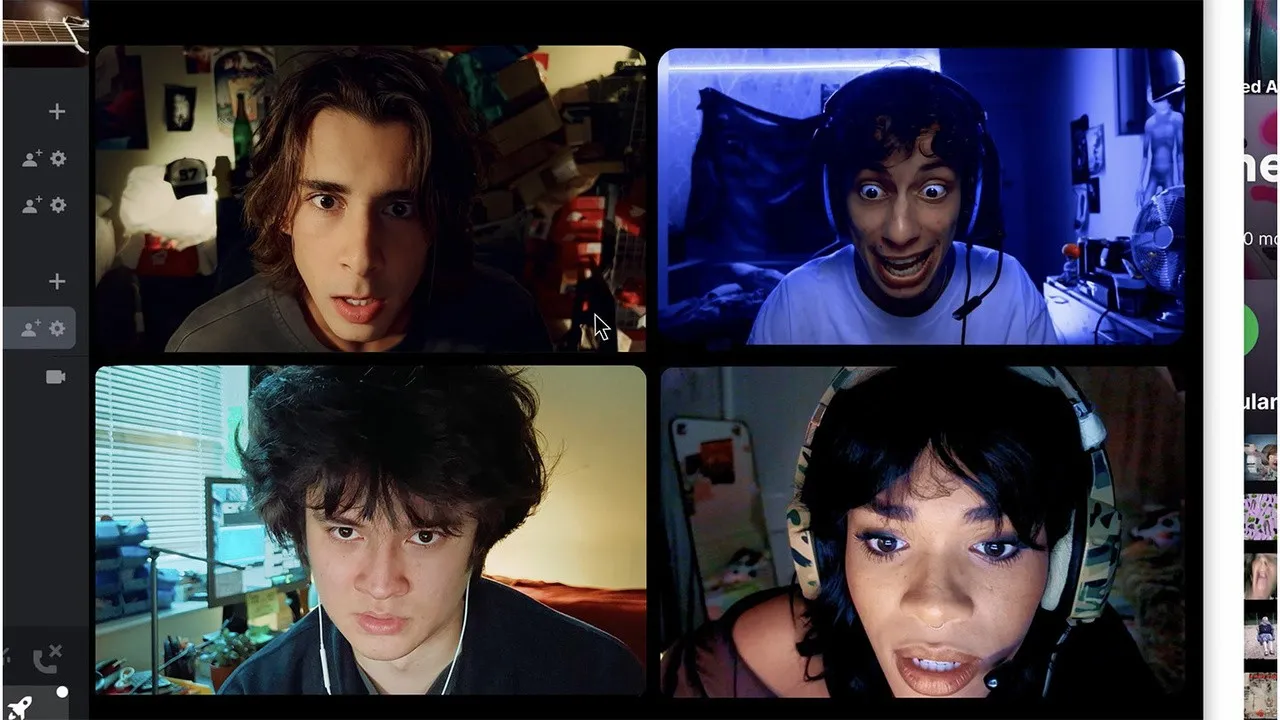

Ronan Corrigan’s debut takes place entirely on desktops and smartphones, positioning the heist within a cascade of open windows rather than shadowy vaults. The setup feels lived‑in: Kyle, Alex, Sid and Petey spend more hours on Discord than in classrooms, forging a bond through shared code and late‑night pranks. When they set their sights on Don Heard—tech billionaire and outspoken crypto evangelist—their collective skills shift from playful scams to a full‑blown digital raid.
Here, the screen isn’t a gimmick. It serves as both stage and character, with every notification ping and webcam frame reinforcing the sense that these teens truly inhabit online spaces. Kyle’s main monitor hosts simultaneous FaceTime calls, security‑camera feeds and chat logs, all arranged with razor‑sharp editing that guides us through the chaos. Alex enters with fresh energy, her presence punctuated by quick‑cut reaction shots; Sid’s explosive humor grounds the group; Petey’s cautious research balances the trio’s bravado.
The core conflict springs from youthful defiance colliding with real‑world risks. Each keystroke propels them toward stolen memecoin, but also toward strained loyalties and unexpected danger. In this set‑up, teenage rebellion acquires urgent stakes—every click might yield a jackpot or expose them to irreversible consequences.
Screenbound Storytelling: Technique and Design
Corrigan situates us in a digital environment, tracking the quartet’s every move across monitors and smartphones. This screens‑only choice paints a portrait of Gen Z’s native landscape, where friendships, schemes and secrets unfurl through floating windows. By holding tight to Kyle’s desktop, the film argues these teens breathe in app notifications more deeply than any real‑world scene.
The interface itself drives the drama. FaceTime chats collapse into movable widgets beside security‑camera loops. Discord video calls flash next to terminal windows. Rapid montages stitch together live streams, code‑cracking segments and dozens of open tabs. These window‑within‑window compositions preserve narrative momentum while ensuring each reveal lands with visual clarity. A scrolling ticker of chat alerts can flood the frame in seconds, heightening suspense before the next command line appears.
Authenticity in interface design deepens immersion. Click‑through menus animate with crisp responsiveness. Hacking sequences present plausible syntax, steering clear of Hollywood‑style gibberish. Reaction GIFs and pop‑culture memes break tension in a manner that mirrors real conversation. Yet when silence descends, punctuated only by notification chimes, each keystroke feels decisive.
Also Read





Visual cues reinforce story beats. Color‑coded notifications glow red as tension spikes, while grayscale overlays on security feeds convey clinical detachment. Subtle background details—an open family‑photo folder behind Petey’s chat window, for instance—hint at personal stakes without ever leaving the screen.
Sound design intertwines with visual cues. Diegetic effects—keyboard taps, alert pings—anchor us in the screen’s microcosm. A driving synth score rides beneath these moments, amplifying stakes without drowning out subtle audio clues. Corrigan balances in‑app and external soundscapes to craft a rhythm that feels relentless yet never disorients.
Blueprint of the Digital Heist
The film eases us in with prank‑reversal scams that serve as both training ground and moral warm‑up. Early sequences show Kyle and his friends baiting email phishers, turning each skirmish into a micro‑lesson in group coordination and digital sleight of hand. These moments build camaraderie while establishing an ethical gray area: their targets may deserve it, but the thrill feels dangerously close to self‑indulgence.
The inciting incident arrives when whispers of Don Heard’s memecoin hoard surface online. A late‑night chat sparks the decision: why pull petty pranks when a billionaire’s fortune lies within public reach? The narrative pivots sharply here, trading small‑scale victories for high‑stakes ambition.
In the planning phase, Corrigan lays out each step with surgical precision. The teens construct a fake modeling agency, enlist Lindsey Heard’s influence, execute a sim‑swap on Don’s number and harvest his credentials. Each tactic unfolds through layered windows, inviting us to trace logic alongside the characters. This methodical approach underscores both their ingenuity and the precariousness of their scheme—one misclick could collapse the entire operation.
The first successful caper arrives as a rush of adrenaline. Quick cuts capture expanding chat bubbles, bank‑transfer confirmations and triumphant reactions. Yet the pacing remains taut—joy gives way to apprehension almost instantly, as the group confronts the consequences of crossing an unregulated frontier.
At the midpoint, Lindsey proposes a grander target: a $20 million venture that promises far greater reward but demands tighter coordination. Stakes escalate, shifting the story from a close‑knit team exercise to a logistical marathon.
The climax interweaves real‑world break‑in footage and desktop streams. Security‑camera streams flicker beside live coding windows, conveying urgency without disorienting viewers. Every keystroke echoes in silent tension.
Resolution beats play out across dual planes: fallout on social media, strained friendships and looming legal threats. By the final frame, digital triumph feels hollow, leaving an aftertaste of uncertainty that lingers long after screens power down.
Faces Behind the Screens: Character Dynamics and Performances
From the first frame, Farmer’s Kyle anchors the action with witch‑craft precision. He moves through code and chat with casual expertise, yet Georgie Farmer hints at a cavern of unspoken loneliness behind each confident keystroke. Moments when Kyle pauses, staring at a paused video call or an unopened text, reveal the emotional toll of a life lived online.
Yasmin Finney’s Alex brings a spark of curiosity to the quartet. Her bright‑eyed charm feels genuine, especially in scenes where she masks family pressures with quick humor. Finney layers vulnerability beneath every GIF reaction, reminding us that the bravura hacking stunts stem from a need for connection as much as rebellion.
Roman Hayeck‑Green’s Sid crackles with energy. His rapid‑fire quips land like jabs in a boxing ring, yet Clark detects cracks in Sid’s bravado during late‑night check‑ins with an absent parent. These quieter moments ground his performance, transforming a comic foil into someone desperate for approval beyond online applause.
James Vinh Scholz portrays Petey as the group’s cautious strategist. His performance balances youthful optimism with college‑application worries, visible in his careful syntax during code‑breaks and the jitter in his voice when transfers go through. Petey’s debate with Kyle over ethical lines serves as much-needed friction, underscoring how stakes escalate so quickly.
Charlie Creed‑Miles turns Don Heard into a polished caricature of tech‑elite swagger. His voice drips charm in one moment, menace in the next, making it easy to see why the teens fixate on him. Yet Creed‑Miles slips in subtle tick of self‑doubt when Don faces public scrutiny—an admission that even oligarchs can feel vulnerable.
Jessica Reynolds as Lindsey Heard threads the needle between insider entitlement and genuine grievance. Reynolds’ body language—leaning into Facetime windows with quiet insistence—captures a daughter caught between vengeance and an uneasy alliance.
Together, these performances create a kinetic chemistry. Screen‑to‑screen banter crackles like live wire, and loyalties shift as pressure mounts. When trust frays, each actor conveys that tension through micro‑expressions in tiny webcam thumbnails, proving that even pixels can reveal the human heart.
Shades of Digital Justice
LifeHack treats hacking as a form of grassroots justice, casting Kyle and his friends as modern-day Robin Hoods targeting scammers and corrupt tech barons alike. Their initial exploits feel cathartic—exposing fraudsters through witty counterattacks—but the film never lets moral triumph feel unearned. Each successful sting raises the question: at what point does righteous hacking become reckless criminality?
These teens crave agency in a world defined by distant or distracted adults. Overbearing parents and absent guardians recede into background noise as the screen provides a stage for empowerment. Yet the film reminds us that digital empowerment can carry real-world fallout. A single keystroke carries weight beyond pixels, turning teenage rebellion into tangible risk.
Pranks evolve into planned thefts, and the moral scale tilts with each captured memecoin. LifeHack charts this descent with precision: moments of playful banter give way to tense deliberations over ethical boundaries. Here, ambition blurs with avarice, and Korczak’s camera emphasizes how easily solidarity fractures under pressure.
Friendship endures as adrenaline and paranoia collide. Betrayals feel visceral despite unfolding in tiny webcam frames—trust shatters in pixelated confessionals and chat logs. The result is a portrait of camaraderie tested by greed, where shared excitement coexists uneasily with suspicion.
In capturing Gen Z’s digital worldview, LifeHack reflects shifting attitudes toward privacy, wealth and authority. The quartet treats personal data as capital, and the film hints that today’s young hackers might see digital footprints as fair game. It’s a timely reminder that, in an age of endless connectivity, the line between justice and opportunism grows ever thinner.
Audio Architecture: Score, Sound and Atmosphere
A driving synth score propels LifeHack’s tension, matching the rapid-fire editing of desktop feeds. Pulsing techno beats underscore each keyboard assault, turning code‑breaking into a rhythmic combat. These cues never feel ancillary; rather, they function as an unseen collaborator, guiding viewers through digital twists and turns.
Diegetic audio anchors the film in its screens‑only premise. Notification pings echo like gunshots, while keyboard clicks carry the weight of every risky command. Sid’s exultant message tone rings out across a silent frame, the contrast sharpening our awareness of that single moment’s significance. When game sound effects spill into the soundtrack, they blur the line between virtual and real stakes.
Corrigan and his sound team know when to mute the score, too. In hushed desktop interludes—Petey studying stolen credentials, Kyle hesitating over a transfer button—ambient hums and distant traffic noises fill the void. These quieter stretches heighten suspense by stripping away musical safety nets.
High‑energy hacking sequences explode with layered effects and driving bass. Quieter character exchanges land with unexpected intimacy, thanks to far subtler audio textures. Fine‑tuned balance between pounding rhythms and silent beats makes LifeHack feel alive at every volume level—even when the screen appears motionless.
Screen Siege: Viewer Immersion
LifeHack never lets tension slacken. Multiple chat windows, security‑cam feeds and code overlays stack atop one another as countdowns tick in real time. That pressure—more urgent than a ticking bomb—pushes each scene forward, ensuring every keystroke feels critical.
Amid digital suspense, humor slips in through in‑character banter and carefully timed memes. A sudden GIF reference or absurd emoji reaction can break the strain, reminding us these hackers still sound like bored teens trading jokes at 2 AM.
For anyone who lives with one eye on notifications, the film’s world feels instantly familiar. We recognize the same multitasking frenzy—tabs piling up, half‑read messages blinking for attention. That relatability deepens engagement, making us care about characters whose lives unfold in pixels.
Emotional stakes hit hardest when personal and digital ambitions collide. A victory ping can lift the group’s spirits, but it also underlines what they stand to lose: college plans, family trust, even friendships. The result is a ride that crackles with risk at every scroll and click.
This isn’t a passive watch. It feels like joining a live raid—each window a pulse‑point, each alert a jolt. The experience leaves veins vibrating with urgency, perfectly tuned to the exhilaration and peril of modern cyber‑crime.
Full Credits
Director: Ronan Corrigan
Writers: Ronan Corrigan, Hope Elliott Kemp
Producers: Joann Kushner, Timur Bekmambetov, Aleksandr Kletsov
Executive Producers: Lala Rustsmova, Mariya Zatulovskaya, Ara Kachatrian
Cast: Georgie Farmer (Kyle Peters), Yasmin Finney (Alex), Roman Hayeck-Green, James Scholz, Jessica Reynolds (Lindsey Heard), Charlie Creed-Miles (Don Heard), Jill Winternitz (Rachel Walker)
Director of Photography (Cinematographer): Ciaron Craig
Editors: Ronan Corrigan, Aleksandr Kletsov
Composer: Liam Brown (performing as Two Blinks I Love You)
The Review
LifeHack
LifeHack transforms a screens‑only premise into a gripping heist, balancing rapid‑fire editing, authentic performances and moral tension. Corrigan’s methodical plotting and synth‑driven score sustain urgency, while moments of humor and genuine character stakes keep the digital thrill grounded in real emotion. It’s a vivid portrait of youthful defiance in a wired world.
PROS
- Immersive Screenlife execution brings the digital underworld to life
- Authentic hacking sequences that avoid Hollywood clichés
- Energetic ensemble chemistry fuels every click and keystroke
- Propulsive synth‑driven score heightens tension
- Taut pacing keeps suspense alive from first ping to final transfer
CONS
- Screen‑only format may feel overwhelming for some viewers
- Emotional stakes occasionally undercut by rapid cuts
- Complex window narratives can verge on clutter
- Character backstories beyond the desktop remain thin