























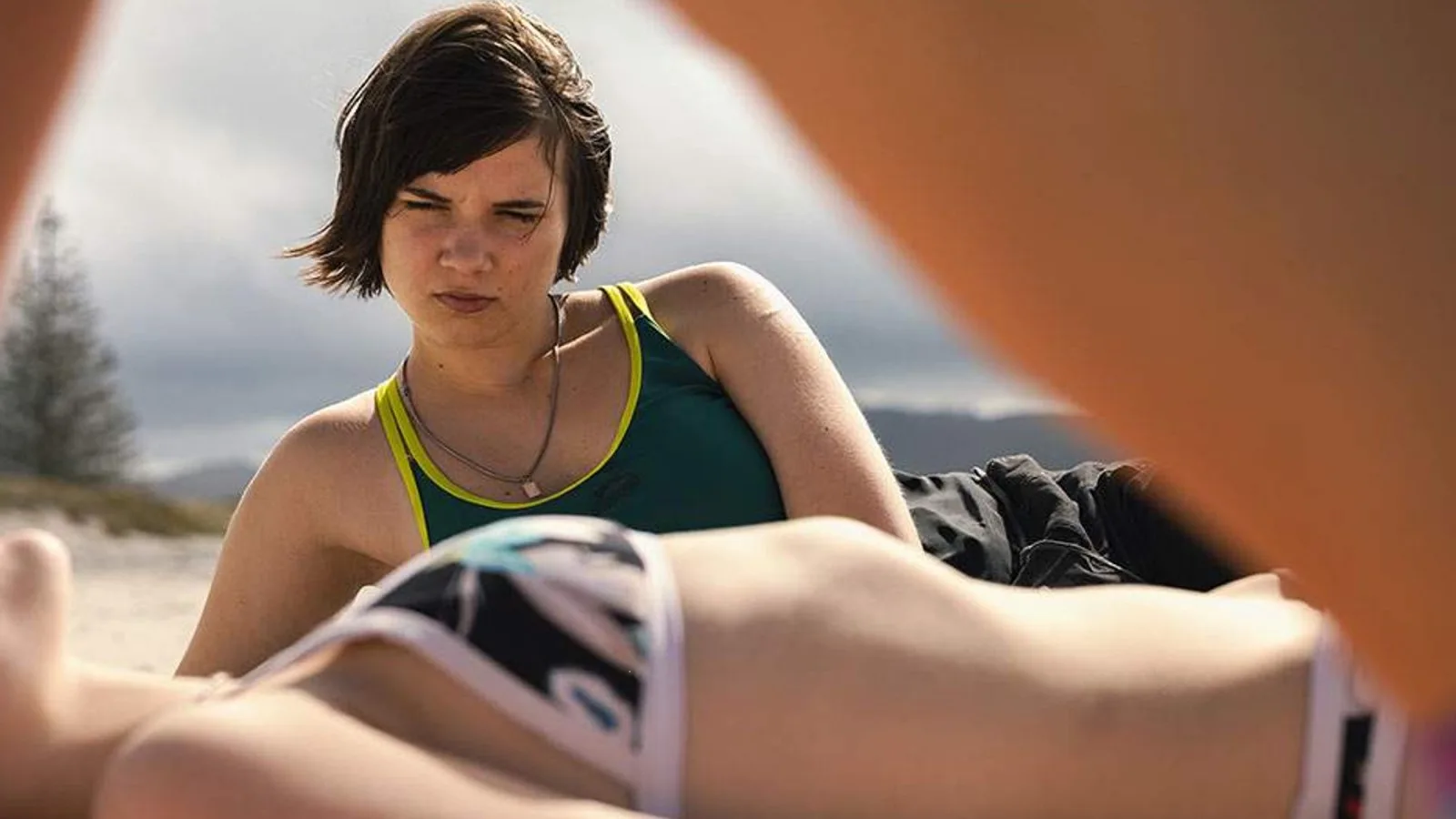

The coming-of-age film has long acted as a mirror to adolescence, and writer-director Paloma Schneideman’s feature debut, Big Girls Don’t Cry, joins that lineage with a clear-eyed, culturally aware perspective. Set in rural New Zealand during the sweltering summer of 2006, the film follows Sid (Ani Palmer), a 14-year-old in the unsettled space between childhood and an emerging self.
Two narrative threads tug at her at once: she catfishes her way into Lana’s (Beatrix Wolfe) social circle by posing as someone else online, and she is quietly unmoored by Freya’s (Rain Spencer) arrival as an American exchange student who notices her in ways the people around her do not.
The film mixes humor, discomfort, and tenderness, sometimes within a single scene. It frames adolescence through the specific angle of a pre-social-media internet, with MSN Messenger and dial-up connections acting as early portals to connection. Schneideman anchors the story in that era with care, producing a debut that reads as personal and widely relatable.
Small-Town New Zealand as Emotional Landscape
Big Girls Don’t Cry stands out among many English-language teen films because the setting shapes the story’s emotional contours so thoroughly. Rural New Zealand in 2006 still existed on the edge of a digital rollout, and Schneideman treats that condition as central. Sid’s community has only recently gained reliable internet access, so the online world arrives alongside puberty, loneliness, and the slow recognition of difference.
This timing carries historical weight: in parts of the Southern Hemisphere, especially locations distant from major cities, broadband arrived unevenly and that unevenness altered the way a generation first found identity and desire online. Schneideman captures how isolation and curiosity can live close together in such a place. Sid’s household feels improvised and ordinary.
Her father Leo (Noah Taylor) is a failed artist turned lawn maintenance worker, emotionally distant. Adele (Tara Canton) brings Freya home from university, and the confident, warm outsider upends Sid’s fragile equilibrium. The production design reinforces the lived-in quality of the family: knotted hair ties, cigarette butts on the bathtub rim, small domestic clutter. Those details create a textured teenage world that keeps the film above generic adolescent drama.
Deception, Desire, and the Sapphic Gaze
The catfishing subplot supplies much of the film’s momentum, and here Schneideman’s screenplay shows real precision. Sid adopts the identity of Diggy, the older brother of her friend Tia (Ngataitangirua Hita), to begin conversations with Lana online. That deception buys her entry to a social circle that proves vicious and exclusionary.
Sid shotguns a beer to impress boys in the group and becomes a larger target as a consequence. She lies, mimics, and overreaches; each maneuver exposes how deeply she needs to be seen and accepted. The screenplay treats those moments with frankness. Sid’s flaws are uncomfortable to witness, and the film keeps those moments clear rather than excusing them.
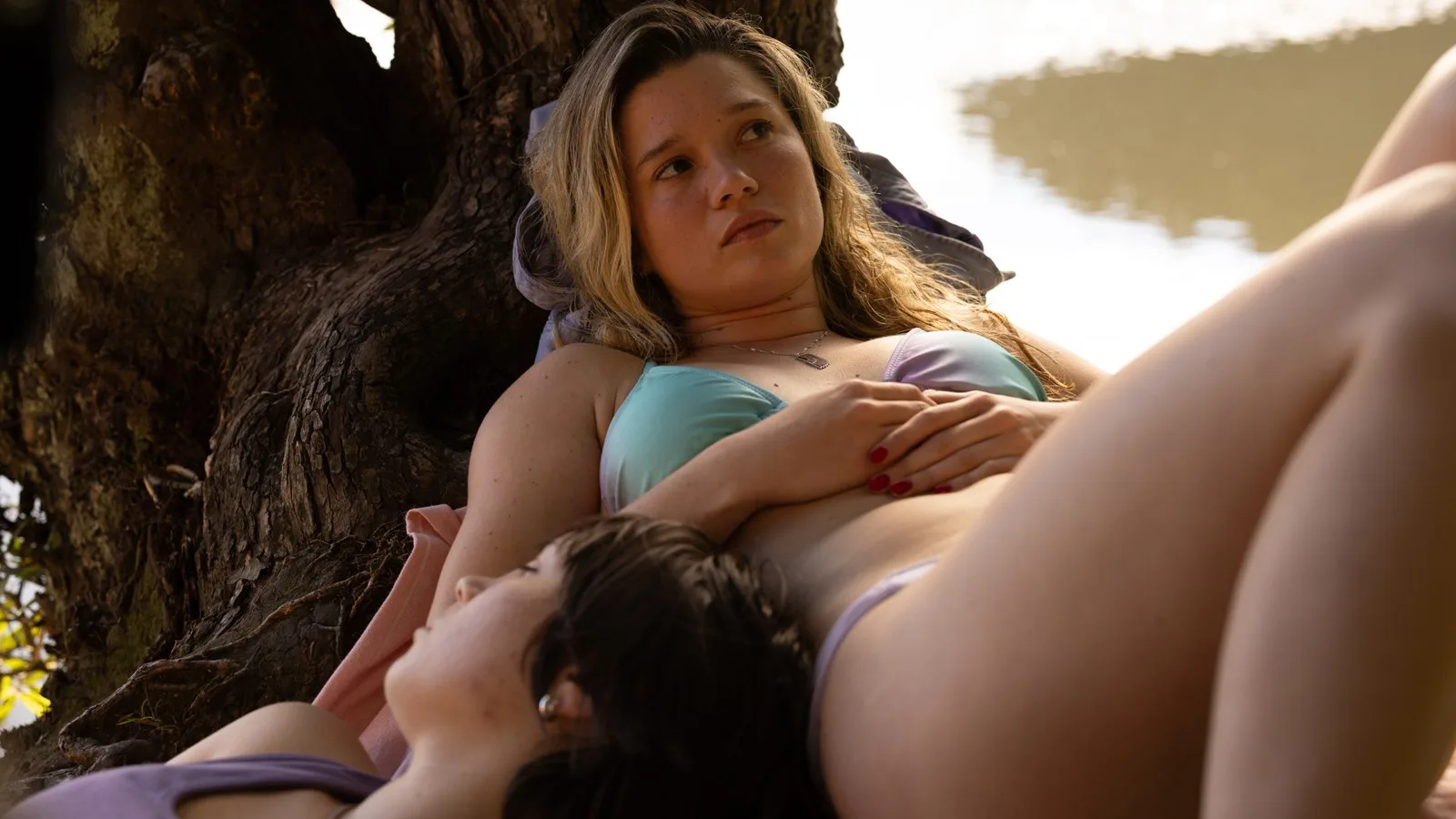
At the same time the dynamic with Freya represents the film’s most careful work. Freya reads as nurturing, magnetic, and subtly unreadable. She tells Sid she is “cool,” cuddles with her, and applies makeup in a series of intimate, lingering shots. Those small gestures add up to a portrait of what it feels like, for a young sapphic girl, to encounter someone whose presence complicates desire and identity.
Schneideman films these exchanges with an observant eye. The camera lingers on hands, on flat stomachs beside water, on the quiet intimacy of two girls in a shared bathroom. The result is an articulation of a female gaze that operates through precision rather than spectacle. The film captures how admiration and attraction can blur at that age and how the lack of vocabulary for those feelings charges each interaction.
Palmer, Spencer, and the Machinery of the Film
Ani Palmer carries Big Girls Don’t Cry with a performance that balances physical detail and emotional control. Her body work often conveys the story as strongly as the dialogue: one instant she is frozen, hunched and avoiding eye contact; the next she is loud, reckless, grasping for a confidence she has not yet claimed. That back-and-forth gives the performance a lived rhythm. Palmer renders Sid’s worst actions—the deception, the cruelty toward Tia, the tantrums—as the desperate acts of someone still learning herself. The performance avoids pity and sentimentality. It feels raw and specific.
Rain Spencer supplies a different tonal skill. Freya is written as warm and slightly opaque, and Spencer plays her to maintain that balance. She comforts and destabilizes, which positions her against Lana’s open cruelty. The supporting cast adds further texture: Noah Taylor brings quiet weight to Leo, and Beatrix Wolfe with Sophia Kirkwood Smith capture the particular brand of insecure viciousness that teenage popularity can produce.
On a technical level, cinematographer Maria Inés Manchego uses close-ups and a shallow depth of field to keep Sid visually isolated, while handheld camera work injects a restless energy into the pacing. Cam Ballantyne’s electronic score sits underneath scenes like low-grade static, heightening anxiety without drifting into melodrama. Those visual and sonic choices work together to place the audience inside Sid’s experience rather than at a detached remove.
A Debut With Familiar Edges
The film’s catfishing premise echoes earlier teen films, and Big Girls Don’t Cry shows the influence of that well-worn structure. The tension between Sid and Tia is signaled early and their arc resolves without the emotional payoff present elsewhere in the film.
The final shot follows a genre convention rather than delivering a surprising or wholly earned end point. Those limits reduce the film’s potential impact. The screenplay operates inside an established form in places where it could have pushed outward.
What keeps the film from feeling disposable are elements rooted in specificity and risk. Palmer’s performance provides a raw center. The New Zealand setting supplies emotional textures that feel particular rather than generic. Schneideman allows Sid to remain difficult, and that decision grounds the film in personal detail. These strengths come from close observation and restraint, which lift Big Girls Don’t Cry above its more conventional passages.
Big Girls Don’t Cry is a poignant and visually striking New Zealand coming-of-age drama that premiered in the World Cinema Dramatic Competition at the 2026 Sundance Film Festival. Set during the sweltering summer of 2006 in rural New Zealand, the film follows 14-year-old Sid Bookman as she navigates the confusing boundaries of her burgeoning queer identity and the pitfalls of the early internet. Mentored by Jane Campion, filmmaker Paloma Schneideman delivers an intimate exploration of female adolescence, peer pressure, and the desperate search for belonging. Following its successful festival debut, the movie is set to be released in select theaters by Blue Fox Entertainment later this year.
Full Credits
Title: Big Girls Don’t Cry
Distributor: Blue Fox Entertainment
Release date: January 24, 2026
Rating: Not Rated
Running time: 100 minutes
Director: Paloma Schneideman
Writers: Paloma Schneideman
Producers and Executive Producers: Vicky Pope, Thomas Coppell, Philippa Campbell, Jane Campion
Cast: Ani Palmer, Rain Spencer, Noah Taylor, Ngataitangirua Hita, Beatrix Rain Wolfe, Emilie Boyle, Tara Canton, Sophia Kirkwood-Smith
Director of Photography (Cinematographer): Maria Inés Manchego
Editors: Hsu Chia-Chi, Cushla Dillon
Composer: Paloma Schneideman
The Review
Big Girls Don't Cry
Big Girls Don't Cry is a confident, grounded debut from Schneideman, carried by an extraordinary first performance from Ani Palmer. Its portrait of queer girlhood in pre-social-media New Zealand feels specific and honest, and its visual storytelling is precise and purposeful. The familiar beats of the catfishing plot and a few unresolved threads hold it back from greatness, but the film's rawness and sincerity make it a worthy addition to the coming-of-age genre.
PROS
- Ani Palmer delivers a raw, commanding debut performance
- Specific and vivid New Zealand setting grounds the story
- The sapphic gaze is filmed with real precision and care
- Schneideman lets Sid be flawed and difficult, which builds honesty
- Strong technical craft in cinematography and score
CONS
- The catfishing premise feels familiar and lacks full subversion
- The Sid and Tia storyline is telegraphed and underwhelming in its resolution
- The final shot relies on genre convention rather than something earned
- Some secondary characters feel slightly underdeveloped