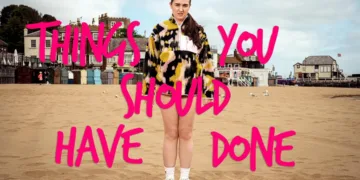







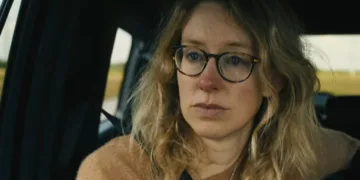












Lucia Keskin returns for season two of her BBC Three comedy, carrying on with Chi, a “stay at home daughter” whose days keep seizing up at the exact moment they should move forward. The story is built around a blunt inheritance: a literal to-do list left by her deceased parents, meant to press their inept child into something resembling independence. Against a beige middle-England setting, the series commits to a dry, deeply awkward rhythm.
Keskin wears two hats as creator and lead, playing Chi with a vacant stare that pins the show to a particular strain of sadcom. Season two shifts past the initial shock of bereavement and into the long, messy stretch of grief that follows. The family setup changes after the parents’ car crash, and the writing keeps the weight of loss in play while letting a zany, sometimes surreal humor interrupt the gloom before it settles. The task list stays as the show’s simplest narrative engine, a reliable way to expose how little Chi can do for herself.
The Vacuum of Antagonism
Selin Hizli’s exit as Aunt Karen jolts the series’ internal chemistry. Karen functioned as the grounded, bitter foil to Chi’s gormlessness, and her abrupt death in a freak vacuum cleaner accident pulls out the main source of friction that shaped season one’s conflict. Bridget Christie arrives as Ruth, a therapist whose lack of professional boundaries brings a new strain of disorder into the room.
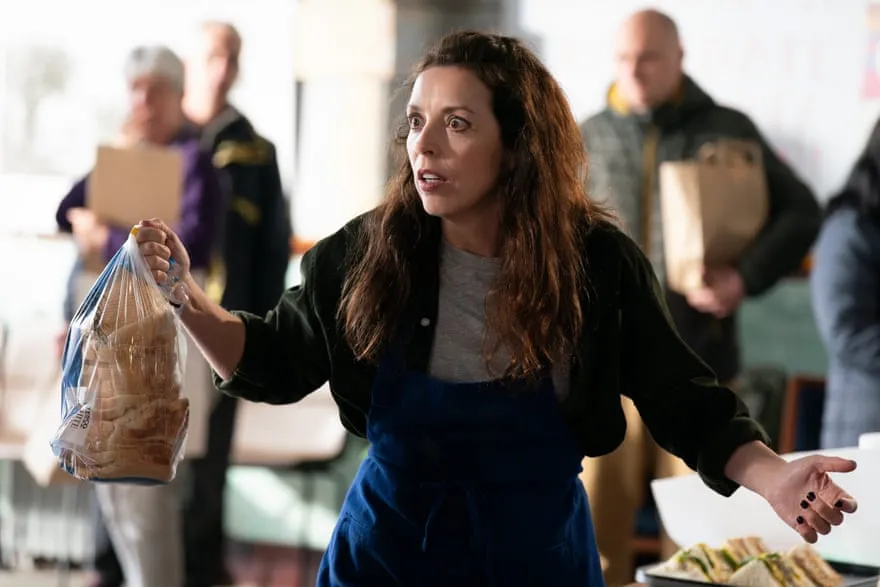
Ruth’s authority has a wild, unfiltered quality, and the story starts leaning into that kind of destabilizing energy. The shift matters structurally: Karen gave scenes a clear oppositional force, while Ruth tilts interactions toward something looser and harder to predict.
That looseness opens space for other notes the show previously treated as secondary. Dave comes through with a softer, more sensitive presence as he faces life as a widower, and the series allows a rare pocket of genuine emotion to sit without turning it into a sermon.
Sarah Kendall’s Sarah Gilbeaux returns and adds texture to a world full of adults who keep failing basic expectations. Jamie Bisping’s Lucas heads to Thanet chasing self-discovery, grasping for an identity that stays as slippery as Chi’s. Put together, the ensemble plays like a set of mismatched instruments that refuse to settle into harmony. Season two trades the first season’s structured conflict for volatility, keeping the viewer slightly off balance by design.
Fragments of Arrested Development
Season two loosens its grip on the rigid, task-by-task format of the debut and moves toward episodes that play like vignettes. That choice fits the subject: arrested development rarely moves in neat lines, and the narrative adopts the same scattered shape.
The show approaches mourning through a committed absurdist lens, treating grief as something that can produce irrational patterns without warning. Chi’s belief that her aunt has been reincarnated as a high-end cordless vacuum cleaner captures the series’ refusal to treat death with conventional solemnity. The comedy comes from the mismatch between the scale of the loss and the odd coping mechanism she grabs at, then insists on.
That mismatch echoes the show’s larger interest in “useless adulthood,” where characters stumble through basic social and domestic norms like they are written in a foreign language. The writing leans hard on specific, nonsensical idiolects that isolate each person inside their own private logic. Surreal touches grow more prominent, including Chi’s hallucinations of miniature pop icons offering terrible advice.
These flourishes clarify the story’s interior focus: Chi’s inner world has become vivid and noisy, while the external world remains a place she cannot handle with any competence. The season’s lack of a clear narrative arc may read as aimless for some viewers. The approach still tracks with a life that has stalled and keeps stalling. The series finds power in jagged, small-scale character studies, without chasing a tidy three-act payoff.
The Architecture of Discomfort
The show’s craft leans into “stony silence” and long, cringe-inducing pauses that have become a recognizable mode in modern British comedy. Its “neo-nihilistic” flavor uses stillness as a storytelling tool, emphasizing how often these characters fail to connect. The audiovisual language supports that approach with specific, often dated pop-culture references and musical cues that puncture scenes at their most absurd. A botched funeral eulogy and a chaotic fight at a food bank play as physical-comedy set pieces, yet they remain rooted in the series’ tacky, tragic atmosphere rather than breaking into sketch-land.
The direction keeps sentimentality on a tight leash, letting potentially tender beats surface only long enough for a sharp, cynical observation to cut across them. That’s where the show’s narrative technique feels most consistent: it builds moments that could turn warm, then reasserts discomfort as the real currency of this world.
The writing stays viciously clever about the pain of human interaction and the constant breakdown of communication. With that steady aesthetic, the series creates a setting that feels familiar and deeply strange at the same time. It prefers abrasion to ease, using discomfort as its main lens on what it means to exist in a world you do not understand.
The second season of the BAFTA-winning sitcom Things You Should Have Done premiered as a full box set on BBC iPlayer on December 31, 2025, before making its broadcast debut on BBC Three on January 20, 2026. Created by and starring internet sensation Lucia Keskin, the series continues to follow the journey of Chi, a socially stunted “stay-at-home daughter” who must complete a series of life goals left by her deceased parents to secure her inheritance. This season introduces a significant tonal shift following the sudden death of Aunt Karen, bringing in Bridget Christie as a highly unprofessional grief counselor who adds a new layer of surrealist chaos to Chi’s already dysfunctional world. The series remains available for streaming on BBC iPlayer for audiences in the United Kingdom.
Full Credits
Title: Things You Should Have Done
Distributor: BBC Three, BBC iPlayer
Release date: December 31, 2025 (Digital Premiere), January 20, 2026 (Broadcast Premiere)
Rating: TV-MA
Running time: 28 minutes
Director: Jack Clough
Writers: Lucia Keskin, Nathan Foad, Sarah Kendall
Producers and Executive Producers: Steve Monger, Ash Atalla, Alex Smith, Tanya Qureshi
Cast: Lucia Keskin, Daniel Fearn, Jamie Bisping, Bridget Christie, Sarah Kendall, Juliet Cowan, Martha Cope, Darren Strange
Director of Photography (Cinematographer): Scott Coulter
Editors: Ben Wilson
Composer: Tessa Rose Jackson
The Review
Things You Should Have Done Season 2
Season 2 of Things You Should Have Done is a daring, if uneven, evolution that leans heavily into its creator's surrealist sensibilities. While the loss of a grounded antagonist like Karen creates a narrative void, the addition of Bridget Christie provides a new, volatile energy that keeps the pacing unpredictable. It is a work that successfully mirrors the messy, non-linear reality of grief and delayed adulthood. This is a refreshingly strange piece of television that rewards viewers who appreciate the beauty in the uncomfortable.
PROS
- Her turn as the unprofessional therapist Ruth is a masterclass in unpredictable comedy.
- The inclusion of miniature pop icons and bizarre hallucinations adds a layer of depth to Chi's internal world.
- Lucia Keskin’s "neo-nihilistic" approach and specific idiolects offer a truly original perspective in a crowded landscape.
CONS
- The absence of Aunt Karen removes the grounded foil that helped anchor the first season's stakes.
- The shift toward a vignette-based style occasionally makes the episodes feel like a collection of ideas rather than a cohesive story.
- The commitment to cringe-inducing silence and dry delivery might alienate viewers seeking more traditional sitcom beats.