















Australian television seems to have found a cheat code in recent years: put a dog in the frame and let the audience do the rest. Dog Park, a six-part series co-created by Leon Ford and Amanda Higgs, rides that wave while keeping its feet on the ground. The story plays out in a chilly, grey-toned slice of inner-city Melbourne, where warmth feels like a limited resource.
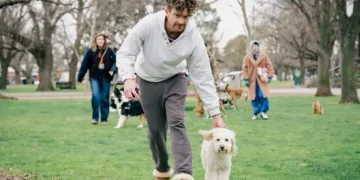
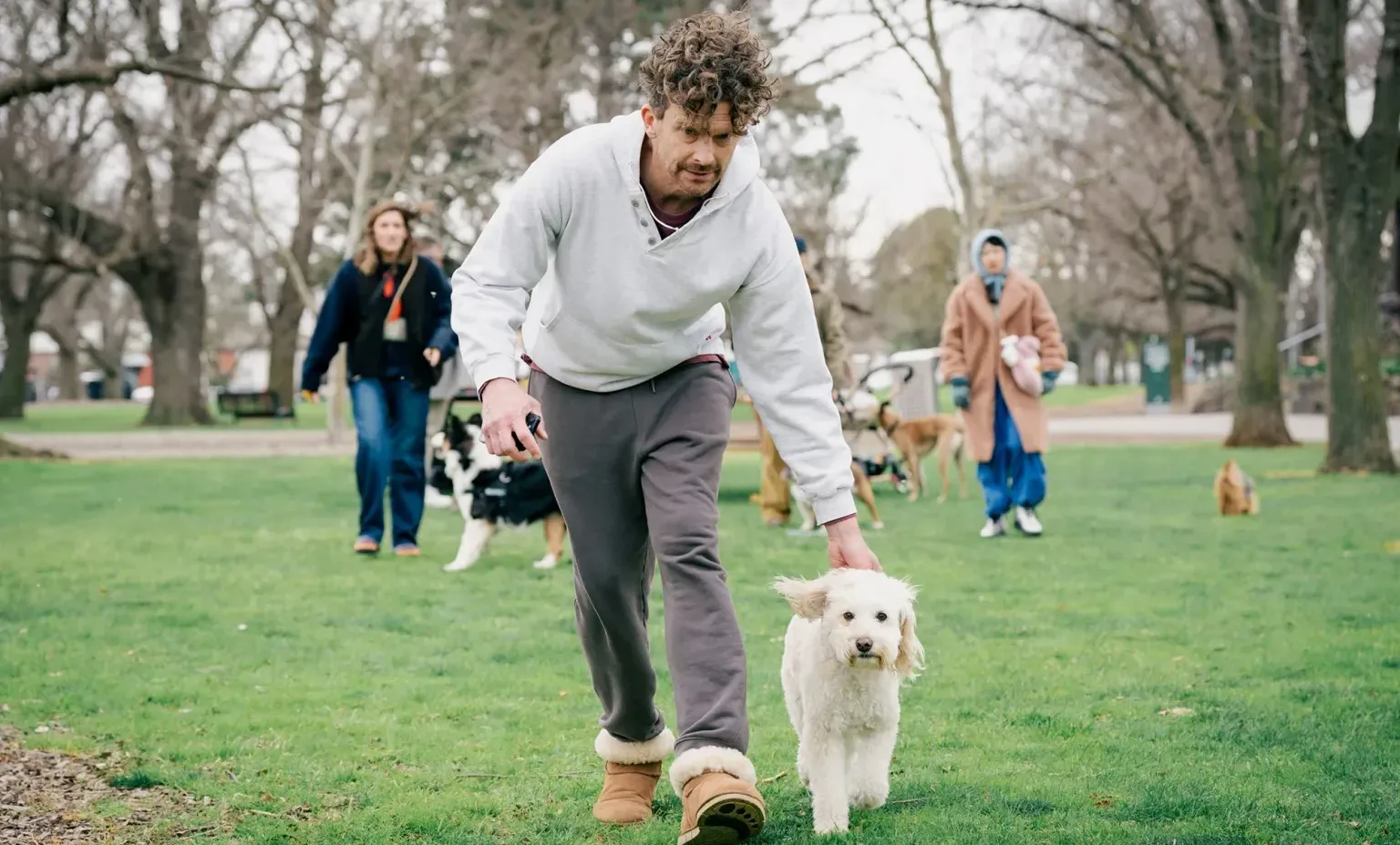
Roland is a middle-aged TAFE career counsellor whose baseline mood reads “grumpy recluse.” His life tilts hard when his wife, Emma, leaves for a lucrative job in the United States. Roland becomes the primary guardian of their teenage daughter, Mia, and the family poodle, Beattie. He never wanted the dog, and the new workload sits on him like a wet coat. Small talk makes him itch.
Dogs do, too. Emma’s absence leaves a gap that pushes him into the local dog park anyway, because there are only so many ways to keep a household running. The park turns into a low-key arena for belonging, a close look at the particular isolation that can settle in around middle-aged men, and the messy way “chosen families” form when the same strangers keep showing up to the same patch of grass.
A Study in Social Friction
Leon Ford plays Roland with a level of irritability that feels earned, not performed. Roland is a “sad sack” perfectionist who corrects other people’s grammar while his personal life slides out from under him. The performance refuses easy villainy. Roland comes across as someone with feelings he can’t translate, like the emotional version of a printer error message.
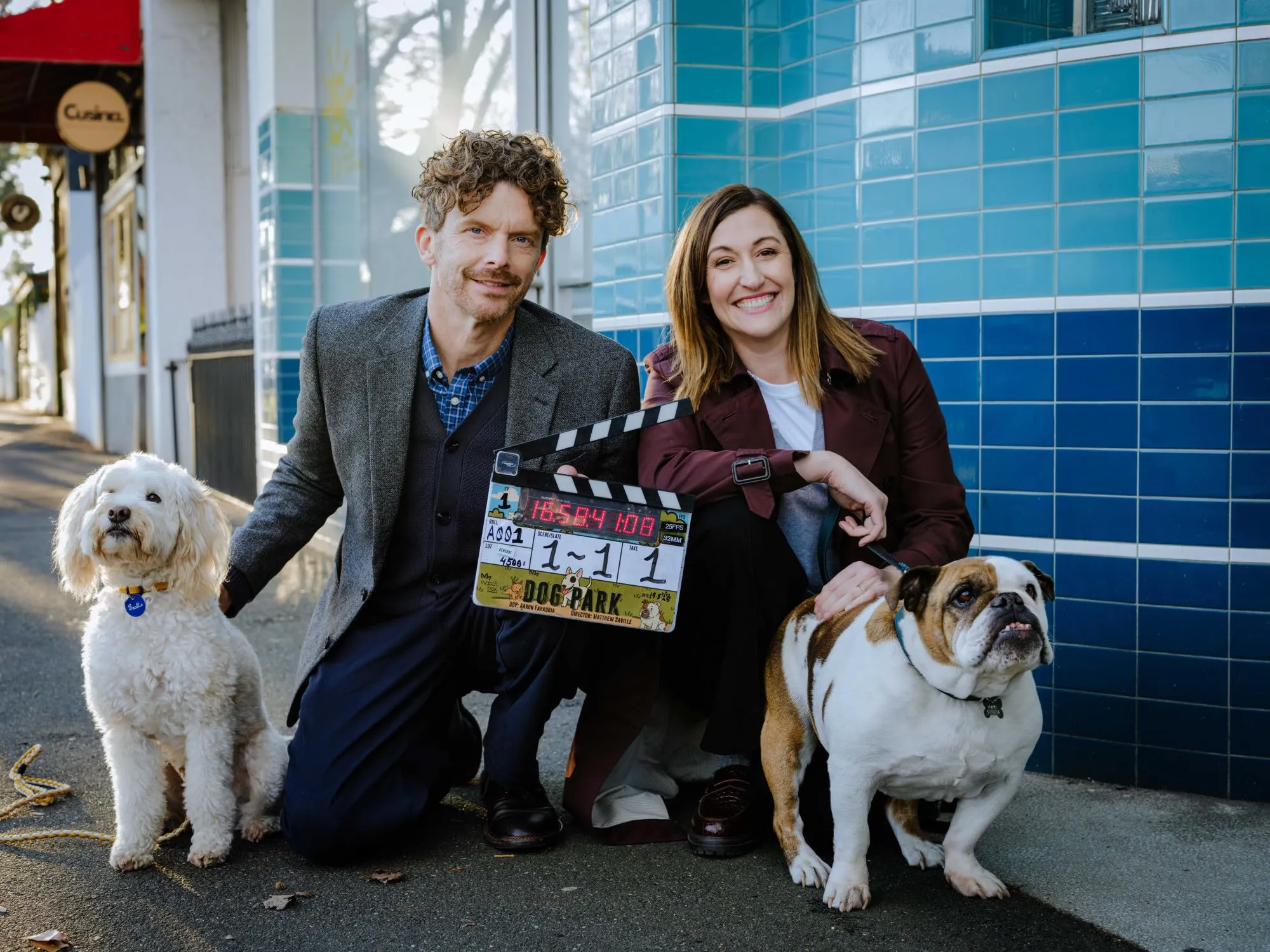
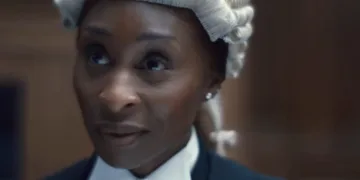
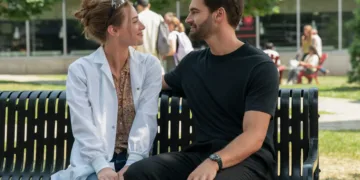
Samantha, played by Celia Pacquola, arrives with the brisk competence of the dog park’s “self-appointed ambassador.” Her optimism is relentless, bright, and strategically placed, like a highlighter drawn across Roland’s cynicism. Their chemistry lands in that awkward, slow-growing zone where you can feel two people testing the temperature of every exchange before committing to it.
Circling them is the “Dog Park Divas,” a varied crew that includes the wise senior Penny, along with Pamelia, Jonah, and Samuel. Their friendliness runs so strong it tips into mildly unsettling territory, which makes Roland’s instinct to bolt feel completely rational. At home, the tension shifts into a quieter key. Mia treats her bedroom like a sovereign nation with strict border controls, and Roland keeps failing the customs check. Even his attempts at generosity arrive wrapped in indifference, a protective layer meant to keep vulnerability out of sight.
Bittersweet Bites and Emotional Bait-and-Switches
Anyone showing up for a high-energy gag-fest may feel like they walked into the wrong room. The promotional push sells playful pooches. The series spends serious time on a marriage coming apart and a heaviness that looks a lot like personal depression. The tone sits in “darkly bittersweet” territory, with an “unprepossessing” quality that makes the laughs feel like small, hard-won breaks in the cloud cover.
The show steps away from traditional sitcom punchlines and leans into moments that linger. It plays as dramedy with a firm commitment to emotional realism. That choice drives the pacing: leisurely, “wandering,” and focused on social observation instead of plot fireworks. A subplot involving Mia’s love life introduces a few shifts, yet the series often asks viewers to stay in the cold with these people and see what changes, if anything, through sheer proximity.
The dogs remain central to the series’ visual identity. Beattie, played by a poodle named Indie, functions as a wordless counterpoint to the human mess. The animals bring spontaneity and flashes of joy, the kind that arrives without permission and leaves hair on your clothes. They watch Roland’s slow thaw in real time, sitting there like silent witnesses who never correct anyone’s grammar.
The Aesthetic of the Urban Paddock
Matthew Saville and Nina Buxton steer the series toward an “earthy,” “unshowy” texture. The style leans closer to a character-driven indie film than a glossy broadcast comedy, and that grounded sensibility shapes how each scene lands. Aaron Farrugia’s “off-beat” camerawork supports the mood, avoiding flat sitcom lighting in favor of a quirkier look that captures the specific feeling of a Melbourne morning.
Sound gets the same level of care. Bryony Marks’ score is described as “percussive” and “rambling,” matching the unpredictable energy of a park full of unleashed pets. The use of Ratcat’s 1991 anthem “Don’t Go Now” as the title theme works as sharp local cultural coding, pinning the show to a recognizably Australian indie sensibility.
The writing team, including Penelope Chai, Chloe Wong, and Nick Coyle, supplies “peppery dialogue” that feels lived-in rather than staged. The scripts take on “fractious love” and the struggle to express emotion with a clear-eyed, unsentimental approach. By the time the credits roll, the premise has moved past novelty and into something quietly pointed, leaving a question hanging in the air: is the dog park built for pets, or is it the last dependable classroom where humans practice being social animals again?
Dog Park is a six-part Australian dramedy that premiered on ABC TV and ABC iview on February 1, 2026. The series follows Roland, a mid-life career counsellor played by co-creator Leon Ford, who finds himself socially isolated after his wife moves overseas for work. Left with a teenage daughter and a dog he never wanted, he is reluctantly drawn into a quirky community of dog owners at his local park. You can currently stream the entire season on ABC iview.
Full Credits
Title: Dog Park
Distributor: ABC TV, ABC iview
Release date: February 1, 2026
Rating: TV-PG (including coarse language)
Running time: 27–30 minutes per episode
Director: Matthew Saville, Nina Buxton
Writers: Leon Ford, Penelope Chai, Nick Coyle, Chloe Wong
Producers and Executive Producers: Amanda Higgs, Debbie Lee, Leon Ford, Rebecca Anderson, Rachel Okine
Cast: Leon Ford, Celia Pacquola, Brooke Satchwell, Florence Gladwin, Elizabeth Alexander, Grace Chow, Ras-Samuel, Ash Flanders, Nick Boshier
Director of Photography (Cinematographer): Aaron Farrugia
Editors: Maria Papoutsis, Michael Melis
Composer: Bryony Marks
The Review
Dog Park
Dog Park is a deceptive, finely tuned dramedy that uses canine charm to anchor a heavy study of human isolation. While the pacing is leisurely and the lead character intentionally difficult to embrace, the payoff lies in its quiet emotional realism. It captures the awkward, essential nature of "chosen families" within the urban landscape of Melbourne. It is a thoughtful, bittersweet observation of a man learning to rejoin the world, one reluctant walk at a time.
PROS
- Authentic, grounded performance by Leon Ford that avoids misanthropic clichés.
- Celia Pacquola provides a perfect, sharp comedic foil.
- Evocative, "earthy" cinematography and a distinct indie-rock soundtrack.
- Highly relatable depiction of modern loneliness and "chosen family" dynamics.
CONS
- The leisurely, "wandering" pace may frustrate those seeking traditional sitcom energy.
- Roland’s initial abrasiveness can make early episodes a challenging sit.
- Some viewers might find the "bait-and-switch" from comedy to drama jarring.