





























The most unsettling scenes take place in rooms where nobody raises their voice. Doctors discuss sterilization targets, financial incentives, and patient eligibility with the detached efficiency of administrators reviewing supply figures. Ivan Ostrochovský’s Only Beautiful Things to Look At understands how institutional violence survives: horror is easier to maintain once it acquires forms, euphemisms, and meeting minutes.
Set in 1980s Czechoslovakia, the film centers on Ingrid, a gynecologist played by Anna Geislerová. Her hospital participates in a state-backed program targeting Roma women for sterilization. Some patients receive payments that can transform an impoverished family’s finances. Others sign documents they cannot properly understand. A few are operated on under false pretenses. The resulting incision has even acquired a harmless nickname, “the bow,” a piece of clinical vocabulary that turns bodily violation into office shorthand.
Ingrid occupies an uneasy place within this structure. An all-male panel denies her the head-doctor position, establishing the sexism governing her professional life. Yet the screenplay refuses to let that discrimination function as moral absolution. Ingrid remains a respected physician with the authority to recommend and perform irreversible procedures on women denied comparable power. Her exclusion from one hierarchy does not prevent her from enforcing another.
The Education of Ingrid
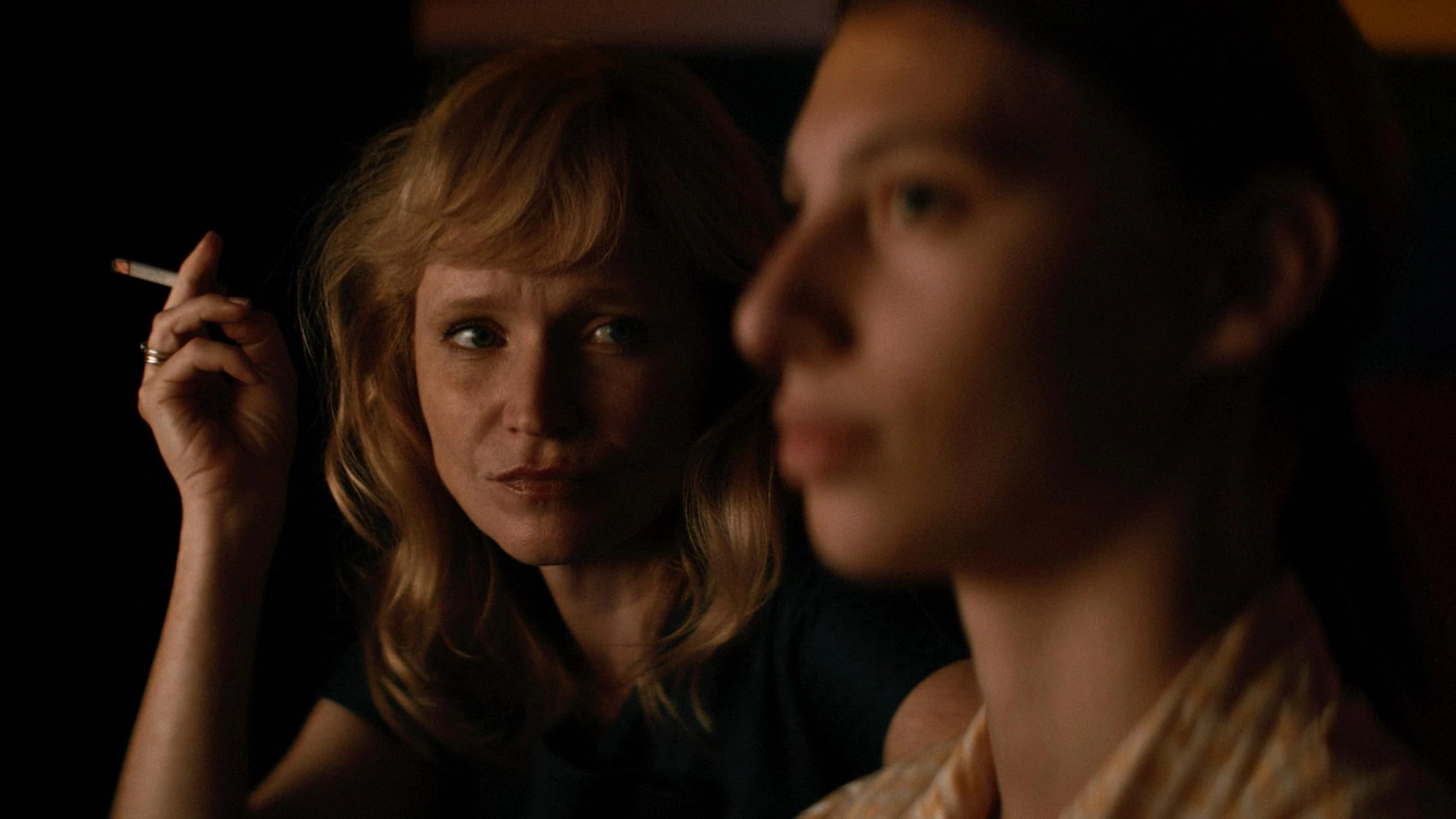
Geislerová plays Ingrid as a woman trained to convert discomfort into composure. During the hospital meeting, she participates in discussions of payment and quotas without visible resistance. Her certainty begins to weaken only after she develops a friendship with Agáta, a young orderly who initially conceals her Romani identity.
The film handles Ingrid’s awakening through physical details rather than declarations. She lies awake in rumpled sheets. Her eyes linger during examinations. Her domestic rituals lose their calming effect. Geislerová keeps these shifts small, allowing guilt to emerge through hesitation and altered attention. The performance is controlled enough to suggest a woman recognizing that competence, discipline, and social refinement have helped her avoid asking elementary moral questions.
That restraint cannot repair the screenplay’s central imbalance. Ingrid learns the scale of the crime through proximity to a victim she knows personally. Agáta was sterilized as a child during what she believed was a hernia operation, a revelation that forces Ingrid to confront medical abuse in its starkest form. Yet this discovery also redirects the conflict away from Ingrid’s routine participation. The screenplay gives her an exceptional atrocity to oppose instead of pressing harder on the procedures she previously regarded as legitimate.
Her awakening therefore arrives with a degree of protection. Ingrid can reject another doctor’s deception while postponing a fuller reckoning with the coercion built into payments, poverty, unreadable consent forms, and state quotas. The distinction makes her easier to forgive than the material warrants.
The Story Agáta Carries
Simona Boledovičová gives the film its most precise performance. Agáta moves through the hospital with guarded competence, revealing little until trust begins to form. Her scenes with Ingrid contain flashes of playfulness, yet the friendship never escapes its power structure. Ingrid is her employer, her doctor, and a representative of the institution that altered her body without consent.

Agáta’s relationship with her sister Jula contains a richer drama than Ingrid’s crisis. Separated as children, the sisters now occupy different social worlds. Agáta lives independently, works at the hospital, and dates a white soldier. Jula remains embedded within a poor Roma community, raising children in a cramped flat while facing another unwanted pregnancy. Their conversations carry resentment shaped by class, shame, abandonment, and the pressure to survive through different forms of accommodation.
The bathtub sequence gives these tensions room to breathe. Jula’s children splash in the water while the sisters share the domestic space with less hostility than before. No speech repairs their history. The scene trusts gestures, glances, and ordinary care. Boledovičová lets Agáta’s reserve loosen by degrees, while Eva Mores gives Jula an exhausted warmth that never asks for pity.
These women hold the film’s deepest questions about identity, family, and bodily autonomy. Still, the narrative repeatedly returns to Ingrid’s sleeplessness, Ingrid’s home, Ingrid’s conscience. Roma suffering becomes the evidence through which a white professional learns to see what has always been visible.
The Politics of a Beautiful Image
Juraj Chlpík’s cinematography gives the film an immaculate surface. Ingrid’s countryside home glows with amber light. Glass walls open onto forests. Classical music fills evening rooms. Macro close-ups isolate pale skin, blond hair, insects, flowers, scars, and medical instruments. Even the hospital possesses a composed severity, with bodies and furniture arranged inside carefully balanced widescreen frames.
The opening montage presents young Roma women as formal portraits while an offscreen voice explains sterilization as a method of improving family life. The images grant each face dignity, yet the women remain silent. The first substantial protest belongs to Ingrid, and it concerns her stalled career. The sequence reveals the film’s contradiction before the plot names it: the Roma women are seen beautifully, then denied control of the argument.
Michal Novinski’s droning score introduces unease beneath the polished photography, but the visual refinement often places the violence behind glass. Ingrid’s bedroom, forest walks, white sheets, and riverside afternoons receive sensuous attention. Agáta and Jula’s world is observed with care, though rarely with equal narrative authority.
The late hopeful turn compounds this distance. Its near-miraculous resolution grants emotional relief after a story built around damage that cannot be reversed. Hope enters through narrative convenience, while the women marked by “the bow” remain outside the frame of repair. The title begins to sound less like an invitation than an accusation aimed at the film itself.
This internationally co-produced drama premiered at the 60th Karlovy Vary International Film Festival on July 5, 2026, and began its theatrical run in the Czech Republic on July 16, 2026. The film is set in the 1980s and follows an ambitious surgeon whose world is challenged when she forms an unexpected friendship with a Romany orderly, bringing her face-to-face with the grim realities of the state-mandated sterilization of Romany women in communist Czechoslovakia.
Full Credits
Title: Only Beautiful Things to Look At
Distributor: Aerofilms
Release date: July 16, 2026 (Czech Republic)
Running time: 88 minutes
Director: Ivan Ostrochovský
Writers: Ivan Ostrochovský, Marek Leščák
Producers and Executive Producers: Ivan Ostrochovský, Albert Malinovský, Katarína Tomková, Pavel Strnad, Petr Oukropec
Cast: Aňa Geislerová, Simona Boledovičová, Eva Mores, Vlad Ivanov, Éva Bandor, Attila Mokos
Director of Photography (Cinematographer): Juraj Chlpík
Editors: Martin Malo, Josef Krajbich
Composer: Michal Novinski
The Review
Only Beautiful Things to Look At
Only Beautiful Things to Look At exposes coerced sterilization as a bureaucratic habit sustained by polite language, professional ambition, and institutional racism. Juraj Chlpík’s luminous cinematography and Simona Boledovičová’s guarded performance lend the film real emotional force, especially during Agáta’s quiet reconciliation with Jula. Yet the screenplay repeatedly converts Roma suffering into the material of Ingrid’s moral education. Its beauty invites contemplation where anger is required, and its hopeful final turn grants reassurance to a history that offers little.
PROS
- Striking, carefully composed cinematography
- Boledovičová’s restrained performance
- Chilling depiction of medical bureaucracy
- Strong Agáta and Jula scenes
- Nuanced portrait of institutional complicity
CONS
- Roma women remain narratively sidelined
- Ingrid’s awakening dominates the victims’ stories
- Emotional distance weakens the subject’s urgency
- Friendship lacks sufficient development
- Abrupt, overly comforting ending