




























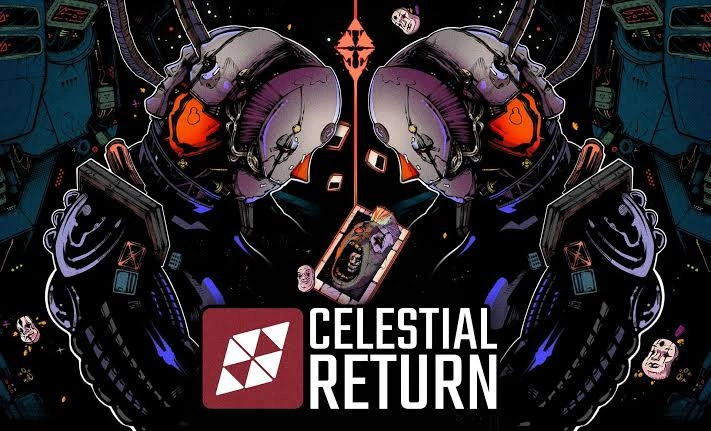

A failed roll during Howard’s first encounter with an Abstract can close off information before the player fully understands what has been lost. That uncertainty defines Celestial Return, a cyberpunk detective RPG from Metaphor Games where dialogue, investigation, and finite dice replace conventional combat as the main sources of pressure.
Howard once led a police strike team into the den of an otherworldly creature. Three years later, he is carrying Rose, an undeveloped Abstract that can speak with the dead, while Netherveil continues collapsing under corporate rule, political violence, and supernatural contamination. An old police contact hands him an apparently impossible murder case, sending him through bars, tattoo parlors, graveyards, and sewers in search of answers.
The setup will feel familiar to anyone who has played Disco Elysium or Citizen Sleeper. A damaged investigator, internal personality voices, text-heavy encounters, and skill checks all come from an established lineage. Celestial Return earns its place beside those games through one important change: every die has value before it is ever rolled.
Netherveil Withholds the Map
The opening refuses to explain what an Abstract is before Howard confronts one. Characters discuss creatures, factions, and events with the confidence of people who have lived through them, leaving the player to catch up through clues. The approach works because Rose immediately gives the confusion a personal shape. She is evidence of Howard’s past encounter, a useful investigative partner, and an unanswered question sitting beside every conversation.
Netherveil gradually becomes legible through the people Howard meets. A bartender’s exhaustion, a police contact’s evasiveness, and the dead voices Rose reaches each reveal a different part of the city’s social order. Corporate control appears through restricted information and disposable workers rather than through a lecture delivered by a convenient rebel leader. Even the smaller locations contribute. The tattoo parlor suggests forms of identity that survive outside official systems, while the graveyard and sewer routes expose the remains that Netherveil would prefer to keep out of sight.
Howard develops through five traits: Virtue, Perception, Foolishness, Anger Issues, and Intelligence. These are not simple numerical bonuses. Investing in Anger Issues can open harsher responses, while Perception creates opportunities to notice details before another character redirects the discussion. Foolishness carries its own strange logic, occasionally producing an option that a conventional detective would dismiss. The system recalls Disco Elysium’s skill voices, though Howard’s traits feel less independent and less likely to interrupt him with a distinct personality.
The murder plot is easier to predict than the setting surrounding it. Players familiar with this branch of narrative RPGs will recognize several turns soon after the investigation begins. Some chapter cutscenes also lean so heavily on symbolic images and modern footage that emotional clarity gets lost. The writing is strongest when Howard is questioning a specific witness or reacting to Rose, not when the game pauses to announce the importance of its own imagery.
Spending the Future
Each important check asks the player to select dice and attempt to beat a target number. Howard’s traits, equipment, and enhancements can improve the odds, but every committed die disappears after the roll. The same dice are used to buy upgrades, drinks, information, and shop items. A successful conversation can therefore cost the resource needed to survive the next confrontation.
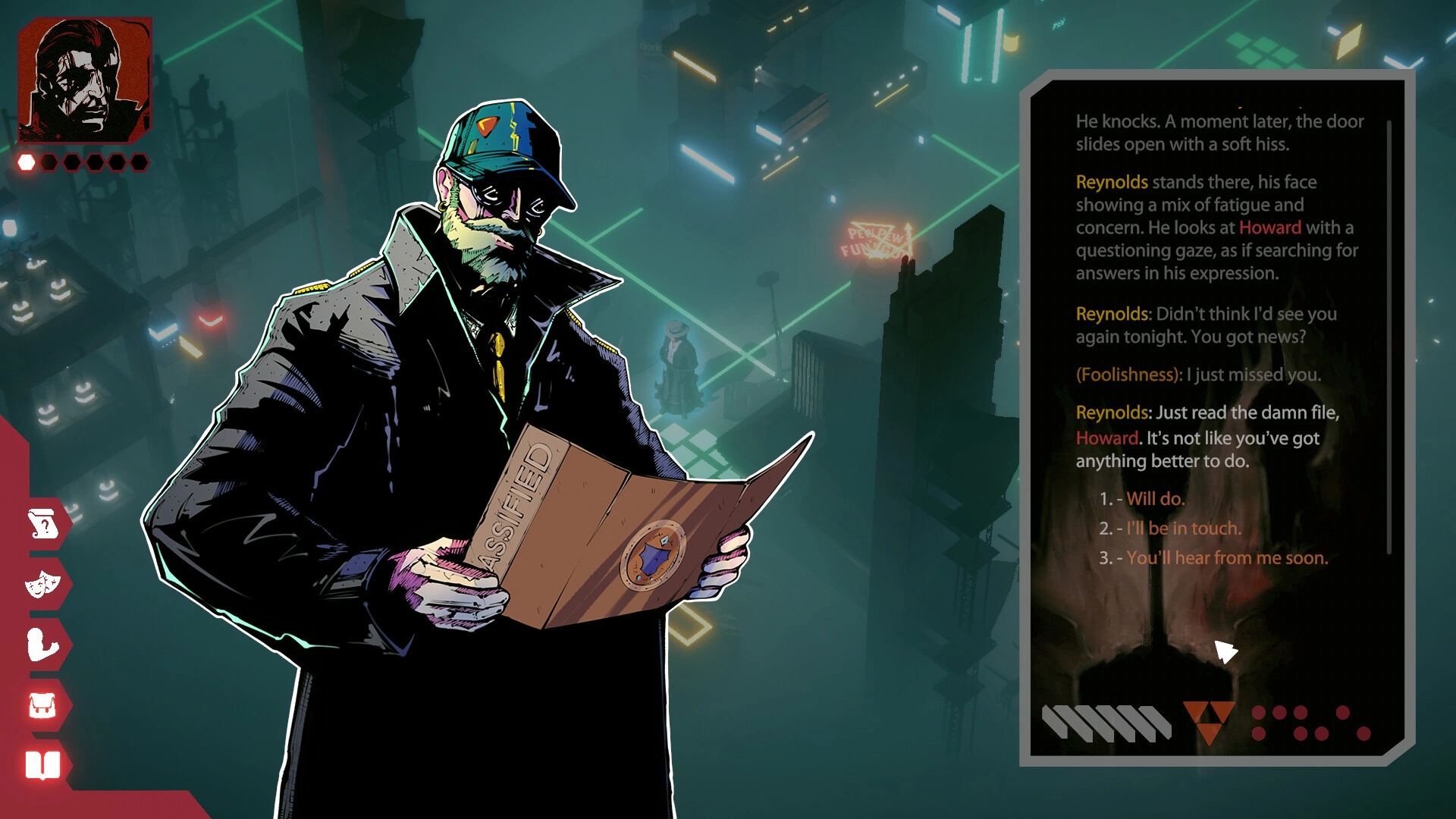
This changes how familiar dialogue choices are read. A highlighted Perception option may reveal a valuable clue, but spending several dice on it could leave Howard unable to challenge a suspect later. Choosing a free response protects the inventory while risking a thinner version of the scene. The player is constantly deciding which piece of information deserves part of the remaining future.
Citizen Sleeper also treats dice as a daily resource, yet its structure provides a rhythm of replenishment and recovery. Celestial Return is harsher. Dice do not reliably return after resting, and the story keeps moving once the pool begins to empty. Optional exploration can uncover replacements, but the game rarely communicates how many future checks its balance assumes the player will attempt.
That creates memorable pressure until a required dialogue option demands dice the player no longer owns. At that point, the mechanic stops producing a consequence and starts exposing a missing safeguard. A player can become trapped inside a conversation, forced toward a bad ending, or sent back several hours because an optional location containing extra dice was missed. One later scene can generate a die to prevent a forced failure, proving that the developers recognized the problem in at least one instance.
The six-to-eight-hour length makes replaying different trait builds reasonable. It does not make a four-hour rollback feel fair. Sierra adventure games once treated unwinnable states as part of the challenge, but Celestial Return asks the player to invest in long conversations and character relationships before revealing that an earlier purchase has made progress impossible.
A City Drawn in Fragments
The hand-drawn portraits give Netherveil its strongest identity. Heavy shadows, mechanical body parts, neon reflections, and exaggerated faces make each resident look shaped by the same damaged city. Clothing and posture often establish class before the dialogue does. A wealthy figure appears protected by clean lines and controlled presentation, while people living closer to the street carry the city’s grime directly on their bodies.
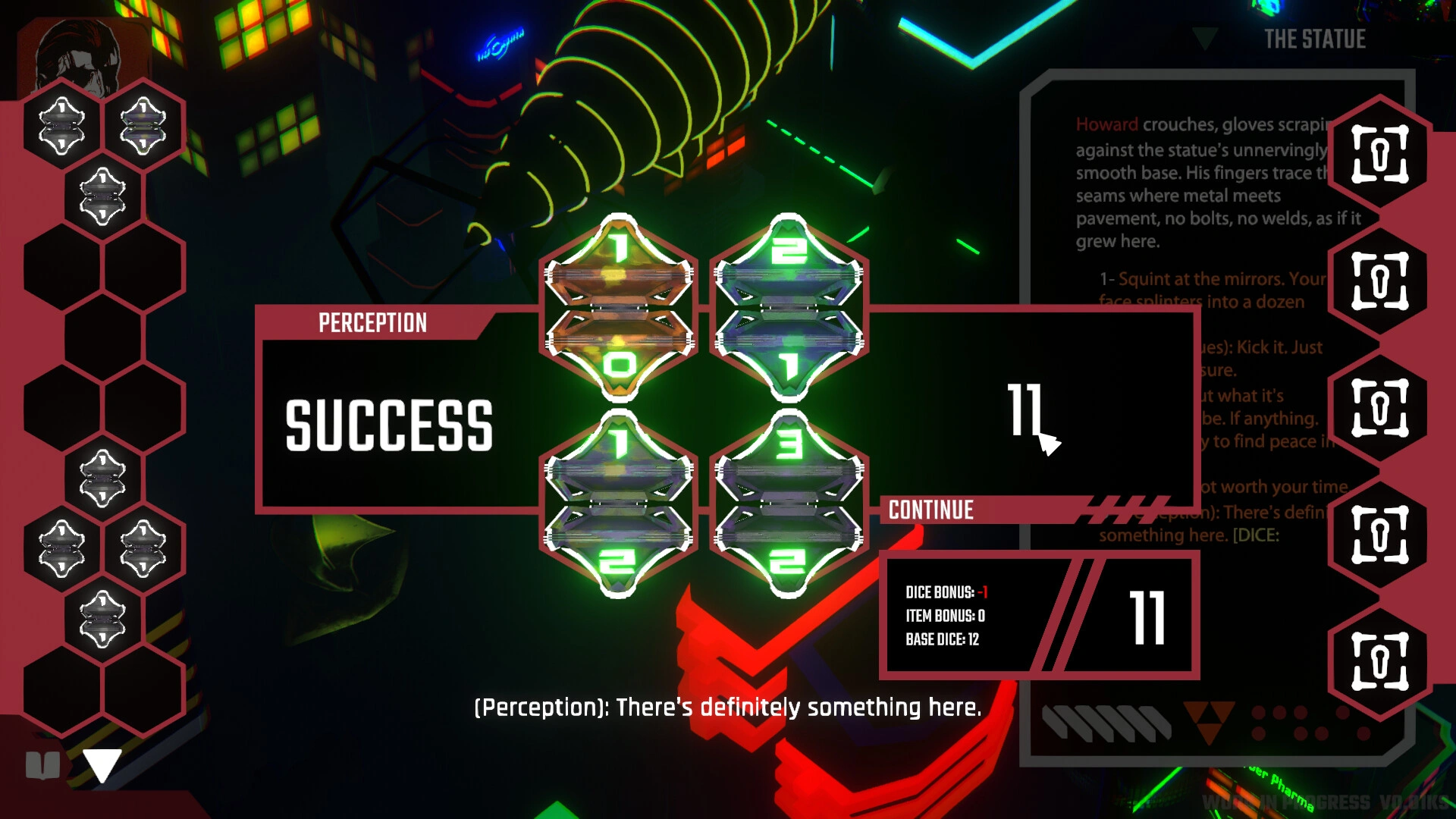
The low-poly overworld recalls late PlayStation-era RPGs and separates exploration from the illustrated conversations. Moving Howard between compact locations gives the investigation a physical rhythm, though the limited number of areas makes Netherveil feel smaller than its writing suggests. Howard’s appearance also changes noticeably between his menu image, map model, and dialogue art, creating uncertainty about the face behind the choices.
The soundtrack holds these fragments together. Electronic percussion drives tense exchanges, noir-flavored jazz settles over quieter investigations, and heavier beats sharpen Howard’s anger when the case turns personal. During long text sequences, the music supplies momentum that the static interface cannot create alone.
Some chapter transitions introduce live-action or contemporary imagery that resembles a music video disconnected from Netherveil. A reference to “Uber” causes a similar break, borrowing a real company name where the game’s invented culture needed its own language. The city is most convincing in the dark spaces between those interruptions, when Rose speaks for someone buried beneath it and the soundtrack continues pulsing as if Netherveil itself has refused to sleep.
The Review
Celestial Return
Celestial Return understands what makes Disco Elysium and Citizen Sleeper memorable, then finds its own identity by turning dice into luck, currency, and survival. That mechanic makes every conversation tense, especially when Howard must choose between buying information and preserving a future roll. Netherveil’s illustrated decay, political anger, and pulsing soundtrack give the familiar detective framework personality. Yet mandatory checks, preventable softlocks, inconsistent visual assets, and technical faults make failure feel arbitrary too often. This is an ambitious cyberpunk mystery whose strongest system still needs better safeguards.
PROS
- Clever consumable-dice system
- Strong cyberpunk worldbuilding
- Distinctive hand-drawn artwork
- Excellent atmospheric soundtrack
CONS
- Frequent softlock risks
- Predictable mystery turns
- Uneven visual consistency
- Noticeable technical problems