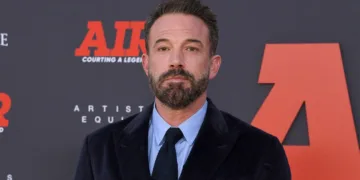


























Netflix disclosed in a securities filing Friday that it paid $587 million in cash to acquire InterPositive, the artificial intelligence startup founded by Ben Affleck, closing the book on a deal whose price tag had remained private since it was announced in March.
The figure appeared in a footnote to the company’s quarterly report to the Securities and Exchange Commission, which described the transaction as a business combination completed in March for a total purchase price of roughly $587 million in cash. Bloomberg had reported at the time that the deal could reach $600 million, a figure Netflix never confirmed until now.
Affleck founded InterPositive in 2022 and ran it largely in secret, building a team of 16 engineers, researchers and creatives around an AI model trained on production dailies rather than open internet data. The tool is designed to assist with post-production tasks such as relighting shots, fixing continuity errors and filling in missing footage, work Affleck has said he wanted to keep filmmakers, not machines, at the center of. He joined Netflix as a senior adviser once the deal closed.
Netflix has moved quickly to fold the technology into its pipeline. Executives said during last week’s second-quarter earnings call that generative AI tools, including those from InterPositive, have touched roughly 300 titles this year, concentrated in complex sequences like large crowd scenes and historical battles. Co-CEO Ted Sarandos told analysts some of those shots would have been cut entirely without the technology, given budget and schedule constraints.
The disclosure lands months after Hollywood’s unions settled their own positions on generative AI. SAG-AFTRA ratified a four-year agreement in June that tightened restrictions on synthetic performers and digital replicas, while the Writers Guild’s deal, reached earlier in the spring, offered writers weaker enforcement tools in exchange for a $321 million infusion into the union’s health plan. The Directors Guild’s contract talks, still ongoing, are expected to test how far studios will go in guaranteeing that creative decisions stay in human hands as tools like InterPositive’s spread across the industry.