





















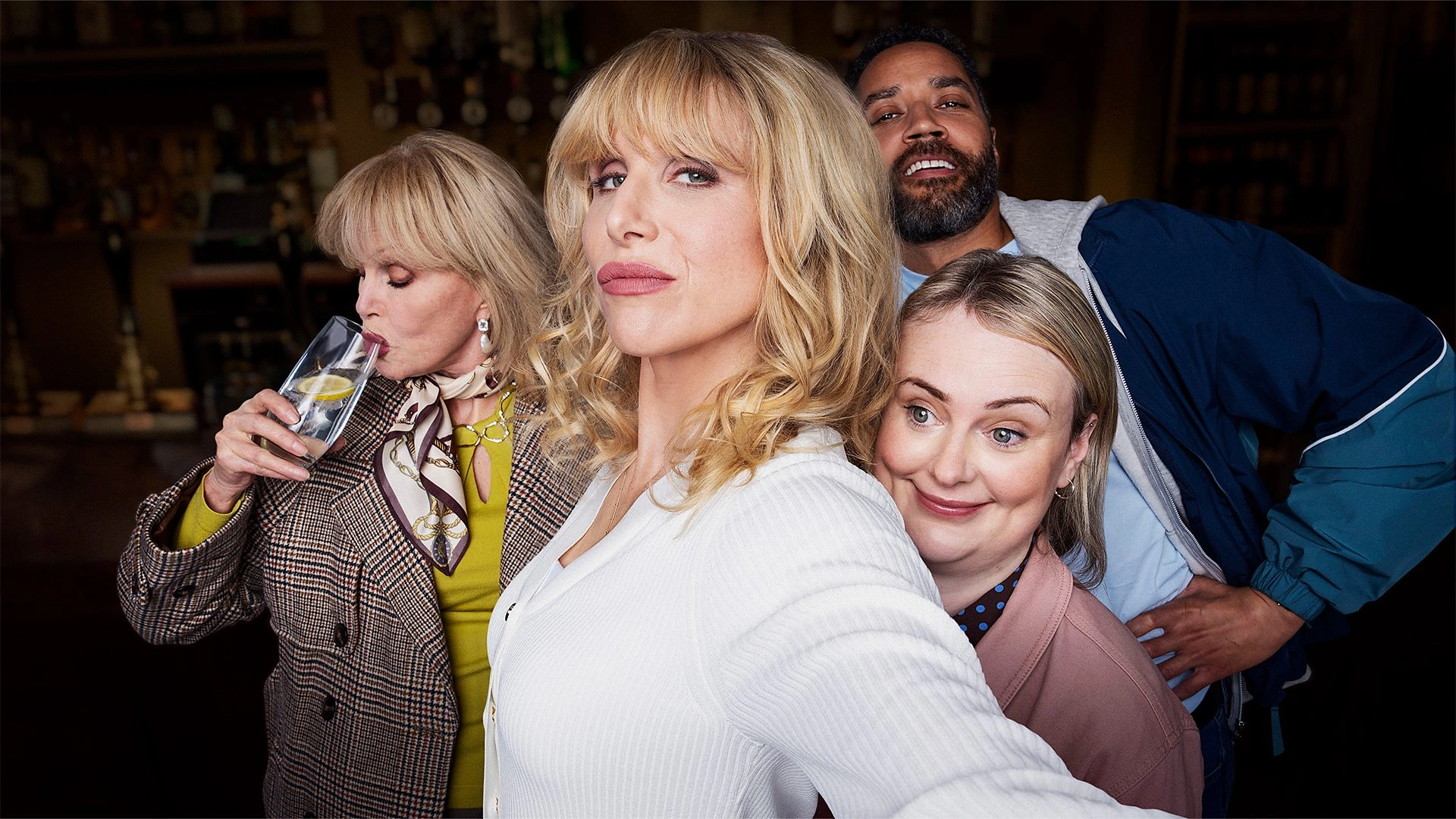

Amanda Hughes has swapped Chiswick greenery for a Harlesden maisonette, which she swiftly renames SoHa, because denial sounds better with a postcode gloss. Her days now run through a kitchen showroom job and the sort of household chores that have never appeared on anyone’s vision board. Amanda treats these duties as temporary static.
Her real devotion belongs to Senuous, a lifestyle brand with a mighty presence in her imagination and a modest one on social media. The move from primary school skirmishes to teenage football sidelines shifts the show’s whole pulse. The school-run frenzy gives way to gentrification at a simmer, plus the bracing sight of a single mother scrubbing her own floors.
Amanda can turn a coffee-shop visit into a networking summit. Each tiny exchange receives the full boardroom stare. Her optimism has begun to look medically resilient. She believes one perfect post will restore the luxury she regards as her natural climate. The season tracks a woman declining to recognize her slide, drawing its best laughs from the distance between Amanda’s self-portrait and Amanda’s bank balance.
The Trinity of Delusion
Lucy Punch gives Amanda’s delusion the discipline of an Olympic sport. Amanda Hughes rests on blissful ignorance, and Punch plays that ignorance with such fierce commitment that the character stays watchable through every cringe spiral. Amanda’s distance from her actual life lets her endure humiliations that would flatten a fully self-aware person.
During a pitch for a business loan, she calls Senuous a philanthropic endeavor because it makes no profit, a line that lands with the crisp snap of a trap closing. Punch’s timing is surgical. She turns snobbery into armor, then lets the metal briefly dent. Flashes of real worry for Amanda’s children or friends slip through, giving the character needed texture. The fool has a pulse. That matters.
Philippa Dunne gives the season its ballast as Anne. The power dynamic tilts once Anne finds accidental fame through viral houseplant content, handing the submissive sidekick the influence Amanda craves with sitcom cruelty and botanical garnish. Anne’s assertiveness reboot works because it keeps misfiring.
Her hunt for a voice produces awkward confrontations that feel painfully human, the kind of scenes where a tiny pause can do the work of an entire speech. She remains Amanda’s ideal foil, a woman whose lies aim to soothe others and often leave her own life knotted.
Joanna Lumley continues to be a comic event as Felicity. She plays uselessness with grandeur. Felicity treats an eye test as a social occasion of national importance and has no working knowledge of basic household appliances, which may qualify her for a peerage in this universe. She wanders through Amanda’s fragile social architecture tossing blunt remarks like live ammunition.
Under the Sloane Ranger hauteur sits late-life isolation. Her friends are disappearing to the Cayman Islands, and Lumley catches that upper-class loneliness without smudging the joke. Felicity stays magnetic while writing a belated birthday cheque, a feat of screen presence and stationery. The chemistry among these three women steadies the show when the plot edges into classic sitcom machinery.
The Harlesden Collective
Amanda’s orbit has widened, giving the series a stronger set of grounding forces. Mal and JJ embody competitive domesticity, a suburban sport with imaginary trophies and far too many opinions. Their arguments over shed construction and parenting philosophies create a sturdy counterweight to Amanda’s vanity.
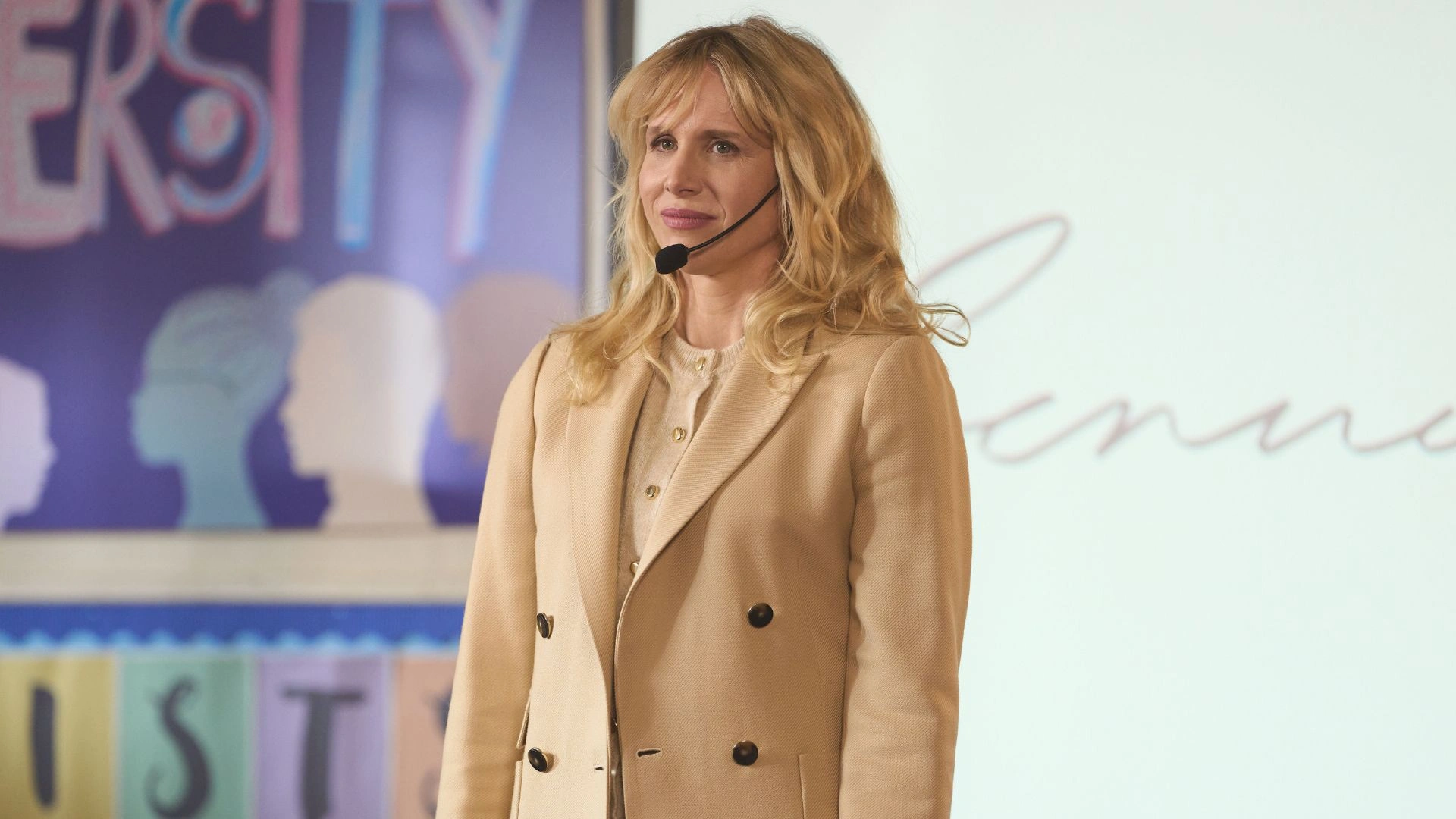
A basic DIY project becomes an ego arena, with modern gadgets and traditional methods treated like rival belief systems. The masculine puffery brings a new comic temperature, helping the series distinguish this Harlesden phase from its earlier form.
Harriet Webb enters as Abs, Mal’s straight-talking ex-partner and the group’s best delivery system for reality. She challenges Amanda’s pretension by refusing to participate in the status pageant. On the football sidelines, that makes her formidable. The pitch replaces the school gates as the main pressure point for social friction. The parents now watch their teenagers with the tired distance of people who have survived one stage of childcare and discovered the next one has sharper teeth.
Fi and Della sharpen the domestic mess. Fi’s turn as a white-van driver is a keen read on middle-class identity drift. She adopts the tradesperson persona at comic speed, performing practicality with the confidence of someone who has found a new costume. Della’s career moves bring logistical strain to their relationship, keeping home life busy and brittle.
These threads make Harlesden feel lived-in, crowded, and nicely untidy. The show thrives in small fights over control and dignity. Its ensemble builds a community where everyone performs competence while battling the dull little tasks of modern life. Television has built plenty of neighborhoods from gossip and proximity; this one runs on aspiration, insecurity, and the terrifying politics of a shed.
The Mechanics of the Cringe
The writing uses corporate satire to expose Amanda’s panic in designer packaging. A visit to an HSBC branch becomes one of the season’s sharpest set pieces. Amanda recasts a personal loan as a high-level partnership with a major international banking operation, because ordinary language would let reality into the room.
She borrows the language of the modern grind to hide her lack of actual employment. Her claim that she operates at the aspirational end of the lifestyle space distills the character beautifully. Even her kitchen showroom job becomes a collaboration, a word polished enough to keep retail work at a safe psychological distance.
The humor runs on a steady feed of sharp lines, and the rhythm matters. Felicity and Amanda get the most stylized dialogue, firing insults and observations with breezy indifference. Those lines vent the bleakness gathering around Amanda’s life.
The plots use familiar sitcom material, including accidental viral fame and neighborhood rivalry, and the character voices make the machinery feel alive. The editing respects the beat. A failed joke gets room to curdle. A misunderstood boast hangs in the air for the exact amount of time required for social death. Lovely, really. Horrifying, too.
The cringe is calibrated with care. The show keeps Amanda extreme enough to generate sparks and human enough to follow. It treats her optimism as a survival tactic, giving the awkward encounters a strange warmth. The direction favors performance and silence, letting actors sit inside a botched interaction until the laugh arrives by squirm.
The physical spaces do plenty of visual work: the showroom, the coffee shop, the football pitch, the maisonette, each one pressing Amanda’s fantasy life against her circumstances. The soundscape grounds the bigger absurdities in neighborhood texture. Each episode becomes a compact study of language as self-defense, with Amanda building verbal fencing around every unpaid bill and bruised fantasy.
Performances of Status
Gentrification works here as a mirror for ambition. Amanda sees the trendy coffee shop in Harlesden as proof that she belongs there, which is an impressive leap even by Amanda’s standards. The changing neighborhood excites her because it seems to confirm the version of herself she keeps trying to project.
The season also shifts its parenting lens toward teenagers, with sex education talks and prom preparations replacing the earlier school-gate wars. The children have become independent figures with their own readings of their mother’s behavior, and those readings are rarely flattering.
Amanda embodies the strain of maintaining success as a public performance under constant digital observation. She works hard to seem influential while living a life that keeps insisting on being ordinary. Status here is labor. It requires captions, poses, borrowed language, and selective blindness.
The series understands social media as a place where people arrange the selves they wish they could afford. Amanda keeps stacking the cards with a smile, a filter, and a terrible grasp of arithmetic. How long before the bank balance ruins the branding?
Amandaland returned to television screens on May 6, 2026, marking a triumphant second season for this celebrated spin-off. Fans of the original series can follow the latest exploits of Amanda Hughes as she navigates her self-imposed exile in South Harlesden. The show is currently available for streaming on BBC iPlayer, offering a look at the challenges of modern parenting and social media branding. This season continues to highlight the chaotic relationship between Amanda and her mother while introducing fresh faces to the neighborhood.
Where to Watch Amandaland Season 2 Online


Full Credits
Title: Amandaland
Distributor: BBC One, BBC iPlayer, Lionsgate
Release date: May 6, 2026
Rating: TV-14
Running time: 30 minutes
Director: David Sant
Writers: Laurence Rickard, Holly Walsh
Producers and Executive Producers: Arnold Widdowson, Sharon Horgan, Clelia Mountford, Faye Dorn, Helen Linehan, Holly Walsh
Cast: Lucy Punch, Joanna Lumley, Philippa Dunne, Samuel Anderson, Siobhán McSweeney, Rochenda Sandall, Harriet Webb, Ekow Quartey, Miley Locke, Anya McKenna-Bruce, Jack Veal, Alexander Shaw, Archie Smith
Director of Photography (Cinematographer): Matt Wicks
Editors: Tim Murrell
Composer: Oli Julian
The Review
Amandaland Season 2
Amandaland Season 2 succeeds through the unwavering commitment of Lucy Punch and the sharp wit of its script. The shift to Harlesden provides fresh social friction. While the supporting cast occasionally leans too far into caricature, the central trio maintains a high standard of comedic excellence. The episodes offer a sharp observation of social performance and the frantic effort required to maintain a facade of success.
PROS
- Lucy Punch provides a masterclass in the comedy of persistence.
- The script features rapid fire zingers and sharp satire of influencer tropes.
- Joanna Lumley delivers lines with a magnificent lack of utility.
CONS
- Some secondary subplots feel thin.
- Certain ensemble characters drift into predictable caricature.