




























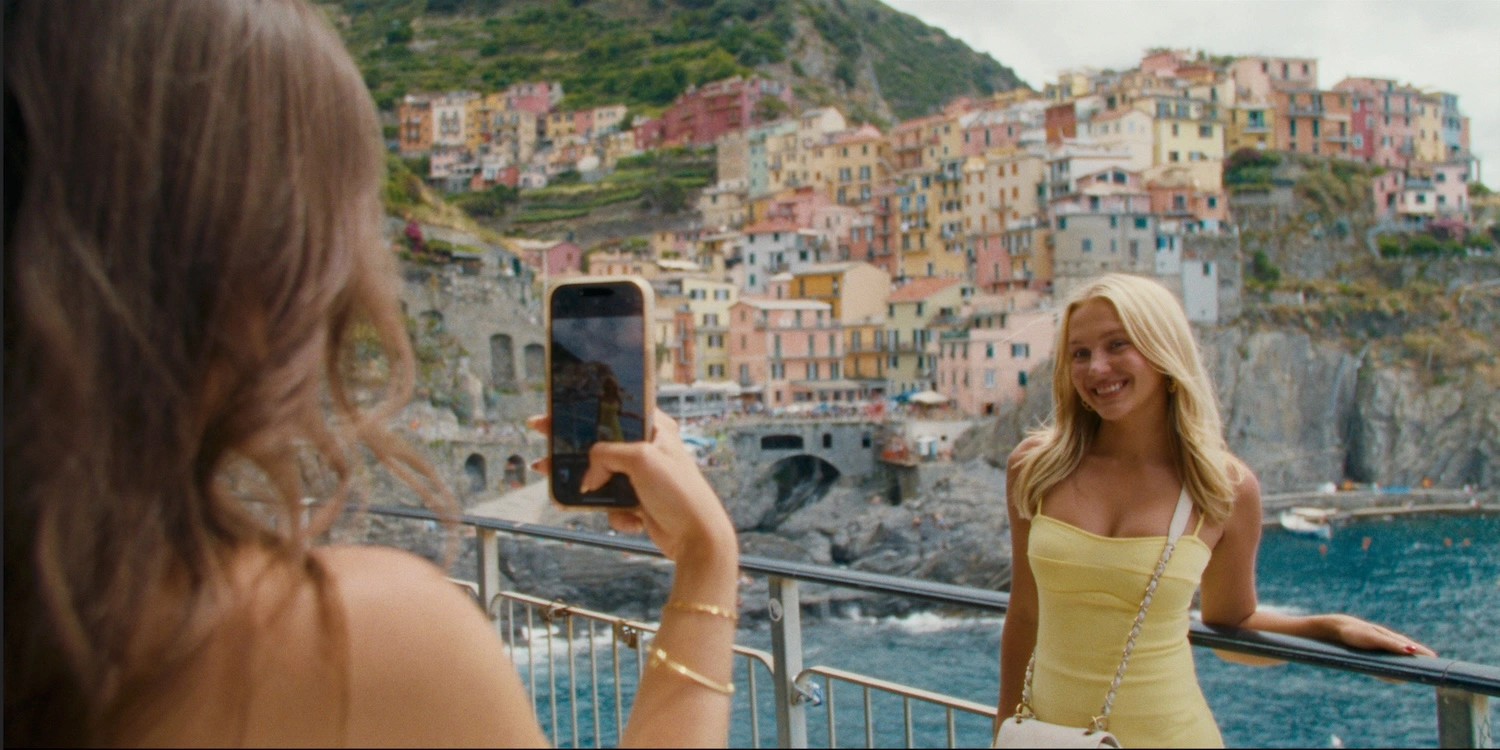
Cinque Terre first appears under a light so generous it borders on accusation. Terraced vineyards descend toward the sea, painted houses cling to the cliffs, and Lukas Gut’s camera glides through cobbled lanes with the calm assurance of a tourist brochure that has learned composition. Gar O’Rourke understands the trap immediately. The prettier the image, the harder it becomes to blame anyone for wanting to stand inside it.
That contradiction gives The Siege of Paradise its visual grammar. O’Rourke’s documentary studies the five villages of Corniglia, Manarola, Monterosso, Riomaggiore, and Vernazza as places split between spectacle and survival. Around 4,000 residents live within a landscape visited by millions each year. Tourism pays wages, fills restaurants, and keeps family businesses alive. It also fills platforms, narrows streets, inflates housing pressure, and turns inherited customs into scheduled attractions.
The film observes rather than prosecutes. Its caution is humane, though caution has a habit of dimming the sharper edges of an argument.
The Crowd Enters the Frame
The opening movement uses rhythm with unusual precision. A local radio host invites listeners to stay in bed for five extra minutes, open a window, and make coffee. Gut photographs the villages before commerce begins, when the streets still belong to residents and the sea appears to hold the horizon in place. Then a bell sounds. Boats approach. Trains unload. Wheels strike stone.
Denis Kilty’s score borrows from Westerns and military marches, making each arrival feel faintly tactical. O’Rourke never turns the comparison into a cheap metaphor. He lets the sound design do the needling. Suitcase wheels, camera shutters, station announcements, and crowd noise gradually replace birdsong and conversation. The occupation is acoustic before it is political.
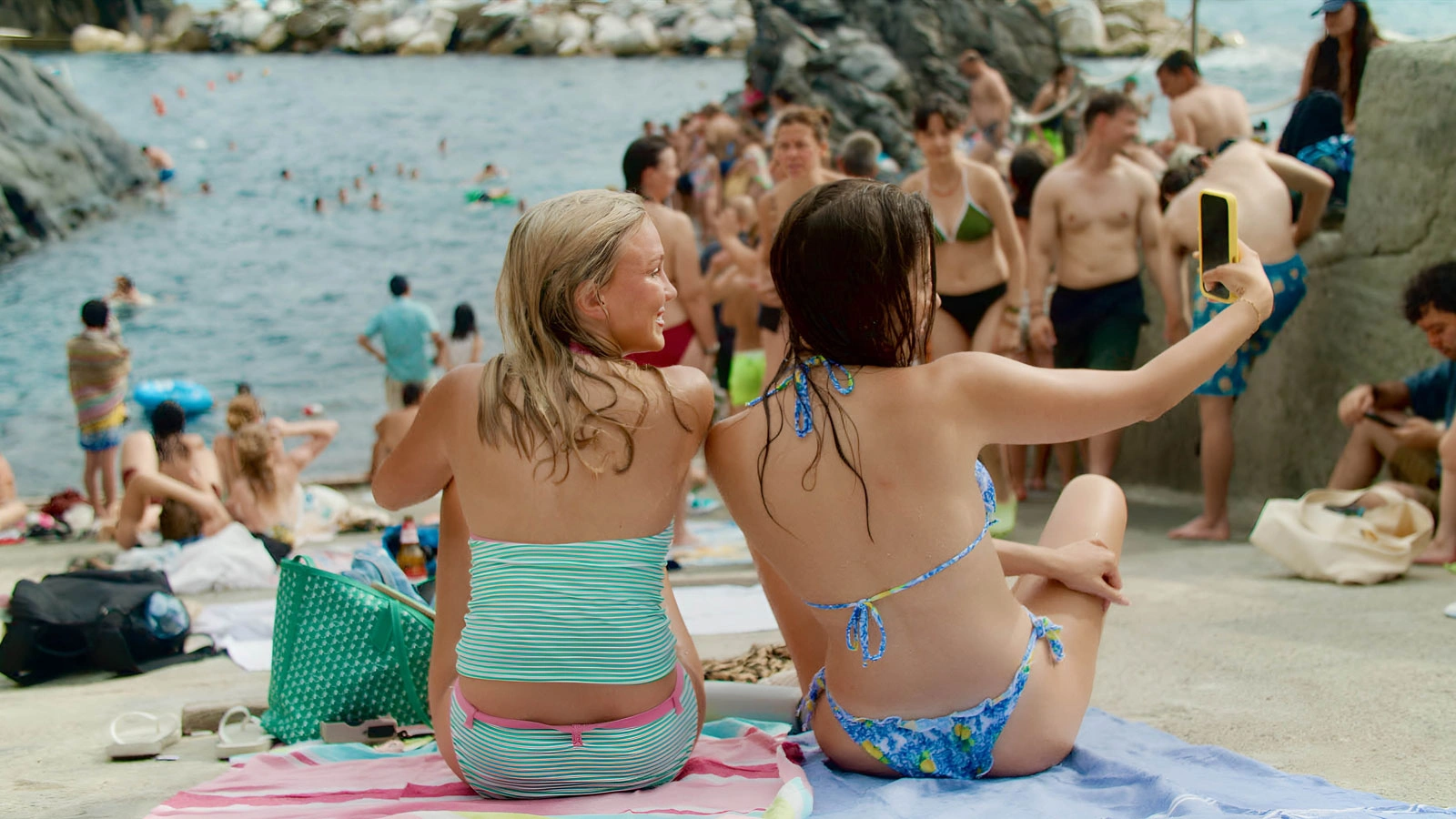
Gut’s framing becomes tighter as the day advances. Wide shots celebrate the coastline, then medium shots compress bodies against storefronts, and close-ups isolate overflowing bins, souvenir racks, and Airbnb lockboxes. The moral argument sits inside that shrinking field of view. Space disappears first. Patience follows.
The nighttime station scenes carry the film’s strongest visual threat. Fluorescent light flattens faces, bodies gather behind railings, and the villages begin to resemble holding areas built for a system no one controls. Paradise, apparently, has poor crowd management.
Lives Facing Inland
Bartalo Lerici and his wife, Lise Bertram, provide the film with an emotional register its crowd imagery cannot reach. Their terrace scenes are framed without decorative fuss. Coffee cups, weathered hands, and the quiet space between two people carry greater weight than another sweep of the coast. Bartalo recalls arriving in Cinque Terre and seeing a sky crowded with stars. His present life is tied to the vineyard, to Lise’s illness, and to the fear that grief may outlast the place that once gave their future shape.
His vineyard also sharpens the film’s economic paradox. The land survives through labour, yet vineyard tours and summer wine sales make that labour financially possible. The tourists threatening continuity are helping fund it. O’Rourke finds no clean moral angle because none exists.
Carmelo Verduci lives inside a similar bind. His restaurant provides comfort and exhaustion in equal measure, while his daughter Giorgia shows little desire to inherit the burden. Their exchanges turn generational decline into a domestic problem. A culture can survive on menus and guided tours for a while. It becomes something else once its children no longer wish to remain.
Mayor Fabrizia Pecunia gives the issue an administrative face. Her meetings and public appeals reveal a leader expected to regulate visitor numbers without enough legal authority to do so. Fisherman Guido Galletti offers a bleaker image when he describes fishing repackaged for tourists. Tradition has not vanished. It has learned to perform.
The Image Consumes the Visit
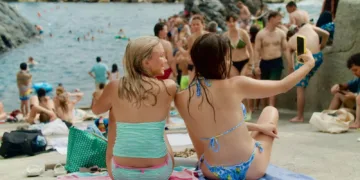
Grace Andrews and Izabel Stewart arrive from Chicago carrying cameras, scripts, and the peculiar anxiety of people required to prove they are enjoying themselves. Grace swims with a camera in hand, repeats introductions, and stages an Aperol Spritz segment around a plastic bucket. John Murphy’s editing finds the joke in repetition, then lets the joke sour. Every retake leaves less room for the place itself.
The film resists making Grace a villain. Her enthusiasm is sincere, and moments of fatigue expose the labour beneath the polished feed. Still, the influencer passages repeat their point long after it has landed. O’Rourke keeps returning to performance when the residents’ housing, service work, and infrastructure pressures need closer scrutiny.
One local distinction becomes the film’s cleanest idea: visitors face the sea, while residents face the land. The first position captures an image. The second reveals vineyards, ageing families, municipal limits, and work carried out before sunrise. Gut’s camera understands both directions, though O’Rourke remains reluctant to choose between them.
That reluctance protects the documentary from sermonizing. It also leaves its title sounding fiercer than the film itself. By the final crowded platforms, the light has changed, the space has tightened, and the postcard has become evidence.
This documentary, which premiered at the 2026 Tribeca Film Festival, examines the impact of mass tourism on the Cinque Terre region of Italy. Through a series of interconnected personal stories, the film explores the escalating tension between local residents trying to maintain their traditional way of life and the millions of visitors and influencers who arrive each season to experience the popular coastline.
Full Credits
Title: The Siege of Paradise
Distributor: MetFilm Sales
Release date: June 2026 (Tribeca Film Festival premiere)
Running time: 86 minutes
Director: Gar O’Rourke
Writers: Gar O’Rourke
Producers and Executive Producers: Andrew Freedman, Ken Wardrop, Jessie Hayden, Greg Martin, Zak Brilliant
Cast: Fabrizia Pecunia, Carmelo, Giorgia, Bartolo, Grace, Izabel
Director of Photography (Cinematographer): Lukas Gut
Editors: John Murphy
Composer: Denis Kilty
The Review
The Siege of Paradise
The Siege of Paradise finds its clearest argument in the space between Lukas Gut’s radiant coastal panoramas and the cramped train platforms that follow them. Gar O’Rourke refuses to cast tourists as villains, yet his restraint leaves housing, labour, and infrastructure lurking beyond the frame. Bartalo and Lise give the film its emotional gravity, their terrace scenes preserving a life that the crowds can photograph but never fully see. Paradise remains beautiful. The camera makes that beauty look increasingly cornered.
PROS
- Exceptional coastal cinematography
- Tender portrait of Bartalo and Lise
- Sharp visual contrasts
- Humane treatment of visitors
- Playful, uneasy score
CONS
- Limited structural analysis
- Repetitive influencer material
- Underdeveloped local perspectives
- Excessively cautious political stance