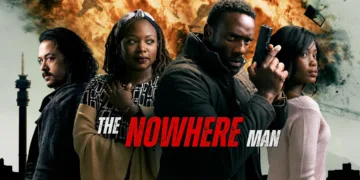







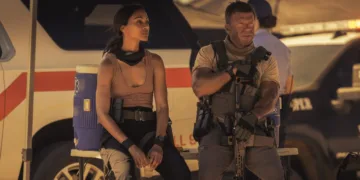



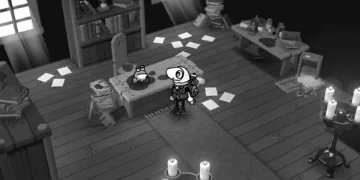
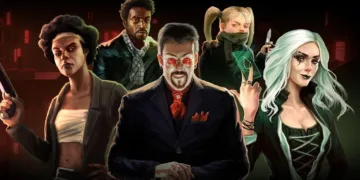


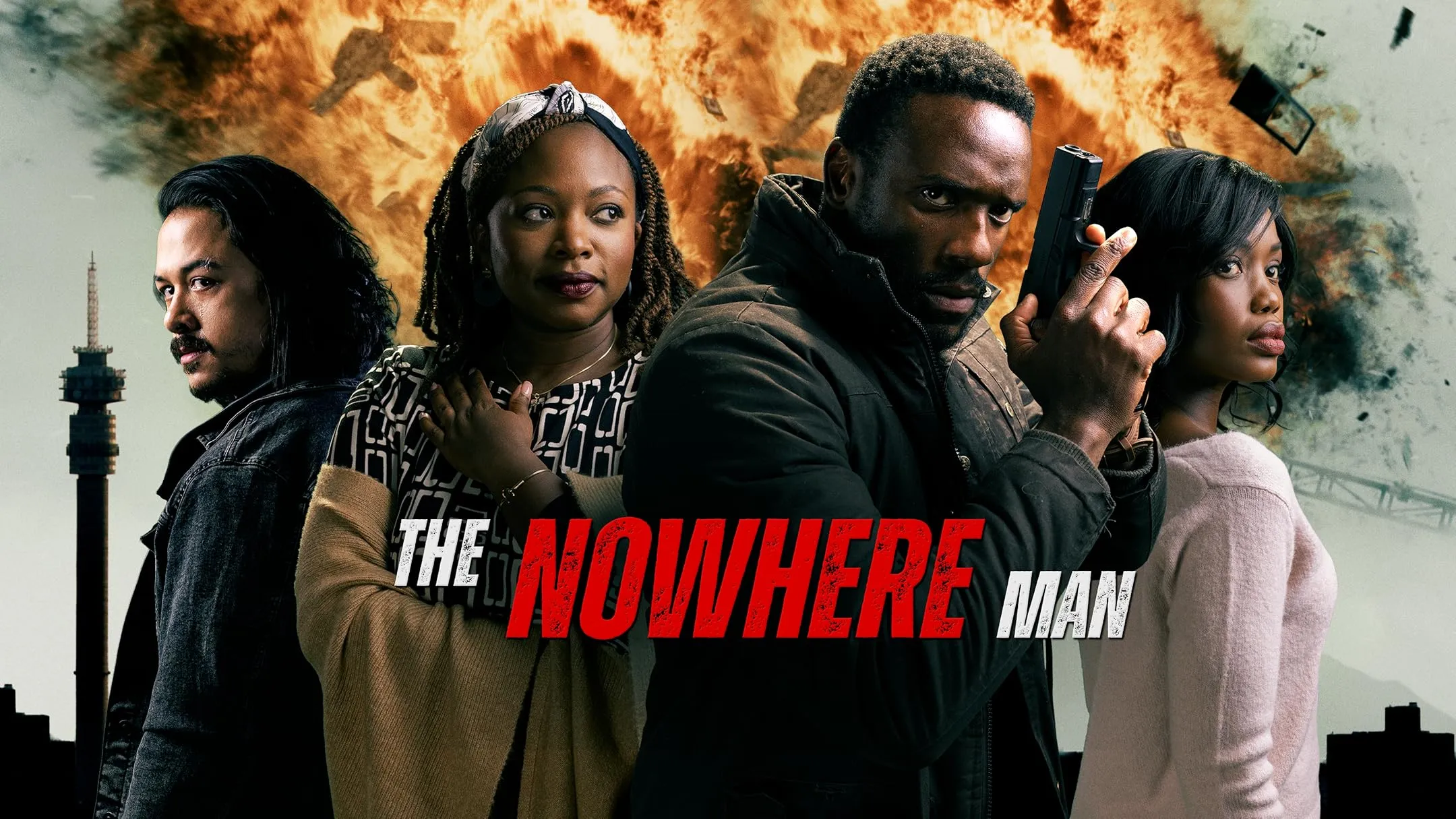

Lukas Nkosi wants a life built on quiet after a violent military past. He lives in a Johannesburg landfill, gathering scrap and turning it into industrial art for a local women’s shelter. He keeps his head down and his name out of circulation until he witnesses a home invasion and steps in. That moment drags him back into high-stakes conflict. Lukas crosses paths with Neo, a doctor fleeing her ex-husband, the powerful drug lord Phumza Sithole.
The series tracks Lukas as he protects Neo while traumatic memories from his time as a mercenary press in on him. Framed by a dusty, visceral South African backdrop, the story sits with the problem of trying to walk away from violence while living in a place where danger keeps finding you. Lukas wrestles with post-traumatic stress while putting himself between harm and the people who cannot afford another hit.
The narrative travels from the streets of Johannesburg to the mountains of Cape Town. It builds a protagonist committed to pacifism in his daily intent, even as he carries a lethal skill set that refuses to stay theoretical. His path is shaped by what he hauls with him, in muscle and in memory.
Anchor Performances in a Fractured Landscape
Bonko Khoza plays Lukas with a quiet, vibrating intensity. The performance rejects the usual invincible action-hero posture and leans into the sense of a man one breath away from ignition. Lukas reads like a ticking time bomb who has trained himself to pass as ordinary, using stoicism as camouflage.
The effect becomes a study of restrained trauma. His military history registers as weight you can see, in the way he holds his body and in his deep reluctance to make contact with the world around him. That choice points to a shifting idea of the “action lead” on global streaming platforms, one that loosens the grip of the hyper-masculine ideal and makes room for fragility without sanding down capability.
Naturi Naughton-Lewis anchors the shelter scenes as Ruby, giving the story a moral center that stays present even when the plot tightens. As the shelter’s operator, she functions as Lukas’s clearest link to a humanity that keeps flickering out. She pushes him toward using his specialized skills for a righteous purpose, keeping his attention off personal gain and back on responsibility.
The casting adds a seasoned presence to the production. Alongside her, Dineo Rasedile’s Neo lands with striking clarity. The writing treats Neo as an active participant in her own survival, with her choices shaping the danger that follows her. The chemistry between Rasedile and Khoza feels earned, growing through shared vulnerability and sustained pressure rather than manufactured romantic beats.
The relationship among the three leads turns the shelter into a sanctuary, a small pocket of steadiness set against a predatory outside world. The shelter also plays as a microcosm of social healing, a place for people discarded by society who are trying to rebuild with limited resources and limited protection. Through these characters, the production presses against familiar action-TV expectations and places emotional intelligence on the same level as physical prowess. It is a quiet argument about what strength looks like, and who gets to embody it on screen.
Tactile Action and the South African Canvas
The series’ technical execution separates it from the sanitized feel that often clings to American action dramas. Choreographer Lubabalo Nontwana steers clear of distracting shaky-cam tactics and keeps the combat crisp and brutal. The violence reads as grounded, with a respect for the physics of impact and the cost of every move.
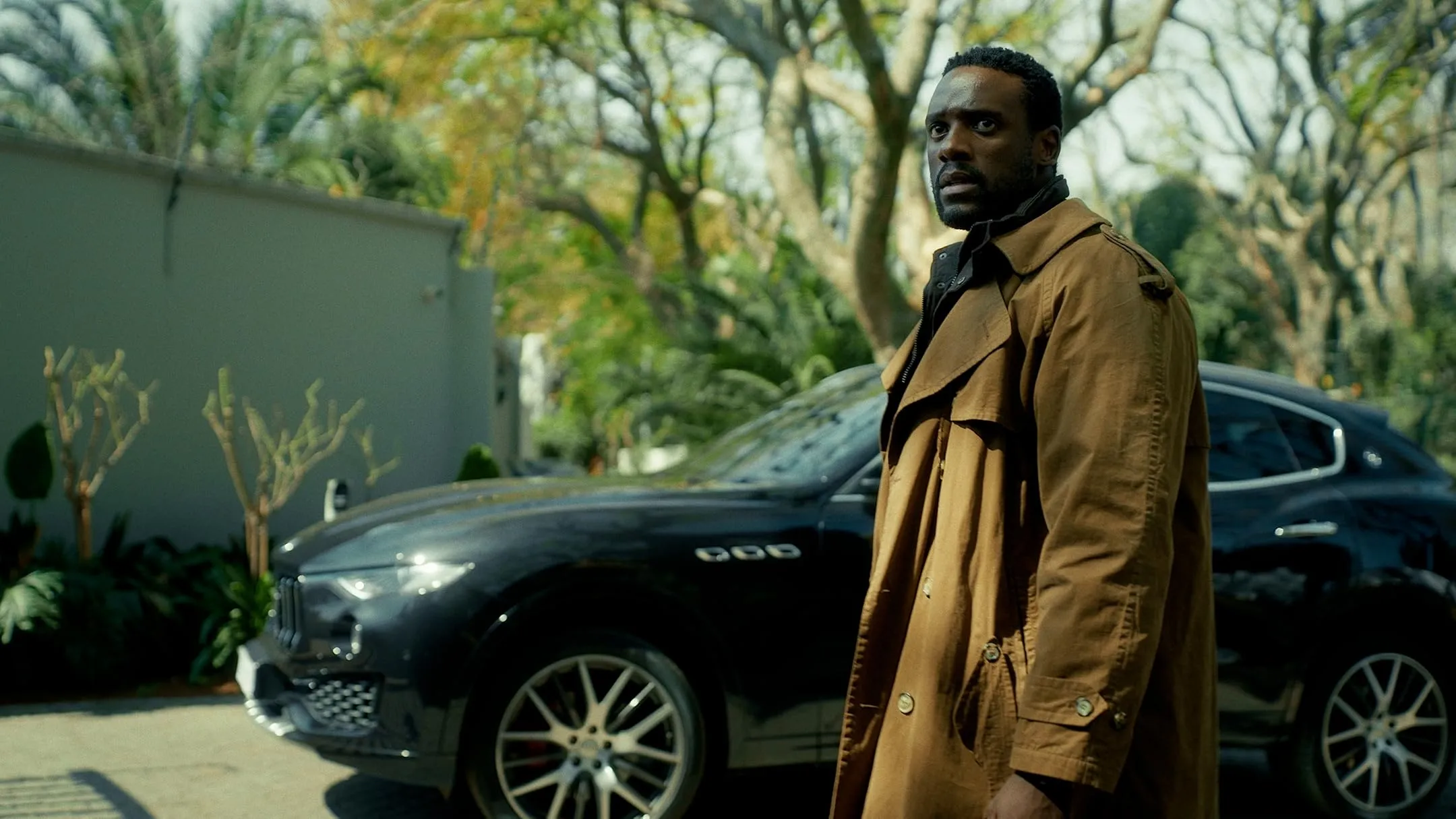
Lukas’s fighting style reflects his mercenary background: efficient, lethal, and stripped of flourish. That emphasis on realistic choreography signals a move toward more visceral, tactile storytelling in international television, where bodies bruise, spaces matter, and spectacle cannot hide the consequences.
South Africa is treated like a character with agency. The dusty streets of Johannesburg and the sharp cliffs of Cape Town carry a specificity that a generic urban backdrop cannot reproduce. The cinematography leans into a gritty visual approach that mirrors the harshness of Lukas’s daily existence. It also draws attention to vast economic disparities, shifting the camera between the landfill’s textures and the city’s polished surfaces. The setting does more than provide atmosphere; it frames a society where survival demands improvisation, and safety can feel like a luxury product.
Lukas’s sculptures operate as key symbolism. He builds predators out of industrial scrap, metalwork that echoes his own nature and his attempts at reconstruction. The art becomes a way to process his history, connecting the person he used to be with the person he wants to become. The pieces carry an unsettling reminder: the animal within him remains present, even while he tries to redirect it into something useful and controlled. That tension sits at the center of the series’ view of rehabilitation, showing how reinvention can look like work rather than clean transformation.
The Ghosts of History and Institutional Rot
The psychological toll of Lukas’s former life drives the series. The idea of “the things we carry” functions as its thesis, with Lukas burdened by the moral cost of his mercenary work. The internal war becomes tangible through Jonah, played by Nathan Castle. Jonah brings the past into the present in literal form, and his presence underlines how shared trauma can bind people together even when it corrodes them. He forces Lukas to face the persistence of history, a past that continues to move and speak long after it should have gone silent.
The series also engages with institutional corruption and the mercenary groups operating in the state’s shadows. It sketches a world where law enforcement can be absent or complicit, leaving people to negotiate security through informal power structures. That choice reflects anxieties about safety and the privatization of violence, where force becomes a commodity and accountability becomes optional. The mercenary network hangs over the story as a pervasive system, reinforcing how difficult justice can be in an environment that keeps rewarding the powerful.
Lukas remains trapped in a cycle where every attempt to protect others pulls him back into methods he wants to abandon. He functions as an instrument of death who cannot smoothly transition into quiet living, and the story treats that problem with sorrow rather than triumph. Violence is presented as corrosive, chewing through the people who deploy it even when they deploy it for protection. The series keeps returning to the question of redemption after harm, staying with the emotional wreckage and asking what repair can look like when the damage has a long memory.
Narrative Momentum and the Architecture of Menace
The antagonists carry a controlled, sophisticated menace. Moopi Mothibeli’s Phumza Sithole holds the screen as a formidable presence, an imprisoned drug lord who still exerts power through a network of loyalists. His threat stays constant and looming, reaching far beyond the confines of his cell. A prison break sequence captures the scale of the criminal influence Lukas is up against and sharpens the stakes of Neo’s defiance. Phumza’s cruelty reads as calculated, built on patience and systems rather than chaos.
The six-episode structure balances the overarching threat of Phumza with smaller conflicts that widen the show’s view of society. An episode built around an underground fight club plays as a self-contained study of exploitation, while still feeding the larger momentum. The pacing stays relentless, giving the characters little room for rest. New dangers emerge from Lukas’s former life with rapid frequency, keeping pressure on his attempts to hold a line between protection and relapse.
That forward drive sustains engagement without flattening character depth. The series stays tight, emphasizing the plot points needed to push events ahead while keeping Lukas’s interior life in view. The speed matches the instability of the characters’ circumstances, as they remain in motion, in hiding, or bracing for the next assault. Peace becomes temporary and fragile in Lukas’s world, and the show positions that instability as part of what modern action television can look like on streaming platforms: compressed, intense, and shaped by social realities that refuse to stay off-screen.
The Nowhere Man is an adrenaline-fueled South African action drama that premiered in the United States on Starz on January 16, 2026. The series follows Lukas, a former Special Forces mercenary living a quiet life as a junk collector in Johannesburg while grappling with severe PTSD. His anonymity is shattered when he intervenes in a home invasion, pulling him back into a violent world he desperately tried to escape. Filmed on location in South Africa, the show blends high-octane action with a deep, emotional exploration of trauma and redemption. Viewers can stream the six-episode series weekly on the Starz app and all Starz on-demand platforms.
Full Credits
Title: The Nowhere Man
Distributor: Starz
Release date: January 16, 2026
Rating: TV-MA
Running time: 45–50 minutes per episode
Director: Fred Wolmarans, Gareth Crocker
Writers: Gareth Crocker
Producers and Executive Producers: Phillip Wolmarans, Nick Keulemans, Chris Lawrance, Colleen Lawrance, Sean Mik’ael Butler, Naturi Naughton-Lewis, Two Lewis
Cast: Bonko Khoza, Naturi Naughton-Lewis, Dineo Rasedile, Nathan Castle, Moopi Mothibeli, Andreas Damm, Langley Kirkwood, Greg Kriek, Hlomla Dandala
Director of Photography (Cinematographer): Nick Keulemans
Editors: Gareth Crocker
Composer: Motion Story Music Team
The Review
The Nowhere Man
The Nowhere Man is a gripping entry in the global action landscape, trading generic thrills for South African grit and emotional depth. While it adheres to familiar tropes of the reluctant warrior, the grounded choreography and Bonko Khoza’s haunting performance elevate the material. It succeeds as a visceral study of trauma and redemption, proving that international streaming can redefine stale genres through authentic settings and nuanced character work. Despite occasional pacing stumbles, it remains a potent, high-stakes drama that resonates long after the final shot.
PROS
- Bonko Khoza brings a rare, vibrating intensity to a traditionally stoic archetype.
- The fight sequences are crisp and brutal, favoring realism over cinematic flair.
- The Johannesburg and Cape Town settings offer a visceral, unique atmosphere.
- The series treats PTSD and the moral cost of violence with genuine gravity.
CONS
- The "retired mercenary pulled back in" premise follows a well-worn path.
- Certain secondary plot points, such as the convict drug pin arc, feel overextended.