









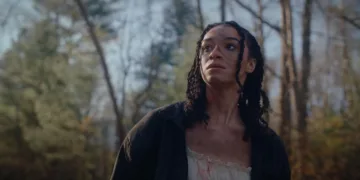

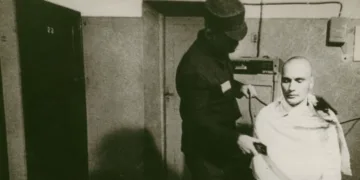









The directions end by disused railway tracks. Anne and Greg walk from there to a cave, where the promised transplant clinic consists of a tent and people prepared to take an organ from an unwilling donor. Their money has brought them to the place they hoped never to see. The distance between the reassuring idea of a medical arrangement and its physical reality is one of the sharpest shocks in Cyrus Neshvad’s Child.
Their route also recalls a strain of European-set horror: comfortable western travelers cross into an unnamed eastern country and find the countryside full of threats. Here the visitors have helped finance the threat. The country is identified only loosely, through Bulgarian speech, forest, wary locals, and a covert operation. Neshvad’s Luxembourg-made film understands that Anne and Greg cannot claim complete innocence once they see the cave. Yet its anonymous destination still carries an old genre burden. The people who live there rarely seem to exist outside the danger the visitors encounter.
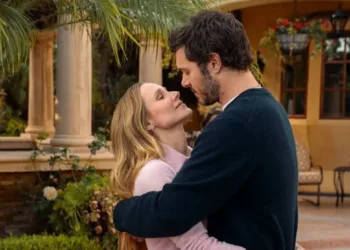
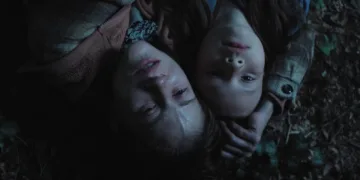
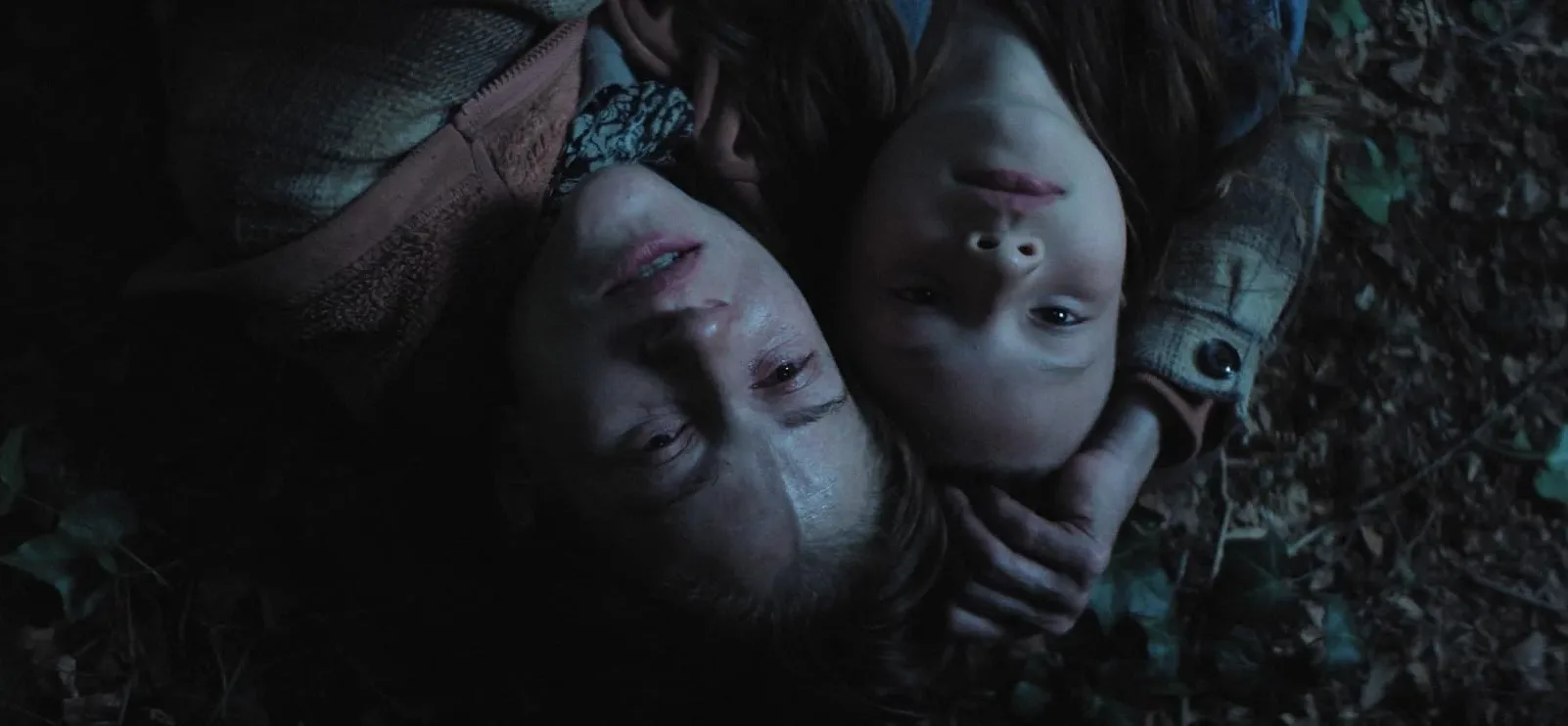
Anne (Brigitte Urhausen) and Greg (Malik Zidi) have a son, Leo, hospitalized after an accident. Greg, himself a doctor, had taken his eyes off the boy, and Anne holds him responsible. They are separated, though the trip forces them into a partnership neither can comfortably sustain.
Urhausen plays Anne’s determination without making it a simple heroic quality; at the cave, her focus on getting back to Leo sits beside the knowledge of what the organ costs. Zidi’s Greg carries a different pressure. His medical training offers no clean solution, and his part in Leo’s accident makes refusing the deal feel, to him, like another failure. Their shared purpose never quite erases the blame between them.
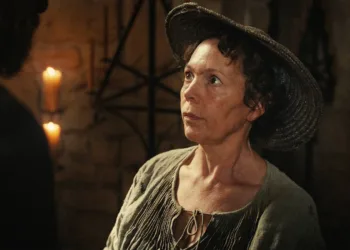
Then Lydia (Lydia Indjova) arrives with a gun, searching for her missing daughter. Her interruption gives the transaction another parent’s face. Anne’s fear of losing Leo is immediate and credible, while Lydia has reason to fear the very system Anne has paid to use. Indjova’s forceful presence prevents the confrontation from becoming a tidy test of one couple’s conscience. As the film sends them into the woods, though, Lydia’s own search has to compete for space with the protagonists’ race home. Her claim risks becoming part of the pursuit rather than a life with equal weight in the story.
Neshvad and cinematographer Nikos Welter mark the border crossing with a shift in color. The changed palette gives the trip a felt break from the hospital, but it can also make an unspecified region seem threatening on sight. The film is strongest when its lighting has a precise task.
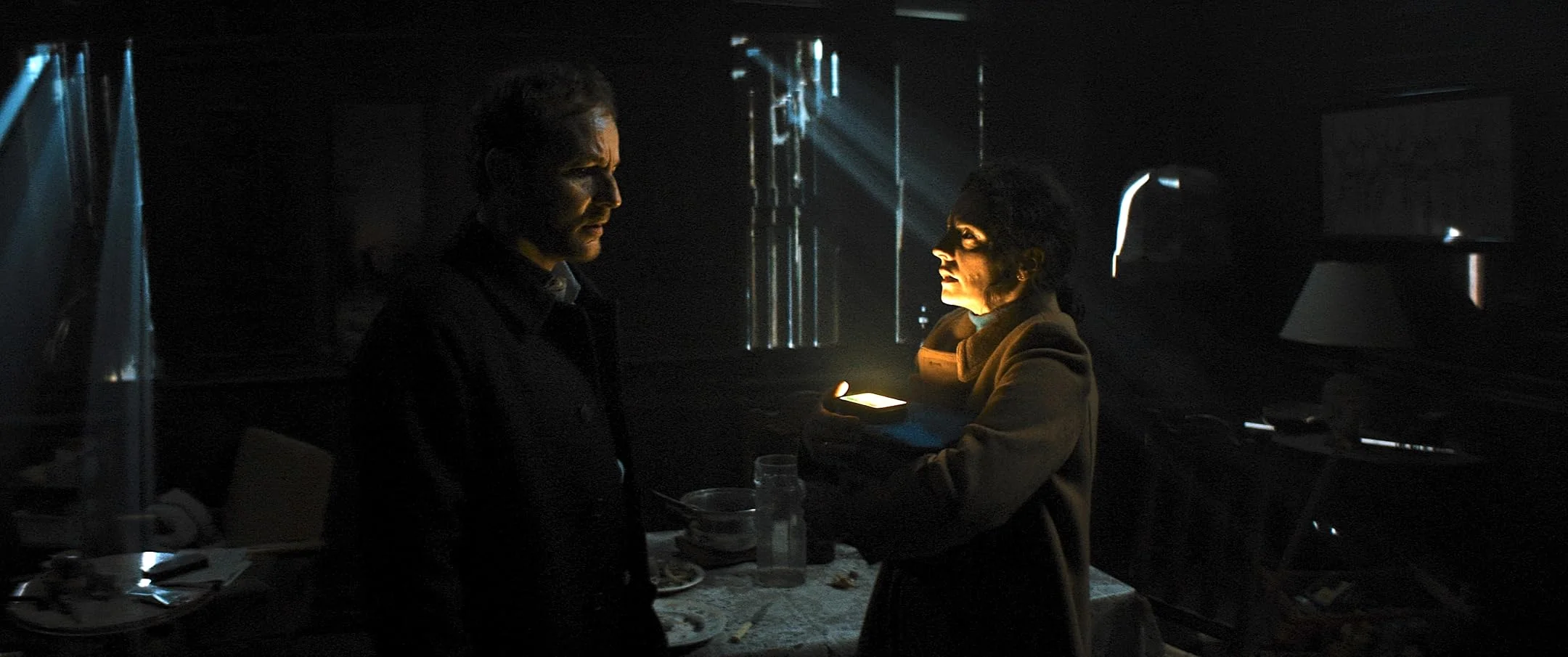
Once the organ is in a portable container, its LEDs cast blue, then orange and red light as the time to use it runs down. The box beeps and can give away the fugitives’ position. Each flash measures Leo’s shrinking chance while making the object harder to conceal. Suspense grows from the same object that holds the evidence of the parents’ bargain.
The woods and abandoned house let Neshvad work in a rougher register. Darkness and noises outside the frame keep the pursuers uncertain, and the house’s traps turn flight into a sequence of immediate choices. Anne remarks that Leo would love the place. It is a small, plausible thought from a mother who has spent the trip thinking about how to bring something back to him. It also briefly lets the house be a place a child might explore before it becomes another site of terror. That double view gives the chase a sharper emotional edge than a succession of scares could supply on its own.
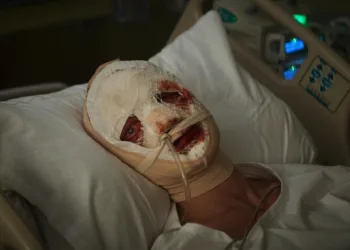
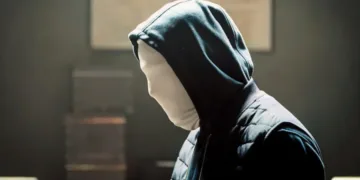
The later appearance of a disfigured pursuer changes the film’s balance. There is energy in the move from the cave’s criminal operation to a figure stalking the house, and Neshvad can handle the darkness and abrupt reversals of survival horror. The creature’s mutilation also belongs to a story about bodies treated as material. Still, a visible monster offers Anne and Greg an enemy much easier to oppose than the market they chose to enter. The chase asks us to fear for them, and it succeeds. It spends less time asking what it means that they were customers before they became fugitives.
Some of the medical setup is too indistinct to bear much scrutiny. The film never clearly identifies the organ, and the route from an illicit extraction to a viable transplant remains hazy. Its short running time benefits the pursuit, where a lit container and a narrowing deadline make the stakes legible at once. It gives the confrontation among Anne, Greg, and Lydia less room to change shape after the cave. The container gives Leo a visible deadline, while Lydia searches for her daughter without any comparable measure of hope.
Child arrives in UK cinemas on October 2, 2026. The psychological horror thriller follows a desperate couple who descend into a dark criminal underworld to save their seriously ill son.
Full Credits
Title: Child
Distributor: Cynefilms
Release date: October 2, 2026 (UK Cinemas)
Running time: 1 hour 18 minutes (78 minutes)
Director: Cyrus Neshvad
Writers: Cyrus Neshvad, Guillaume Levil
Producers and Executive Producers: Cyrus Neshvad, Stefan Milovic
Cast: Malik Zidi, Brigitte Urhausen, Lydia Indjova, Anne Klein, Dmytro Yaroshenko, Raphaël Temim, Jules Werner
The Review
Child
Cyrus Neshvad turns an illicit transplant into tense, resourceful horror. The beeping container and changing light make Leo’s deadline palpable, while Lydia’s search exposes the cost of Anne and Greg’s bargain. The creature pursuit is effective, though it pulls attention from the conflict among the parents. The unnamed eastern setting also relies too heavily on familiar danger-zone imagery. Child makes its protagonists’ fear immediate; their complicity deserves as much attention.
PROS
- Cyrus Neshvad turns an illicit transplant into tense, resourceful horror. The beeping container and changing light make Leo’s deadline palpable, while Lydia’s search exposes the cost of Anne and Greg’s bargain. The creature pursuit is effective, though it pulls attention from the conflict among the parents. The unnamed eastern setting also relies too heavily on familiar danger-zone imagery. Child makes its protagonists’ fear immediate; their complicity deserves as much attention.
- Strong tension among Anne, Greg, and Lydia
- Effective lighting and pursuit through the woods
- A sharp question about who pays for one child’s survival
CONS
- The creature chase weakens the parental conflict
- The eastern setting remains anonymous
- The transplant arrangement lacks clarity