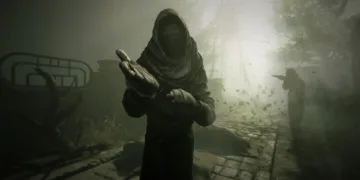

























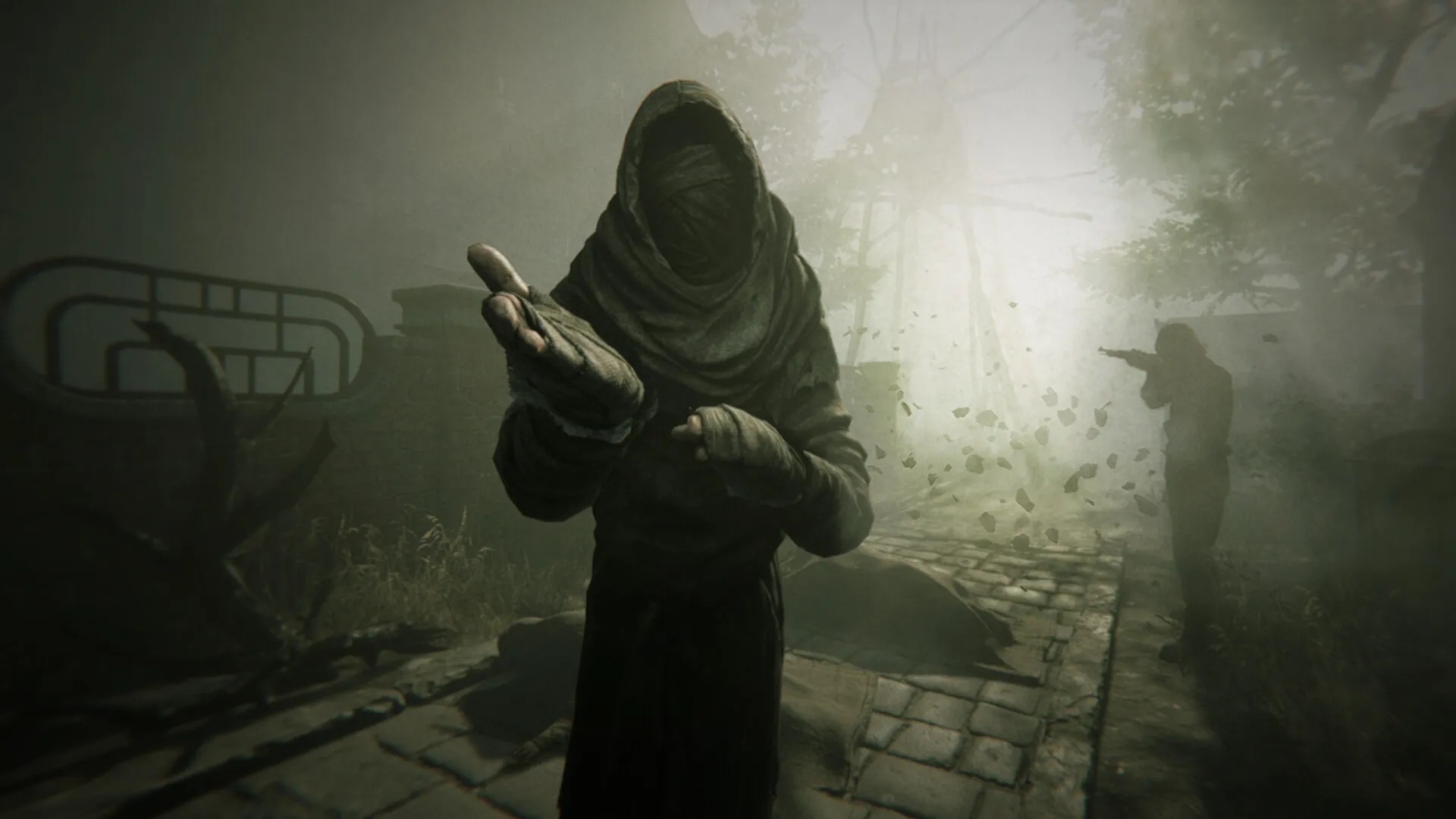

Town-on-Gorkhon hits you first through the nose: wet earth, rot, and a kind of damp menace that clings to the dirt. The place looks like a knot of pre-revolution Russian architecture, packed tight enough to feel claustrophobic before anything starts going wrong. Daniil Dankovsky arrives carrying a medical bag and an arrogance that reads almost sacred to him. He comes looking for Simon Kain, the man rumored to have beaten death. What he meets is the Sand Pest, a lethal outbreak that moves fast enough to turn one visit into a siege.
The town behaves like a stage built for cruelty. People glide through conversations with a stiff, theatrical, waxy rhythm, like they’re performing roles they hate but refuse to abandon. Dankovsky brings logic into a place where gravity feels optional. He slips into Latin to swat away the local herb brides.
He treats the steppe dwellers like barriers between him and his work. That attitude matters because the game keeps putting you in his hands while the town keeps pushing back. You get twelve days to stop an outbreak that starts to feel like another character in the cast. Every day tightens the air. Superstition sets the rules. Logic keeps showing up with its papers in order, and the town keeps tearing them up.
A Theatre of Misanthropy and Madness
Dankovsky plays the professional straight man in a theater full of people who seem to enjoy watching him fail. The story uses a framing device that seats him in a bleak interrogation room, replaying his mistakes while a shadow questions him. That structure changes the feel of choice. Even small decisions land with weight because the game keeps reminding you that you are building a case file against yourself.
Mark Immortel, the director, steps in to break the fourth wall. He talks like he recognizes your prior play sessions, and the script leans into that awareness. Dialogue also pulls a neat trick with the camera. You watch Dankovsky insult someone, then the perspective flips and places you in the other person’s position, forcing you to answer his arrogance from the receiving end. It turns snide lines into a mechanical shove. You don’t get to enjoy being the smartest person in the room without also sitting with the damage it causes.
Dankovsky’s motives stay messy. He weighs leaving the town to rot, then his curiosity drags him back. The tone swings between despair and sharp humor, and the humor comes from the sheer absurdity of trying to fix a place that seems committed to self-destruction. Those laughs act like pressure valves. They make the horror hit harder once the valve snaps shut again. You feel his overeducated blowhard energy in every interaction: the constant condescension, the reflex to label traditions as nonsense, the habit of treating people like footnotes. That friction powers the narrative because the town responds to him like a body rejecting a transplant.
Temporal Fractures and the Cost of Memory
Time is a system you can touch, and it also becomes the game’s most punishing bill. A figure called the Shadow teaches Daniil how to fracture reality, letting you return to previous days to correct errors. The mechanic reads like mercy until you see the price tag. Rewinding runs on Amalgam, and you gather it by smashing mirrors across town. Each broken mirror pays out the energy needed to rewind, turning destruction into currency and making the environment feel like a resource node with moral baggage.
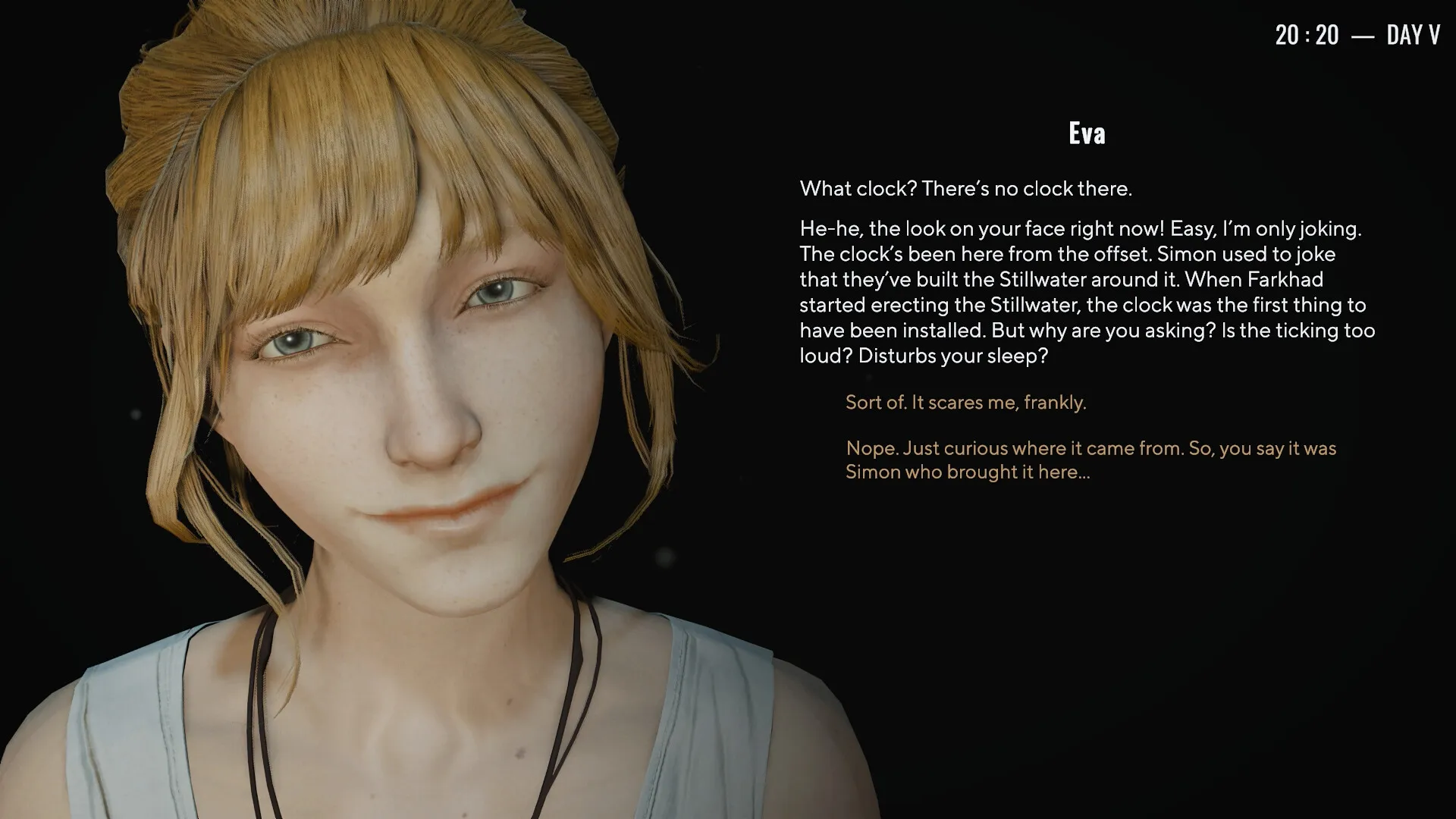
The Mind Map lays out the town as threads: characters, connections, and the deaths waiting for them. The interface turns the narrative into something you track and manage, and it also refuses to let you believe in clean heroism. Failure sits inside the design. You cannot save everyone. The game forces decisions about who lives and who dies, then asks you to live with the way those decisions stain later outcomes.
The harshest beat lands when the game asks you to un-save someone. A person you pulled back from the brink on Day 3 might need to die on Day 5 so a vaccine can work. Rewinding to erase a good deed doesn’t feel like optimization. It feels like betrayal with a neat UI. Characters also seem to sense the loops.
They talk with a familiarity that hints at memory across runs, and that meta-awareness makes the whole timeline feel like a recurring play you cannot exit. You chase a perfect run that the structure refuses to grant. Each “success” carries the echo of a previous failure, and the Mind Map becomes a place you keep returning to, checking which threads have snapped and which deaths are now “necessary.” The loop becomes exhausting by design: trial, error, rewind, regret, repeat.
The Clinical Struggle of Strategic Survival
Dankovsky has to practice medicine while the town’s social order collapses around him. The Patient of the Week system gives you bite-sized medical mysteries built from interviews and physical exams. Patients lie about their history. You parse symptoms, weigh stories, and try to drag truth out of bad faith. It’s detective work with a pulse, and it feeds directly into larger decisions.
That larger layer lives on the Decree board, where you issue daily orders meant to manage the town. This is where the game turns governance into a choice engine that loves unintended consequences. You can decree that UV lamps should disinfect entryways, then watch the town misread the instruction and start burning furniture because they interpret it as sterilizing all wood. Moments like that sell the fantasy of being a scientist trapped inside madness, and they also show how consequence works here: you can pick a rational action and still trigger irrational outcomes.
You create vaccines in the Stillwater laboratory using blood and herbs, bottling experimental fluids that stand between you and collapse. On the streets, exploration becomes tactical through the Prototype tool, a device with limited charges that drives away the miasma. Every charge becomes a small decision about space and time. You juggle quests, contain infection, and decide where to spend your scarce tools.
The shift between medical investigation and town management feels seamless because both systems ask the same question: what do you sacrifice today to keep tomorrow possible? The game keeps you in the stress of being the only person in the room who thinks they have a plan, then keeps reminding you how many people refuse the plan on principle.
Psychological Health and the Hazards of the Steppe
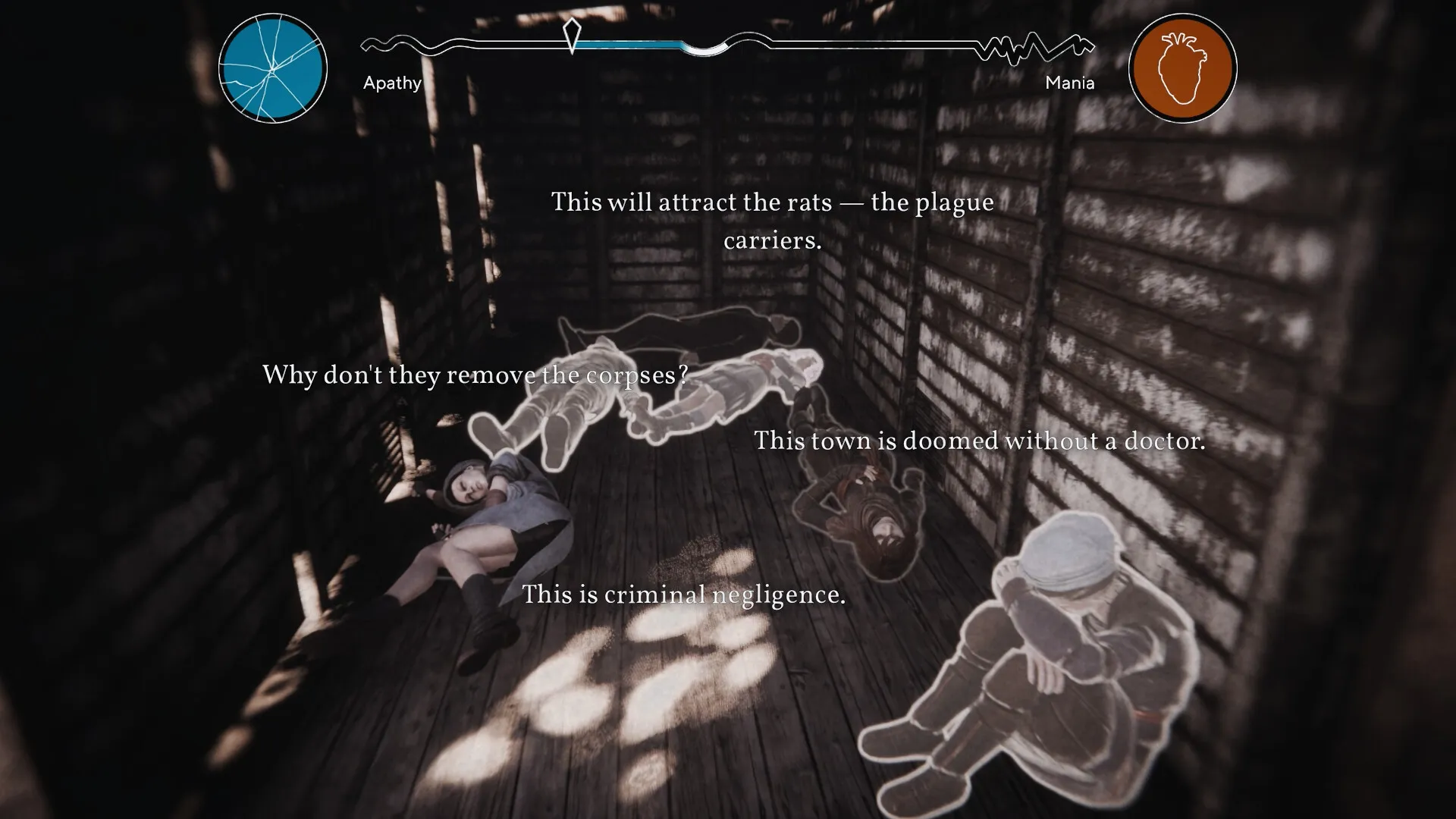
The most important fight happens inside Dankovsky’s head. The Apathy and Mania gauge tracks his mental state and turns mood into movement rules. High Mania pushes him into a sprint, and that speed comes with a cost: a racing heart and health loss. High Apathy slows him down until it reaches a breaking point where he gives up and ends his own life. That threat isn’t decoration. It’s a hard edge on every decision, because the game ties survival to how you carry yourself through the day.
You manage the balance through interaction with the world. Blue objects lower mania. Red objects raise it. The game even lets you find relief in a place that feels almost insulting in its normalcy: a playground. Sitting on a swing or using a roundabout can steady his heart, turning childlike motion into a survival technique.
Town geography adds another layer of planning. Districts are split by loading transitions, so route choices matter and backtracking hurts. Infected zones introduce the Shabnak, a mythical golem that stalks like a hunter and reads as a physical embodiment of the plague. Combat exists, but it stays secondary to psychological survival. You carry a pistol and can use it to threaten rioters, and firing it tends to go wrong. Killing others slams you with a massive spike in Apathy, pushing the protagonist toward meaninglessness through a mechanical penalty.
Even the inventory leans into the theme of unstable control. You manage a small set of items that resets each day, and trading walnuts with children for medicine or scraps becomes vital. Every action risks tipping the gauge. You live on a tightrope between manic collapse and apathetic surrender, and the game makes a simple walk across town feel as dangerous as any fight because your mind is always part of the map.
The Review
Pathologic 3
Pathologic 3 is a demanding study of friction. It forces you to inhabit an unlikable mind while you struggle with the cruelty of time. The marriage of medical detective work and temporal puzzles creates a pressure few games achieve. It is often frustrating and glitchy. The emotional weight of your choices remains heavy. This title focuses on the cost of knowledge and the inevitability of loss. It demands patience and rewards it with a bleak, unforgettable experience.
PROS
- Deep medical diagnostics.
- Creative time manipulation.
- Sharp dark satire.
- Tense psychological balancing.
CONS
- Technical bugs and crashes.
- Confusing quest markers.
- Slow district movement.