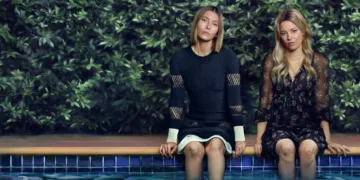


















In the ever-expanding televisual landscape, where narratives of domestic discord often curtsy to the macabre, The Better Sister Season 1 presents its opening gambit. We meet Chloe Taylor (Jessica Biel), a woman seemingly sculpted from the very marble of modern aspiration – a high-powered publishing executive, her life an enviable edifice of success, her hair a marvel of geometric precision that likely requires its own T-square. This meticulously constructed reality, however, proves as fragile as a champagne flute in a mosh pit.
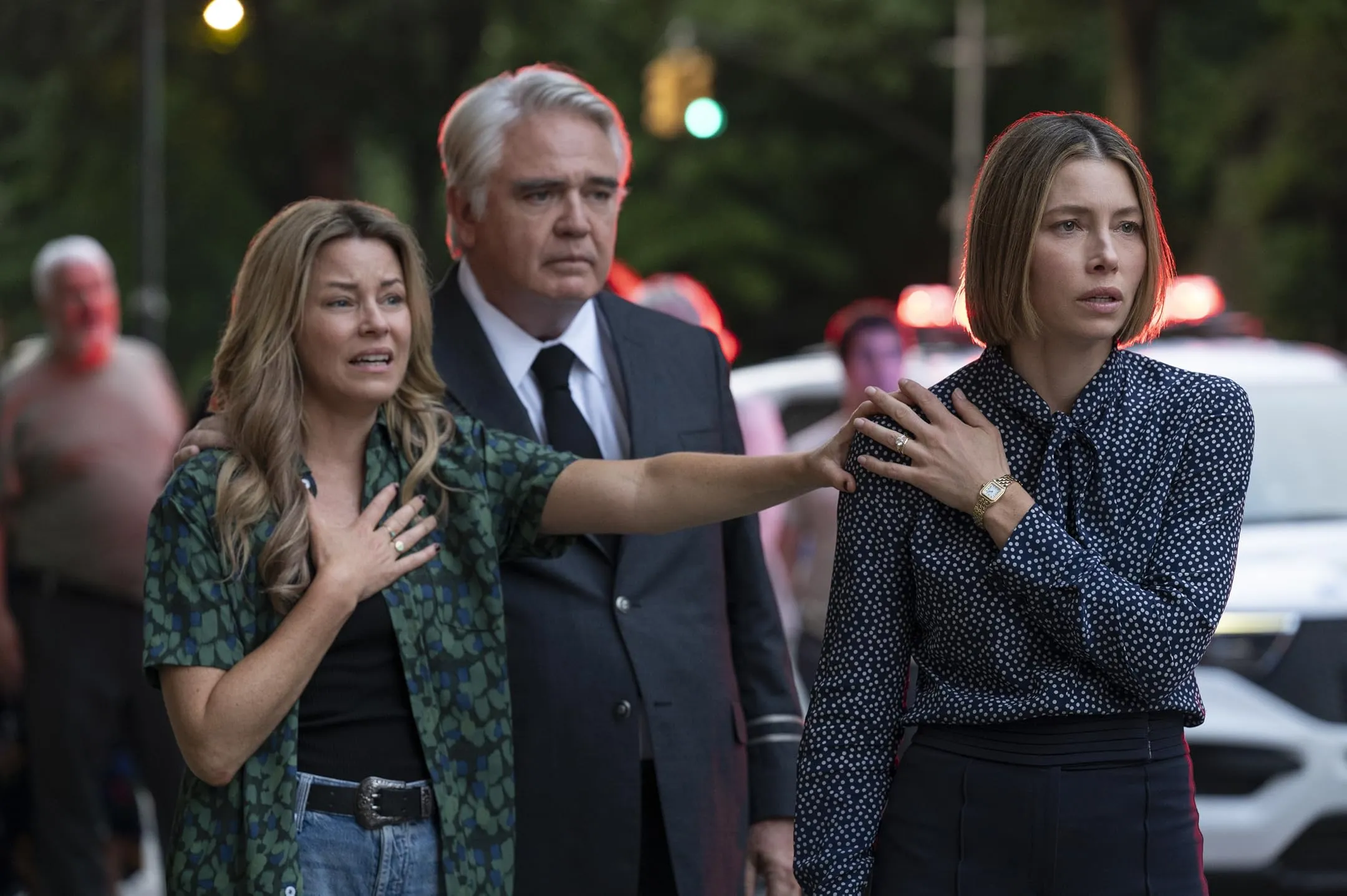
The series wastes little time in applying a sledgehammer to this polished veneer: Chloe stumbles upon her husband, Adam (Corey Stoll), dispatched with a notable lack of subtlety in their presumably tasteful home. This violent act immediately sends tremors through the family unit, not least towards her teenage stepson, Ethan, whose adolescent angst now acquires a far sharper, more sinister edge.
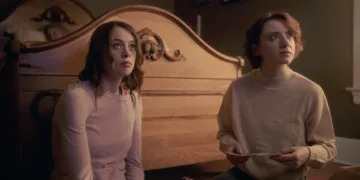
And just as the crime scene tape goes up, in wafts Nicky (Elizabeth Banks), Chloe’s estranged sibling – a whirlwind of past indiscretions and inconvenient biological ties to both the deceased and young Ethan. Thus, the stage is set, not merely for a whodunit, but for an exploration of sororal friction amidst the detritus of a shattered idyll; a contemporary Cain-and-Abel, if Cain wore couture and Abel had a better alibi (initially, at least).
Untangling the Gordian Knot of Kinship and Clues
The narrative architecture of The Better Sister rests upon a foundation of familial entanglements so baroque they’d make a Habsburg blush. At its heart lies a curious relational triangle: Chloe, our paragon of painful propriety, is the widow of Adam. Adam, however, was previously wed to Chloe’s own sister, Nicky, a woman whose life choices appear to have been curated by a committee of chaos agents. From this prior union sprang Ethan, the son now caught in this emotional crossfire.
Chloe, in a maneuver of domestic usurpation (or perhaps rescue, depending on your moral compass and Nicky’s blood-alcohol level at the time), stepped in to raise Ethan, effectively becoming his maternal figure while Nicky wrestled with demons of addiction and what the script politely terms mental health struggles. The inconvenient codicil to Adam’s life? His will, which naturally throws a spanner in the works regarding Ethan’s custody, yanking Nicky back into the orbit from which she was long ago ejected.
Adam’s demise, then, is less a simple crime and more an emotional detonation device, compelling this estranged sororal dyad into an unwelcome reunion. The local constabulary, personified by the (occasionally accented) Detective Guidry and her mustachioed (initially) partner Bowen, commence their procedural plodding.
Suspicion, that most democratic of investigative tools, flits towards young Ethan, whose teenage disaffection and strained paternal bond offer a convenient, if somewhat pat, narrative hook. Chloe navigates these initial shockwaves with the steely composure of a Cold War diplomat, though one senses the seismic activity rumbling beneath that impeccable surface. Nicky, conversely, crashes back into their lives with all the subtlety of a dropped anvil, her intentions towards her son and sister a murky cocktail of maternal instinct and ingrained volatility.
The plot, in its early stages, doesn’t shy from temporal gymnastics, employing flashbacks – and rather more spectral visitations from their deceased father, Hank, a figure of some hyper-intense past trauma – to color in the shadowed corners of their shared history. This creates a sort of narrative echo-chamber, where past agonies resonate with present crises.
The mystery itself, a creature of slow reveal, introduces external variables: Adam’s professional dealings, hinted to be less than savory, involving colleagues like the aquatically inclined Jake (always emerging from water, a curious baptismal motif for a red herring) and the powerful, white-haired Bill, a classic archetype of suspicious authority. The question lingers: does the series hook you immediately with its central crime, or is it more of a slow burn, daring you to sift through the emotional wreckage for the actual clues?
A Masquerade of Selves: Sisterly Strife and the Supporting Cast
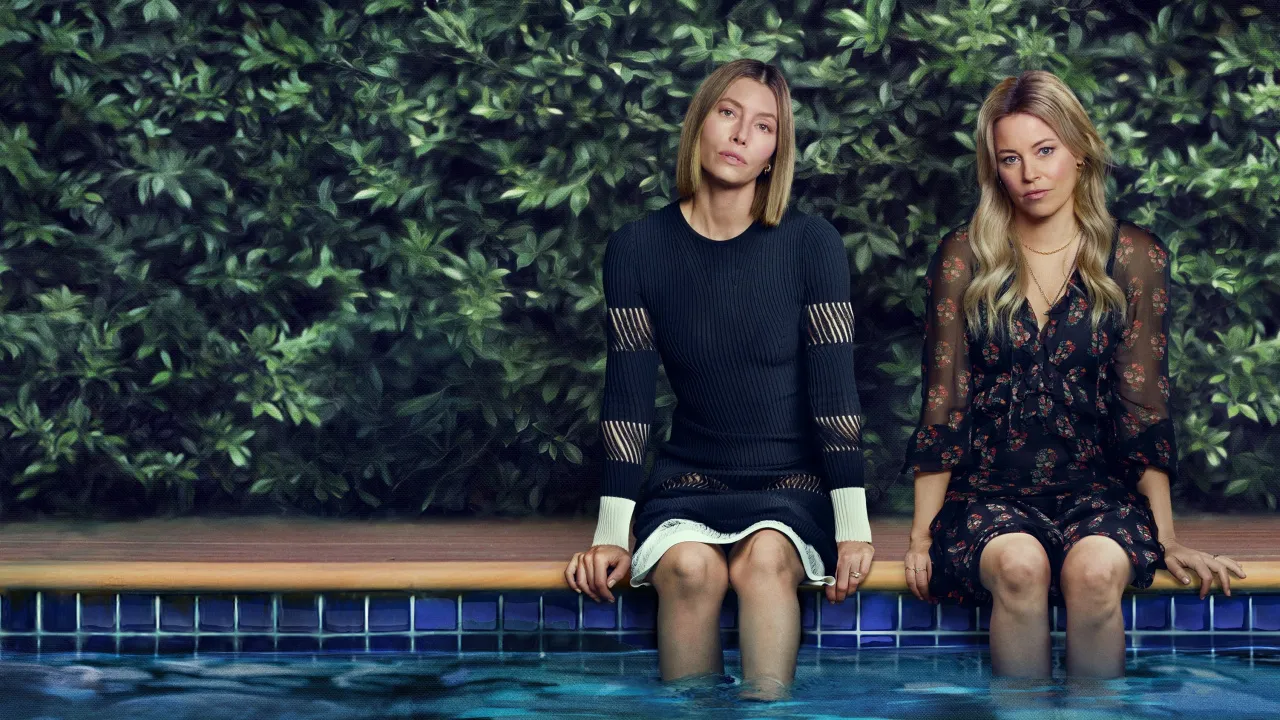
The human drama, or perhaps melodrama, of The Better Sister orbits primarily around its two titular siblings, Chloe and Nicky, a dyad seemingly designed by a mischievous deity fond of Hegelian dialectics. Chloe Taylor, as rendered by Jessica Biel, is the apotheosis of the “good sister,” an archetype polished to a blinding sheen.
She is the successful career woman, her life a meticulously curated Instagram feed made flesh, her control so absolute one suspects her internal monologue is delivered in bullet points. Yet, Biel allows us glimpses of the frantic paddling beneath this serene surface – the strained sinews of a faltering marriage, the crushing weight of maintaining that perfect image, especially when events conspire to smear it with something as déclassé as murder.
Her performance charts Chloe’s unraveling (or is it a recalibration?) with a brittle precision, leaving one to ponder the sincerity of her every calculated gesture. Is it strength, or simply a highly developed form of social camouflage?
Then there is Nicky. Ah, Nicky. Elizabeth Banks attacks the role with a certain unbridled, if occasionally perplexing, energy. She is the designated “bad sister,” a walking cautionary tale adorned with a history of substance abuse, impulsive decisions, and a mouth that frequently forgets to engage its filter before speaking (those borderline racist/sexist quips feel less like character depth and more like writerly provocation).
Banks clearly relishes Nicky’s no-holds-barred approach to life, and there are moments, particularly in her unguarded concern for her son Ethan, where a raw, authentic vulnerability pierces through the accumulated wreckage of her past. The comedic jolts she provides are frequent, though one might argue they occasionally trip over the dramatic shoelaces of a scene, a sort of tonal arrhythmia. The writing strives for an authentic portrayal of her struggles, a noble aim not always achieved.
Their dynamic, when the script finally allows them to share significant screen time (a curious delay, given it’s the show’s supposed linchpin), crackles with the uneasy energy of a long-dormant volcano. They bicker with the practiced ease of those who know precisely where the emotional landmines are buried.
Biel’s portrayal of Chloe’s tight-wound composure contrasts sharply with Banks’s Nicky, all frayed edges and unfiltered pronouncements. Their interactions explore the well-trodden ground of sibling rivalry and shared trauma, teasing out the uncomfortable similarities lurking beneath their starkly different exteriors. The chemistry is there, a palpable tension born of resentment and a deeply buried, perhaps vestigial, affection.
Beyond this central pair, the supporting cast orbits with varying degrees of gravitational pull. Maxwell Acee Donovan’s Ethan is a convincingly uncomfortable adolescent, a bundle of Cimmerian moods and potential Oedipal complexities; he vacillates effectively between pitiable pawn and plausible perpetrator.
Corey Stoll’s Adam, the catalyst corpse, appears mostly in spectral form or flashback, a spectral patriarch whose complexities feel somewhat sketched-in despite Stoll’s efforts. More engaging are the detectives: Kim Dickens’ Guidry, a delightful confection of Southern charm, wry humor, and an almost gleeful suspicion (her LGBTQ+ identity a welcome, if not deeply explored, facet), and Bobby Naderi’s Bowen, whose initial mustache seems to carry more personality than its later, shorn version.
These two provide their own parallel banter, a procedural counterpoint to the sisters’ familial psychodrama. Other figures – Catherine the publisher, Jake the perpetually damp colleague, Bill the powerful boss, and Hank the ghost-dad – largely serve as plot mechanics, cogs in a machine that sometimes prioritizes machination over motivation.
Genre Soup and the Ghosts of Baggage Past
At its thematic core, The Better Sister wrestles with the enduring specter of family trauma, that unwelcome heirloom passed down through generations like a cursed tea set. The psychic wounds of youth clearly dictate the dysfunctional dance between Chloe and Nicky, their adult lives a prolonged reaction formation to shared, and presumably unpleasant, origins.
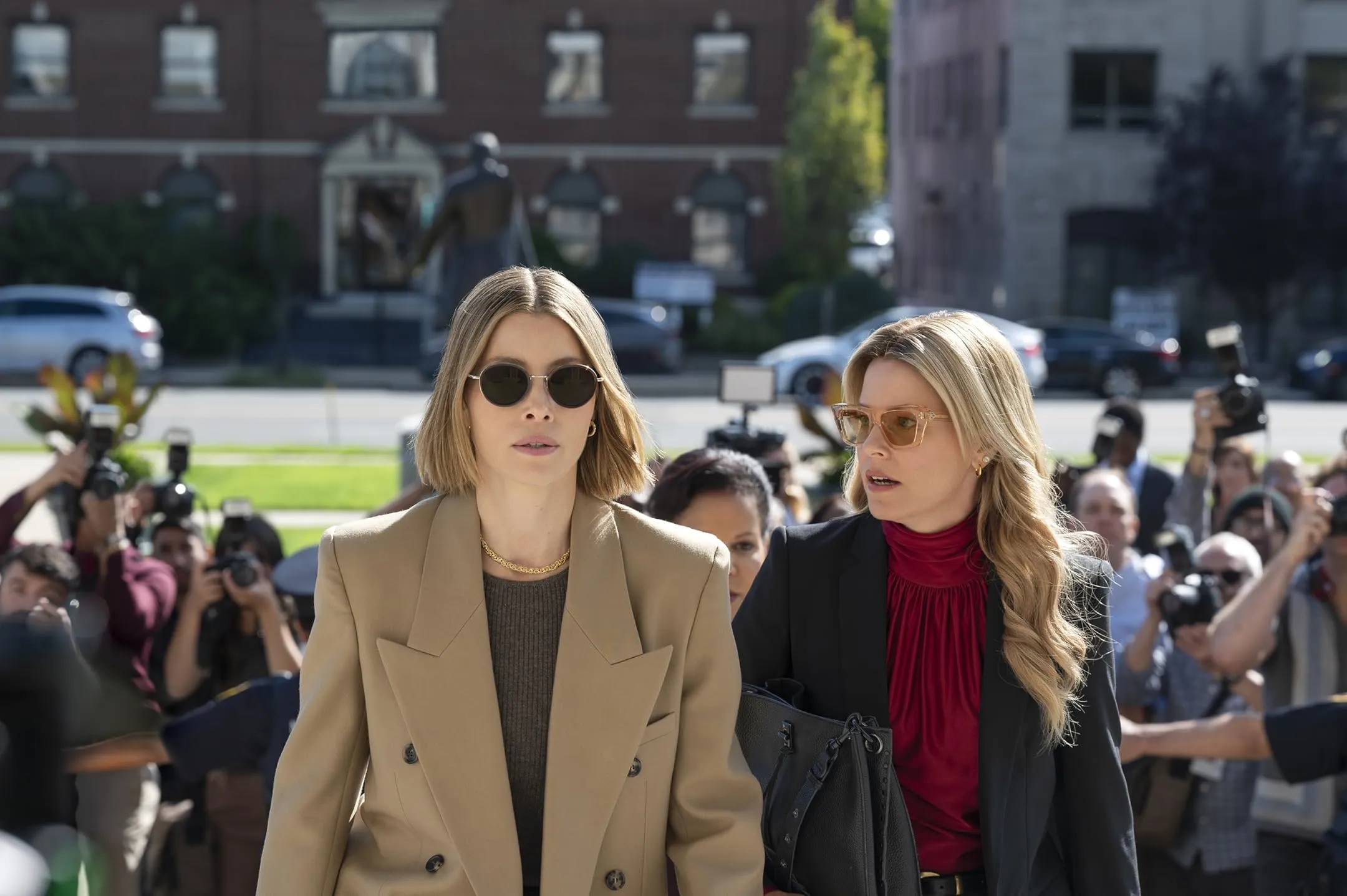
The series toys with the classic “good sister/bad sister” binary – that Manichean simplification so beloved of domestic dramas – and, to its credit, occasionally smudges the lines, suggesting that virtue and vice are less fixed states and more a matter of PR and circumstance.
Loyalty, betrayal, and the thorny path to some semblance of reconciliation are interrogated, though sometimes with the subtlety of a daytime talk show confessional. Motherhood, too, is thrown into this thematic crucible: Chloe, the de facto mother, versus Nicky, the biological progenitor, creating a messy, modern Madonna/Magdalene complex around young Ethan.
Beneath the surface of its character drama, the show picks at the scab of appearance versus reality. Chloe’s “perfect” life, naturally, is revealed to be as structurally sound as a Hollywood backlot, a meticulously crafted illusion designed to ward off the wolves of judgment.
The uncovering of secrets – Adam’s, Chloe’s, Nicky’s, heck, probably the milkman’s – propels much of the narrative, as characters shed their public skins to reveal the raw, often unlovely, motivations beneath. It’s a meditation on the masks we wear, though perhaps one we’ve seen rehearsed many times before in similar drawing rooms.
As a genre piece, the series is something of a hybrid creature, a griffin assembled from the parts of a murder mystery, a psychological thriller, and a family melodrama. The whodunit aspect offers its share of red herrings (some more crimson and fishy than others) and attempts at twists, though its capacity to genuinely maintain suspense across its span is debatable.
The investigation unfolds, at times briskly, at others with a certain languor, before morphing into a legal thriller whose courtroom scenes, shall we say, might not give Perry Mason any sleepless nights. There’s a perfunctory nod to social commentary – Chloe’s magazine musings on gender equity, the societal double standards faced by women – but these feel more like set dressing than a deeply excavated concern, wallpaper in the grand, creaking house of the central plot.
The Meandering Path to Revelation (and a Word on Wallpaper)
The narrative scaffolding of The Better Sister, an eight-episode affair, exhibits a certain elasticity in its pacing – a polite term for moments that stretch like taffy in the sun, interspersed with episodes of almost frantic plot-cramming.
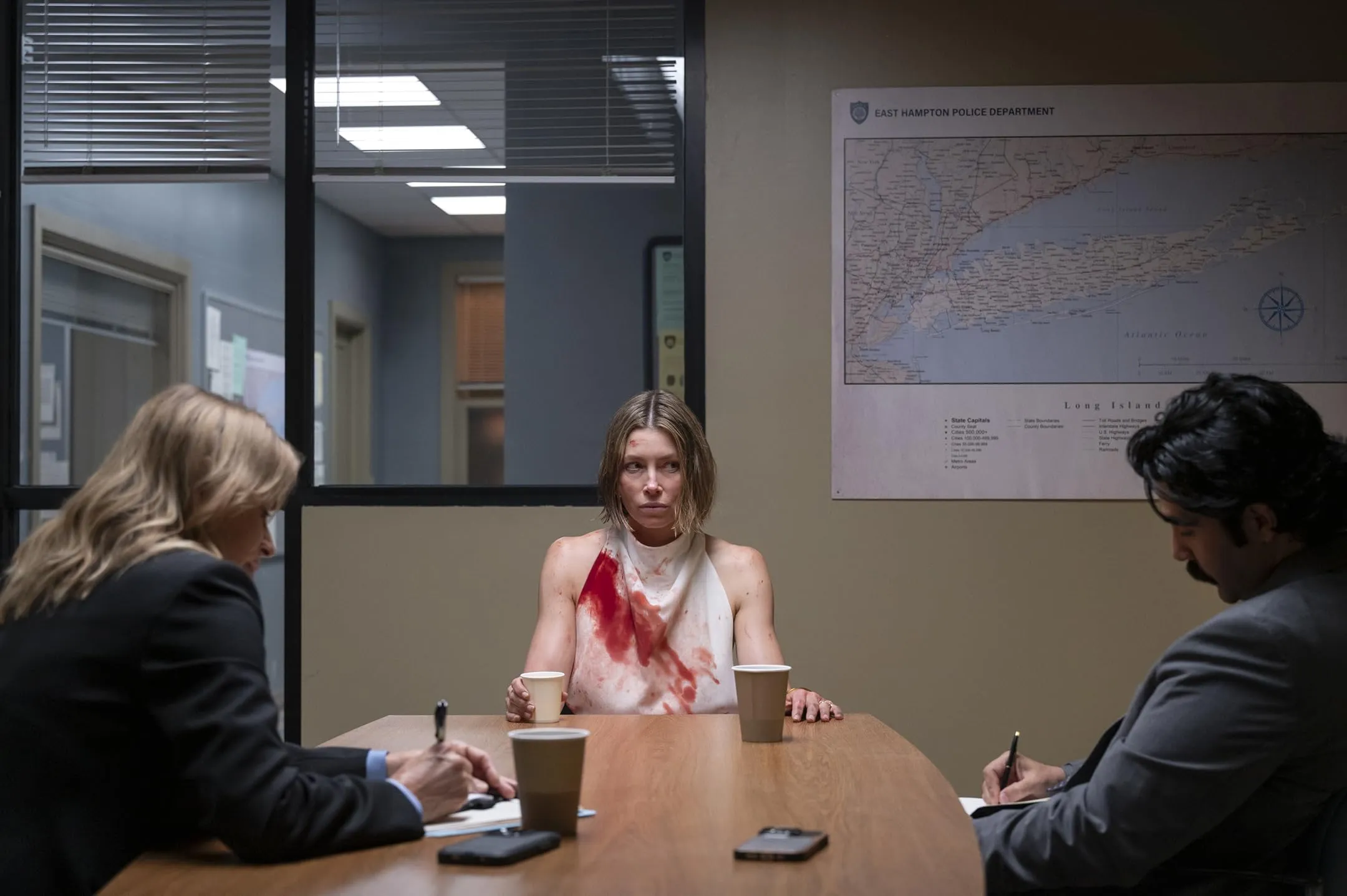
The premiere, helmed by Craig Gillespie (a director not unacquainted with telling stories of complicated women), lays out the initial breadcrumbs with a workmanlike efficiency, yet the subsequent journey through the series’ midsection occasionally feels like a stroll through a narrative swamp, where subplots bloom like algae, sometimes threatening to choke the main investigation. The momentum, therefore, is less a steady incline and more a series of lurches and stalls before the finale attempts to sprint to the finish line.
Tonally, the series juggles its disparate elements – mystery, familial angst, splashes of humor – with variable success. The humor, often emanating from Nicky’s unfiltered pronouncements or Detective Guidry’s folksy cynicism, lands with intermittent impact, sometimes offering a welcome pressure release, other times feeling like an ill-timed rimshot.
Visually, the affair is often draped in a kind of stark, desaturated cinematography, a palette of greys and muted tones that presumably aims for “prestige drama” but occasionally lands closer to “well-lit Scandinavian morgue.” This visual austerity either underscores the bleakness or simply makes one yearn for a splash of primary color.
As for the grand resolution, the tying together of myriad threads (past traumas, present deceptions, who-stabbed-Adam-in-the-Hamptons), it is an exercise in narrative contortion. The reveal of the culprit and the accompanying exegesis may elicit less a gasp of surprise and more a weary nod of “ah, so that’s how they decided to iron out that wrinkle.”
Character arcs, particularly those of our central sisters, find a form of resolution, though whether this feels entirely earned or satisfying is a matter for post-viewing debate over lukewarm coffee. And, in the grand tradition of modern streaming sagas, there’s the almost obligatory scattering of narrative seeds for a potential second season, a practice that can leave a supposedly limited series feeling less like a closed book and more like a chapter desperately seeking a sequel.
The clarity of character motivation, too, sometimes takes a backseat to the exigencies of the plot twist, leading to moments where individuals behave less like consistent beings and more like chess pieces being maneuvered into a preordained checkmate.
The Architecture of Unease: Pacing, Palettes, and Plot Payoffs
The narrative journey through The Better Sister’s eight installments is less a direct flight and more a meandering scenic route, complete with occasional, perplexing detours. An initial burst of activity from the Gillespie-directed premiere, which efficiently lays the grim groundwork, gives way to a somewhat variable cadence.
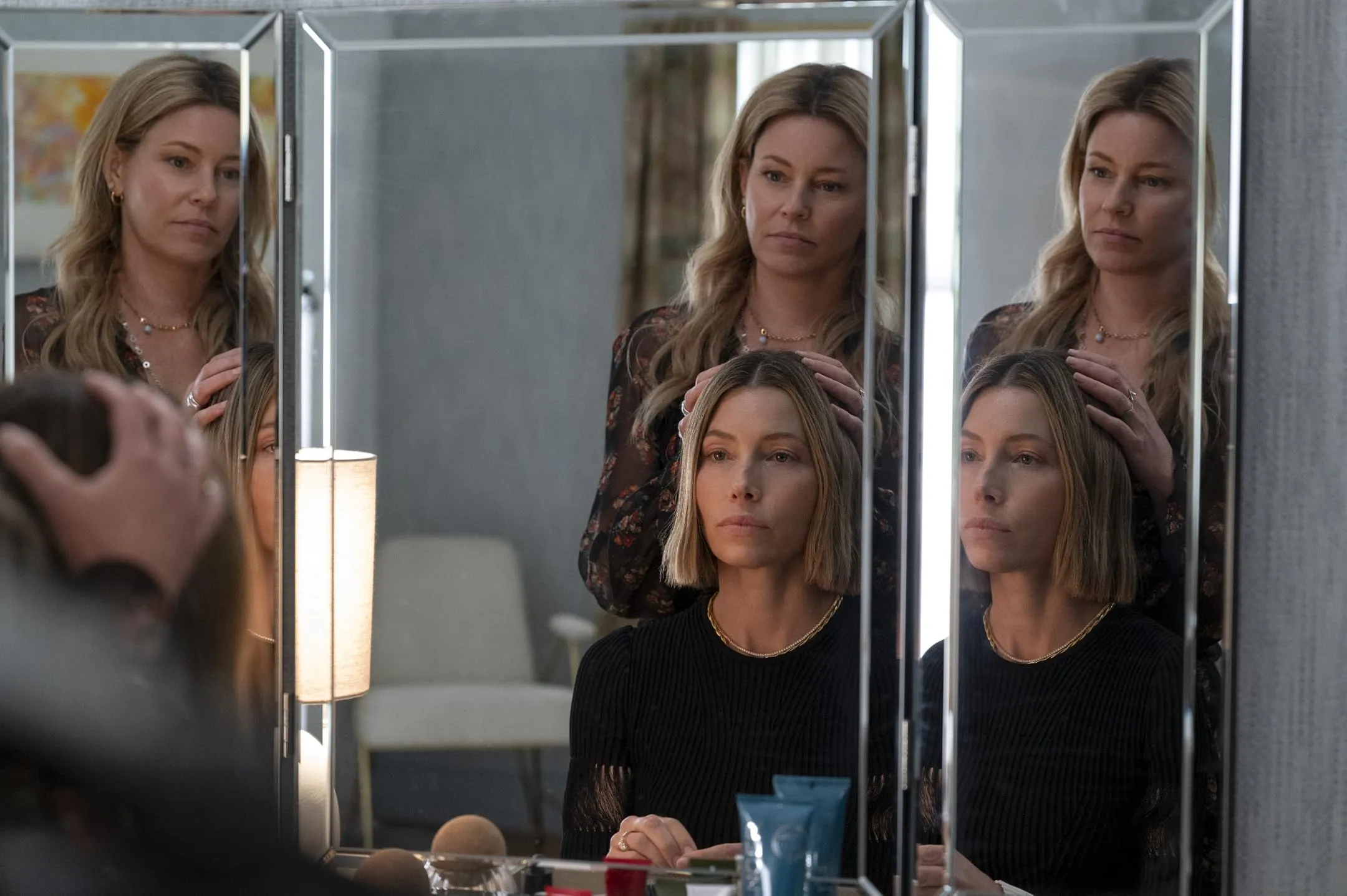
The central episodes, tasked with thickening the plot and deepening the sisterly schism, sometimes find their momentum diffused by burgeoning subplots that threaten to overshadow the primary investigation – a common affliction in the age of binge-worthy sprawl. The build-up to the climactic reveal feels, at times, like a race against a self-imposed clock, ensuring all narrative ducks (or red herrings) are meticulously, if hastily, arranged.
Aesthetically, the series cultivates a specific atmosphere, a delicate balancing act between the grim requirements of its mystery, the emotional turbulence of its drama, and the surprising flecks of humor – largely delivered by the ever-unvarnished Nicky or the shrewd Detective Guidry.
This humor, when it lands, provides a much-needed leavening. Visually, the world often appears through a lens of deliberate drabness, a stark and grey palette that either amplifies the characters’ internal desolation or simply makes one wish for a sudden, inexplicable burst of Technicolor. The soundscape, too, presumably aims to underscore the tension, though its effectiveness in truly heightening the atmospheric dread can be inconsistent.
When the narrative finally pulls back the curtain on its central enigma, the resolution – the grand untangling of past sins and present culpability – is delivered with a flurry of explanations. Whether this climax feels like an organic outgrowth of what came before or a somewhat engineered solution will likely divide viewers.
The character trajectories, especially for Chloe and Nicky, reach a denouement, though the sense of profound transformation or earned catharsis remains open to interpretation. Lingering threads, perhaps dangled for a hypothetical continuation, slightly fray the edges of its purported finality, leaving the viewer to ponder if all motivations were truly laid bare or if some were conveniently tailored to fit the final, somewhat convoluted, design.
The Better Sister is scheduled to premiere on Prime Video on May 29, 2025.
Full Credits
Director: Craig Gillespie, Leslie Hope
Writers: Olivia Milch, Regina Corrado, Ariel Doctoroff, Brittany Dushame, Lauren Stremmel
Producers: Kevin Fogarty, Jamie Crowell, Claire Severance, Elizabeth Milch
Executive Producers: Olivia Milch, Regina Corrado, Craig Gillespie, Jessica Biel, Elizabeth Banks, Marty Adelstein, Becky Clements, Alissa Bachner, Kerry Orent, Annie Marter, Michelle Purple
Cast: Jessica Biel, Elizabeth Banks, Corey Stoll, Maxwell Acee Donovan, Kim Dickens, Bobby Naderi, Gabriel Sloyer, Matthew Modine, Lorraine Toussaint, Gloria Reuben, Michael Harney, Frederick Weller, Paul Sparks, Janel Moloney, John Finn, Frank Pando, Katie Kreisler, Revon Yousif, Gigi Grace, Aislin Echo Wood
Director of Photography (Cinematographers): Duane Charles Manwiller, Isiah Donté Lee
Editors: Erica Freed Marker, Gershon Hinkson, Jonah Moran, Tatiana S. Riegel
Composer: Will Bates
The Review
The Better Sister Season 1
The Better Sister offers a tangled web of familial strife and criminal intrigue, ultimately more compelling in its character dynamics—particularly the fractured sororal bond—than in its sometimes convoluted, unevenly paced mystery. While Biel and Banks inject moments of genuine pathos and acerbic wit, the series struggles to fully capitalize on its provocative premise, becoming a competent, if not entirely captivating, addition to the domestic thriller genre. It’s a study in imperfect people navigating an imperfectly plotted crisis, occasionally redeemed by sharp performances that cut through the narrative fog.
PROS
- Strong central performances from Jessica Biel and Elizabeth Banks.
- Explores complex sisterly dynamics with some depth.
- Moments of effective dark humor, especially from supporting characters.
- Intriguing initial premise of intertwined family secrets.
CONS
- Uneven pacing across the season, with some episodes dragging.
- The central mystery can feel contrived and its resolution underwhelming.
- Inconsistent tone, occasionally undermining dramatic tension.
- Some subplots and character motivations feel underdeveloped or forced.