




























From the first shot of molten copper cascading down a barren peak, The Mysterious Gaze of the Flamingo stakes its claim as a queer western steeped in ritual and rebellion. In a remote Chilean mining town circa 1982, an invented epidemic links eye contact to a fatal disease, turning every look into a gamble.
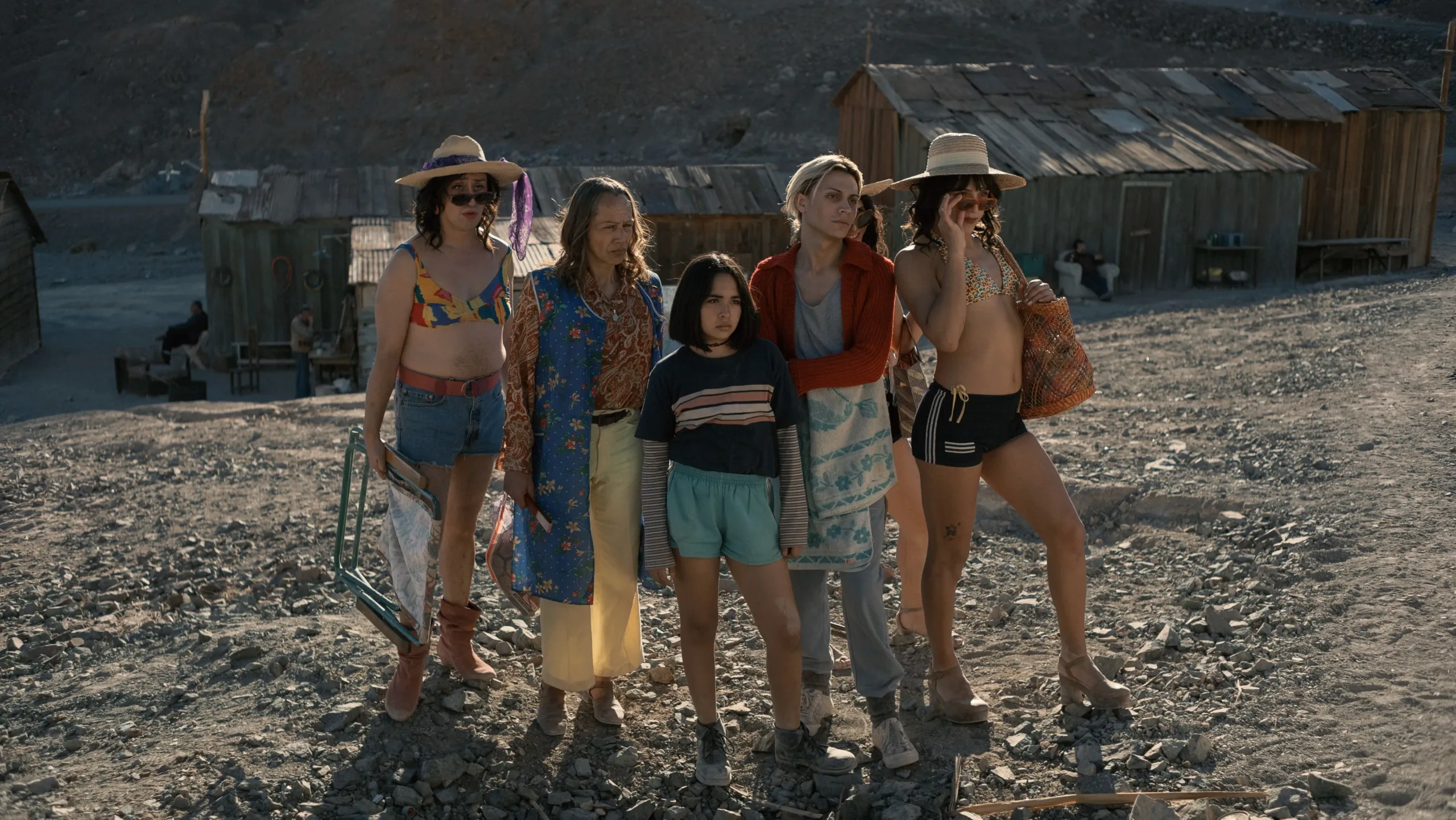
Eleven-year-old Lidia serves as our surrogate, her wide-eyed curiosity guiding us through Mama Boa’s cabaret sanctuary, where Flamingo and her chosen family of trans women perform defiance as much as drag. Director Diego Céspedes uses the stark geometry of the Atacama Desert—its sun-baked expanses and intimate, lantern-lit interiors—to choreograph moments of communion and threat.
Céspedes paces the film like a game designer laying out levels: early scenes teach us the rules of superstition and solidarity, while mid-film conflicts introduce new challenges—betrayal, romance, enforced blindness—that test both characters and audience expectations. The camera alternates between sweeping wide shots, which underscore isolation, and tight close-ups on trembling eyelids, emphasizing how vision becomes both weapon and refuge.
This tension between collective celebration and individual peril sets up an experience that feels as immersive as it is emotionally resonant. As Flamingo names her makeshift family after animals—Piranha, Lioness, Star—we’re asked to wonder how identity and survival intertwine when every gaze holds power.
Contextual Currents Beneath the Sand
Set against the 1980s AIDS crisis unfolding far from urban centers, The Mysterious Gaze of the Flamingo shines a light on how fear and misinformation spread in places cut off from broader discourse. In contrast to metropolitan films like Longtime Companion, which navigate early epidemic narratives through established queer networks, Céspedes situates his story in a remote mining camp where whispers carry as much weight as copper shipments. Here, transgender women forge kinship in isolation, carving out a sanctuary where survival hinges on shared rituals and fierce loyalty.
Mining towns are governed by rigid hierarchies: men hold economic power, while women—especially those who defy gender norms—exist in a precarious space between necessity and scapegoat. Céspedes capitalizes on this tension, weaving scenes of communal drag performances with sudden displays of aggression. These shifts echo the pacing techniques seen in narrative-driven games like Disco Elysium, where moments of celebration abruptly give way to moral dilemmas and brutal acts, underscoring how quickly security can fracture.
Local superstition becomes a gameplay mechanic of its own: the invented myth that eye contact transmits disease forces characters into high-stakes psychological duels. Each forced stare resembles a risk-reward decision in an indie title such as Papers, Please—do you look away and lose integrity, or hold your ground and risk infection? By reclaiming once-derogatory terms—transvestite, queer—Céspedes empowers his cast, turning language into a system of buffs that reinforce identity rather than undercut it.
This cultural tapestry situates the film within a broader indie landscape, one where scarcity breeds creativity and every glance carries meaning. What happens when those myths outgrow the desert and challenge our own beliefs about sight and shame?
Rhythm of Rituals and Rebellion
The film unfurls like a finely tuned level in a narrative-driven game, teaching its players—us—how the world works before ratcheting up stakes. Act I drops us into a ritualistic tableau: molten copper cascading down rock faces becomes both world-building and metaphor, signaling that this town’s lifeblood is as dangerous as it is vital. The long take on flowing metal plays like a tutorial boss fight—beautiful yet foreboding—before we learn the rules of the “gaze” myth. Eye contact is an invisible status effect: look away and lose connection, stare too long and risk fictional contagion.
In Act II, tension spikes. Flamingo’s drag performance reads like a climactic mid-game event, a showcase of character abilities—flourishes, costumes, horn-driven score—followed by the romance with Yovani, a high-risk side quest with emotional payoffs. When the troupe forces local boys to lock eyes with them, it resembles a timed mechanic: maintain focus until the gauge fills, triggering narrative progression or failure. That sequence cements the community’s solidarity and highlights the cost of ignorance.
By Act III, the tempo shifts into surreal mode. The miners’ occupation of the cabaret home feels akin to an invasion mechanic in a strategy game—territory seized, resources under threat, forcing characters to adapt in real time. Lidia’s transformation into a miniature huntress mirrors a character-level upgrade: her coming-of-age arc gains urgency as she arms herself not with weapons but with purpose.
Sprinkled throughout are moments that temper the darkness: shared laughter among chosen kin offers breathing room, much like safe zones in sprawling open-world titles. Then, without warning, violence bursts in—sharp editing and discordant horns jolting the senses, reminding us how fragile security can be. Even when pacing slows in quieter exchanges, those lulls serve as narrative cooldowns, preparing viewers for the next emotional spike.
What emerges is a structure that never lets the audience settle, prompting us to wonder how belief systems—whether in games or in film—shape our willingness to keep looking, to keep risking, and to keep fighting for connection.
Characters as Conduits of Change
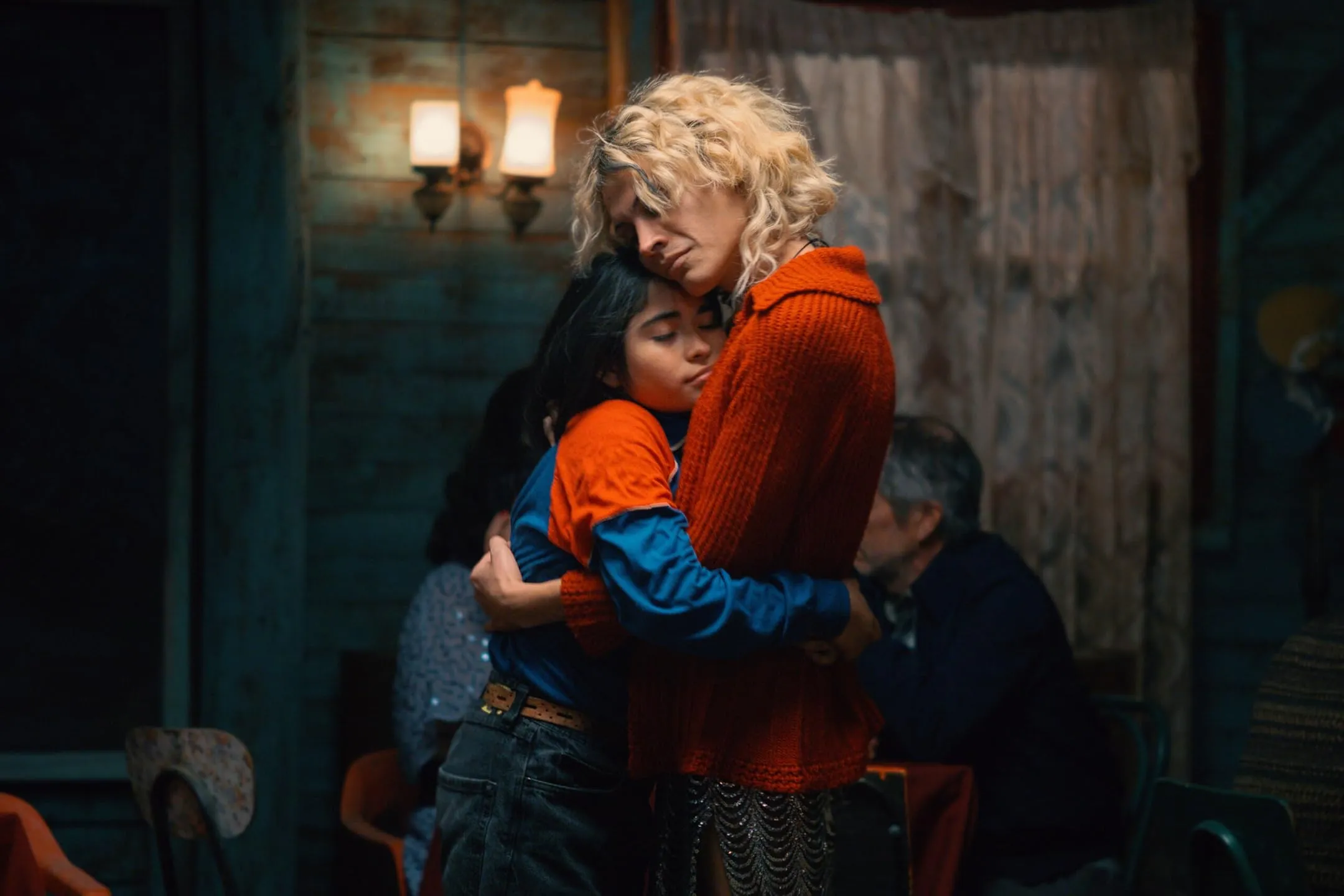
Lidia anchors the story much like a player avatar guiding us through uncharted territory. Her child’s-eye view functions as a narrative HUD, displaying warnings—fear in whispered rumors—and objectives: protect her chosen family. Cortés charts Lidia’s trajectory with precision, shifting from wide-eyed wonder during cabaret performances to steely resolve when she confronts injustice. Each subtle adjustment in posture feels like gaining a new skill—first curiosity, then righteous anger—as she moves from passive observer to active agent in her own story.
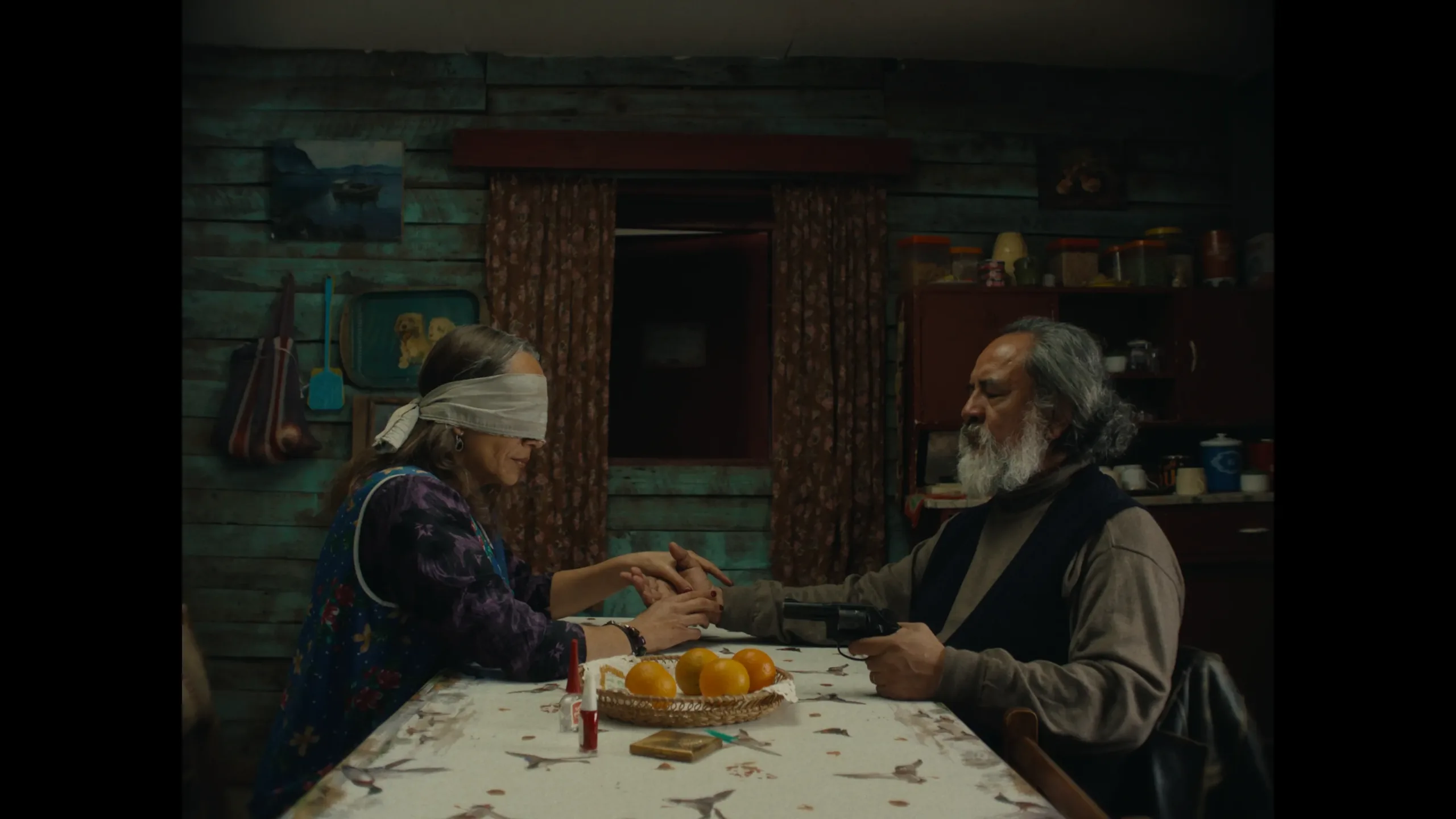
Flamingo embodies a dual-class build, equally adept at dazzling performances and offering maternal refuge. Catalán’s fluid physicality during drag numbers communicates narrative beats without dialogue, akin to environmental storytelling in indie games such as Journey. When her romance with Yovani sours, those same movements become weighted by betrayal, transforming graceful spins into gestures tinted with pain. Her emotional stakes serve as a skill tree: love unlocks vulnerability, heartbreak unlocks survival instincts.
Boa serves as the fortress-class matriarch—unyielding yet unexpectedly open to growth. Dinamarca layers snarls with soft solace, particularly in her subplot alongside miner Clemente. Their connection feels like an unlikely co-op mission, two characters from opposing factions teaming up against a shared threat. Boa’s vulnerability emerges in quiet scenes where trust feels like a rare resource, and those moments resonate like collectible lore entries rewarding patient exploration.
Each performer adopts an animal moniker that hints at abilities: Piranha’s quick wit, Lioness’s protective roar, Star’s guiding light. These brief character vignettes function like side quests, enriching the world without detracting from the main campaign. The group’s chemistry—sharp banter, coordinated choreography—creates a living system where individual flourishes power up communal resilience.
Yovani’s arc illustrates how desire can mutate into violence—an upgrade gone wrong—while Clemente’s growing empathy demonstrates that even antagonists can acquire redeeming traits. Their interactions underscore how complex motivations drive character progression, leaving us to wonder whether true transformation requires confrontation or compassion.
Framing Fear and Flourish
Céspedes treats the Atacama Desert like an expansive game map, using wide-angle shots that stretch the horizon until both characters and viewers feel the weight of isolation. In sequences where Flamingo strides across sun-baked sands, the camera pulls back to underscore how small these figures are against unending terrain—an environmental storytelling technique reminiscent of indie films such as The Rider, where landscape itself becomes a narrative character. Those vistas deliver emotional resonance: every moment of connection among the troupe feels more precious amid such emptiness.
Inside Mama Boa’s cabaret, the lens shifts to tight two-shots and low-key lighting, crafting a cozy labyrinth of sequined costumes and cluttered props. These interiors function like an intimate hub area in a narrative-driven game—safe, vibrant, yet tinged with the knowledge that danger lurks just beyond the doors. Close-up shots of trembling eyelids during forced stares become symbolic “power meters,” drawing us into each character’s vulnerability and forcing us to share their tension.
Céspedes plays with color contrast as deftly as a UI designer tweaks palette choices. Exteriors glow in washed-out golds and grays, while costumes—and the women who wear them—pop in saturated pinks and purples. This visual dichotomy signals when characters shift from camouflage to full expression, much like toggling between stealth and combat modes in a stealth-action title.
Here and there, the film injects surreal touches—distorted reflections in shards of broken mirrors, close-ups of tears refracted like glitch effects. Those flourishes suggest how fear warps perception, turning routine gestures into hallucinatory obstacles. By weaving these elements together, Céspedes crafts a visual experience that challenges viewers to keep looking, keep feeling, and keep questioning what they think they see.
Echoes of Danger and Desire
Céspedes’ score operates like a dynamic soundtrack in a narrative game, where horn-driven motifs cue moments of romantic tension. Those brassy swells arrive just before Flamingo and Yovani lock eyes, signaling an emotional boss fight about to begin.
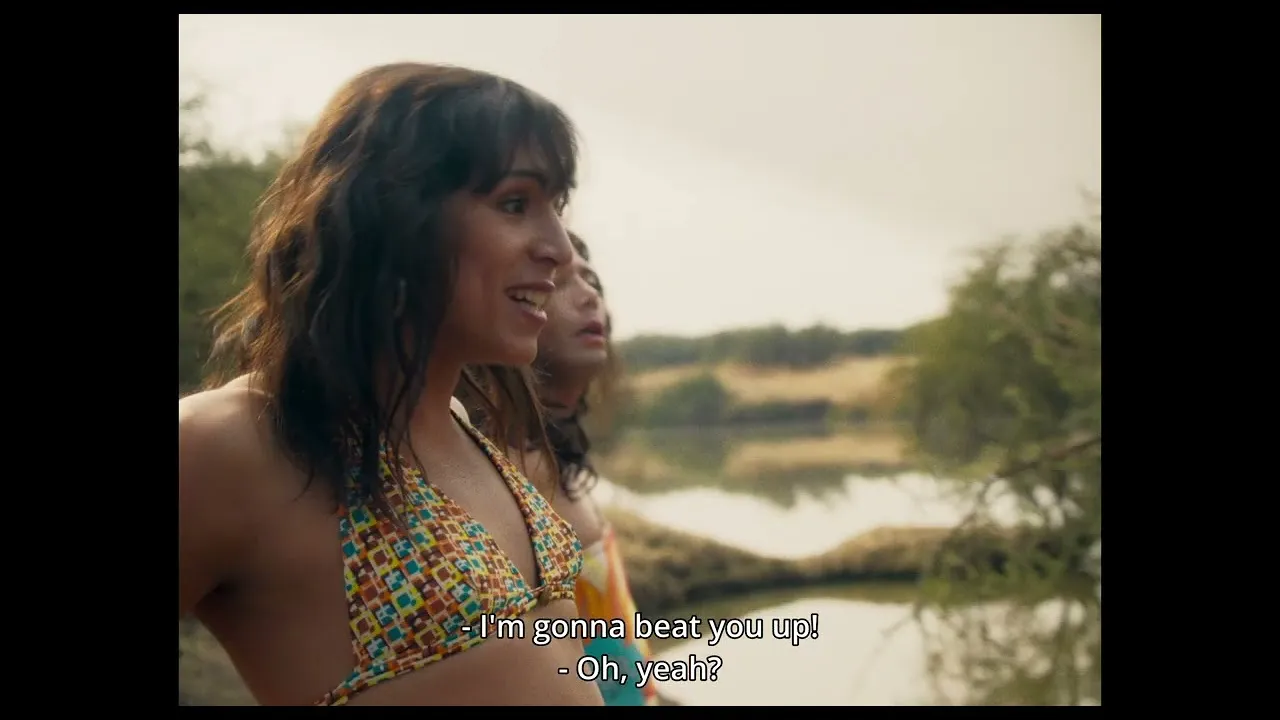
In the open-air scenes, ambient desert sounds—whistling wind, distant machinery—function as environmental audio that heightens isolation, much like how a minimalist OST in indie titles such as Kentucky Route Zero can evoke nostalgia and unease simultaneously.
Inside Mama Boa’s cabaret, diegetic performance numbers pulse with rhythmic energy, immersing us in drag shows that feel as interactive as rhythm-game sequences. Laughter and applause become feedback loops, reinforcing the warmth of chosen family. Then, in a masterful pacing choice, Céspedes cuts to near-total silence when miners advance on the safe haven. That absence of sound lands harder than any score spike, reminding us that the threat isn’t just narrative—it’s visceral, waiting for us to fill the void with our own rising heartbeat.
Signs in the Sand
The film’s fixation on vision transforms every glance into an assertion of existence—each unblinking stare becomes a player action declaring, “I am here.” That insistence on visibility echoes mechanics in games like That Dragon, Cancer, where simple interactions carry profound weight. Fear of otherness drives the miners’ blindfold tactics, yet communal rituals—forced stares turned celebratory gatherings—stand as acts of resistance, reminding us that solidarity can rewrite oppressive rules.
Playfulness and vengeance dance together: cabaret performances morph into spectacle and strategy, much like emergent moments in sandbox titles where resourcefulness subverts threat. Lidia’s bond with Flamingo reframes parent-child dynamics, illustrating chosen families’ resilience; her journey feels akin to escort missions that defy cliché by centering emotional stakes. Finally, the naming ritual—Piranha, Lioness, Star—operates like character customization, each title affirming identity and agency in a world determined to erase it.
Full Credits
Director: Diego Céspedes
Writer: Diego Céspedes
Producers: Giancarlo Nasi, Justin Pechberty, Damien Megherbi
Executive Producers: Les Valseurs, Arte France Cinéma
Cast: Tamara Cortés, Matías Catalán, Paula Dinamarca, Claudia Cabezas, Luis Dubó
Director of Photography (Cinematographer): Angello Faccini
Editor: Martial Salomon
Composer: Florencia Di Concilio
The Mysterious Gaze of the Flamingo premiered at the 78th Cannes Film Festival on May 15, 2025, in the Un Certain Regard section.
The Review
The Mysterious Gaze of the Flamingo
The Mysterious Gaze of the Flamingo immerses viewers in an atmospheric blend of ritual and rebellion, anchored by vivid performances and a richly layered narrative. Its pacing occasionally dips, but its striking visuals, evocative score and thematic depth deliver an emotionally resonant journey that lingers.
PROS
- Striking cinematography that captures isolation and intimacy
- Powerful performances by Tamara Cortés, Matías Catalán, Paula Dinamarca
- Evocative score that heightens both ritual and threat
- Rich thematic layers on identity, community and fear
- Inventive myth of the “gaze” as a narrative engine
CONS
- Pacing slows during quieter dialogue scenes
- Occasional tonal shifts feel abrupt
- Some secondary characters receive limited development







