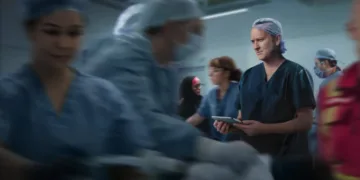















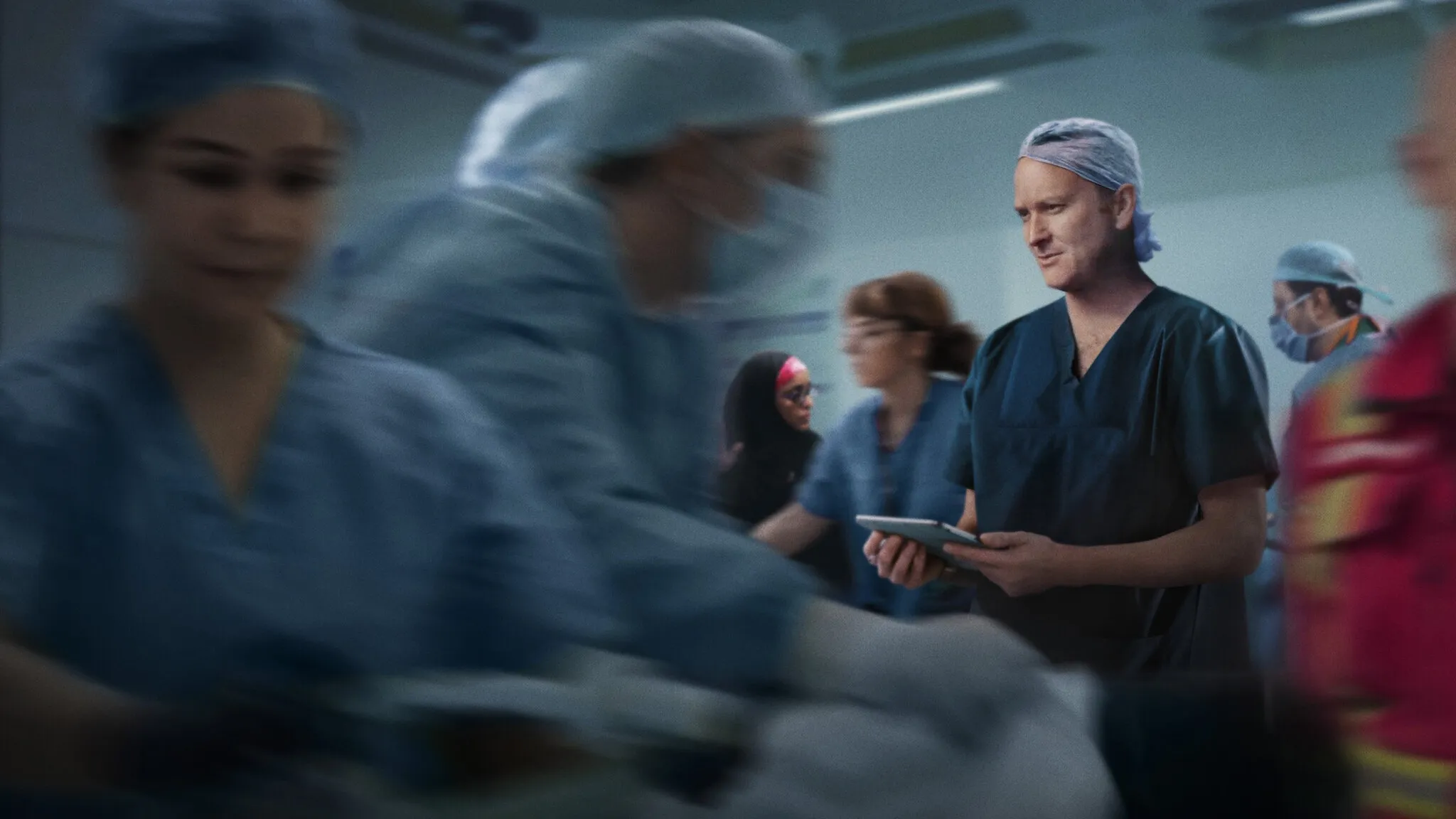

If you thought you knew medical shows from the polished halls of Grey’s Anatomy or the operatic emergencies of ER, prepare for a bracing dose of reality. Netflix’s Critical: Between Life and Death jettisons the script, the romance, and the dramatic monologues, embedding itself directly into the bloodstream of London’s Major Trauma System.
For 21 days, more than 40 cameras chronicle the entire chain of life-saving, from the initial 999 call to the tense calm of the operating theater. This is not a reenactment. It is a fly-on-the-wall documentary with unflinching access, capturing the controlled chaos that erupts when life hangs by a thread.
The series promises a front-row seat to moments most of us hope to never witness firsthand, offering a raw, unfiltered perspective on the people and procedures that stand between a person and the unthinkable.
A Viewer Discretion is Advised
Let’s be clear: this series is not for the squeamish. If the sight of a papercut makes you woozy, you may want to sit this one out. The show’s premiere episode sets a grimly spectacular tone, following the aftermath of a catastrophic fairground ride collapse at Brockwell Park. A single moment of mechanical failure sends multiple victims into the system.
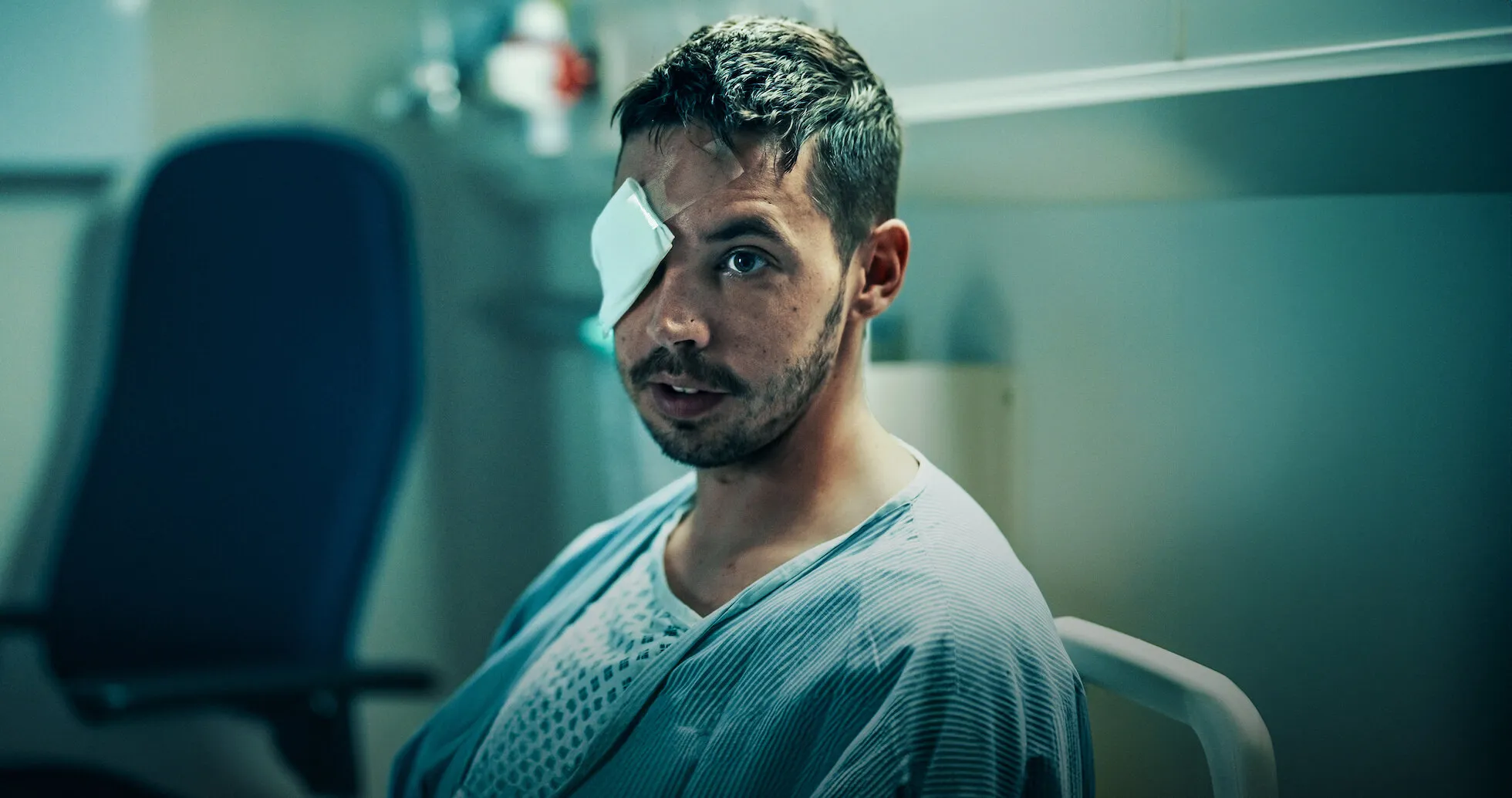
There’s Alison, who comes to incoherent with a head injury and broken ribs puncturing a lung, and her partner Nick, whose face is so badly fractured that a surgeon later describes needing to find “big chunky bits” of bone to rebuild it. Then there is 11-year-old Silvana, hit by a falling speaker, and her grandfather Sebastiano, injured while pushing her to safety. The series presents their ordeals with a stark realism that is both its main draw and its greatest challenge to the viewer. This is television as an endurance test.
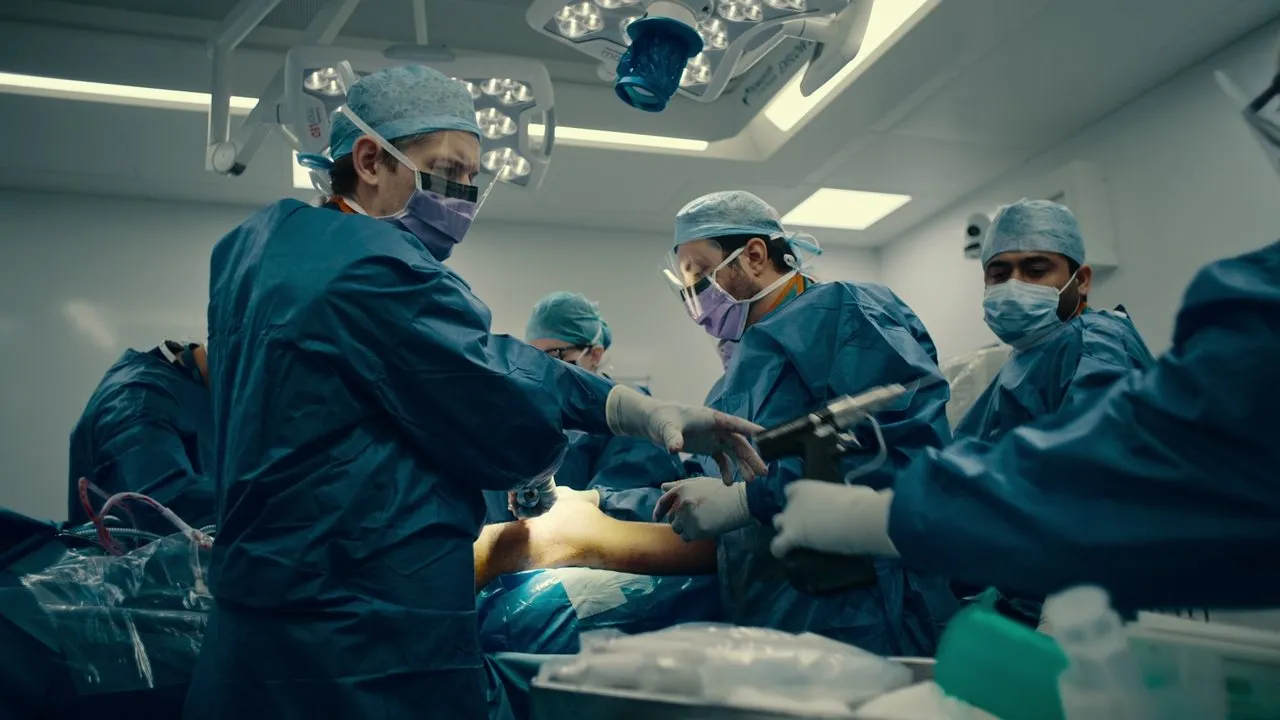
The cameras do not pan away. They capture the raw details of trauma with an unflinching gaze that borders on invasive. You will see deep incisions, bloody faces, and the gruesome work of reattaching a severed finger. In one unforgettable sequence, doctors apply leeches to a reattached digit to restore blood flow, a practice that one astonished family member aptly calls “mediaeval medicine.”
This is the series’ unapologetic mission: to demystify trauma by showing its physical reality. Beyond the fairground, the show documents a relentless procession of human fragility: a man airlifted after being attacked with a pipe, a patient with a leg so badly mangled that amputation is a constant possibility, and victims of construction incidents and motorcycle accidents.
It’s a comprehensive, and at times overwhelming, survey of what can go wrong in a human body. The narrative follows patients through the entire process, from the Tactical Operations Center coordinating ambulance dispatch to the collaboration between different hospitals and specialties, illustrating the incredible machinery required to combat sudden, life-threatening injury.
The Stiff Upper Lip Under the Scrubs
Amid the torrent of medical crises, the series finds its heart in the people at the center of the storm. London’s trauma teams operate with a level of calm that is almost unnerving; there is no shouting, just a quiet, focused intensity that feels distinctly British. The show excels when it pulls back the curtain on these professionals, revealing the humanity beneath the sterile scrubs.
We meet Lala, a diminutive trauma consultant who commands her unit with absolute authority. She is acutely aware of how she is perceived, wryly noting the reactions of patients when “the shortest person at the end of the bed is actually the person who is in charge.” In a very modern touch, she’s seen checking Twitter after a major incident to gather information when early reports are sketchy. This is not a superhero doctor; this is a highly skilled professional using every tool at her disposal.
Then there is trauma consultant Maryam, who shares a personal story of a teenage friend dying in a car crash, a tragedy she admits she “could not comprehend or believe or accept.” That formative experience now fuels her empathy and professional drive. These moments are vital, preventing the series from becoming a mere procedural.
We see surgeons joking about calories between life-saving operations, humanizing them in an instant. On the other side are the patients’ families, whose faces, etched with fear and hope, serve as the emotional barometer for every case. The camera often lingers on the disassociation on a mother’s face as she receives an update, or the anxious silence of a waiting room, reminding us that for every clinical procedure, there is a universe of private anguish.
The show even explores the difficult psychological aftermath for patients, as seen when one man with brain damage struggles to accept he must remain hospitalized. This raises fascinating questions about the very nature of consent and filming in such vulnerable states, making the viewer a complicit observer in deeply personal moments.
The Scalpel and the Editing Bay
As a piece of filmmaking, Critical is a slick, high-speed machine, clearly benefiting from a Netflix-sized budget. The production team, veterans of the long-running British series 24 Hours in A&E, have elevated their craft. The editors masterfully distill hundreds of hours of footage into coherent, gripping narratives, often building an episode around a single incident for maximum impact.
Drone shots of the London skyline are deployed liberally, and while a familiar cliché in factual programming, they are executed beautifully here. Yet, the production’s hand is sometimes too heavy. A relentless, dramatic score often swells to signal TENSION, turning a routine intubation into a cliffhanger moment that feels more manipulative than documentary. The music feels designed to tell the audience what to feel, a choice that undermines the power of the raw footage.
This is most apparent in the first episode, which leans on repetitive slow-motion shots of the inciting accident, complete with rapid-fire cuts. It is a classic “big splash” opening designed to hook a streaming audience, but it feels needlessly sensational.
The series is far stronger in later installments when it trusts the inherent drama of the situation to speak for itself, toning down the stylistic flourishes. Following a single patient’s story across multiple episodes, like the man with the severe leg injury, allows for a deeper narrative investment than a simple case-of-the-week format.
The primary storytelling convention, however, involves post-event interviews with the patients themselves. While these moments provide closure and reflection, they also telegraph the outcome. It’s a trade-off: we lose the terrifying uncertainty of the moment in exchange for a tidy resolution. The show brilliantly documents the fight for life, but one has to wonder if, in packaging these stories for television, some of the terrifying, messy truth of it all gets stitched up in the edit.
This six-part documentary series premiered on July 23, 2025.
Full Credits
Director: Nick Holt
Writers: Jermaine Blake
Producers: Meredith Chambers (executive producer), Marina Parker (associate producer), Spencer Kelly (executive producer), Louise Bartmann (co-executive producer), Rebecca Arnold (co-executive producer), Mahi Iftikhar (series producer), Andrew Fitzpatrick (series producer)
Cast: Richard Lintern, David K. Menon, Richard Rudd
Director of Photography (Cinematographer): Nick Holt
Editors: Ben Brown, Madoc Roberts
Composer: Daniel Pemberton
The Review
Critical: Between Life And Death
Critical: Between Life and Death is an essential, if punishing, piece of documentary filmmaking. It offers an extraordinary and unflinching look into the controlled chaos of saving lives, anchored by the profound humanity of its subjects. While its polished production sometimes veers into manipulative territory with an overbearing score, the sheer power of its raw, unfiltered access to moments of profound crisis makes it a compelling and humbling watch. This is visceral, vital television that will stay with you long after the credits roll.
PROS
- Offers unprecedented and unflinching access into London's Major Trauma System.
- Presents a raw, humbling, and realistic depiction of medical emergencies.
- Highlights the remarkable skill and calm professionalism of the medical staff.
- Features powerful human stories from the perspectives of both staff and patients' families.
- The production quality and editing are exceptionally polished and compelling.
CONS
- The graphic nature of the injuries and surgeries makes it unsuitable for many viewers.
- The musical score can be overly dramatic and emotionally manipulative.
- Early episodes lean on sensationalist editing techniques.
- The intimate, fly-on-the-wall perspective can raise ethical questions about filming subjects in extreme distress.