

























![Kingdom Hearts Collection [I-III] Review](https://gazettely.com/wp-content/uploads/2026/10/Kingdom-Hearts-Collection-I-III-1-360x180.webp "Kingdom Hearts Collection [I-III] Review: KHII Holds Steady as Newer Entries Fluctuate 40")


Music possesses a rare ability to slice through circumstance, connecting two strangers in a single, shared moment of discovery. Glass Heart, Netflix’s latest Japanese drama, builds its entire world on such a moment. The series charts the demanding journey into the music industry through Akane Saijo, an aspiring drummer whose ambitions seem extinguished.
During a rain-lashed, impromptu solo performance—an act of pure defiance—she is unknowingly witnessed by Naoki Fujitani, a celebrated and reclusive musical prodigy. Three years later, Naoki finds her and asks her to anchor his new rock band, Tenblank. Joined by a precise pianist and a steadying guitarist, this quartet of outsiders begins its ascent.
The series presents itself as a story about the creative fire and the formation of a makeshift family, but it also serves as a fascinating case study in the global streaming apparatus, questioning which international stories are granted a stage and which are left waiting in the wings.
A Labor of Authenticity
The series’ most undeniable success lies in its sonic and visual presentation of music. In an era where the relentless churn of streaming content often prioritizes quantity over quality, Glass Heart makes a significant statement through its profound commitment to physical craft. This is not a series that fakes its key moments.
The principal actors reportedly dedicated over a year to mastering their respective instruments, an investment of time and effort that feels almost radical in today’s fast-media landscape. This dedication pays dividends on screen, grounding the story in a startlingly tangible reality where every chord struck and every drum fill feels earned.
There is no suspension of disbelief needed when the band performs; the sweat is real, the fingerwork is precise, and the kinetic chemistry between the musicians is palpable. This focus on authenticity functions as a quiet rebellion against the weightless, CGI-heavy spectacles that so often dominate our screens, arguing for a form of entertainment rooted in verifiable human skill.
The directors, Kensaku Kakimoto and Kotaro Goto, film these sequences with the visual language of a high-budget concert documentary. They understand that a performance is more than just sound; it is a physical event. Sweeping drone shots capture the vastness of the crowd, while rapid, energetic cuts mimic the exhilarating rush of live music.
The camera doesn’t just observe; it participates, pushing in close to capture the intensity in a performer’s eyes or pulling back to reveal the symbiotic relationship between the band and its audience. Slow motion is employed not for mere aesthetic effect, but to dissect the muscular effort and intense focus of performance, transforming a simple drum solo into a study of athletic grace.
This aesthetic choice is amplified by the production’s reported use of thousands of extras for its concert scenes. This is more than a flex of production budget; it’s a thematic statement about the communal experience of music. In an increasingly isolated and digital world, Glass Heart champions the physical gathering of bodies, celebrating a type of connection that technology often seeks to replace.
It serves as a powerful reminder of what it means to share a physical space and a singular passion with thousands of other people. With a powerful, anthemic soundtrack supplied by prominent Japanese musicians like Yojiro Noda and Taka, the show ensures its emotional peaks are supported by genuine musical quality, creating a spectacle that feels both grand and deeply personal.
The Muse and the Modern Man
For a series so meticulously invested in technical authenticity, its central characterization of Akane Saijo feels strangely synthetic. She is written with an earnestness and purity that leaves little room for flaw, ambiguity, or internal conflict. She is less a complex musician grappling with her art and more an idealized female muse, a throwback archetype whose primary narrative function is to unlock the potential of the male genius.
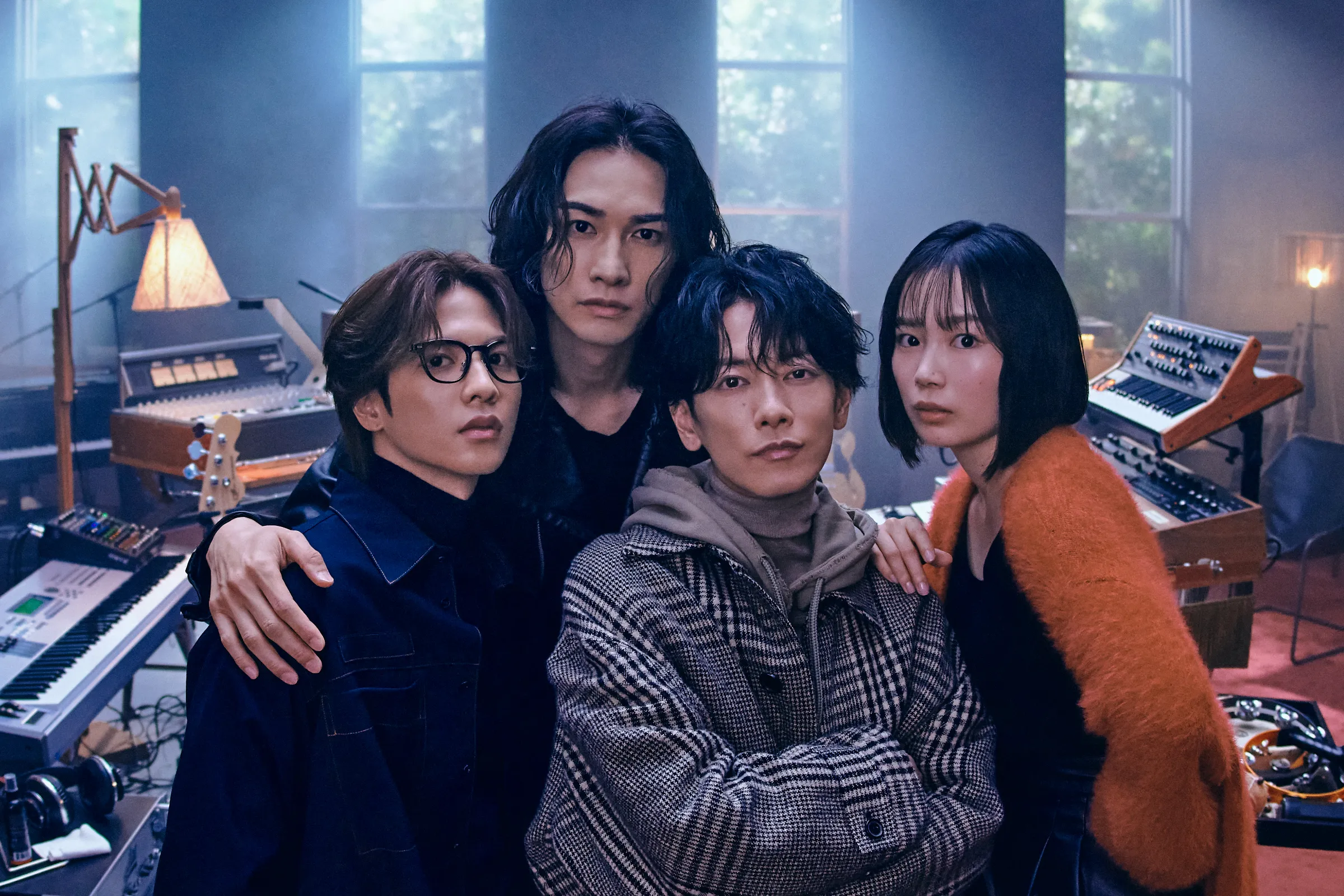
This choice is puzzling and frankly disappointing in a 2025 production. It highlights a strange contradiction at the show’s core: it is willing to invest enormous resources in achieving realism in its musical performances but defaults to a dated and simplistic social realism for its heroine. One has to ask who this character is for. Is she a concession to a perceived traditional audience, a non-threatening “fan insert” fantasy for viewers who want to imagine themselves inspiring their rock-star idol?
Whatever the reason, it undermines the show’s otherwise impressive ambitions, creating a hollow center in an emotionally rich world. Akane is at her most compelling when she is behind her drum kit, where her explosive talent is allowed to speak for her, free from the constraints of a one-dimensional script.
This weakness is made more conspicuous by the relative complexity of the male characters. Naoki Fujitani, the band’s brilliant leader, sidesteps the most tired clichés of the “tortured artist.” He is quiet, considerate, and supportive, even if Takeru Satoh’s performance leans into the theatricality of a live-action anime character, complete with knowing smirks and dramatic postures.
Yet it is in the supporting members that the show finds its most compelling human notes. Guitarist Sho Takaoka is a study in quiet charisma, a grounding force whose calm demeanor hides a deep well of feeling. Pianist Kazushi Sakamoto offers a compelling portrait of insecurity, grappling with his place in the shadow of a prodigy like Naoki.
The easy, supportive chemistry between the men of the band suggests a more modern and nuanced exploration of male friendship, one that allows for vulnerability, professional jealousy, and profound respect to coexist. Their dynamic feels far more authentic and emotionally intelligent than the central romance.
This focus on the male relationships, especially when contrasted with Akane’s simplistic portrayal, reveals a show caught between the past and the present, capable of depicting modern masculinity with sensitivity while retreating to outdated tropes for its female lead.
Fame in Fast-Forward
The narrative structure of Glass Heart mirrors the strange temporal distortions of our digital age. This is a story that moves at the speed of a viral trend. The band’s rise from obscurity to superstardom is depicted with a dizzying, almost breathless, velocity.
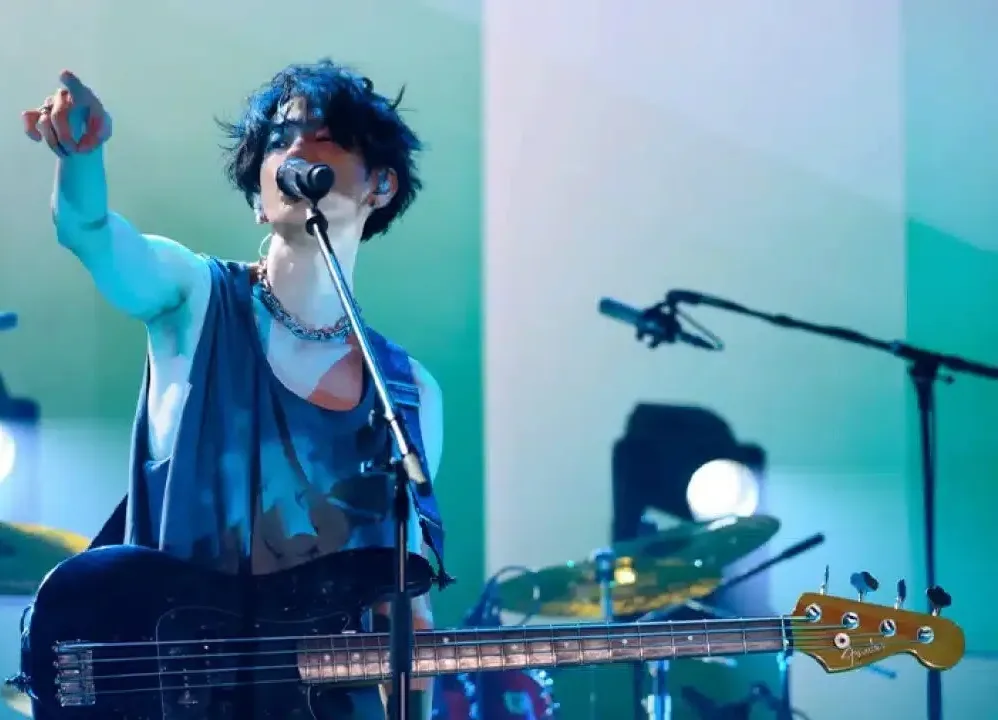
In one episode, they are anxiously filming their first music video; in what feels like the very next, they are commanding sold-out arenas. This accelerated timeline is more than just a storytelling convenience; it’s a reflection of the hyper-speed of internet fame, where careers can be made or broken overnight.
This narrative compression is a hallmark of the binge-watch model, designed to propel viewers from one plot milestone to the next without pause. The casualty of this pacing, however, is the sense of a gradual, messy, and hard-won creative process. The journey feels less like a climb and more like a rocket launch.
The show’s visual style enhances this feeling of a dual reality. It shifts between a dreamy, cozy aesthetic for the band’s quiet, off-stage moments and a thrilling, high-stakes intensity for its public performances. This visual dichotomy reinforces the central theme of the artist’s split life: the private, internal world of creation versus the loud, external world of reception.
Yet, for all its contemporary pacing and visual flair, the story hedges its bets by leaning on a predictable and passionless romantic subplot between Akane and Naoki. This storyline feels like a structural default, a failure of imagination from a creative team that otherwise takes significant risks. It pulls focus from the more innovative parts of the show—the music and the collective dynamic of the band—and begs the question of whether mainstream television believes a story about a mixed-gender group can exist without defaulting to romance.
Why is the idea of a platonic, creative partnership between a man and a woman still treated as less compelling than a will-they-won’t-they trope? This tension between its bold production choices and its safe narrative ones makes the series a fascinating, if flawed, object of study. It wants to be both a crowd-pleasing romance and a serious drama about art, and its struggle to reconcile these two impulses is its most compelling story.
“Glass Heart” is a Japanese musical drama series that will be released worldwide exclusively on Netflix on July 31, 2025.
Full Credits
Directors: Kôtarô Gotô, Kensaku Kakimoto
Writers: Mari Okada, Tomoko Akutsu, Shiho Kosaka, Anna Kawahara, Mio Wakagi (adapted by)
Producers: Takeru Satoh, Gô Abe, Hirofumi Sakurai, Makiko Okano
Cast: Takeru Satoh, Yu Miyazaki, Keita Machida, Jun Shison, Masaki Suda, Akari Takaishi, YOU, Erika Karata, Pistol Takehara
Director of Photography (Cinematographer): Kensaku Kakimoto
Editors: Jim Gattoc, Krystol Grayson
Composer: Yojiro Noda (original songs), Masakatsu Takagi (score), Masahiro Tobinai (original song “Crystalline Echo”)
The Review
Glass Heart
Glass Heart is a frustratingly brilliant series, a feast for the eyes and ears that is let down by its heart. While its commitment to authentic musical spectacle is breathtaking and its depiction of band dynamics feels fresh and sincere, the show stumbles over a one-dimensional female lead and a formulaic romance. It reaches for prestige television status with its impressive scale and ambition, yet remains tethered to outdated character tropes. It's a series worth watching for its electrifying concert sequences alone, but its full potential remains just out of reach.
PROS
- Spectacular and authentic musical performances with actors who genuinely play their instruments.
- Incredible production scale, especially the immersive and electrifying concert scenes.
- A nuanced and compelling depiction of male friendship and band dynamics.
- High-quality original music from prominent Japanese artists.
- Stunning cinematography that captures both intimate moments and grand spectacle.
CONS
- The female protagonist is a flat, one-dimensional "muse" archetype.
- The central romance is predictable, cliché, and lacks emotional spark.
- The narrative rushes the band's rise to fame, sacrificing depth and process.
- The story relies on outdated tropes that clash with its modern production values.