





















![Kingdom Hearts Collection [I-III] Review](https://gazettely.com/wp-content/uploads/2026/10/Kingdom-Hearts-Collection-I-III-1-360x180.webp "Kingdom Hearts Collection [I-III] Review: KHII Holds Steady as Newer Entries Fluctuate 40")
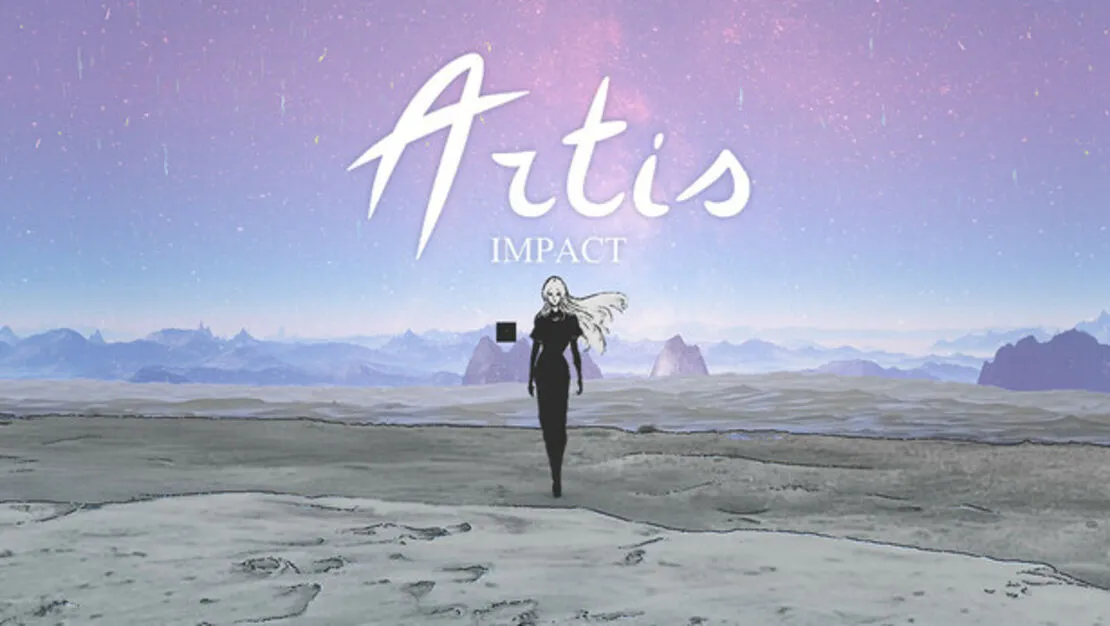

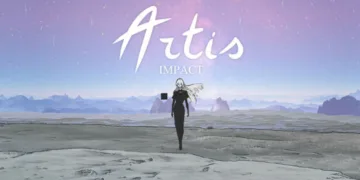
In the world of Artis Impact, the war is over, but the wreckage remains. Humanity picks through the ruins of a civilization laid waste by a conflict with artificial intelligence, carving out a fragile existence. Into this bleak landscape walks Akane, a young woman with a massive sword, accompanied by her witty and often cynical AI companion, Bot.
They are an odd pair tasked with protecting the settlements from corrupted machines that still roam the wilds. As agents of an organization named Lith, their duties place them on the front lines of this uneasy peace.
The debut game from solo developer Mas presents a world steeped in post-apocalyptic hardship, yet it constantly finds moments of levity and warmth. The quiet life, the humorous banter, and the connections between characters offer a hopeful counterpoint to the ever-present danger, creating a strange and inviting atmosphere.
A Living Comic Book
The visual presentation of Artis Impact is immediately its most defining characteristic, a confident and eclectic fusion of styles. The world itself is built from 2D pixel art, but it avoids the harsh, blocky look of many retro-inspired titles. Instead, environments are rendered with soft edges and a subtle use of color that gives the world a painterly quality.
This approach allows the grim reality of the post-apocalyptic setting, full of rusted metal and crumbling concrete, to coexist with the comforting warmth of a lived-in settlement. The pixel art excels at creating a mood that is simultaneously haunting and comfortable, a visual representation of the game’s core thematic tension.
This pixelated foundation is constantly augmented by hand-drawn comic panels that dominate cutscenes and dialogue sequences. Here, the art shifts to a striking monochrome palette, a choice that mimics the look of an indie manga. The stark black-and-white visuals are used with great effect, with splashes of color occasionally introduced to highlight a key object or a moment of intense emotion. This technique gives these scenes a significant visual punch.
The comic format also allows for a more dynamic and expressive form of storytelling. Panels zoom in on characters’ faces to capture exaggerated reactions, while slapstick humor is conveyed through sequential art in a way that simple sprites could not achieve. The game frequently experiments with its presentation, shifting to a simplified chibi style for its world map or adopting a side-scrolling perspective for specific narrative beats.
This visual variety ensures the presentation never becomes static. The execution is not flawless; a minor but persistent disconnect occurs when the detailed, hand-drawn backgrounds in cutscenes do not align with the simpler pixel-art interiors the characters occupy. This quirk can momentarily disrupt immersion, but it is a small blemish on an otherwise masterful and wholly unique artistic vision.
A Life Lived and Fought
The gameplay of Artis Impact is a study in contrasts, cleaving its time between the mundane realities of daily life and the stylized violence of turn-based combat. The game’s main focus is arguably its “Daily Life” system, which feels less like a secondary feature and more like the primary mode of engagement. It strongly encourages the player to step off the main path and simply inhabit the world as Akane.

The level of interactivity is astonishingly deep. You can try to unplug an ATM, flip a light switch enough times to annoy nearby NPCs, or learn the hard way that when a vendor says to take only one free sample, they mean it.
These small, seemingly trivial interactions make the world feel less like a static backdrop and more like a responsive, living place. This philosophy extends to the quest design, where a casual conversation with a townsperson can spiral into a multi-stage narrative arc with surprising consequences. This design rewards curiosity above all else.
This detailed world is supported by a robust economic simulation. Akane’s initial source of income comes from part-time jobs, like working shifts at a supermarket or delivering pizzas. Success in these roles can eventually lead to opportunities to acquire and manage the businesses, establishing a stream of passive income.
This money is the engine of progression, used to purchase better items, upgrade weapons and Bot’s equipment, and, most critically, to increase Akane’s “Combat Rank.” Player choice is tracked through the “Respect” mechanic, a reputation system that quietly observes your actions. Helping an old lady at the bank or giving coins to a homeless man may not offer immediate rewards, but these choices shape how the world perceives Akane and are instrumental in unlocking one of the game’s hidden endings.
The system reinforces the idea that your place in this world is defined by the sum of your actions, big and small. The game even allows for purely expressive spending, like buying a “Gold Card” for bank privileges or renting a fancy room when a free bed is available, choices that serve no gameplay purpose but deepen the role-playing experience.
When interaction gives way to confrontation, the game transitions to a streamlined turn-based combat system. Akane’s abilities are straightforward: a basic attack, a defensive Guard, and a selection of special skills called “Arts.” These Arts draw from two different resources, a standard MP bar and a secondary gauge that fills as Akane lands successful hits, creating a simple tactical rhythm.
She is accompanied by Bot, who functions as an uncontrollable support character. While you cannot issue direct commands to him, his behavior in battle is entirely dictated by the parts and programs you equip him with, allowing you to shape him into a healer, an attacker, or something in between.
Character progression cleverly subverts RPG norms. Experience points from battles are secondary. Akane’s core stats—her strength, defense, and health—are primarily increased by engaging with the life-simulation systems. Eating a hearty meal at a restaurant, resting in her bed, or unlocking one of the game’s many “Achievements” for completing specific tasks all provide direct, permanent stat boosts.
Traditional level grinding is made nearly impossible by the “Combat Rank” system, which acts as a level cap that can only be raised by spending significant amounts of money. This design masterfully connects the two halves of the game, making Akane’s social life the true source of her power. The combat itself, while visually impressive with slick animations, lacks strategic depth.
Many fights devolve into a repetitive loop of using the same one or two effective skills. The system’s opacity can also be a point of frustration for genre veterans, as enemy status effects are often inflicted with little to no explanation of their actual mechanics. The difficulty feels uneven, with long stretches of easy encounters punctuated by sudden and punishing difficulty spikes, making preparation feel like guesswork.
A Tale of Two Tones
The emotional anchor of Artis Impact is the wonderfully realized relationship between Akane and her AI companion, Bot. Their dynamic is built on a foundation of constant, sarcastic banter. They are, as one character puts it, at each other’s throats in a way that only family can be.

This sibling-like connection provides the game’s most memorable and heartwarming moments, evolving into a genuine partnership that feels more significant than any world-saving plot. This strong character work is vital, as the main story is the game’s weakest element.
The narrative often feels disjointed and aimless, lacking a strong central conflict to drive the action forward. It plays out more like a collection of vignettes from Akane’s life than a single, epic quest. This loose structure allows for immense player freedom but may leave those seeking a more traditional, plot-driven RPG feeling unsatisfied.
This structural looseness is mirrored by a frequent and sometimes jarring tonal dissonance. The game’s sense of humor is decidedly offbeat, swinging from clever wit to edgy jokes that would feel at home on an old internet message board. One of Akane’s colleagues, a man named Billy, is profoundly misogynistic, and his backward views are treated as a recurring punchline.
This type of humor can be polarizing, sitting uncomfortably alongside the game’s otherwise serious themes of loss, trauma, and survival in a ruined world. The game asks the player to lean into its peculiar wavelength. For those who can, the experience is uniquely charming; for others, it may feel tonally incoherent.
The game’s narrative is expressly designed to be replayed. The choices you make can lead to entirely different story branches, unlocking hours of content, new areas, and unique character interactions that are impossible to see in a single playthrough. Discovering these hidden paths on a second run is a genuine delight, reframing the story and revealing the true depth of the world.
Rough Edges on a Polished Surface
Despite its clear artistic vision, Artis Impact is hampered by a number of technical issues and curious design choices. Performance is a notable problem in certain areas. The cave system in the Mosswood Foothills, for example, is plagued by severe lag that makes basic navigation and combat a frustrating chore.

This slowdown is not isolated and can appear in other graphically intensive locations. The controls also exhibit a lack of responsiveness at times. In a turn-based combat system where every action counts, delayed or ignored inputs can lead to wasted turns and undeserved damage, a technical flaw that directly impacts gameplay.
Beyond the technical hitches, some of the game’s content feels unpolished. The writing, while often sharp and funny, contains some genuinely perplexing creative choices. The dialogue of the misogynistic character, Billy, is particularly jarring. His presence is made stranger by in-game text that explicitly states treating others with respect is a societal norm.
This contradiction makes his character feel less like intentional social commentary and more like a misguided attempt at humor that clashes with the established world-building. The game’s pacing is another hurdle that may filter out some players. The main narrative takes a very long time to gain momentum, requiring a significant initial investment in the slower-paced life-simulation loop. Players accustomed to the urgent opening hours of most RPGs might find the deliberate, meandering start difficult to push through.
A Flawed Original
Artis Impact is a singular creation, a game that defies easy classification and commits fully to its unconventional ideas. It presents itself as a turn-based RPG, but its true focus is the quiet, everyday moments of its life-simulation systems and the powerful bond between its two lead characters. The entire experience is built on this tension.

The game’s greatest strengths—its bold artistic direction, its deeply charming central relationship, and its intricate life-sim mechanics—are inextricably linked to its most apparent weaknesses. The disjointed plot, mechanically simple combat, and lack of technical polish are the price of its fierce originality.
This is not a game for everyone. It is a title for players who value a unique authorial voice over streamlined design, for those who seek out the experimental spirit of the independent scene. It will appeal to players who can appreciate a game that prioritizes character and atmosphere above all else, and who are willing to forgive its rough edges to experience something truly different.
When viewed as the product of a single developer’s four-year effort, its flaws become more understandable and its achievements all the more remarkable. Artis Impact is a powerful example of what personal game development can produce: a flawed, frustrating, and utterly unforgettable experience.
The Review
Artis Impact
Artis Impact is a work of flawed brilliance. Its stunning artistic direction and deeply engaging life-simulation systems create a world that is a joy to simply exist in. The charming relationship between Akane and Bot provides a powerful emotional core that papers over many issues. However, the experience is held back by shallow combat, an unfocused main plot, and frustrating technical problems. It is a memorable and heartfelt game from a solo developer that prioritizes artistic expression over polished design, making it a journey worth taking for its incredible highs.
PROS
- Stunning and unique visual style blending pixel art and comic panels.
- Deep and rewarding life-simulation mechanics that directly impact character progression.
- A charming, well-written central relationship between the two protagonists.
- High replayability with multiple story paths and endings to discover.
CONS
- The turn-based combat is mechanically shallow and often repetitive.
- The main story feels disjointed and lacks a clear, driving purpose.
- Suffers from technical issues, including lag and unresponsive controls.
- The tone can be inconsistent, with some humor and writing choices feeling out of place.