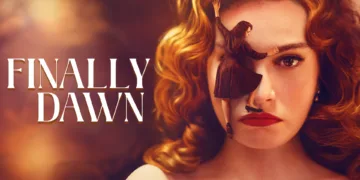














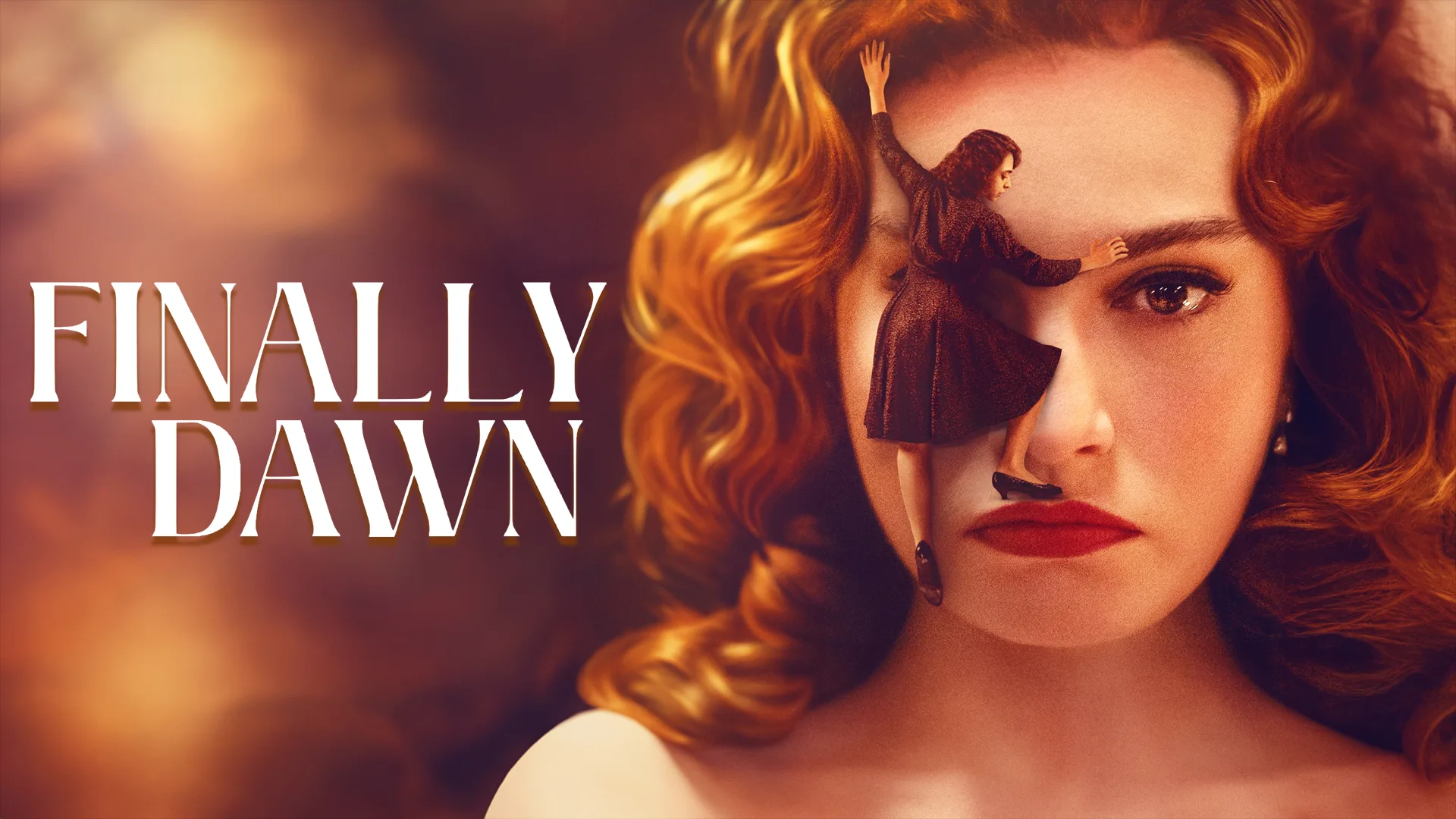

In the Rome of the 1950s, a city rebuilding its soul with celluloid and light, the Cinecittà studio stands as a modern pantheon. It is a factory for gods, a place where reality is a raw material to be sculpted into grand, flickering illusions. Saverio Costanzo’s Finally Dawn plunges us into this dream-machine, but it offers no simple tale of stardom.
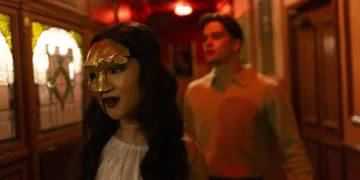
Instead, it follows Mimosa (Rebecca Antonaci), a young woman so plain she is almost translucent, a ghost haunting the edges of her own life. Chaperoning her sister to an audition, she is the one who is inexplicably chosen, pulled from the mundane world into the orbit of a colossal sword-and-sandals epic. Her passage is not an ascent.
It is a fall through the looking glass into a surreal, night-long odyssey, a disorienting trip into an underworld where every face is a mask and the self is a fragile concept, easily shattered under the hot studio lights.
The Vessel and the Void
Mimosa moves through the film’s opulent, chaotic world as its existential anchor, a quiet center in a vortex of performance. She is a vessel, a near-silent protagonist whose stillness becomes a void into which the other characters pour their own raging insecurities and existential terror. Her presence invites their projections; they see in her plainness a canvas for their fantasies, a mirror for their vanities, or a weakness to be devoured.
This is the hell of being-for-others, where one’s identity is forged in the predatory gaze of the outside world. Yet her silence is not mere passivity. It is a profound, almost philosophical refusal to be fully defined. Rebecca Antonaci’s performance is a masterclass in this quietude. Her wide eyes absorb the world’s absurdity and cruelty, reflecting it without comment, while the tension in her posture speaks a language of its own.
Her journey is not one of ambition but of survival and the painful birth of a self. When she refuses to remove her blouse for the producers, it is more than modesty; it is a primal act of rebellion, a small, desperate claim to the sovereign territory of her own body. By the time dawn threatens to break, the girl she was has been shed like a skin. The face staring back from the mirror is a stranger, one forged in the crucible of a single, terrible night.
Gods with Hollow Eyes
The beings that populate this nocturnal purgatory are the American stars, gods whose glamour conceals a spiritual famine. Lily James gives the diva Josephine Esperanto a terrifying fragility; she is a collapsing star whose neurotic cruelty is a vampiric need to consume Mimosa’s authenticity to fuel her own fading light. Her kindness is a weapon, her praise a prelude to humiliation.
Joe Keery’s Sean Lockwood is a handsome leading man lost in a chasm of self-doubt, an Icarus who flew too close to a sun he did not possess. He sees in Mimosa a purity he has traded for fame, and his attraction is shaded with the melancholy of his own corruption. And Willem Dafoe’s art dealer, Rufus Priori, acts as a benign ferryman, a Charon guiding a soul across a river of misunderstanding, all the while knowing the destination is a kind of hell.
The atmosphere, evoking Fellini’s world, is thick with a beauty that feels dangerous, the scent of expensive perfume mingling with decay. A hedonistic party at a seaside villa becomes a danse macabre, a ritual of excess haunted by the unspoken ghost of Wilma Montesi, the real-life actress whose death grounds the film’s fantasy in a grim reality. Her fate is the foundational violence of this world, and Mimosa’s journey feels like a potential reenactment, a terrible echo across time.
The Skin of the Image
Finally Dawn, arriving in select theaters and on digital platforms today, July 18, is a film that peels back the skin of cinema to inspect the bone and sinew beneath. The film-within-a-film, a hilariously stiff Egyptian epic, exposes the hollow grandeur of manufactured emotion, a pantomime of power that reveals its own impotence.
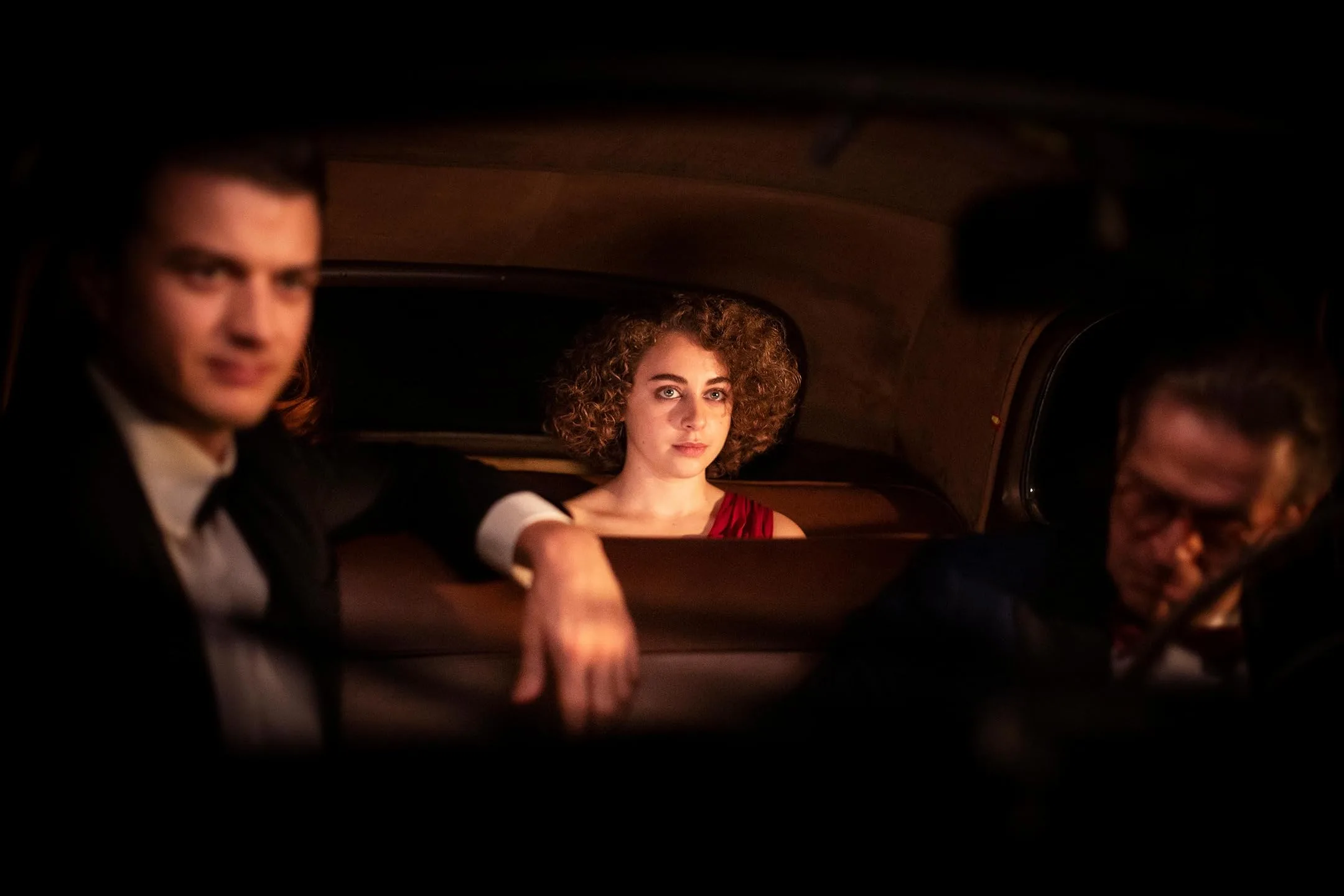
Sayombhu Mukdeeprom’s cinematography captures this duality, shifting between the awesome, alienating scale of Cinecittà’s backlots and the suffocating intimacy of a human face in a moment of terror. The camera’s gaze is a character in itself, at times granting freedom, at others becoming an instrument of violation. The score, by Massimo Martellotta, charts this psychic break. It transitions from the sweeping melodies of a past era to a thumping, modern beat—the new, insistent heart of a consciousness forged in darkness.
And then there is the lion. A final, surreal flourish, the beast pads through the Roman streets. It is the eruption of the primal into the artificial, a creature of pure being in a world of seeming. It is the untamed spirit Mimosa has unleashed within herself, a beautiful, dangerous thing stepping out from the wreckage of the dream.
Full Credits
Director: Saverio Costanzo
Writers: Saverio Costanzo
Producers: Mario Gianani, Lorenzo Gangarossa
Executive Producers: Saverio Costanzo
Cast: Lily James, Rebecca Antonaci, Joe Keery, Rachel Sennott, Alba Rohrwacher, Willem Dafoe
Director of Photography: Sayombhu Mukdeeprom
Editors: Francesca Calvelli
Composer: Massimo Martellotta
The Review
Finally Dawn
Finally Dawn is a disquieting and beautiful fever dream. It is a film less concerned with narrative propulsion than with crafting a potent, allegorical atmosphere of existential dread and discovery. While its deliberate pace and dense symbolism demand patience, the journey is a worthy one. Anchored by a masterful performance from Rebecca Antonaci, the film succeeds as a haunting exploration of the self, seen through the beautiful, predatory lens of the cinematic machine. It is an imperfect but unforgettable work of art that lingers long after the credits roll.
PROS
- A captivating and deeply expressive lead performance from Rebecca Antonaci.
- Stunning cinematography and production design that create a rich, immersive 1950s atmosphere.
- A philosophically deep and symbolic examination of identity, celebrity, and the nature of cinema.
- Artful, ambitious direction that skillfully balances beauty with an undercurrent of menace.
CONS
- The deliberate, slow pace and indulgent runtime may test some viewers' patience.
- Some supporting performances feel intentionally broad, which can be an alienating stylistic choice.
- Its heavy reliance on symbolism and surrealism can make the narrative feel opaque at times.
- The tone is consistently bleak, offering little in the way of conventional entertainment.