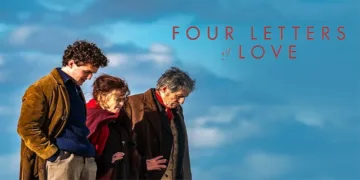















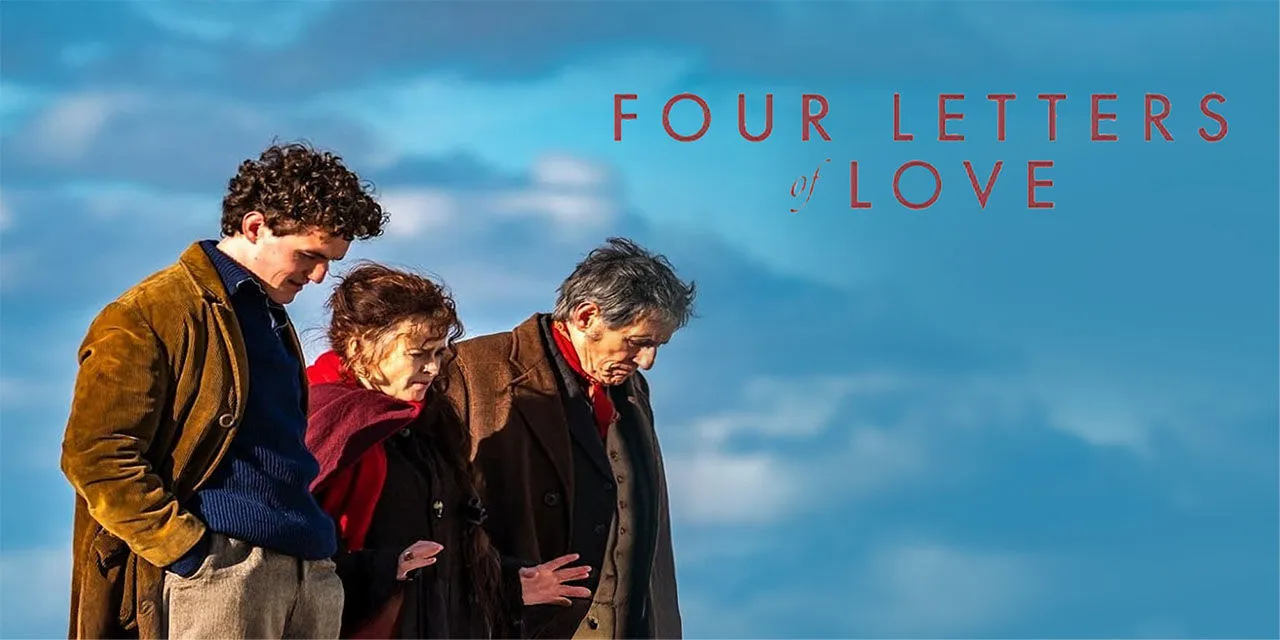

Four Letters of Love positions itself as a soulful drama steeped in the traditions of Irish romance, yet its appeal is calibrated for a global palate. Set in a version of 1970s Ireland, the film presents two parallel lives seemingly guided by cosmic will.
We follow Nicholas Coughlan, a boy left behind when his father abruptly abandons a civil service job in Dublin, convinced by a sliver of sunlight that his true calling is to be a painter. Simultaneously, on a remote island off the west coast, the idyllic childhood of Isabel Gore is fractured by a family tragedy that sends her down a difficult path.
The narrative is built not on chance, but on the certainty of fate. Director Polly Steele frames this story as a modern fairytale, a sweeping, heartfelt exploration of love and divine intervention set against a mythic landscape. Its unabashedly romantic and poetic spirit is a clear invitation to viewers who believe that some connections are written in the stars, long before the characters themselves have met.
The Architecture of Fate
The film’s structure is a patient exercise in delayed gratification, a narrative form that owes as much to literary fables as it does to cinematic romance. Polly Steele constructs the story through a persistent dual-narrative, cutting between the separate worlds of Nicholas and Isabel.
This choice intentionally slows the pacing, asking the audience to invest in atmosphere and longing over plot mechanics. Each scene is meant to build a sense of inevitability, making the viewer a participant in wishing for their eventual union. The central conflicts are rooted in loss of control.
Nicholas develops a quiet stoicism as a shield against the bewildering abandonment by his father, his youth defined by a man who chose a mystical calling over paternal duty. Isabel’s trajectory is a reaction to her own powerlessness; her brother’s sudden illness prompts a rebellion against the strictures of her convent school and leads her into a misguided romance that feels more like an escape than a choice.
The script, adapted by the novelist himself, operates on this mystical logic. It forgoes psychological realism for a world governed by omens, prophetic dreams, and symbolic paintings. This is a high-risk strategy that aligns the film with magical realism, where the miraculous is accepted without question.
For those attuned to its frequency, the effect is enchanting; for others, the threads connecting the two lives may feel too contrived, lacking the grounded causality of more conventional dramas.
An Ensemble of Anchors and Aspirations
The film’s fantastical premise is made palatable by the sincere work of its veteran cast, who serve as cultural and emotional anchors. Helena Bonham Carter is exceptional as Isabel’s mother, Margaret, injecting a distinctly English style of pragmatic wit into the Irish family unit.
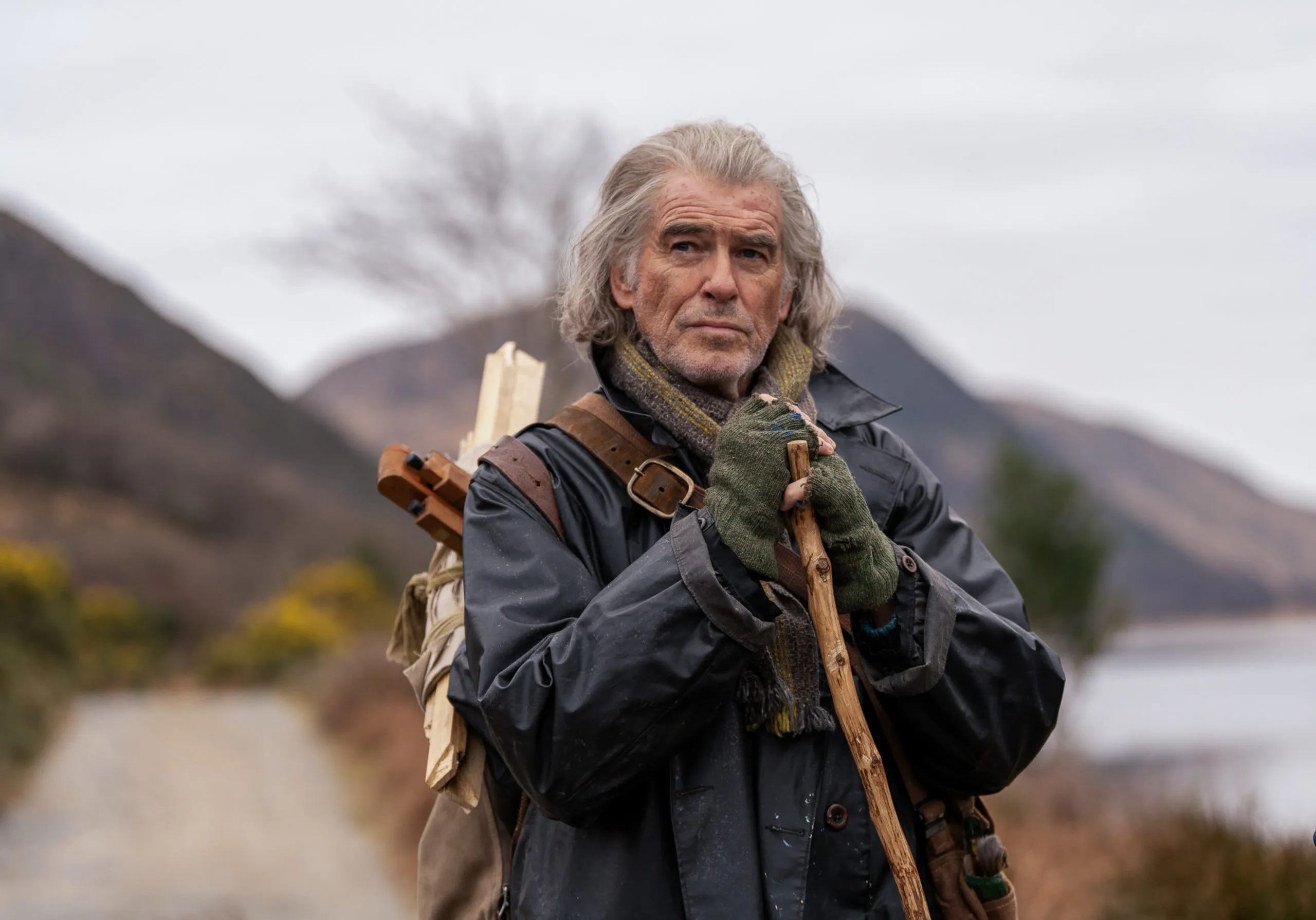
Her perfectly timed eye-rolls and sharp observations provide a necessary tether to reality, preventing the story from floating away on its own sentimentality. Pierce Brosnan, facing the difficult task of portraying a man whose motivations are entirely internal and spiritual, uses his physical presence and a quiet, brooding intensity to convey the profound shift from bored bureaucrat to driven artist.
Alongside them, Gabriel Byrne embodies a gentle, literary Irish masculinity, his performance as the poet-father Muiris radiating a quiet wisdom. The younger leads carry the film’s central romantic thesis. Ann Skelly captures Isabel’s untamed spirit, a wildness that mirrors the rugged landscape of her island home. Fionn O’Shea gives a disciplined performance as Nicholas, a study in repression where deep feeling is communicated through nervous glances and restrained posture.
The film insists their love is an epic force, yet their on-screen chemistry remains symbolic rather than visceral. Because the narrative keeps them apart for nearly the entire runtime, their climactic meeting feels more like a plot requirement than an organic emotional release. Their connection is built on theory and signs, leaving the actors little shared experience from which to build a convincing passion.
Ireland of the Imagination
Visually, Four Letters of Love is less a historical document of 1970s Ireland and more a carefully curated “Ireland of the imagination.” The cinematography by Damien Elliott creates a sun-drenched, hyper-real dreamscape where the sea is impossibly blue and the light has a permanent golden-hour quality.
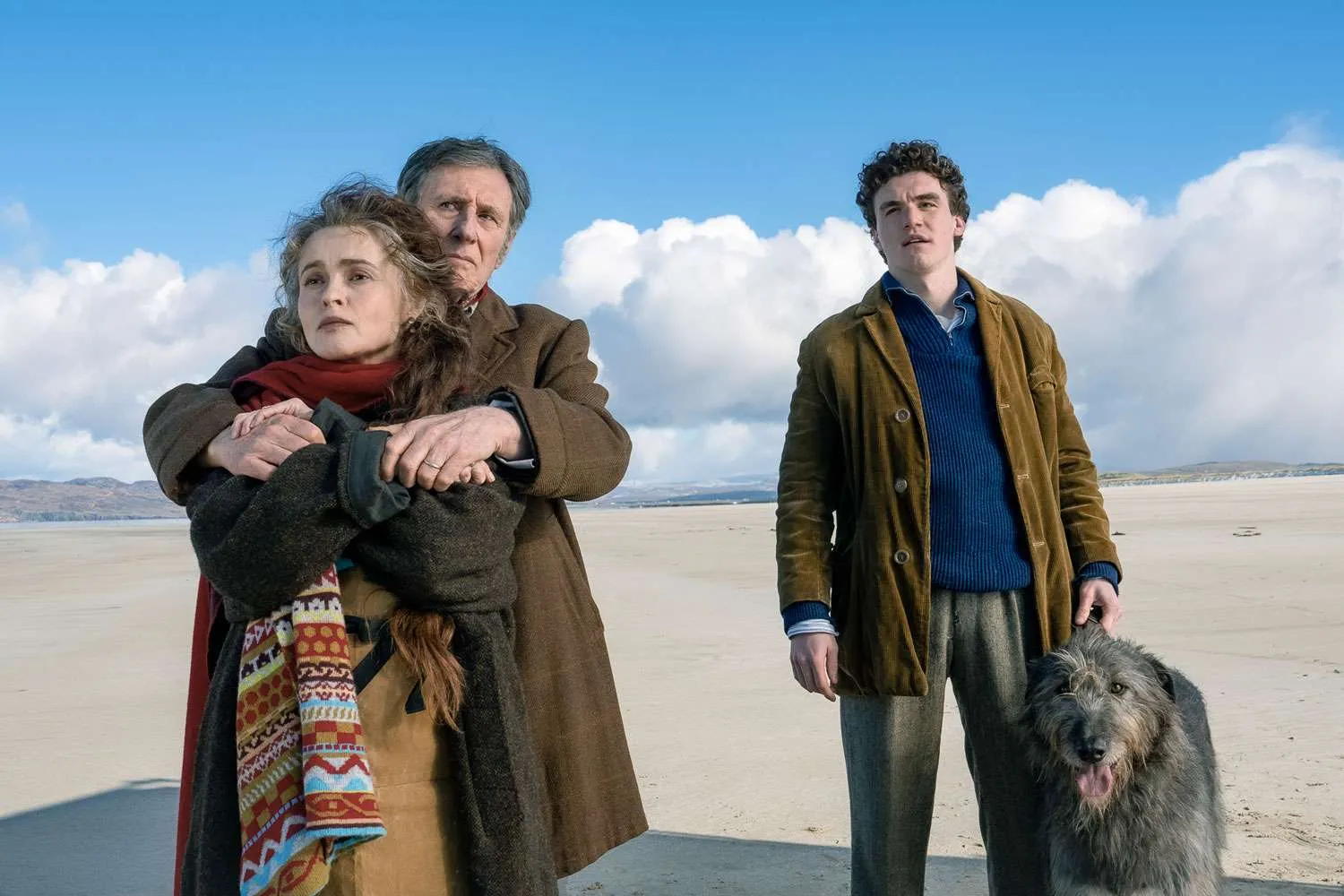
This aesthetic is a key visual storytelling technique; a world governed by miracles logically looks more beautiful and saturated than our own. The stunning landscape becomes an active character, its moody, mythic scale reinforcing the script’s belief in destiny.
This idealized vision is a form of cultural export, presenting an “Ireland™” perfectly packaged for a global audience seeking romantic escape. It stands in contrast to the more naturalistic, and often more complex, portrayals of Irish life seen in the work of directors like Jim Sheridan or Martin McDonagh. This film chooses affirmation over interrogation.
The production design extends this philosophy to the interiors. Cottages and pubs are cozy and quaint, but they feel more like immaculate sets from a heritage catalogue than lived-in spaces. This aesthetic choice is both the film’s greatest commercial asset and its most significant artistic compromise.
It offers a gorgeous, easily digestible vision of a place and its culture, but in doing so, it smooths away the very hardships and contradictions that often define a national identity, particularly one in a state of flux during that era.
Four Letters of Love, a romantic drama based on Niall Williams’ international best-selling novel of the same name, is directed by Polly Steele. It was released as a limited theatrical release in the United States on July 25, 2025, and is available for streaming on Plex as of the same date.
Full Credits
Director: Polly Steele
Writers: Niall Williams
Producers: Debbie Gray, Douglas Cummins, Martina Niland
Cast: Pierce Brosnan (William Coughlan), Helena Bonham Carter (Margaret Gore), Gabriel Byrne (Muiris Gore), Ann Skelly (Isabel Gore), Fionn O’Shea (Nicholas Coughlan), Dónal Finn (Sean Gore), Olwen Fouéré (Nora Ni Liathain), Michelle Lucy (Sister Agnes)
Director of Photography (Cinematographer): Damien Elliott
Editors: Chris Gill
Composer: Anne Nikitin
The Review
Four Letters of Love
Four Letters of Love is a visually stunning film with sincere performances that fully commits to its fairytale logic. It succeeds as a heartfelt and unabashedly sentimental romance for those willing to embrace its belief in destiny over realism. However, its reliance on an idealized, postcard version of Ireland and a central romance that feels more symbolic than passionate may leave other viewers unconvinced. It’s a gorgeous cinematic fable that sacrifices gritty truth for a mythic, beautiful vision of love conquering all.
PROS
- Stunning cinematography that turns the Irish landscape into a mythic character.
- Excellent, grounding performances from the veteran supporting cast, especially Helena Bonham Carter.
- A deeply romantic and sincere tone for fans of the genre.
CONS
- A lack of convincing on-screen chemistry between the two romantic leads.
- The plot relies heavily on contrivance and fated coincidences.
- Presents a romanticized, tourist-brochure vision of its setting and culture.