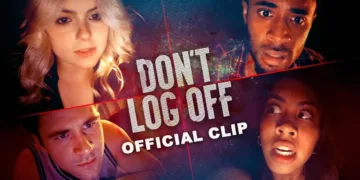


























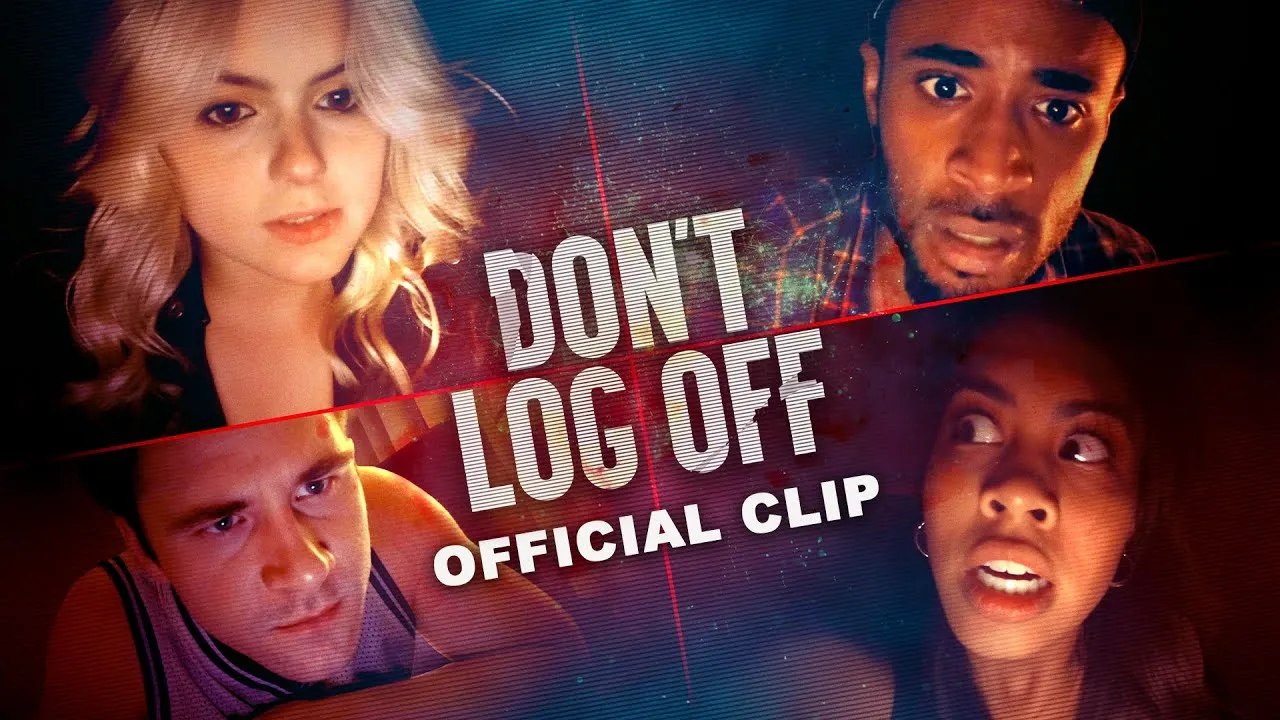

There’s a specific texture to art made during the early days of the pandemic, a kind of digital amber preserving the anxiety and isolation of March 2020. Don’t Log Off, which arrives on VOD today, July 15, 2025, is a direct artifact of that moment.
The film opens on a scene familiar to anyone who weathered that first lockdown: a group of college friends attempting connection through a screen for a surprise birthday party. The grainy webcams, the awkward banter, the feeling of being together while being miles apart—it’s all there. The movie sets its hook when the birthday girl, Sam, steps away from her laptop to answer the door.
She never returns. Her camera keeps streaming her empty room, a silent testament to her sudden absence. Her friends, trapped in their respective quarantines, are left staring at their screens in growing horror. What happened to Sam? And how can they possibly find out when their only tool is the very technology that keeps them apart?
A Window with Too Many Fingerprints
The film operates within the screenlife genre, a fascinating evolution of found footage where the story is told entirely through a character’s computer desktop. The most effective examples of this style trust the audience to become an active participant.
I remember watching films like Searching, where my eyes darted across the desktop, catching little clues in file names and browser tabs, feeling as if I were part of the investigation. That active engagement creates a potent sense of reality. Don’t Log Off generates some of its best chills this way, especially when a character explores a darkened apartment through the shaky, pixelated lens of a FaceTime call. Our view is as limited and vulnerable as theirs.
The filmmakers, however, seem to lack confidence in the format’s inherent power. The movie repeatedly breaks its own rules with intrusive, traditional cinematic techniques. A slow, artificial zoom pushes in on a key text message. A non-diegetic musical sting punctuates a scare.
These choices feel like mainstream concessions, a hedge against the possibility that a “pure” screenlife experience might be too demanding. Instead of trusting us to find the important details, the film highlights them for us, shattering the illusion of looking at a real screen. It’s a critical misstep that pulls you out of the experience, reminding you that an editor’s hand is guiding your gaze. The window into this world has too many directorial fingerprints on it.
A Loop of Bad Decisions
Once the initial mystery is established, the film’s narrative engine sputters, settling into a frustratingly illogical loop. After Sam vanishes, one friend decides to drive to her apartment to investigate. Alone. When that person inevitably disappears, another friend follows suit, also alone.
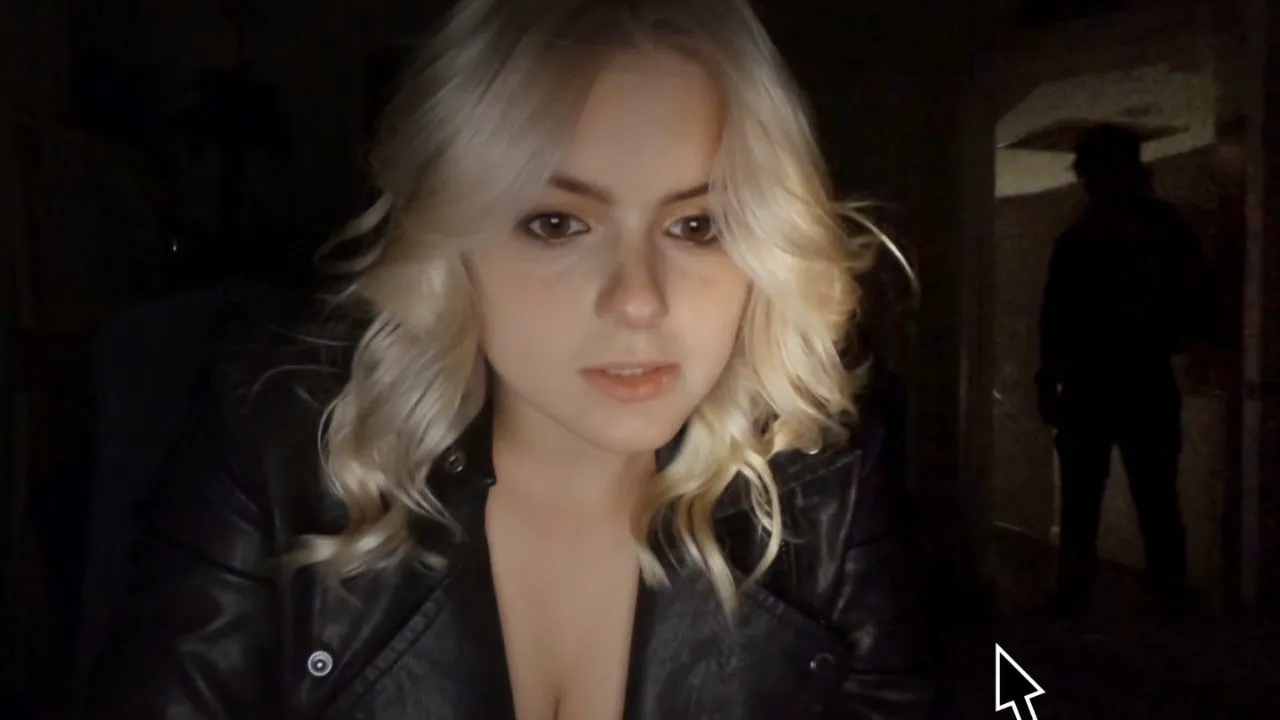
This happens again. What starts as a brave, if reckless, decision quickly strains credulity, becoming almost comical by the third attempt. The script bypasses any logical character response—calling authorities, coordinating a group effort, using their combined digital skills from a safe distance—for a cheap and repetitive way to place individuals in peril. It’s a failure of imagination that disrespects both its characters and its audience.
The time between these ill-fated excursions is filled with circular arguments that do little to advance the plot. Certain friends stubbornly insist the entire situation is an elaborate prank, a tired horror trope that feels especially out of place here.
The early pandemic was a time of heightened awareness to unseen dangers; these characters seem to exist in an opposite reality of willful ignorance. The denial feels less like a genuine character trait and more like a tool to stall for time. This causes the pacing to drag considerably through the first two acts. The story feels stagnant, killing any momentum before it can build, leaving the viewer waiting for the characters to catch up to what is painfully obvious.
Friends You Wouldn’t Call
A story this contained lives or dies on the chemistry of its ensemble, and here the connections feel disappointingly thin. The dialogue is often functional and expository, with characters talking about their friendship rather than demonstrating it through natural, lived-in interactions. I never quite believed them as a close-knit group that shared years of history.
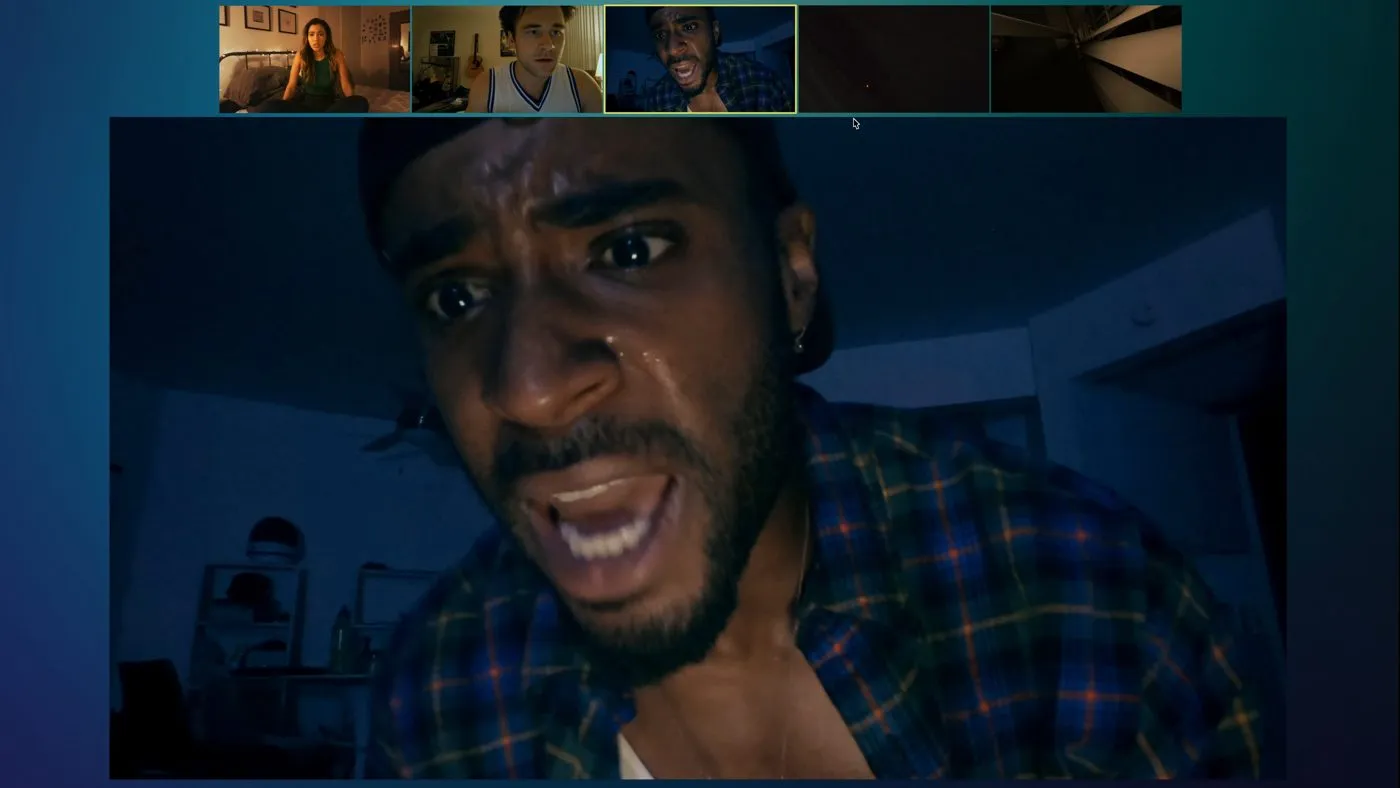
The performances are similarly uneven, feeling more like a collection of isolated reactions than a cohesive group experiencing a shared, escalating panic. This may be a byproduct of the production circumstances, but the final edit fails to stitch these individual efforts into a believable whole.
When the film finally reaches its climax, the resolution is a disappointingly conventional one. The mystery is solved with a human, earthly explanation that feels safe and predictable. The screenlife format opens the door to so many uniquely modern fears—digital ghosts, the terror of doxxing, a malevolent AI—but the film retreats to a standard thriller conclusion.
It sets up a 21st-century problem and solves it with a 20th-century answer. This feels like a massive missed opportunity. The movie had the perfect setup to be a definitive statement on the anxieties of that era, but instead uses the lockdown as simple window dressing. Even the title is a misnomer; the characters are never tempted to log off. They are forcibly disconnected, much like the film is from its own potential.
Don’t Log Off is a screen-life horror thriller released during the COVID-19 era, with a limited theatrical release on July 11, 2025, and streaming availability on VOD platforms starting July 15, 2025. You can rent or buy it on platforms like Fandango at Home, Amazon Prime Video, or potentially stream it on Netflix.
Full Credits
Director: Brandon Baer, Garrett Baer
Writers: Brandon Baer, Garrett Baer
Producers: Sterling Beaumon, Ariel Winter, Austin Seltzer, Nicole Smolen, Luke Benward, Todd Slater
Cast: Ariel Winter (Annie), Sterling Beaumon (Justin), Kara Royster (Katy), Ashley Argota (Becca), Brielle Barbusca (Sam), Luke Benward (Adam), Jack Griffo (Jacob), Khylin Rhambo (Brian), Kenny Ridwan (Robert)
Director of Photography (Cinematographer): Ben Goodman
Editors: Erik Vogt-Nilsen
The Review
Don't Log Off
Don't Log Off works best as a time capsule, perfectly capturing the digital anxiety of the early 2020 lockdown. Its screenlife premise is initially chilling, but the film sabotages its own tension with intrusive directing choices and a deeply repetitive plot. Weak character logic and a predictable ending keep it from realizing its potential. It’s a fascinating artifact with a great idea at its center, but the execution unfortunately disconnects before the final credits roll.
PROS
- An effective time capsule of the early pandemic era.
- The screenlife format creates moments of genuine tension.
- A strong, relatable initial premise.
CONS
- Illogical plot structure relies on characters making repetitive, unbelievable decisions.
- Intrusive editing and music break immersion.
- Unconvincing characters and stilted dialogue.
- A safe and predictable final reveal.