





























The first block you summon solves three problems before the game has finished explaining one. It weighs down a floor switch, forms a platform across shallow water, and becomes an anchor once the grappling tether enters the toolset. Helix: Descent N Ascent builds its puzzles around this kind of functional overlap. Each ability has a clear basic purpose, then gains a different behavior when connected to another.
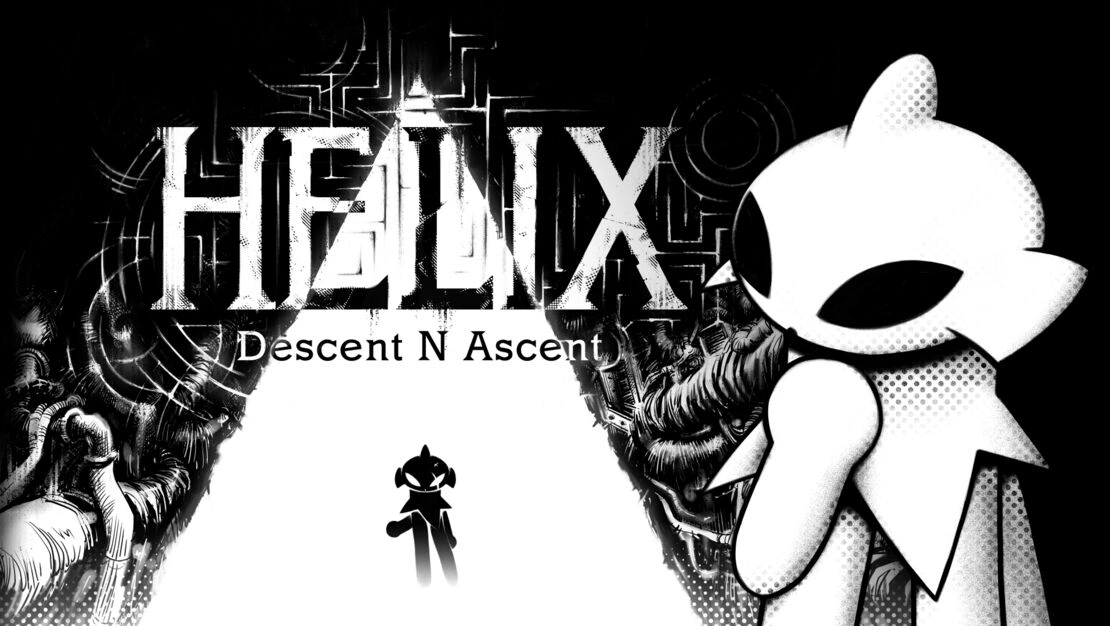
Developed by Belgian studio Badass Mongoose, the game places an alien-like figure inside a monochrome world of abandoned cottages, industrial pipes, snowfields, and unfinished spaces. A scarred doppelgänger appears along the route, sometimes indicating where to go and sometimes interfering with progress. Flashbacks and environmental fragments imply a relationship between the two figures, but dialogue rarely interrupts the act of solving.
The opening areas introduce five abilities separately. A pillar creates platforms and activates weighted switches. The tether pulls the protagonist toward anchor points or moves objects attached to it. A drone travels through narrow passages and transports crafted materials. An inverter swaps the environment between light and dark states. A spherical capsule captures small animals, allowing a crab or fly to be released beside a remote mechanism. These tools give the game its vocabulary. The puzzles teach its grammar.
Combination Logic
The progression structure limits which abilities are available inside each chamber. That restriction matters. Handing the player all five powers at once would turn every obstacle into a process of testing an unwieldy inventory. Assigning two or three specific tools creates a smaller, readable possibility space without revealing the intended sequence.
Combining the tether with the animal capsule produces a fishing-rod-like device. Linking the tether to a summoned block changes its function from personal movement to object repositioning. The drone can carry crafted objects across rivers or transport captured creatures through ventilation shafts. Later rooms ask the player to send a drone carrying flies through a narrow passage, invert the world to expose a route, then release the insects near a switch.
That sequence works because each step was introduced earlier in isolation. The game rarely needs written instructions. Symbols placed near dungeon entrances indicate the assigned ability set, while simpler rooms demonstrate one interaction before harder chambers demand several in succession. Failure usually reveals useful information: a block landed in the wrong position, the drone entered from the wrong side, or the world was inverted one action too early.
Most rooms can be cleared in several minutes, which gives the game a steady rhythm. A puzzle presents its conditions, allows space for experimentation, then releases the player back into the hub. The absence of enemies and strict timers keeps attention on the relationship between objects rather than execution speed.
Some middle sections begin recycling familiar switch-and-platform arrangements. The design recovers once three-ability combinations appear, since every added interaction changes the order in which a solution must be assembled.
A World in Two States
The black-and-white presentation does practical work inside the puzzle system. Activating the inverter can reveal platforms, close passages, or replace one arrangement of the room with another. The visual transformation functions like a mechanical state change rather than a cosmetic filter, forcing the player to remember how both versions of a space connect.
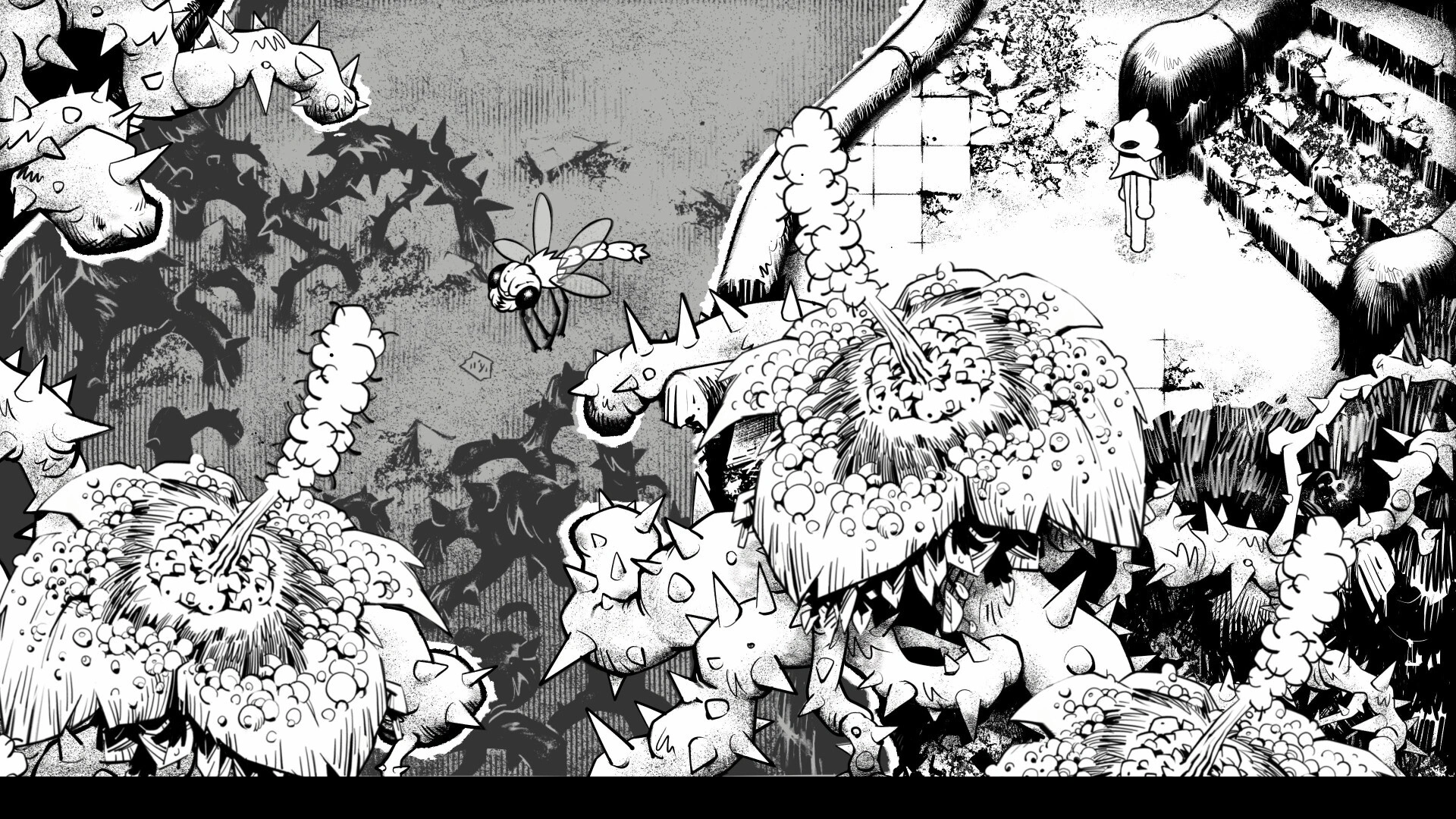
Badass Mongoose gives those states a hand-drawn texture. Tiles carry rough edges, pipes resemble streaks of ink, and distant valleys fade into sketched construction lines. Some areas appear fully illustrated while others dissolve into grids and blank canvas, making exploration feel like movement through an unfinished drawing. Earlier locations acquire new paths when later abilities become available, lending the hub a restrained Metroidvania structure without turning navigation into its primary challenge.
Finding the correct path can still be awkward. Ability symbols help identify relevant routes, but some dungeon entrances sit behind environmental details that are easy to misread. Trial and error resolves most confusion, though searching the hub is less satisfying than solving the rooms attached to it.
Sound gives the world much of its physical weight. Footsteps land with a soft, rubbery impact. Doors and blocks produce crisp mechanical responses. Wind, running water, and machinery occupy spaces where constant music might have crowded the player’s concentration. Jim Guthrie’s score appears selectively, often around transitions or tense narrative fragments, leaving long puzzle stretches to ambient noise.
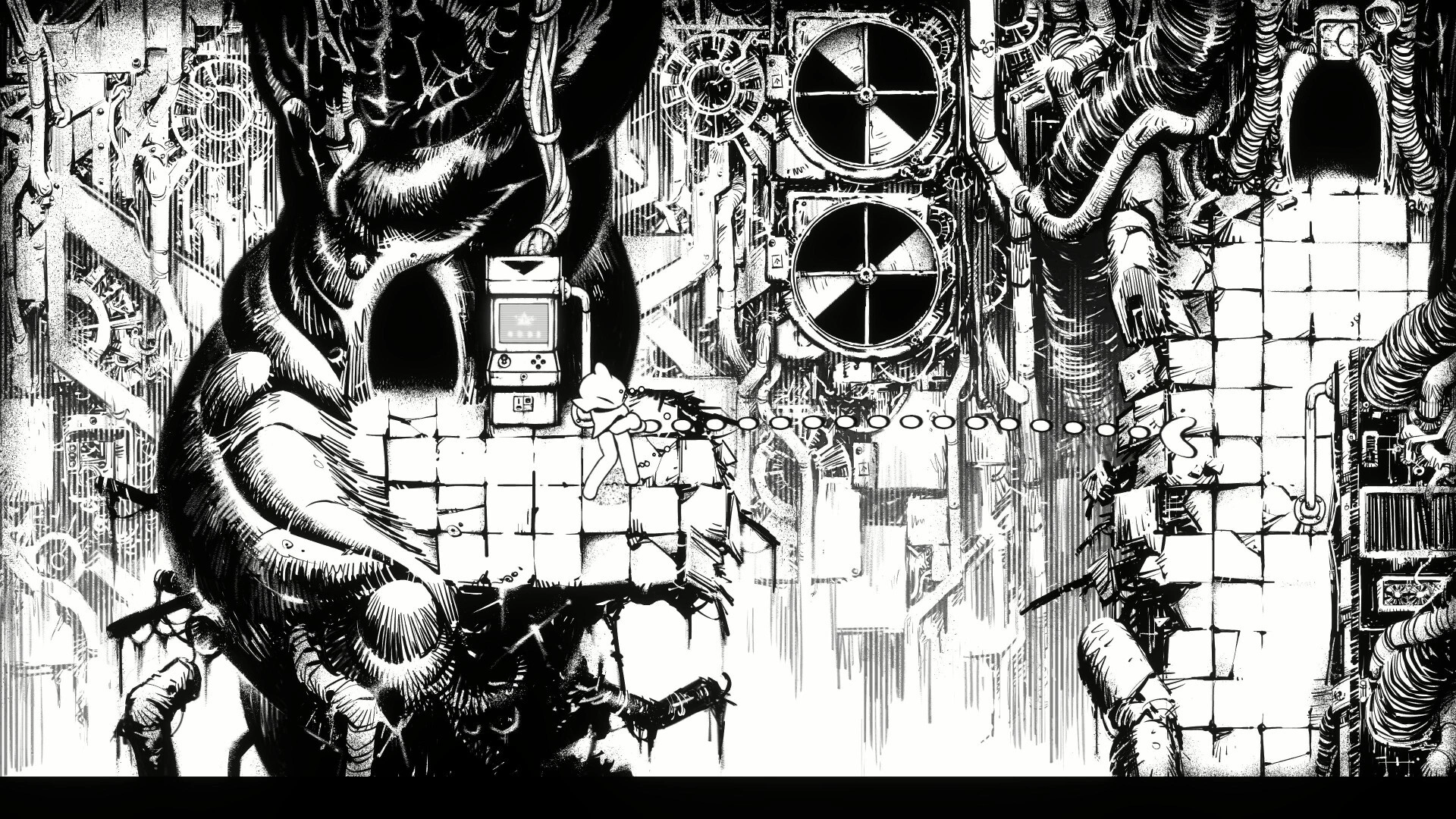
Hidden terminals briefly replace this measured pace with arcade platforming. These challenges resemble early Donkey Kong: the protagonist climbs toward the doppelgänger while avoiding hazards and attacks across three difficulty settings. They are mechanically simpler than the main puzzles, but their faster tempo gives the strange rivalry a playable form.
The Climb After the Credits
The campaign’s structure creates its largest problem. Five early areas teach individual abilities, followed by ten spaces built around paired tools. Collecting the fifteenth sigil triggers the ending and rolls the credits just before the system reaches its richest configuration.
Ten further areas remain afterward, each centered on combinations of three abilities. These chambers contain roughly thirty individual puzzle sequences and can take longer to clear than the main route. Here, the player may need to position a pillar, alter its behavior through another tool, send the result through the environment with the drone, then switch the room’s color state at a precise stage.
Placing this material after the credits makes the initial ending feel mistimed. The systems have finished teaching their rules, yet the formal campaign stops before asking the hardest questions. Completing the postgame and entering its secret gate offers no new scene, image, lore fragment, or altered ending. The same credits return, leaving mechanical mastery without a narrative response.
Technical problems also concentrate in these later chambers. Drone combinations can cause objects to stop responding, gates may close before every required item has crossed, and certain sequences can leave the player soft-locked. Generous checkpoints reduce repeated work, but restarting a room breaks the calm reasoning loop that the rest of the game protects so carefully.
A controller handles simultaneous abilities cleanly. Keyboard bindings spread actions across keys such as U, O, J, K, and L, which becomes cumbersome once a room asks for several inputs in quick succession. The postgame demands the sharpest understanding of the system while providing its least reliable interface with that system.
The Review
Helix: Descent N Ascent
Helix: Descent N Ascent builds its best puzzles by treating abilities as components rather than isolated tricks. A block, tether, drone, creature capsule, and world inverter gain new functions when combined, producing a progression system that teaches through experimentation. Its monochrome environments and tactile sound design give that system a strong identity. The campaign rolls credits before the three-ability puzzles reach their peak, while postgame drone bugs interrupt some of its hardest rooms. Those structural faults sting because the underlying design is so carefully constructed.
PROS
- Inventive ability combinations
- Patient puzzle progression
- Striking monochrome artwork
- Excellent environmental sound
- Flexible, self-contained challenges
CONS
- Premature credit sequence
- Buggy postgame interactions
- Limited completion payoff
- Awkward keyboard bindings