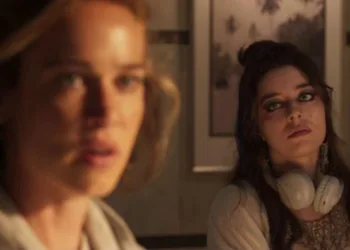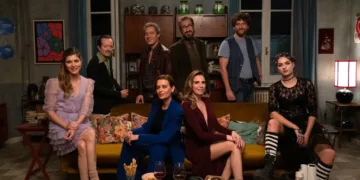















The first date is a theatre of managed anxieties, a performance where every line and gesture is scrutinized. Paolo Genovese’s film Madly takes this internal drama and places it directly on screen. The picture follows the initial romantic encounter between Piero and Lara, a seemingly simple dinner at her apartment. Yet this is no simple two-hander.
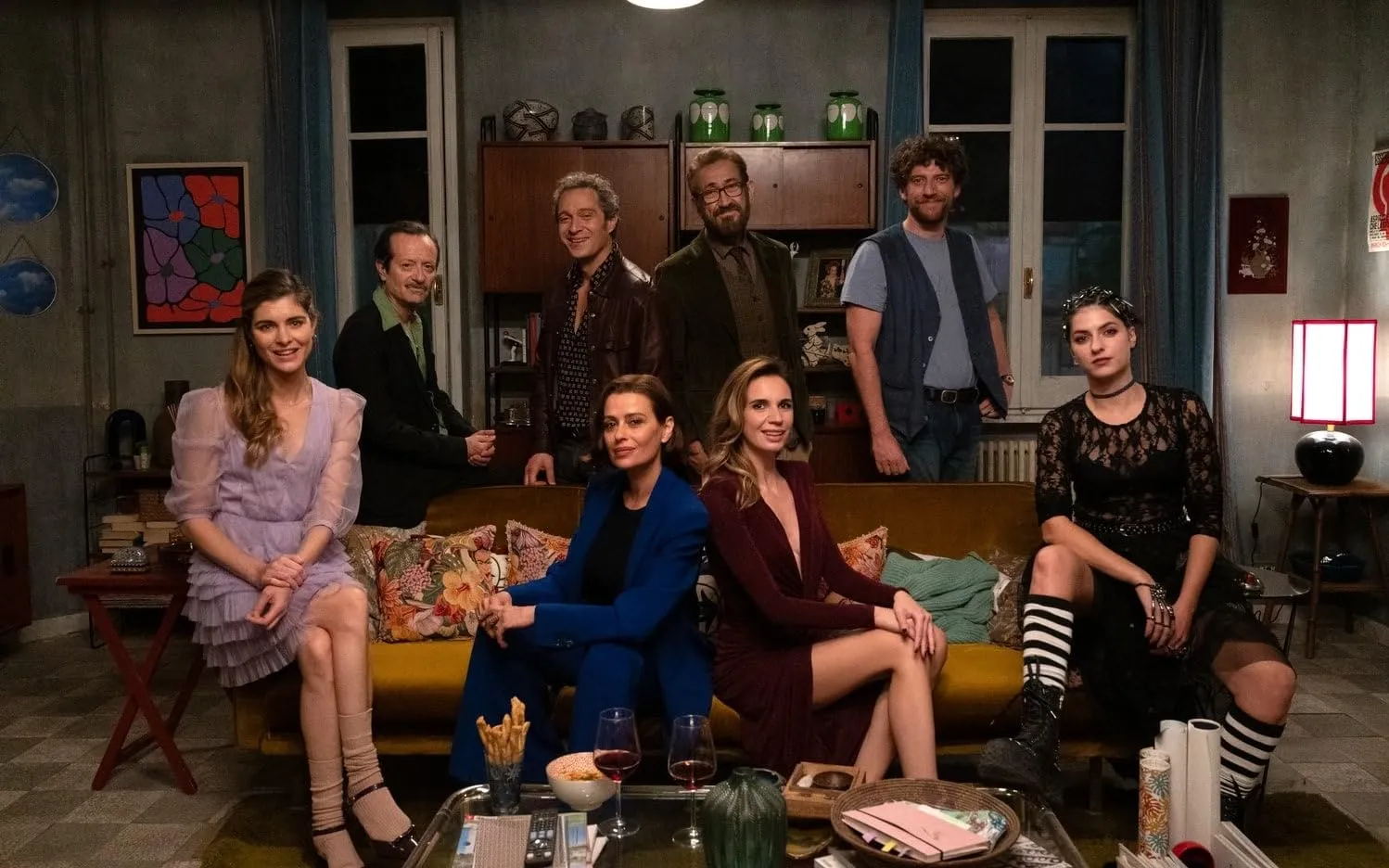
Genovese splits the screen and the story, inviting the audience into the minds of his protagonists. Here, a boisterous committee of personified emotions debates every choice, from flirtatious remarks to wardrobe selection.
The premise is a high-wire act of narrative architecture, promising to expose the chaotic mechanics of attraction. We watch Piero and Lara attempt to connect, all while knowing the puppet masters pulling their strings are in plain sight.
The Divided Self on Display
The film establishes its psychological territories with stark visual contrast. Piero’s mind is a spartan, industrial storage room, cluttered with relics of past failures and achievements, a masculine space where his all-male council holds court.
Here, the hot-blooded Eros advocates for immediate gratification, clashing with the tender-hearted Romeo, who pleads for chivalry. The logical Professore attempts to impose a rational framework on every decision, only to be undermined by the cynical, risk-averse Valium.
These archetypes do not just debate; they engage in loud, theatrical power struggles for control over Piero’s every word. Across town, Lara’s psyche is a chic, modern loft, impeccably designed yet emotionally charged. Inside, the dreamy Giulietta champions the cause of romance against the unyielding Alfa, a disciplined figure of feminist principle.
Instinct, embodied by the fiery Trilli, fights for attention with Scheggia, a spirit of pure rebellion. The film’s rhythm is dictated by a relentless cutting between these two internal war rooms and the quiet apartment where the date unfolds.
This editing structure ensures that no moment is simple. A slight hesitation before answering a question is revealed to be the result of a deadlocked vote, turning the simple act of getting acquainted into a complex tactical game.
The Calculated Heart
The film’s humor springs from the disconnect between inner turmoil and outer composure. It often settles for broad, sitcom-style gags instead of subtler wit. The frantic debate inside Lara’s head about room lighting, resulting in flickering strobes from Piero’s perspective, is indicative of the comedy’s blunt tone, as is a Freudian slip where Lara invites Piero to “lie down at the table.”
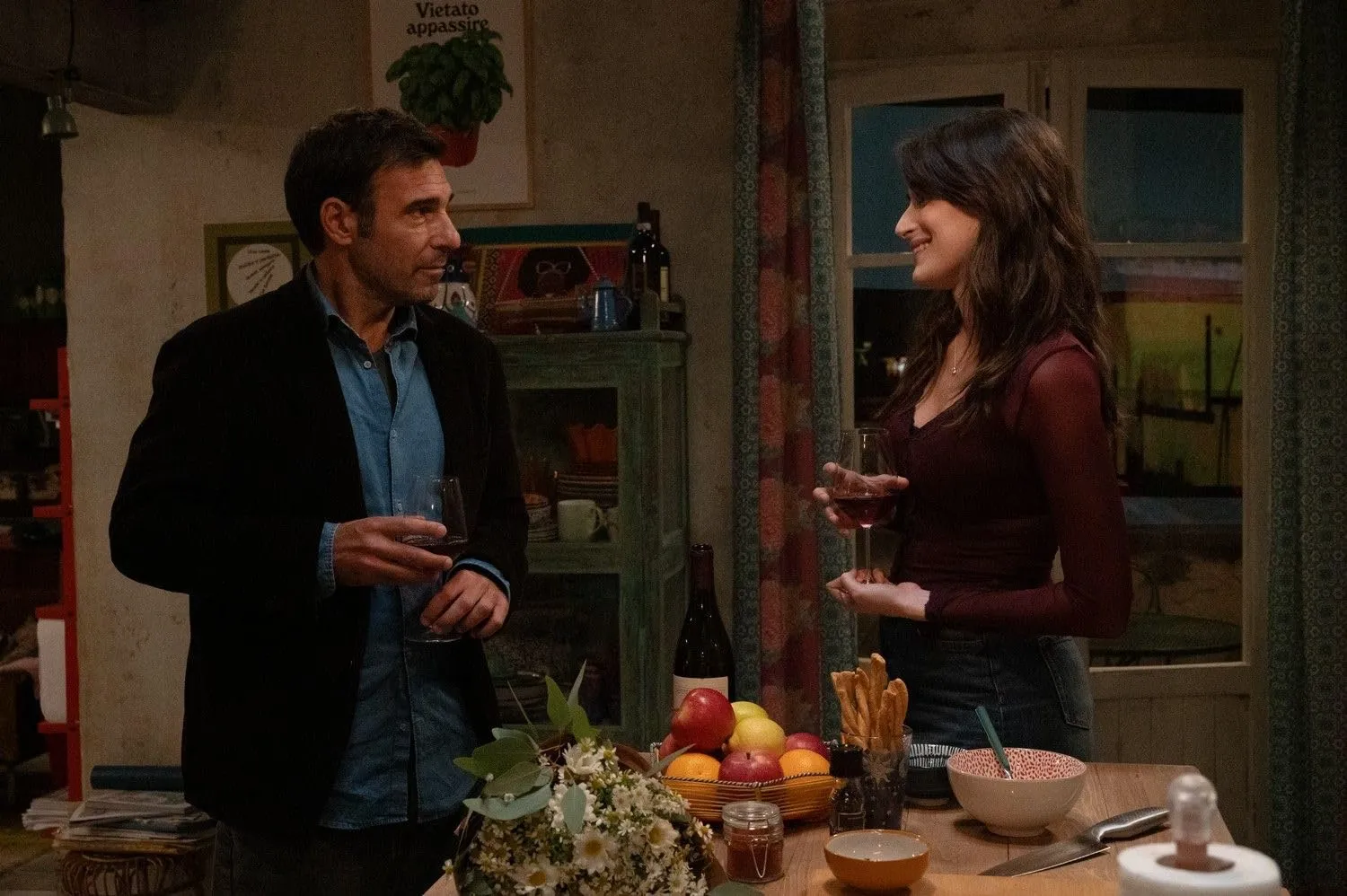
This conceptual framework places a heavy burden on the central relationship. The connection between Edoardo Leo’s Piero and Pilar Fogliati’s Lara feels strained, an inevitable consequence of the script’s design. Their sincerity is rendered impossible. Because we see every calculation and insecurity, their spoken words land as hollow, carefully vetted statements.
They are not two people getting to know each other; they are two ambassadors conducting cautious diplomacy. This strategic thinking prevents any sense of authentic chemistry from taking root. The real energy erupts from the ensemble cast portraying the inner voices.
The performances of Claudio Santamaria as the swaggering Eros and Emanuela Fanelli as the passionate Trilli offer a vitality the film’s central pairing struggles to match. They are vivid sketches of impulse, raw and unfiltered, and far more alive than the people they supposedly control.
An Ideology of the Interior
Beneath its romantic-comedy surface, Madly constructs a deeply conventional, almost clinical, map of gender. The film’s psychological blueprint is starkly binary. Piero’s mind is the domain of male-coded logic, passion, and reason, presented as the primary forces of action.
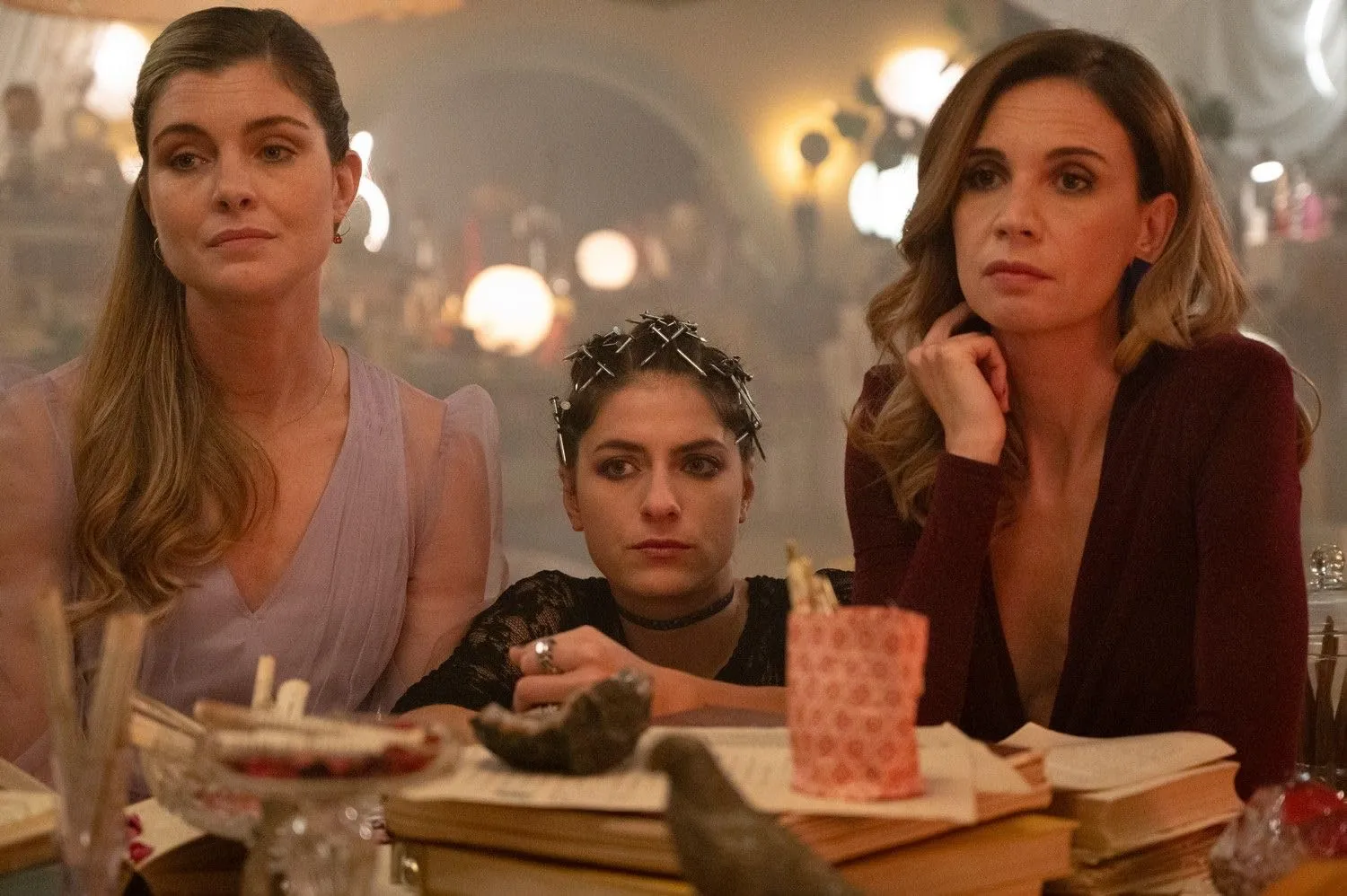
Lara’s internal world, by contrast, is a landscape of female-coded intuition, romantic dreams, and stubborn principle—forces that react rather than initiate. This division is not accidental; it is the film’s central organizing principle, reinforcing a tired hierarchy of human behavior.
The script illustrates these ideas with dated scenarios, such as Lara placating Piero by letting him watch football, a sport she supposedly cannot comprehend. Her identity is affirmed through accommodation, his through indulgence. These are not character traits; they are tenets of a reductive worldview presented as psychological fact.
The film asks if two people can silence their inner noise to find each other. The resolution suggests they can, but the price of this connection is conformity. They must accept these prescribed roles to achieve harmony.
This is not a story about integrating one’s complex self, but about suppressing it to fit a template. Madly begins with an ambitious question about the difficulties of human connection in the modern age, yet its exploration leads only to an answer built from the most familiar and uninspired parts of the past.
Full Credits
Director: Paolo Genovese
Writers: Isabella Aguilar, Lucia Calamaro, Paolo Genovese, Paolo Costella, Flaminia Gressi
Producers: Carlotta Galleni, Raffaella Leone, Andrea Leone
Executive Producers: Federico Polimanti, Paolo Sciarretta
Cast: Edoardo Leo, Pilar Fogliati, Emanuela Fanelli, Maria Chiara Giannetta, Claudia Pandolfi, Vittoria Puccini, Marco Giallini, Maurizio Lastrico, Rocco Papaleo, Claudio Santamaria
Director of Photography (Cinematographer): Fabrizio Lucci
Editors: Consuelo Catucci
Composer: Maurizio Filardo
The Review
Madly
Madly presents a clever concept that promises a witty exploration of modern romance but delivers a disappointingly conventional story. Its reliance on tired gender stereotypes and a lack of genuine chemistry between the leads ultimately smothers the initial spark of its premise. While the inner monologues provide some energy, the film itself feels hollow, trapped by the very clichés it puts on display.
PROS
- An inventive, high-concept premise that visualizes internal thought processes.
- Energetic and vibrant performances from the ensemble cast playing the inner voices.
- Sharp editing that fluidly connects the three narrative settings.
CONS
- Execution relies on reductive and dated gender stereotypes.
- The two main characters lack believable on-screen chemistry.
- The humor is often broad and superficial.
- An uninspired resolution that reinforces conventional ideas.