














There are films that ask you to watch, and then there are films that feel like they are holding you hostage. Mehran Tamadon’s My Worst Enemy belongs to the second category. Tamadon, an Iranian filmmaker living in exile, has a history of making documentaries that seek dialogue with the staunchest defenders of the Iranian regime.
Following his own detention by authorities, he devises a plan that is both staggeringly bold and disarmingly naive. He will invite fellow exiles, all of them former political prisoners, to interrogate him on camera. The hope?
That this film might find its way to his real captors and, like a message in a bottle, spark a flicker of conscience within them. It’s a perilous proposition, a psychological experiment where the lab is a series of bare rooms and the variables are human trauma and memory.
When the Script Fails
I remember a theater class exercise where we had to role-play high-status and low-status characters. Within minutes, the artificial power dynamic felt uncomfortably real. Tamadon’s initial experiment shows just how impossible that exercise becomes when the roles are not king and peasant, but torturer and prisoner. The first part of the film documents the project’s immediate fracture.
The men he invites to interrogate him, former prisoners themselves, cannot bring themselves to inflict the necessary cruelty. Their own humanity and deep-seated trauma get in the way. The film’s structure is brilliant here; instead of hiding this dead end, it presents the project’s failure as its first finding. It suggests that the methodical cruelty of a state interrogator is not a mask one can simply put on.
It’s a corrosion of the soul that cannot be easily simulated by those who have been on its receiving end. This structural choice subverts our expectations. We anticipate a linear investigation, but the film forces us to sit with the director in his initial failure.
Then, actress Zar Amir Ebrahimi arrives. The film’s entire grammar shifts. Herself a survivor of a year of intense questioning after a private video was leaked, she brings not just the weight of lived experience but the sharp tools of a performer, ready to inhabit a role that others found unbearable. Her entrance signals a point of no return.
The Performance Becomes the Punishment
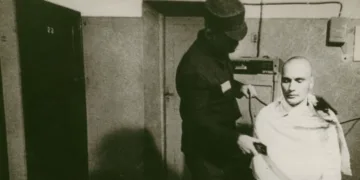
What follows is one of the most grueling sequences I’ve seen in modern documentary cinema. The camera becomes tight, handheld, and nervous, reflecting Tamadon’s own state as Ebrahimi’s two-day interrogation begins. This is not just a reenactment; it is a meticulous, psychological demolition.
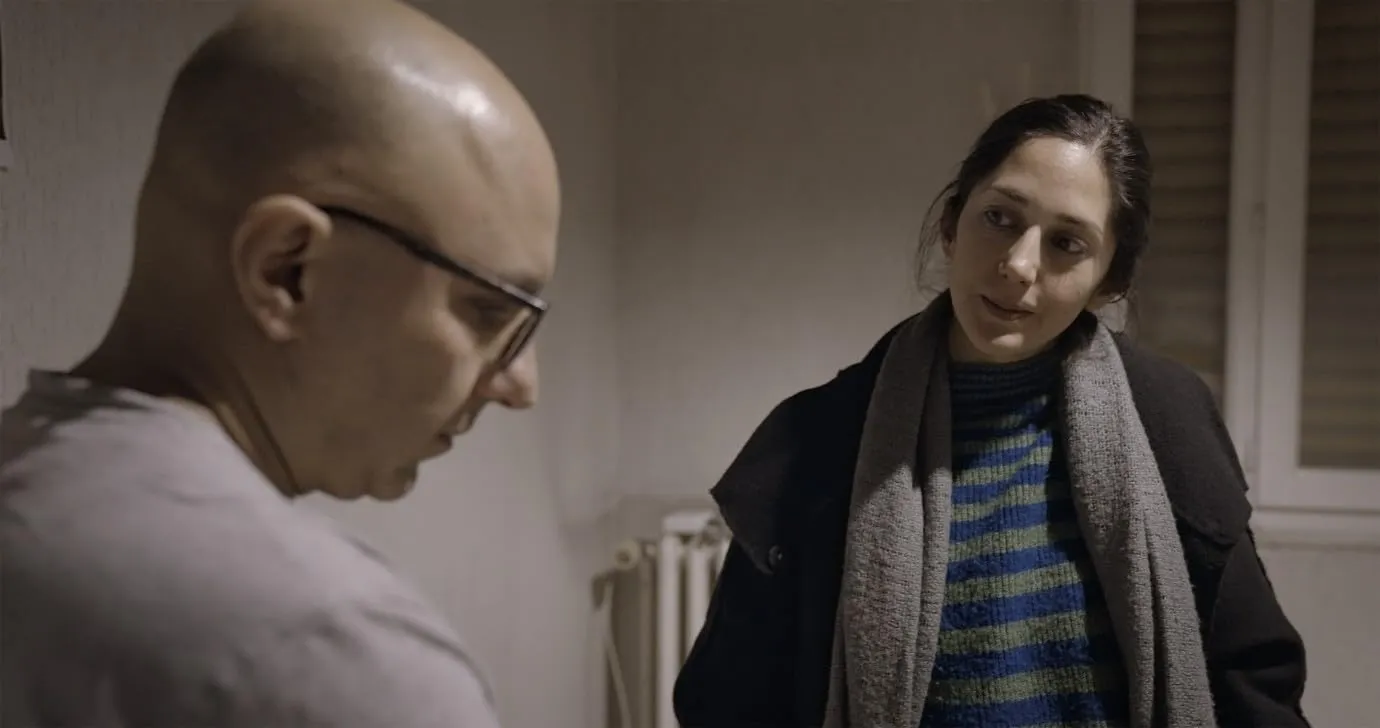
She uses the knowledge of her own ordeal to inform her performance, targeting his motivations for leaving architecture for filmmaking, his relationships, and his methods. The sound design is stark—the echo of voices in a bare room, the discomfort of silence, the unsettling sound of clothing being removed as she orders him to strip.
The interrogation escalates to physical humiliation, dousing him with cold water and making him walk nearly naked on a deserted street. The critical turn, the moment the film becomes truly great, is when Ebrahimi weaponizes her role against the creator himself. She attacks the ethics of the project, yelling, “Is it right to make people suffer in the name of cinema?”
She calls his experiment a “silly little game” that re-traumatizes its participants. In this moment, her performance achieves a terrifying clarity. The artifice of the exercise becomes the most authentic tool for truth, exposing the director’s privilege and forcing him—and us—to confront the uncomfortable reality of what we are watching.
A Film Turned Inward
A film that begins as an inquiry into the mind of a state torturer radically transforms into a piercing self-interrogation of the filmmaker. My Worst Enemy succeeds precisely because its initial premise collapses. Its true subject is not the enemy of the state, but the enemy within: the artist’s own blind spots and the ethical minefield of telling stories about pain.
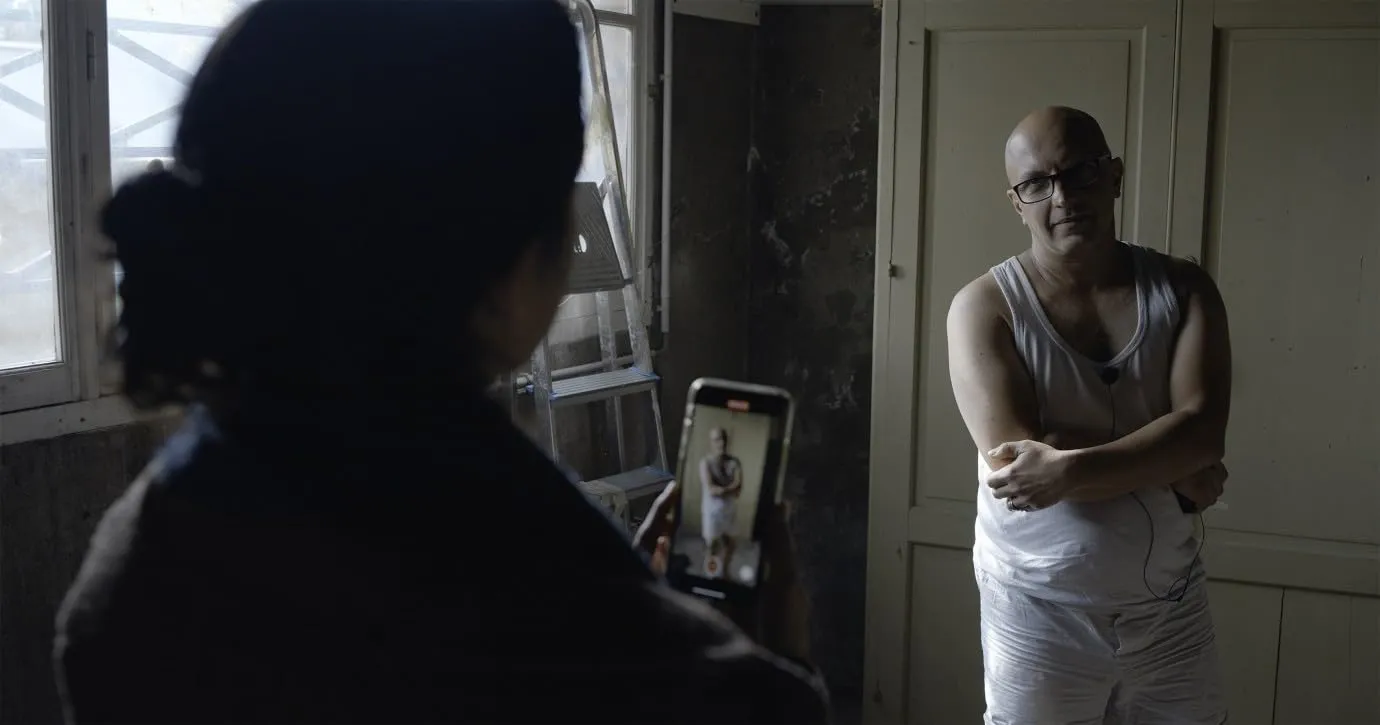
The project’s pivot to self-critique is its main achievement, placing it within a vital trend of independent documentaries that challenge the filmmaker’s authority. Tamadon’s choice to let his own project be ruthlessly deconstructed on screen is an act of profound cinematic courage. The film forces us to ask what it means to watch someone’s pain, even if it is staged. It implicates the audience in the director’s experiment.
It leaves you with heavy questions for which there are no simple answers. How does wielding power change a person? What is the artist’s responsibility when their medium is human trauma? It’s a work that shows the startling evolution of documentary filmmaking towards a form of radical, uncomfortable honesty.
My Worst Enemy premiered at the Berlin International Film Festival on February 21, 2023.
Full Credits
Director: Mehran Tamadon
Writers: Philippe Lasry, Mehran Tamadon
Producers: Elena Tatti, Raphaël Pillosio
Executive Producers: Raphaël Pillosio
Cast: Zar Amir Ebrahimi, Mehran Tamadon
Director of Photography (Cinematographer): Patrick Tresch
Editors: Mehran Tamadon, Luc Forveille
The Review
My Worst Enemy
My Worst Enemy is a masterfully unsettling piece of cinema. It is a film that succeeds by failing, transforming its own flawed premise into a riveting and ruthless self-interrogation. Powered by an astonishingly raw performance from Zar Amir Ebrahimi, this is a challenging, essential documentary that interrogates the ethics of filmmaking itself. It’s a grueling but unforgettable watch that proves the most powerful truths are often found in the wreckage of our own designs.
PROS
- A brilliantly unconventional structure that embraces failure as a narrative device.
- An intensely powerful and brave central performance from Zar Amir Ebrahimi.
- Raises profound ethical questions about documentary filmmaking and the nature of trauma.
- The director’s willingness to deconstruct his own authority on screen is courageous.
- Effective, claustrophobic cinematography that immerses the viewer in the tense atmosphere.
CONS
- Can be an extremely uncomfortable and psychologically grueling viewing experience.
- The ethical ambiguity of the experiment itself may be off-putting for some.
- The film's deliberate pace in the first act may test some viewers' patience.