

























![Kingdom Hearts Collection [I-III] Review](https://gazettely.com/wp-content/uploads/2026/10/Kingdom-Hearts-Collection-I-III-1-360x180.webp "Kingdom Hearts Collection [I-III] Review: KHII Holds Steady as Newer Entries Fluctuate 37")




The Swiss Alps exist as both a physical place and a global idea, a symbol of natural purity and tranquil isolation. It is this powerful mythos that Heidi: Rescue of the Lynx taps into from its opening frames. The film reintroduces Heidi, not merely as a girl, but as a cherished European cultural artifact, the spirited child of the mountains living a simple life with her reclusive grandfather.
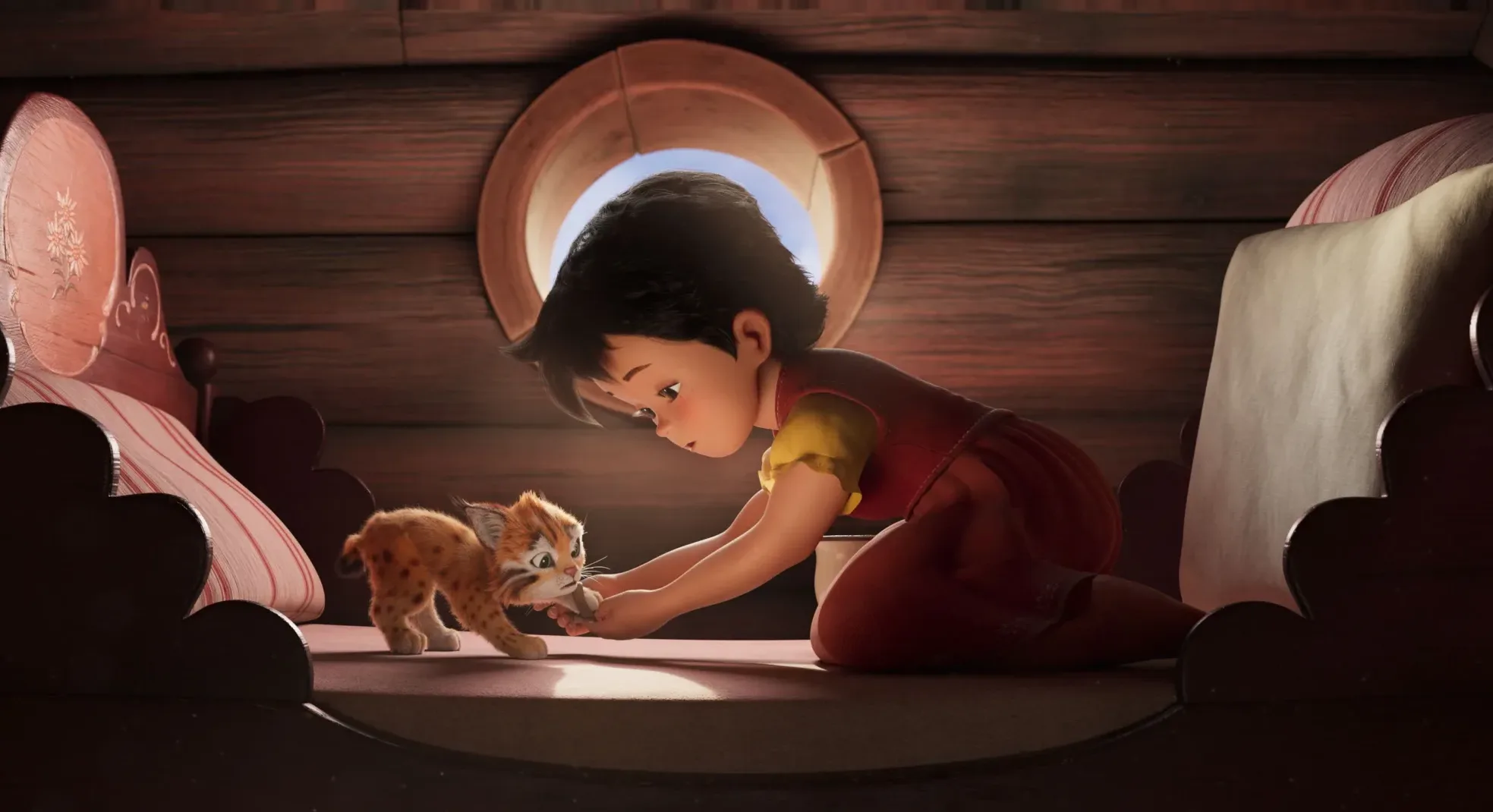
This idyll is promptly disturbed by the arrival of a businessman, whose proposal for a modern sawmill frames a classic conflict of tradition against progress. The story finds its emotional anchor when Heidi discovers an injured baby lynx, a creature whose fate becomes intertwined with that of the entire valley. This act transforms an abstract environmental debate into a personal, heartfelt mission, presenting a light-hearted adventure for a young, international audience.
Universal Tropes on a Swiss Stage
The film’s narrative follows a path well-trodden in global children’s media: a compassionate child defends a helpless animal from human greed. By adopting this universal template, the story makes its culturally specific setting immediately accessible, translating a regional conflict into a simple quest narrative.
The antagonist, Schnaittinger, is the embodiment of a profit-obsessed modernity. He is a stock figure rooted in a post-industrial European anxiety about the destruction of rural life, representing a worldview that sees nature purely as a resource for monetization.
His lack of complexity creates a stark moral binary, which is a common feature in didactic storytelling across many cultures. In this context, Heidi functions less as a developing character and more as a moral constant.
Her courage is unwavering, positioning her as a force of nature akin to the mountains she protects. Unlike the transformative “hero’s journey” prevalent in American animation, Heidi is a figure of integrity who changes her environment rather than being fundamentally changed by it. The supporting cast reinforces this focus.
By keeping Peter defined by his appetite and the grandfather as a simple archetype, the narrative avoids distractions from the central ideological struggle. Even Clara’s late arrival feels less like a plot device and more like a nod to the source material’s legacy, assuring viewers of the story’s place within a long and respected tradition.
The Politics of the Pastoral
Nature conservation is the film’s explicit purpose, but it is framed within a distinctly European romanticist tradition. The struggle is not for the environment in an abstract sense, but for the Alps specifically—a landscape deeply tied to Swiss national identity and the preservation of a threatened way of life.

This form of environmentalism, rooted in a reaction against the industrial revolution, mourns the loss of a perceived harmony between humanity and the land. The proposed sawmill is a potent symbol of this threat. It is a machine designed to impose uniform order on the organic diversity of the forest, a visual metaphor for the homogenizing force of industrialization against local culture.
The film’s most brilliant cross-cultural device is the lynx itself. For a European audience, the animal’s presence has contemporary ecological weight, as lynx have been part of recent reintroduction programs. For a global viewer, it is simply an adorable, exotic cat in peril.
The film operates successfully on both levels, grounding its story in local reality while using a universally understood emotional appeal. This direct approach to messaging aligns with a long history of European children’s literature, which often carries an unabashedly educational purpose: to shape a young citizen’s relationship with community and the natural world.
Animating a National Myth
The film’s most notable success lies in its visual storytelling, which actively constructs the idealized Alps of the popular imagination. This is not a passive backdrop but a carefully curated argument. The use of light, for instance, contrasts the warm, golden glow on the grandfather’s cabin with the cold, functional ambitions of the sawmill.

Sweeping camera shots consistently emphasize the scale and majesty of the mountains, visually subordinating human conflicts to the power of the natural world. In this film, the landscape is the protagonist’s primary motivation and the source of her moral clarity. The health of the ecosystem is visually linked to the well-being of the community.
Furthermore, the character designs consciously echo previous adaptations, particularly the beloved 1970s anime. This is an act of careful cultural stewardship, creating a visual bridge that connects generations of viewers and reinforces the Heidi brand’s integrity.
While not possessing the hyper-saturated polish of a massive American studio production, the film’s high-quality European aesthetic offers a more grounded, naturalistic sensibility that feels true to its setting. Its distinct visual identity is a strength, demonstrating a commitment to its own cultural style rather than an attempt to mimic a globalized one.
Heidi: Rescue of the Lynx premiered at the German Children’s Media Festival on June 4, 2025, and was released in Germany on June 26, 2025.
Full Credits
Director: Toby Schwarz, Aizea Roca Berridi
Writers: Rob Sprackling, Tess Meyer, Marcus Sauermann, Johanna Spyri, Peter Dollinger
Producers: Dario Sanchez Diaz, Thorsten Wegener
Executive Producers: Martin Krieger, Maria Vallejo, Jörn Radel
Cast (English Version): Max Giermann, Michael McCown, Toby Schwarz
Composer: Ute Engelhardt
The Review
Heidi: Rescue of the Lynx
Heidi: Rescue of the Lynx is a visually splendid animated feature that successfully translates a treasured European cultural icon for a modern global audience. While its narrative is built on a predictable foundation with one-dimensional characters, its strength lies in its beautiful depiction of the Alps and its earnest, clear-eyed environmental message. The film functions as a charming, if simple, cinematic postcard that reaffirms the value of preserving both nature and cultural heritage, making it an effective piece of family entertainment that succeeds on its own modest terms.
PROS
- Stunning animation featuring beautiful and atmospheric Alpine landscapes.
- Presents a clear and effective environmental conservation message for its target audience.
- The baby lynx is an endearing and well-designed character.
- Effectively captures the spirit of a classic European children's story.
CONS
- The plot is highly predictable and follows a familiar formula.
- Characters are simplistic and lack meaningful development or complexity.
- Secondary plotlines feel underdeveloped and add little substance.
- Its narrative simplicity may not hold the attention of adults.







