








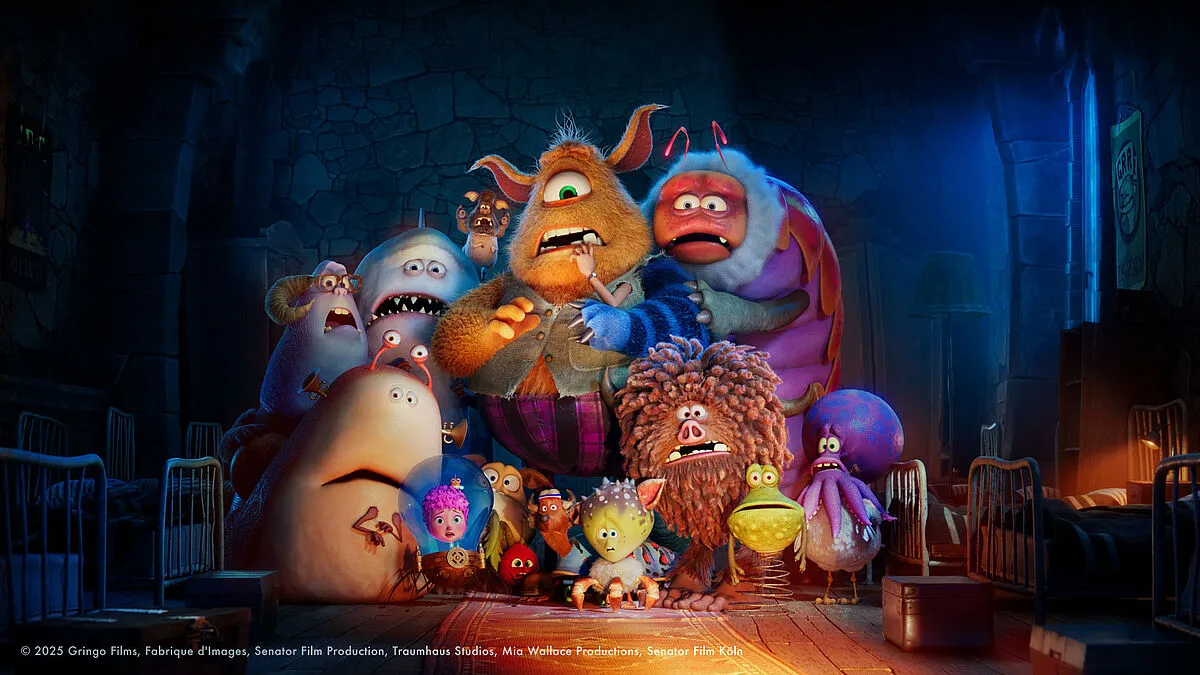

High within the gothic clutter of Castle Grotteskew, a creature assembled from spare parts awakens to a familiar silence. This is Stitch Head, the first and forgotten creation of a mad professor whose passion for invention is eclipsed only by the speed with which he abandons his work.
Stitch Head’s existence is a cycle of caretaking for the professor’s subsequent, more outlandish monsters, his own longing for acknowledgment a quiet hum beneath the castle’s eccentric chaos.
He is the forgotten child in a house full of strange siblings. When a failing circus run by the opportunistic Fulbert Freakfinder arrives in the village below, it brings with it a promise of the one thing Stitch Head craves: to be seen, even loved, by the outside world.
Of Creators and Exploiters
Stitch Head functions not as a monster but as the castle’s weary custodian, a figure of profound responsibility in a world defined by creative caprice. He is the one who domesticates each new creation, calming their wild natures with instructional videos and the simple, repetitive mantra, “Stay hidden, stay quiet, stay safe.”
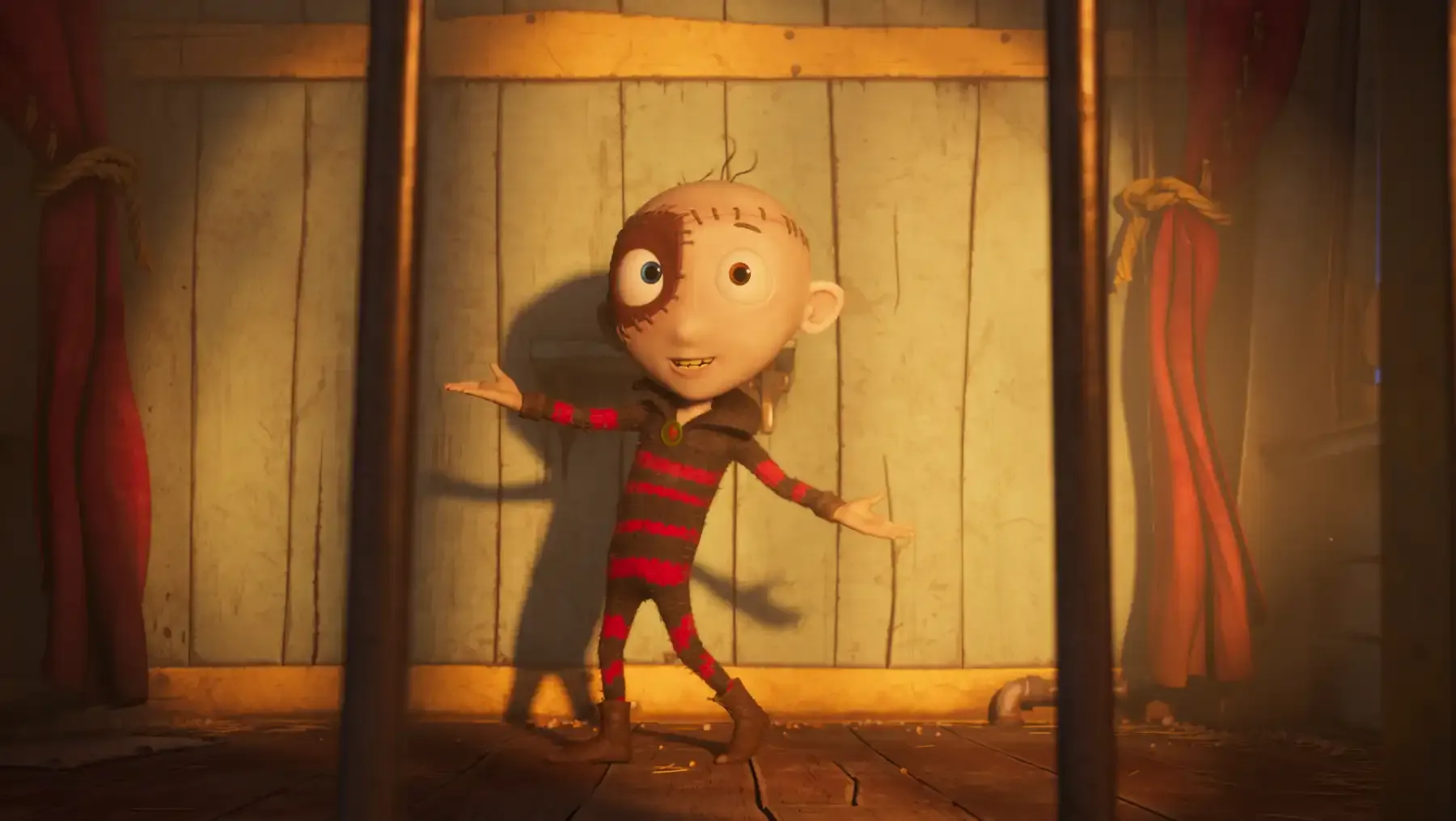
He reads them bedtime stories and manages their anxieties, performing the emotional labor his own creator, Professor Erasmus, discards along with each finished project. The professor’s neglect is not born of malice but of a deep-seated artistic solipsism; he is a man trapped in the ephemeral thrill of invention, constitutionally blind to the persistent, living needs of what he has already made.
Into this paternal vacuum steps Fulbert Freakfinder, a charismatic showman who offers an ersatz form of attention. He promises stardom and popularity, a poisonous substitute for love, seeing in Stitch Head’s stitched-together visage not a being to be known but a spectacle to be sold for parts. He is a peddler of false hope, an embodiment of exploitative commerce in a whimsical guise.
True, untainted connection appears only at the story’s fringes, through the steadfast loyalty of The Creature, a tentacled monster with a good heart, and Arabella, a village girl whose fascination with the castle is free of prejudice. They represent pure sight, one from within the monster world and one from the human, both challenging the transactional relationships that define Stitch Head’s life.
A World of Frayed Edges
The film’s visual landscape is one of its most distinctive assets, a key element of its peculiar charm. The 3D animation possesses a tangible, textural quality, as if rendered in felt and frayed string, giving every surface a history.
The aesthetic feels worn and moth-eaten, evoking the tactile, hand-crafted sensibility of classic gothic stop-motion productions. This hand-stitched feel is more than an artistic flourish; it mirrors the emotional state of the characters—well-loved in their own way, but slightly falling apart and in constant need of mending. This extends to the character designs, especially the menagerie of monsters who form a riot of bizarre and colorful forms.
With their googly eyes, fluffy fur, and surplus of tentacles, they are designed to be more cuddly than terrifying, a choice that purposefully softens the story’s darker potential and makes the world feel safe. The environment itself reflects this sensibility; Castle Grotteskew is a space of dark but cozy clutter, a haven of chaotic creativity.
This stands in stark opposition to the drab, grey-faced conformity of Gubbers Nubbins, the village below, a place of sterile order. A musical score with a familiar spooky-sweet flavor enhances the on-screen action, giving the entire production the feeling of a beautifully crafted, slightly macabre music box whose melody is tinged with melancholy.
Familiar Beats, Absurd Detours
The story proceeds with a lively, energetic gait, its narrative path punctuated by moments of offbeat, almost Pythonesque humor. These sequences provide a welcome dose of absurdity, injecting verbal wit and situational irony that work for both the younger audience and the adults watching alongside them.
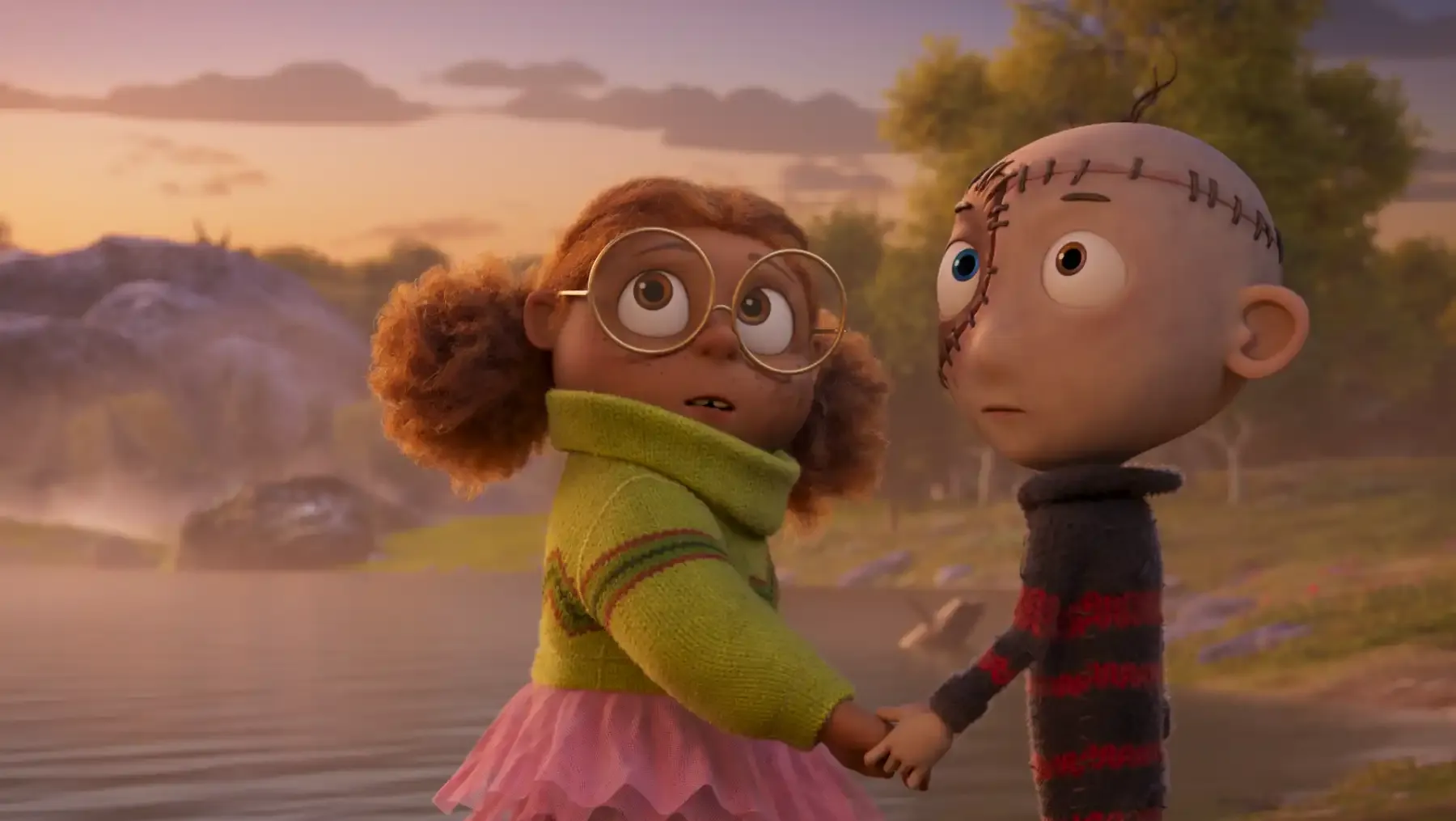
Beneath the gags and the slapstick runs a current of genuine pathos; the film treats Stitch Head’s loneliness with an affecting sincerity, examining the quiet ache of a child who feels invisible to his parent. His quest is not merely for fame but for a paternal affirmation he never received and cannot name. This emotional honesty gives the film its resonant heart.
The plot itself, however, treads a well-worn path. The journey of an outsider who leaves home only to discover its true value is a foundational story in family entertainment. While the execution is spirited and the pacing brisk, the destination is never in serious question.
The narrative uses the comforting familiarity of its structure as a sturdy vehicle for its specific emotional and aesthetic aims, prioritizing a consistent mood and heartfelt moments over startling narrative invention. The final act resolves its central conflicts in a manner that is emotionally satisfying without being structurally surprising.
A Gentle, Contained Rebellion
At its center, the film champions the ideas of acceptance and the power of a chosen family. It puts forth a “be yourself” message, yet the force of this declaration feels curiously muted and carefully managed. The film hesitates to make its protagonist a true, isolated outcast.
It constructs the problem of loneliness but then provides an immediate solution in the form of a large, pre-existing monster family and a human friend acquired with relative ease. This foundation of support prevents Stitch Head from ever experiencing the sustained, painful alienation that would give the theme of acceptance real teeth.
His otherness is a visual fact but not a social one. The narrative shies away from investigating the more unsettling aspects of its premise, gesturing toward the cruelty of freak shows and the fear of the unknown before retreating into a “conformist politeness.”
It hints at a celebration of non-traditional families and radical difference but ultimately settles for simple friendliness. Its ultimate strength, therefore, is not in a challenging thematic statement but in its undeniable sincerity and oddball charm. It chooses to be a comforting fable rather than a complex allegory.
Stitch Head is scheduled for release on October 16, 2025, in Germany, followed by releases in other countries like Brazil and Spain on October 30 and 31 respectively.
Full Credits
Director: Steve Hudson.
Writers: Guy Bass, Steve Hudson.
Producers: Sonja Ewers, Mark Mertens.
Executive Producers: Adam Nagle.
Cast: Asa Butterfield, Joel Fry, Alison Steadman, Rob Brydon, Fern Brady, Paul Tylak, Jamali Maddix, Ruth Gibson, Tia Bannon.
Composer: Nick Urata
The Review
Stitch Head
Stitch Head is a visually distinctive fable with a sincere heart and an endearing, hand-stitched aesthetic. Its quirky charm and gentle humor make for a pleasant viewing experience, yet the film's reluctance to explore the deeper, darker facets of its story results in a narrative that feels overly safe and thematically muted. It is a comforting, beautifully crafted creation that chooses sweetness over substance, leaving a mild but pleasant impression.
PROS
- A unique and textural animation style that evokes a hand-crafted, stop-motion feel.
- Genuinely sincere emotional core centered on themes of loneliness and found family.
- Quirky character designs and an offbeat sense of humor.
- Charming and whimsical world-building.
CONS
- A predictable narrative that follows a conventional path.
- Thematic messages about acceptance feel underdeveloped and lack significant impact.
- Avoids the darker, more complex potential of its premise in favor of a gentler tone.
- The central "outsider" conflict feels low-stakes due to the protagonist's existing support system.