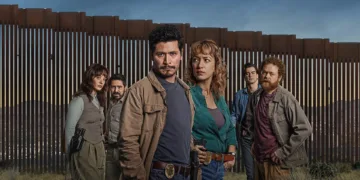
















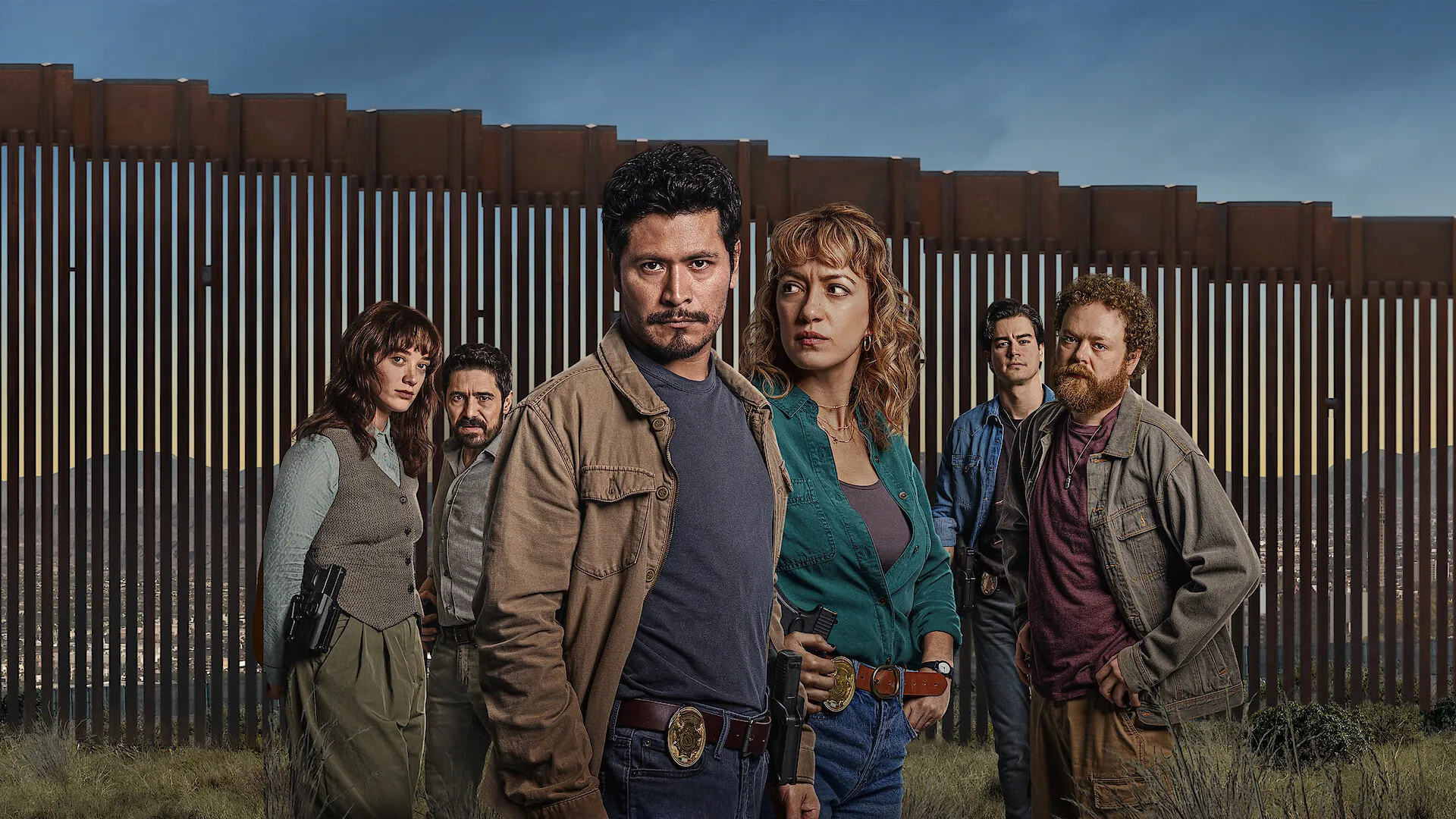
For decades, American television has presented a familiar story: determined U.S. agents venturing into Mexico to pursue criminals. The Gringo Hunters takes that well-worn template and turns it on its head. Set in Tijuana, the series follows the International Liaison Unit, an elite Mexican police squad whose specialty is tracking and deporting American fugitives who have fled south to escape justice.
This is not just a clever narrative inversion; it is a premise grounded in the real world, drawn from a 2022 Washington Post article that documented the work of the actual unit. The show quickly establishes its procedural rhythm, but that foundation is shattered by a single event: the murder of the unit’s respected commander, Temo.
His death pulls the series out of a simple case-of-the-week format and plunges his protégé, Nico, into a conspiracy that official channels want left undisturbed. The central question shifts from “Who are they hunting this week?” to “Who is hunting them?”
A Tale of Two Plots: Procedural Cases and a Sprawling Conspiracy
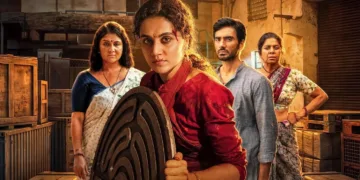
The narrative architecture of The Gringo Hunters is ambitious, attempting to operate on two distinct tracks simultaneously. On one level, it functions as a procedural. In arcs that span two or three episodes, the unit pursues fugitives for a variety of crimes, from a woman who took violent revenge on her abusive boyfriend to a fraudster caught in a dangerous web.
This episodic engine provides a constant stream of action and showcases the team’s capabilities. The variety is welcome; the fugitives are not a monolith of violent criminals, which helps the show avoid monotony. Yet, these cases often feel like narrative detours whose dramatic potential is never fully realized.
The story of the vengeful woman, for instance, touches on complex issues of justice versus vigilantism, but the resolution feels rushed. Gloria’s promise to the fugitive’s daughter that she will advocate for her mother feels like a thread left dangling, an emotional investment the script makes but forgets to cash in. The result is a series of interesting scenarios that feel more like vignettes than fully integrated subplots, leaving a faint sense of incompleteness before the next chase begins.
Running beneath these weekly hunts is the season’s sprawling mystery. Nico’s unsanctioned investigation into Temo’s death slowly uncovers a conspiracy connecting a massive development project, “Suenos Sin Fronteras,” with its philanthropic developer Juaquin Meyer-Rodriguez, a charismatic youth pastor named Father Murphy, and the city’s corrupt Chief of Police, Ortega.
This serialized story holds the show’s thematic weight, portraying a cynical enterprise where the promise of urban renewal masks profound greed. The symbolic pairing of a developer and a pastor is particularly sharp, exploring how capital and faith can be weaponized to exploit a community’s hope. This is the story the show truly wants to tell, but its momentum is constantly stalled by the procedural demands.
The effect on the viewing experience is one of persistent friction. Following the plot feels akin to reading two different books by alternating chapters; just as the conspiracy gains traction and you lean in, the plot pivots to a new fugitive, fracturing the narrative rhythm and diluting the tension of the central plotline.
The Unit: Characterization and Ensemble Dynamics
Where the series finds its most consistent footing is in its characters. The story is anchored by the partnership between Nico (Harold Torres) and Gloria (Mayra Hermosillo). Torres portrays Nico with a quiet intensity, a man burdened not just by grief but by the loss of his moral compass in Temo.
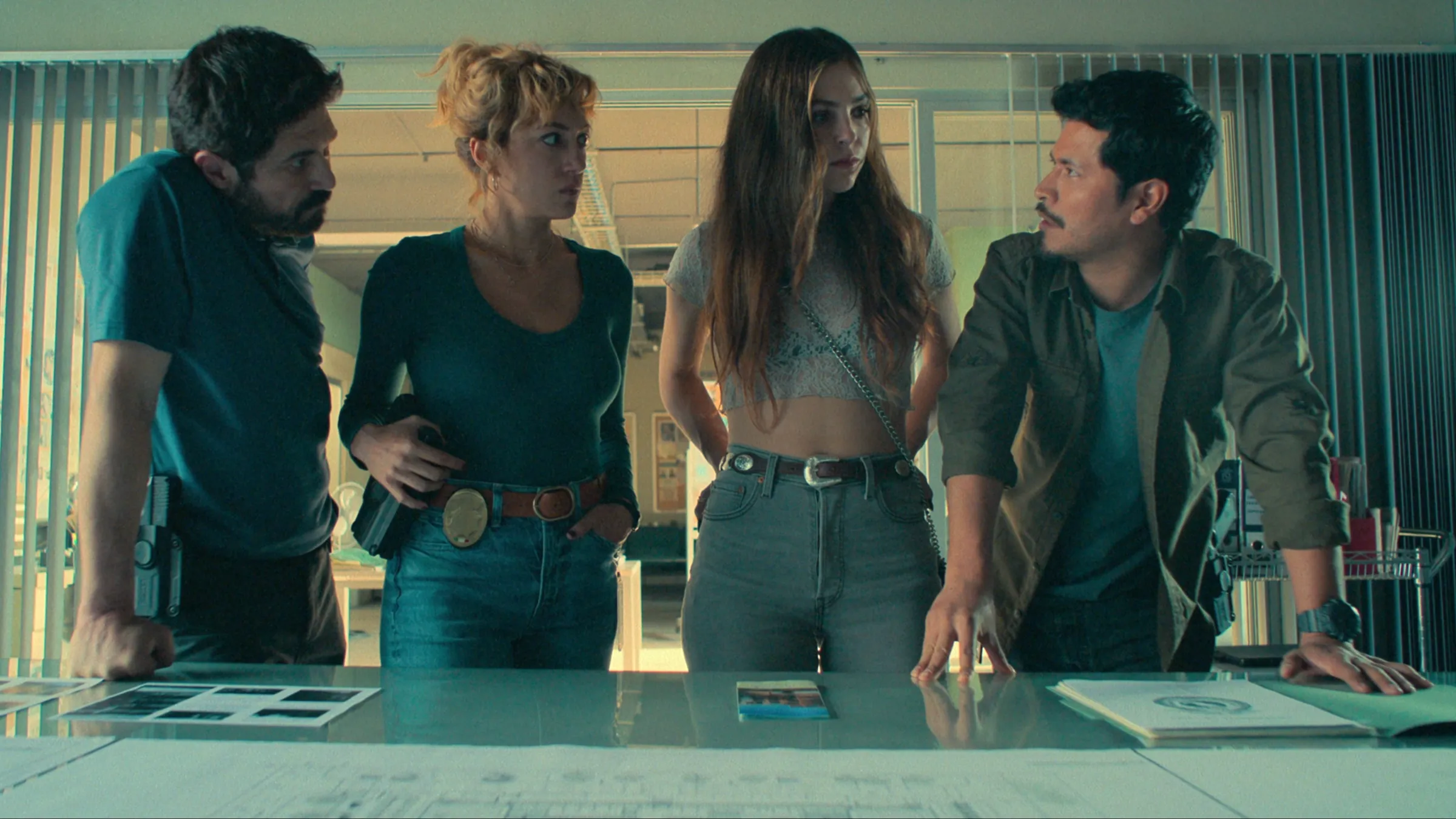
This explains his willingness to operate in the gray areas of police work, driven by a need for answers that transcends protocol. Opposite him, Hermosillo is a dynamic force as Gloria, serving as the pragmatic, grounding counterpoint to Nico’s obsessive quest. Their easy, sibling-like chemistry provides the show with its emotional core. Their relationship feels lived-in and authentic, a necessary anchor amidst the chaotic plot.
The show’s most impressive character work, however, is its handling of Camila (Regina Nava), the unit’s new tech specialist. Camila is on the autism spectrum, a trait that could easily have become a collection of worn-out tropes seen in countless other procedurals. Instead, the writers and Nava deliver a wonderfully nuanced portrayal. Her condition is presented as an integral part of her identity that shapes her perspective, not as a simplistic obstacle to be overcome.
Her directness, a function of how she processes the world, allows her to cut through social niceties and official jargon to get to the heart of a problem. She is an asset not in spite of her autism, but because of it. The rest of the squad is filled out with well-drawn supporting players. Beto (Manuel Masalva) is initially positioned as the team’s pretty boy, a role the show seems to lean into before subverting it to reveal a deep well of vulnerability.
Cri (Héctor Kotsifakis), the jester with dual citizenship and a jarring political history, adds a layer of unexpected complexity, showing that deep bonds can exist despite ideological differences. The easy banter among them builds a convincing portrait of a team bound by trust and shared danger. Even the antagonists, like the calculating Ortega, embody a chilling “banality of evil,” his corruption presented not with theatrical villainy but with the quiet, mundane paperwork of a compromised bureaucrat.
Aesthetics and Atmosphere: A Cinematic Vision of Tijuana
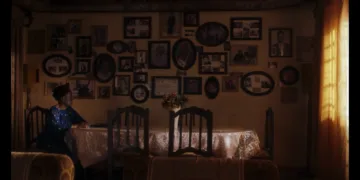
Visually, The Gringo Hunters is a meticulously crafted series that uses its setting as a character. The production makes a crucial, and welcome, decision to reject the lazy visual shorthand of the “Mexico filter.” There is no oppressive yellow haze here, a tiresome trope that has long been used to signal a dangerous “otherness.”
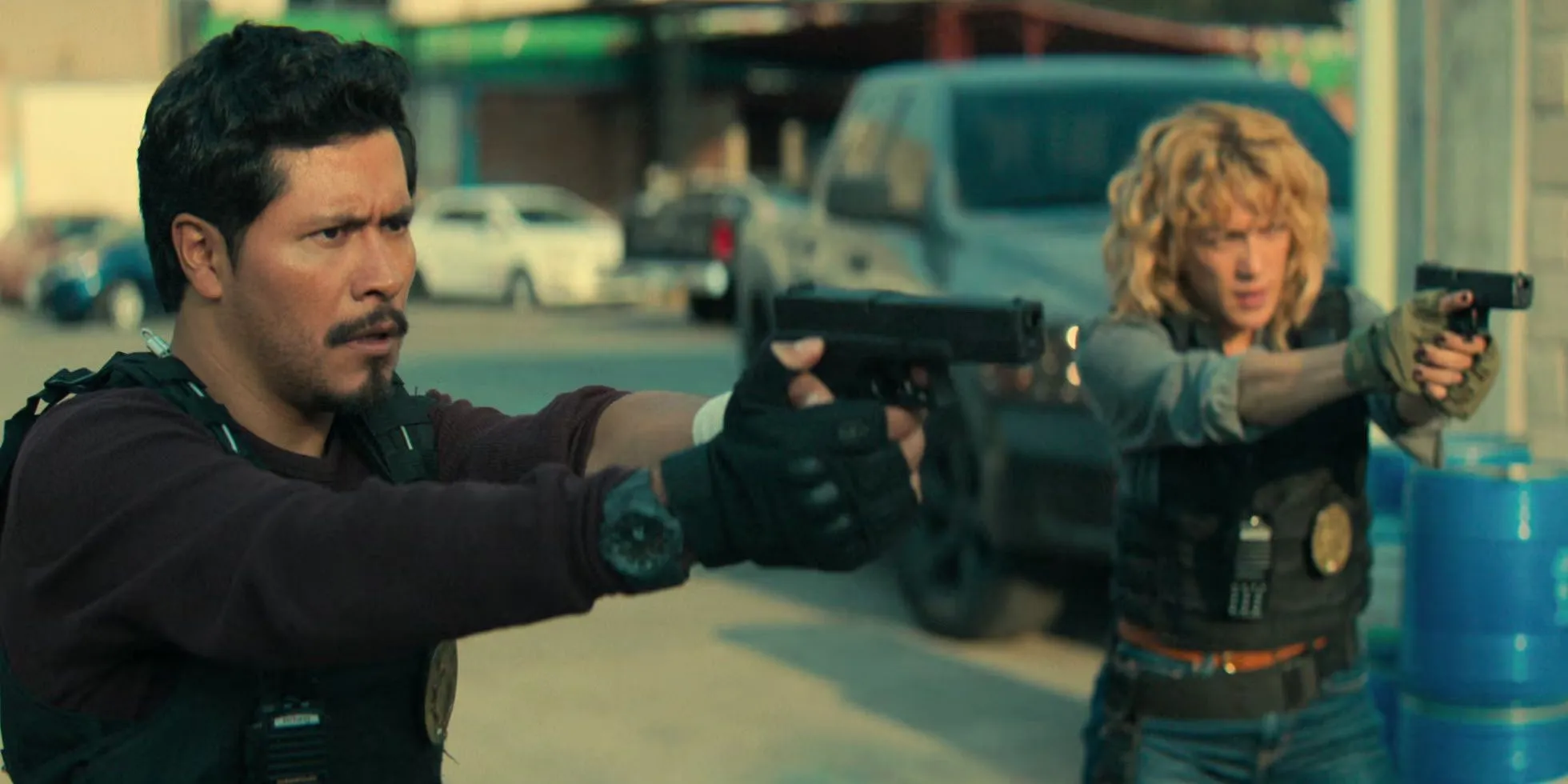
Instead, the cinematography presents a vibrant, authentic Tijuana, capturing both its sun-drenched streets and its shadowy corners with a clear, cinematic eye. The camera work excels at juxtaposition, contrasting the gleaming, modern architecture of the “Suenos Sin Fronteras” project with the struggling neighborhoods it purports to serve.
This visual conflict underscores the city’s deep economic divides and the story’s central themes. The strong production design and art direction create an immersive world that feels both beautiful and dangerous, a city of stark contrasts that mirrors the show’s moral complexities.
The action sequences, from tense shootouts to frantic foot chases, are staged with admirable clarity. You always know who is where and what the stakes of the immediate confrontation are. However, after the initial shock of Temo’s death, the sense of genuine peril for the core team begins to wane.
The unit is so competent, and the narrative structure so dependent on them moving to the next case, that their survival feels assured. The action, while competent, seldom feels truly life-threatening for the protagonists. The atmosphere is further enhanced by an effective score and sound design, which smartly incorporates local music to deepen the sense of place and underscore the tension without overwhelming it.
Flipping the Script: Thematic Commentary on Power and Perception
Beneath its procedural surface, The Gringo Hunters is engaged in a pointed conversation about power, perception, and national narratives. Its most significant thematic achievement is this deliberate immigration inversion.

For years, American media has reinforced a one-sided story of border crime. This series, arriving at a time of heightened political rhetoric, offers a potent counter-narrative. It focuses on the reality of U.S. citizens—murderers, fraudsters, and abusers—committing serious crimes and seeking refuge in Mexico.
By centering the professional, capable Mexican law enforcement officers tasked with bringing them to justice, the show directly challenges entrenched prejudices and media stereotypes. It asks its audience to reconsider who is a fugitive and who is an authority.
At the same time, the series does not shy away from a sharp critique from within. The central conspiracy is a story of endemic Mexican corruption, where police, business, and even religion collude to exploit the poor and vulnerable. This avoids a simplistic, nationalistic narrative and instead presents a more complex reality. The show attempts to walk a fine line, functioning as a form of introspective “copaganda.”
It presents a dignified portrait of its protagonists as honorable officers fighting a broken system, acknowledging that the greatest threats often come from inside their own institutions. It is a series about the struggle for individual integrity within a compromised structure, a far more interesting story than a simple tale of good versus evil.
The Long Game: Pacing and the Test of Patience
For all its strengths in character, theme, and production, the series is hampered by its most significant structural flaw: its pacing is laborious. The central mystery unfolds at a glacial speed, and the decision to constantly pause it for self-contained cases tests a viewer’s patience.

The slow burn is a difficult technique to master; here, it does not build suspense so much as it starves the audience of narrative catharsis. It asks for immense trust from the viewer that the payoff will be worth the long wait, a trust that is frequently strained.
Revelations that should land with the force of a thunderclap often arrive with a quiet thud, their impact lessened by the meandering road it took to get there. By the time the conspiracy’s endgame comes into view, many will have already connected the dots themselves.
The trade-off is clear: to appreciate the show’s rich character work and sharp commentary, one must endure a narrative that often feels like it is running in place.
It is a rewarding watch, but one that feels more like a dense novel than a snackable piece of content—a nature that is both its most admirable quality and its biggest challenge in the current media landscape. It is best consumed slowly, an episode at a time, rather than in a single, exhausting binge.
“The Gringo Hunters” is a crime drama series that premiered on Netflix on July 9, 2025.
Full Credits
Director: Alonso Alvarez, Adrian Grunberg, Natalia Beristáin, Jimena Montemayor
Writers: Manuel Alcalá, Ana Sofía Clerici, Jorge Dorantes, Augusto Mendoza, Gabriel Nuncio, Gabriela Vidal
Producers: Mariana Aceves, Rob Cubero, Adrian Grunberg, Stacy Perskie, Mario Savino, Pamela Toro Moreno, Brian Grazer, Ron Howard, Pamela Toro
Executive Producers: Mariana Aceves, Adrian Grunberg, Stacy Perskie, Pamela Toro Moreno, Brian Grazer, Ron Howard, Pamela Toro
Cast: Manuel Masalva, Héctor Kotsifakis, Andrew Leland Rogers, Sebastian Roché, Jessica Lindsey, Dean Simone, Clayton Conroy, Dale Carley
The Review
The Gringo Hunters
While The Gringo Hunters is hampered by a laborious pace and a fractured narrative, its phenomenal character work, potent thematic commentary, and stunning visual craft make it a compelling watch. The series offers a sharp, necessary reversal of storytelling tropes, anchored by an outstanding cast. It demands patience from its audience, but the destination is rewarding for those willing to endure the slow journey.
PROS
- A provocative and socially relevant premise that reverses common media tropes.
- Strong, nuanced performances from the entire ensemble cast.
- Excellent characterization, particularly the authentic and respectful portrayal of a main character on the autism spectrum.
- High-quality cinematography and production design that create an authentic sense of place.
- Sharp thematic commentary on corruption, power, and U.S.-Mexico relations.
CONS
- The pacing is extremely slow and can be laborious for the viewer.
- A fractured narrative structure that struggles to balance its episodic cases with the main conspiracy.
- The resolutions to the procedural cases can feel underdeveloped and emotionally unsatisfying.
- The sense of genuine danger for the main characters diminishes as the season progresses.