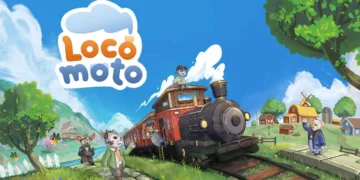


























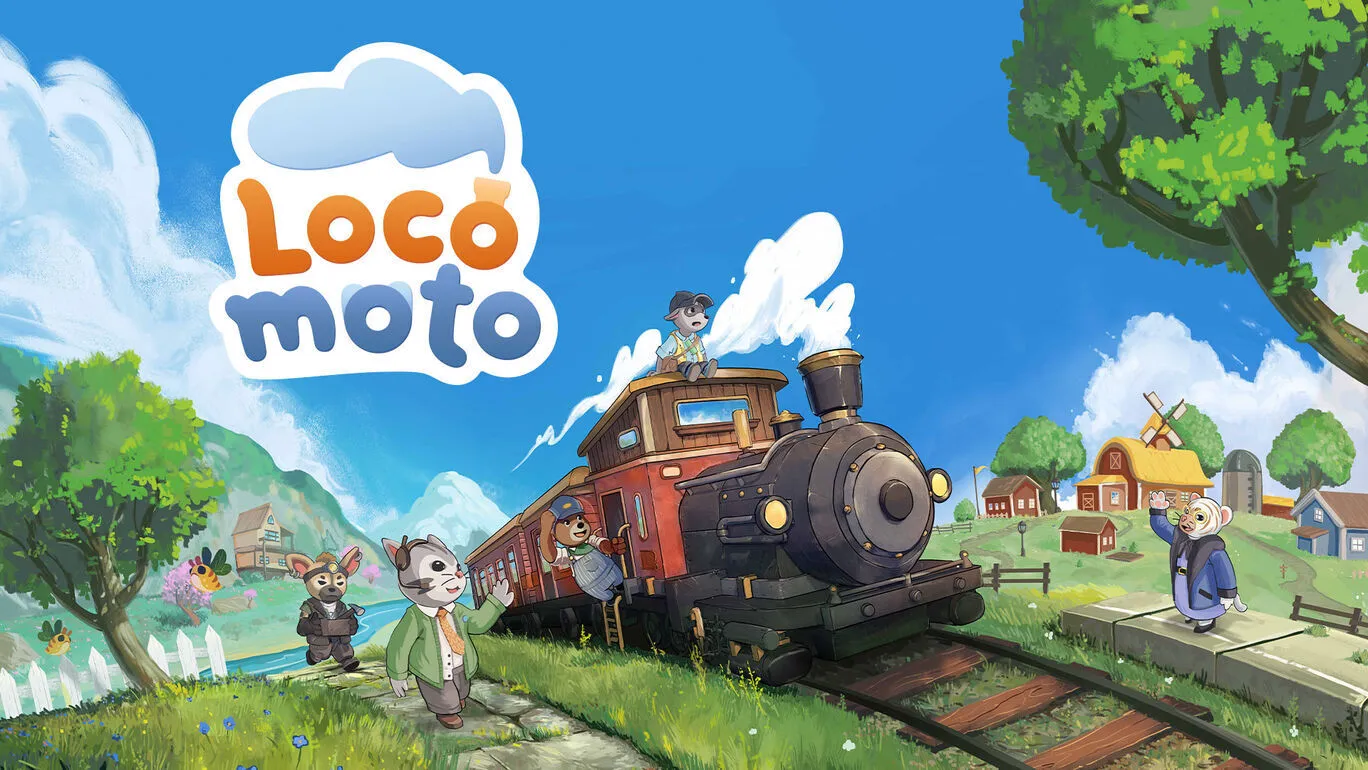

There’s a certain kind of fantasy that games excel at providing—the power fantasy, the hero’s tale. But what about the quieter fantasies? Locomoto proposes a wonderfully specific one: what if you could just own a train, paint it how you like, and spend your days chugging through a gentle countryside helping people?
The game hands you the keys to a quaint, coal-powered engine and sets you down in a world populated by anthropomorphic animals. You, a custom-designed creature yourself, are its new conductor. Your core purpose is simple: travel the land, fulfill requests, and slowly restore your starting town of Barrenpyre from a desolate patch of land to a lively community.
This isn’t a game of high stakes or pressure. It operates on the gentle logic of a children’s storybook, where the most pressing matter is delivering a package on time, and there are no penalties if you decide to take a scenic detour. The world asks for nothing but your quiet participation.
The Heart of the Community
The gameplay loop of Locomoto is built on a foundation of small kindnesses. Most tasks are simple variations of fetch quests—gather some wood, find a lost tool, deliver mail between stations. On paper, it sounds repetitive.
In practice, these actions are the threads that connect you to the community. You are not just completing objectives; you are participating in the lives of these cheerful animal townsfolk. You might help mend a friendship between two characters or assist in setting up a new school. The game smartly ties this narrative progression directly to a visible change in the world.
As you complete quests for the main story, the drab, lifeless ground of Barrenpyre slowly gives way to green grass and thriving plants. This transformation, much like restoring the community center in Stardew Valley, provides a powerful sense of accomplishment born from simple acts. Each station offers more small ways to contribute, from recycling to mining resources or simply giving someone a ride, each act weaving you deeper into the fabric of the world.
Building Your Home on Rails
Personal expression is central to the experience, starting with the creation of your avatar. You can assemble a character from the parts of various animals, resulting in wonderfully ambiguous creatures like a bear with a beaver’s tail, immediately giving you a unique presence.
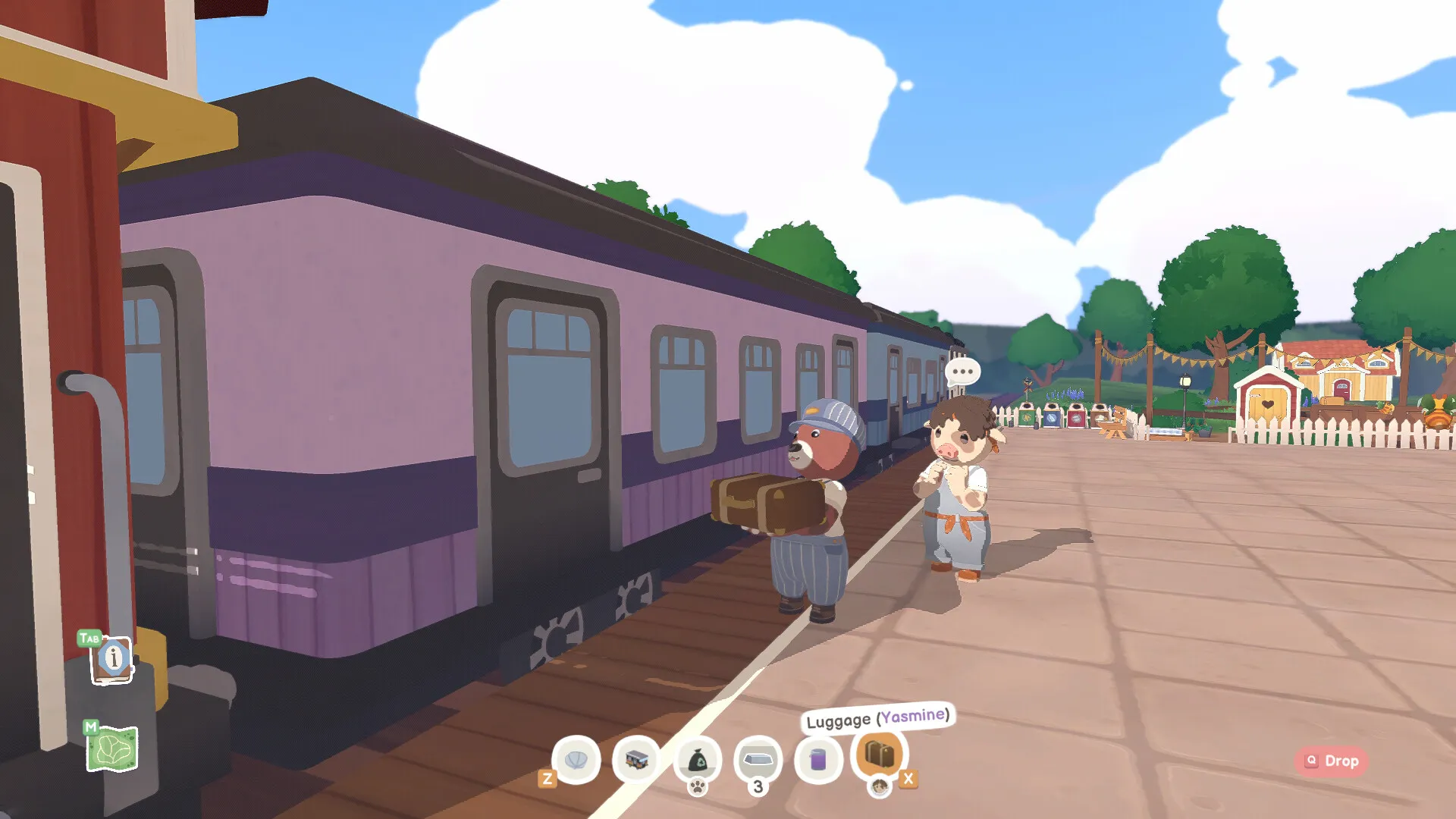
This sense of ownership extends profoundly to your train. It functions as your mobile home, a space that is entirely your own to shape. The crafting system allows you to build a diverse range of furniture, from art deco pieces to flowery, rustic sets. You can design each carriage with a distinct personality, painting the exterior to match.
The game establishes a satisfying cycle where helping others directly benefits you. Transporting passengers earns you tokens, which are used to acquire blueprints and materials for your train. This design choice links the communal good to your own personal comfort, making the act of decorating your train feel like a reward earned through your contributions to the world around you.
The Journey Itself
The actual operation of the train is, fittingly, very simple. You shovel coal into the furnace, select a destination on the map, and the engine begins its trip in real-time. These journeys can take several minutes, leaving you with stretches of downtime.
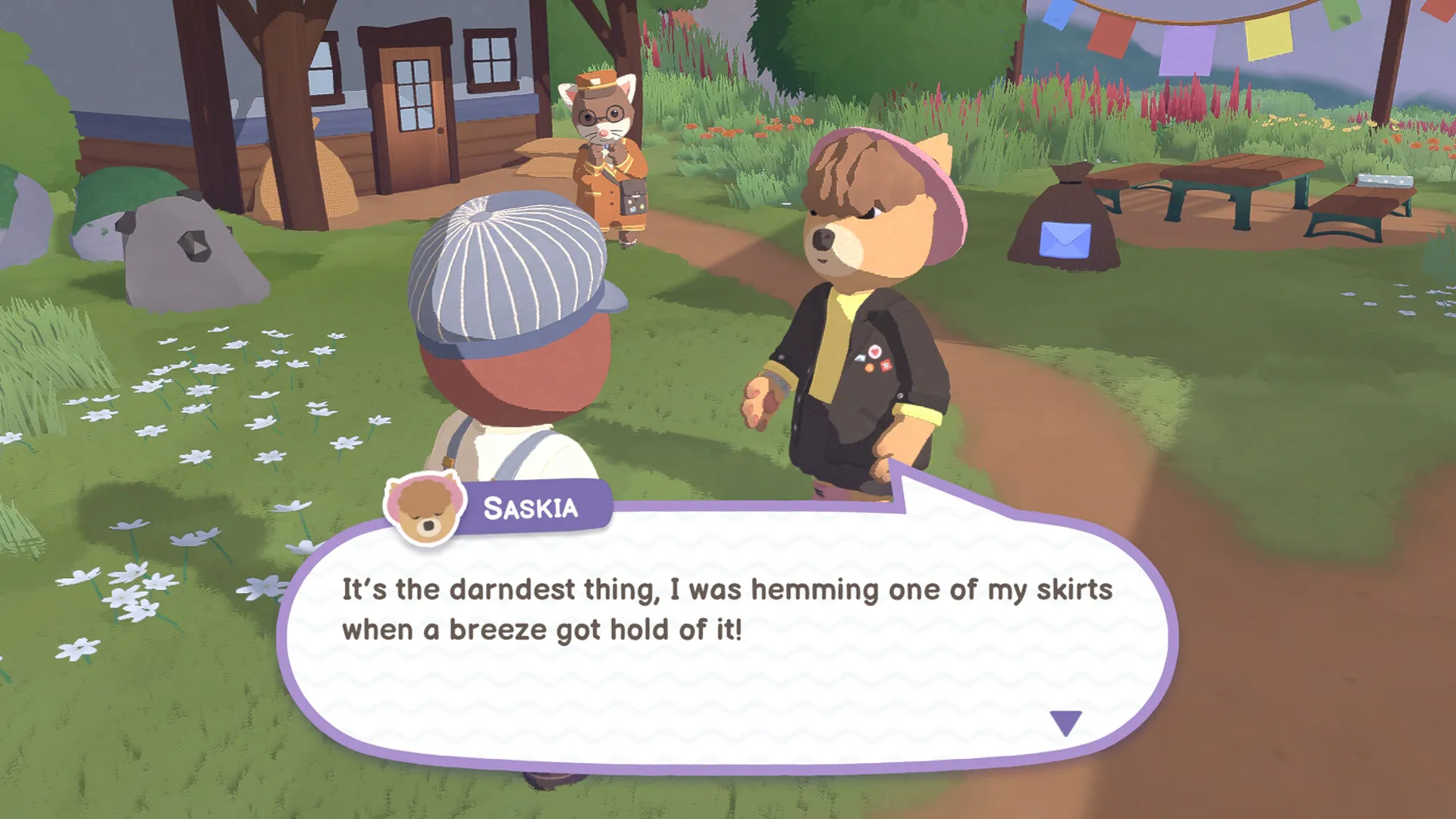
During these moments, you can walk through your custom carriages, chat with passengers, or tinker with decorations. This passive approach to travel is a distinct design choice. At its best, it creates a meditative rhythm, a quiet moment for reflection. At its worst, the lack of engagement can feel like a missed opportunity. The only real interaction is occasionally adding more coal to keep your speed up, a mechanic too shallow to be truly compelling.
It is a bit disappointing that there are no options to switch to an external camera to simply watch your train move through the countryside, a feature that would have greatly enhanced the romance of the rails the game works so hard to build.
A Sometimes Bumpy Ride
Locomoto presents its world with a lovely, pared-back visual style. The 3D graphics and soft, pastel color palette give it the feel of an interactive picture book. A chilled-out soundtrack accompanies your travels, fitting the relaxed mood even if it isn’t especially memorable.
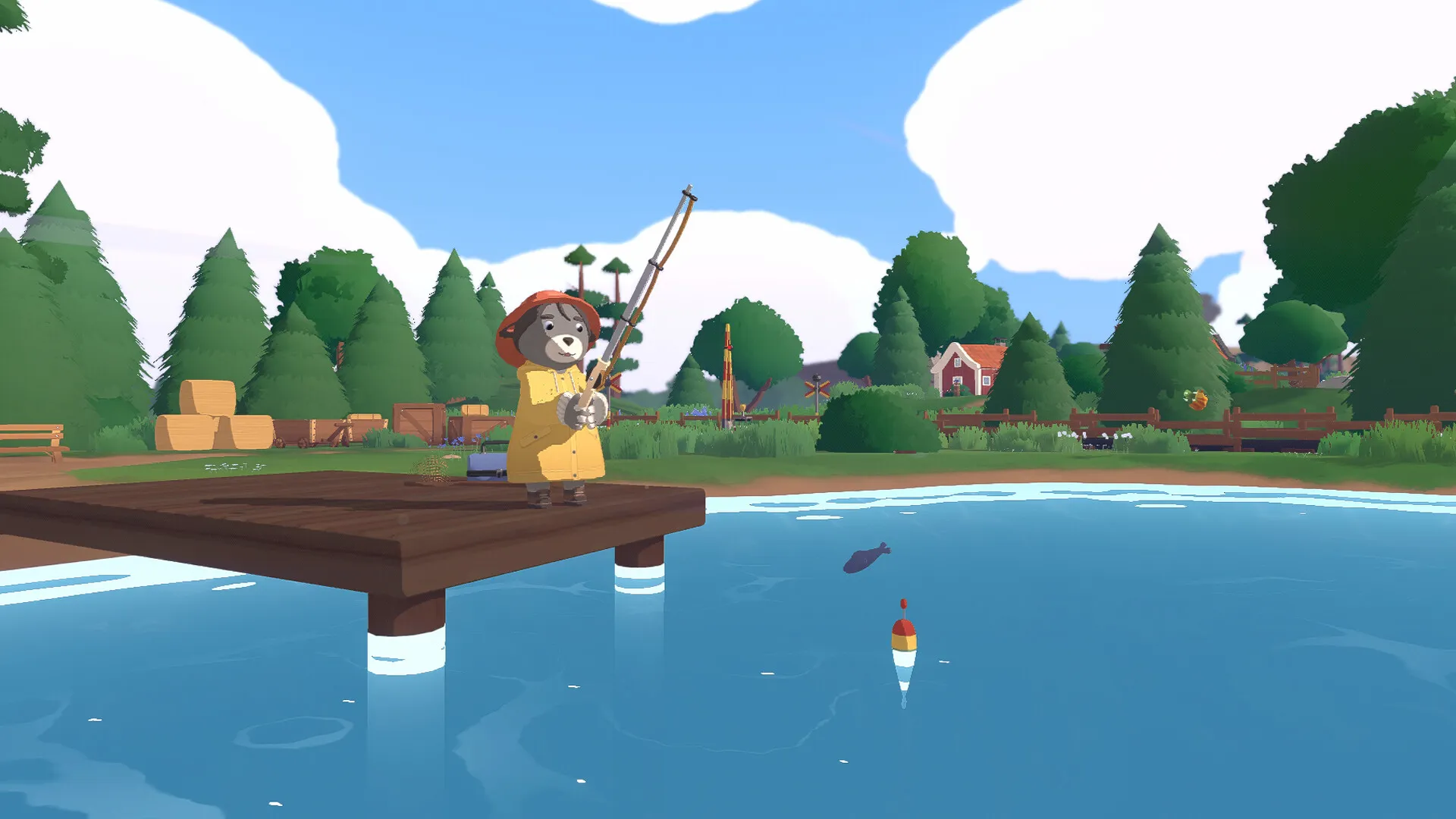
This carefully crafted cozy atmosphere is unfortunately threatened by significant technical problems. On the Nintendo Switch, the game’s performance is shaky, with the frame rate often struggling to stay consistent and dipping noticeably in busier towns.
The most disruptive issue is the frequency of software crashes. For a game designed to be relaxing, having it unexpectedly close after a long, quiet journey is jarring and pulls you right out of the experience. These crashes, alongside visual glitches like missing textures or items spawning inside characters, create an unfortunate roughness that mars an otherwise pleasant ride.
The Review
Locomoto
Locomoto presents a heartfelt and wonderfully cozy premise, giving players the tools to build a genuine home on the rails while restoring a community. Its deep customization and stress-free loop are initially captivating. The journey, however, is far from smooth. The simple quest design eventually feels repetitive, and the entire experience is frequently interrupted by significant technical issues, including frustrating crashes and performance dips. It is a beautiful idea for a game, but one that is hampered by its execution, requiring patience from any passenger willing to climb aboard.
PROS
- Deep and rewarding train and character customization.
- Charming, stress-free atmosphere and art style.
- Satisfying world progression that visibly improves the towns.
- Heartfelt theme centered on community building.
CONS
- Frequent software crashes and technical bugs.
- Inconsistent performance and frame rate drops.
- Shallow quest design becomes repetitive over time.
- Unengaging and passive train travel mechanics.