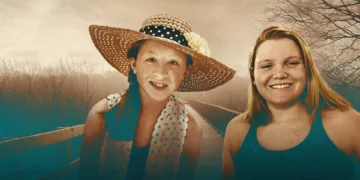































A pall of flat, Midwestern light hangs over Capturing Their Killer: The Girls on the High Bridge, a three-part docuseries that returns to the February 2017 murders in Delphi, Indiana. This is a town rendered in muted tones, a quiet American landscape torn open by an act of savage violence against two children, Abigail Williams and Liberty German.
The series anchors its grim narrative to a uniquely modern artifact of horror: a spectral image and a disembodied command, “Down the hill,” captured by one of the victims on a cellphone. This digital ghost haunted the investigation for years.
The filmmakers trace the contours of the case from the initial shock through the long, fallow years of inquiry, culminating in the 2024 conviction of Richard Allen. The work sets out not to solve, but to document the fracture lines that spread from a single, brutal moment on an old, rickety bridge. It promises a map of a tragedy.
A Chorus of Contradiction
The series constructs its emotional architecture from talking heads, yet the framing elevates them beyond simple testimony. These are portraits in grief and defiance, shot with a camera that remains both intimate and unnervingly steady. The filmmakers favor tight close-ups, isolating each subject against a shallow depth of field that blurs the background into an indistinct wash of color.
This technique forces the viewer to confront the speaker directly, to study the geography of a face as it recounts an unbearable memory. The lighting is soft, almost painterly, a choice that could be read as compassionate or as a deliberate aestheticization of pain. In the recollections from the victims’ mothers, Carrie Timmons and Anna Williams, their testimony is presented within domestic spaces.
The familiar setting of a living room, filled with personal effects, becomes a stage for discussing an event that shattered that very domesticity. Their language is halting, precise in its detail, as they rebuild the final days of their daughters’ lives. The camera holds on them through long, silent pauses, refusing to cut away from the weight of their sorrow.
Then, the narrative structure executes a sharp, deliberate pivot. We are introduced to Kathy Allen, wife of the convicted, whose identity is withheld in a calculated piece of structural misdirection. She is first presented as another voice from a wounded community, her observations on the town’s lost innocence indistinguishable from any other resident. When her connection to the accused is revealed, the film destabilizes the viewer’s moral footing.
The series forces a recalibration, compelling an examination of our own rush to judgment. Her interviews are framed differently, often with a more rigid composition, her posture conveying a defensive resilience. The viewer is placed in the unsettling space between two irreconcilable truths.
The film asks a profound question about the nature of testimony itself: is truth an objective fact or a story we tell ourselves to survive? One family’s closure is another’s injustice, and the camera captures this collision without taking a side, presenting a diptych of human experience under extreme pressure.
Ghosts in the Machine
Every noir investigation needs its cryptic clue, and here it is a low-resolution phantom, the “Bridge Guy.” The series dissects this artifact with an almost fetishistic attention. The image is pixelated, indistinct, a figure of pure suggestion. The audio is a muffled command, stripped of context.
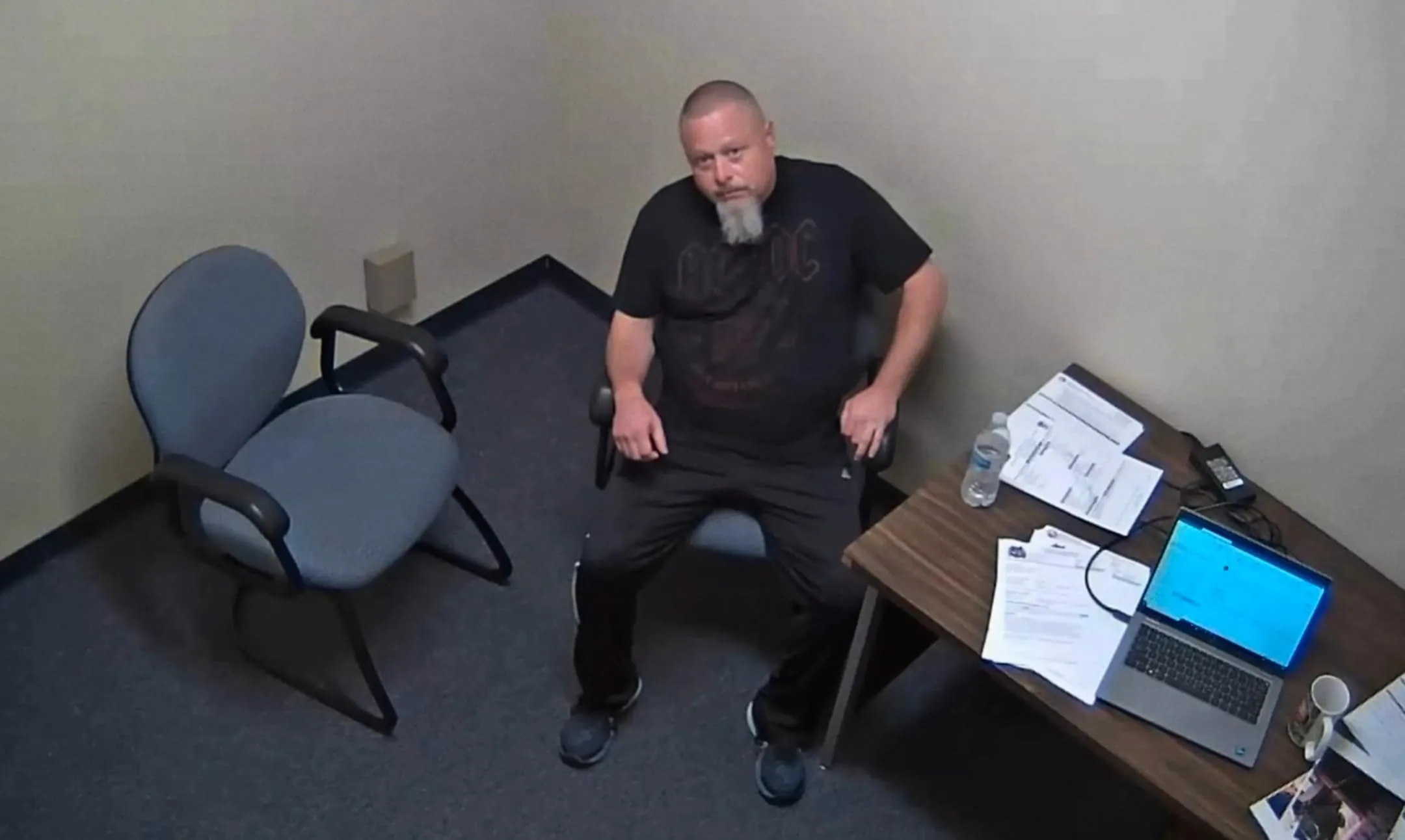
The filmmakers show this evidence being replayed, enhanced, and scrutinized, its digital decay mirroring the erosion of certainty in the case. Its poor quality becomes its primary feature, allowing it to function as a blank screen onto which a global audience projects its fears. It becomes a piece of modern folklore, a ghost in the digital machine. For over five years, this was the entire case.
The narrative effectively conveys the maddening stasis of the investigation, a long, empty corridor of time that classic noir would fill with smoke and shadows. Here, it is filled with the flat, featureless light of rural Indiana, a more unnerving kind of emptiness.
Then, the filmmakers detour into the esoteric, exploring a theory of Odinist ritual sacrifice. This narrative turn feels like a concession to the lurid demands of the genre, a sharp turn into sensationalism that the material does not require. A simple, horrifying crime is perhaps not enough; it must have a mythology.
The inclusion of this theory, presented with a veneer of seriousness, speaks to a cultural craving for complex evil over banal brutality. This is where the series documents a very modern phenomenon: the rise of the internet sleuth. These digital detectives, a decentralized chorus of the curious, are shown picking apart the evidence from their screens.
They are the untrustworthy informants and the obsessive private eyes of this new noir landscape. Their presence warps the traditional investigative narrative, highlighting a world where the search for truth is both democratized and dangerously susceptible to crowd-sourced paranoia. The official investigation seems to move at a glacial pace while a frenzied, digital hunt rages in parallel.
No Catharsis
The series denies its audience the comfort of a clean resolution. In place of catharsis, there is a lingering disquiet, a philosophical chill that the final credits cannot dispel. The conviction of Richard Allen is not presented as a final, restorative act but as another point of contention in a divided town. This refusal to offer a simple answer is the series’ most radical and commendable choice. The final act avoids triumphal shots of prosecutors or weeping, grateful family members.
Instead, the camera’s gaze becomes analytical, almost cold. It gives us lingering, static shots of the decaying Monon High Bridge, now an icon of dread. It pans slowly across the impassive facade of the county courthouse, a symbol of a justice system that has produced a result but not necessarily the truth. The sound design strips away music, leaving only the ambient sounds of wind or the distant hum of traffic, amplifying the sense of isolation.
The filmmakers close on this note of profound ambiguity, forcing the viewer to marinate in doubt. We see the faces of Delphi’s residents in close-up, their expressions unreadable. Relief, skepticism, and weariness all seem to coexist. By withholding a definitive moral verdict, the program aligns itself with the bleak worldview of neo-noir. It suggests that a case may be closed, but the truth remains a fugitive. The system functioned, but the wound remains open.
The program’s ultimate achievement is to shift the burden of judgment onto the viewer. It rejects passive consumption and instead demands active moral engagement. It asks difficult questions: What is your standard of proof? How much uncertainty can you tolerate? The series does not provide an answer. It simply holds up a mirror to a world where certainty is a luxury and justice is a contested, messy, and perhaps unattainable ideal.
This three-part documentary series from ABC News Studios examines the Delphi murders, the unsolved case that gripped the nation for years before the eventual arrest and conviction of Richard Allen. The series premiered on Tuesday, August 5, 2025, and is available for streaming exclusively on Hulu.
Full Credits
Director: Grace Miller
Producers and Executive Producers: Eamon McNiff (Executive Producer), David Sloan (Senior Executive Producer)
Cast: Mike Thomas, Kathy Allen, Carrie Timmons
The Review
Capturing Their Killer: The Girls on the High Bridge
Capturing Their Killer is a formally rigorous and philosophically challenging piece of documentary filmmaking. It transcends the conventions of the true-crime genre to become a meditation on the fractured nature of truth and the elusiveness of justice. By refusing easy catharsis and instead embracing a profound moral ambiguity, the series forces the viewer to confront the uncomfortable space between a legal verdict and an absolute truth. Its structural sophistication and sensitive handling of testimony make it essential viewing for those who prefer difficult questions over simple answers.
PROS
- A sophisticated narrative structure that masterfully juxtaposes conflicting testimonies to create emotional and philosophical depth.
- A thematically rich examination of ambiguity, doubt, and the limits of the justice system.
- Thoughtful cinematography that uses framing and lighting to underscore the gravity of the personal accounts.
- A relevant exploration of how digital evidence and internet speculation shape modern crime narratives.
CONS
- A brief and distracting foray into sensationalist theories that detracts from the otherwise grounded and serious tone.
- The deliberately slow pace and ambiguous conclusion may prove unsatisfying for viewers seeking a conventional procedural with a clear resolution.







