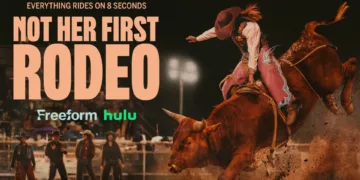
















In the vast landscape of streaming content, where algorithms often favor spectacle, a quieter trend is emerging: the micro-documentary that uses a niche subculture to examine broad societal truths. Hulu’s Not Her First Rodeo is a prime example of this form.
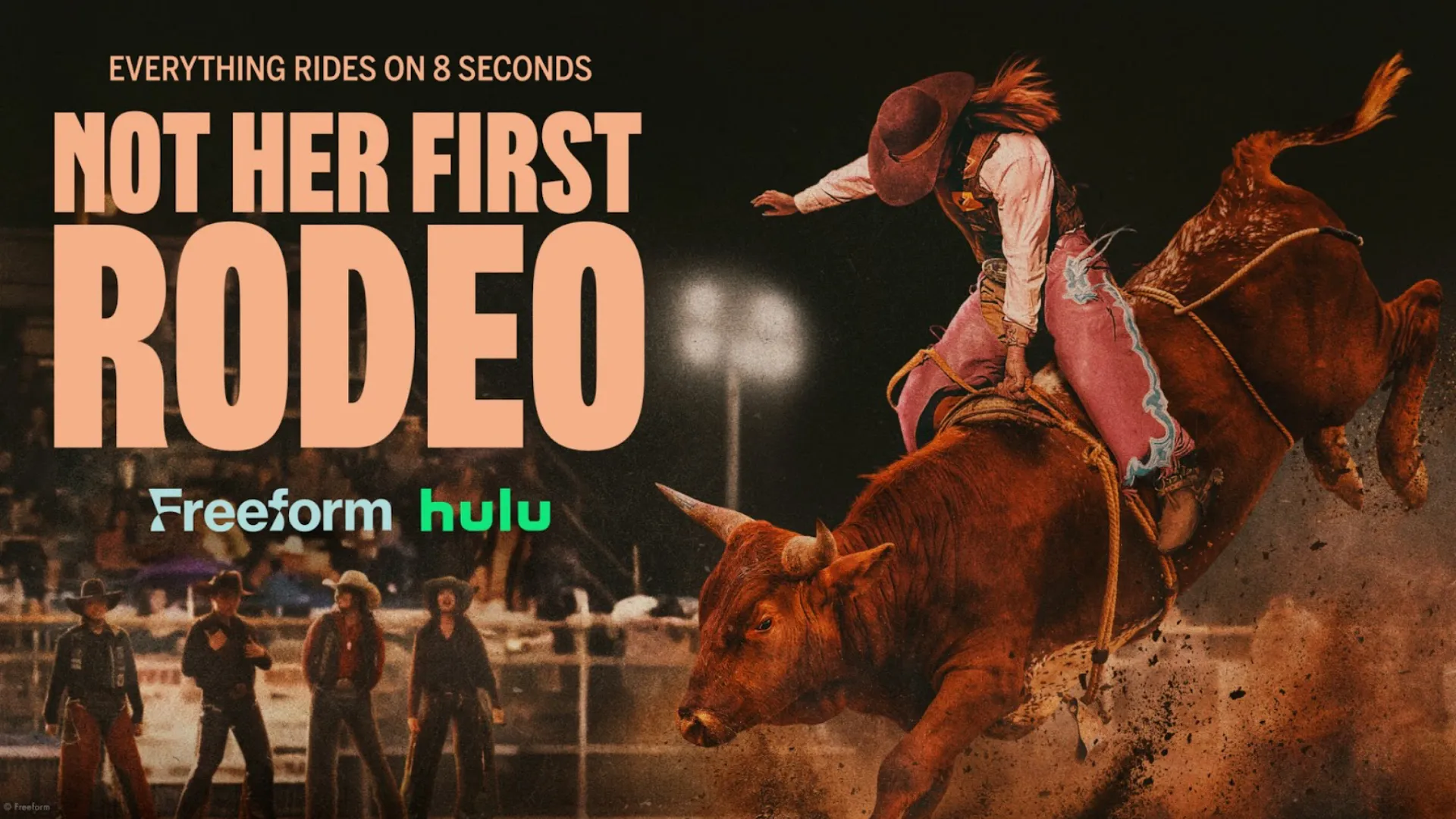
The six-part series drops viewers into the high-stakes world of women’s professional bull riding. Here, success and failure are measured in a frantic eight-second window. A rider’s ability to stay on a furiously spinning bull for that short duration is the entire game.
For Jorden Halvorsen, founder of the Elite Lady Bull Riders (ELB), the goal extends far beyond a single ride. She and her team are working to build a permanent home for women in a sport defined by cowboy masculinity. Their struggle is not simply against a one-ton animal; it is against generations of tradition and the quiet, persistent friction of sexism.
The New Faces of Grit
The series wisely grounds its cultural critique in the personal stories of its subjects, dedicating time to each woman so she becomes more than a mere archetype. Jorden Halvorsen is presented not just as a leader but as an entrepreneur born of necessity. At 29, the multiple-time world champion carries the dual burden of being a top competitor and the architect of an entire league.
The series captures the immense pressure of this role, showing her manage logistics, mentor younger riders, and still find the mental focus to face her own dangerous rides. Her work illustrates a familiar narrative for female pioneers: when a space does not exist for you, you must build it yourself, performing the extra labor of administration on top of the actual job.
The other riders offer different windows into the soul of the sport. Alexia Huffman’s story connects two disparate pillars of American identity: the military and the rodeo. As an Army veteran returning to the chutes after a decade, her journey speaks to the search for purpose and adrenaline that can follow service. The discipline learned in one high-risk environment is reapplied to another, suggesting a deep connection between these seemingly different worlds of structured danger.
Catalina Langlitz is the embodiment of resilience. The show documents her comeback from a coma, focusing not on the morbid details of the accident but on the psychological fortitude required to face the very thing that almost killed her. Her story forces a consideration of trauma and the human capacity to reclaim a narrative of victimhood and transform it into one of strength.
The younger generation is represented by Renata Nunes and Athena Rivera. Nunes, as “The Legacy,” must navigate the long shadow of her father, a celebrated PBR champion. Her participation in the ELB is a direct challenge to the patrilineal transfer of sporting greatness. She must honor her family’s heritage while simultaneously forging an identity in a new, gender-specific context that her father never knew.
Rivera, a rider from Mexico, broadens the show’s cultural scope. Her presence quietly dismantles the monolithic, Anglo-centric image of cowboy culture. Her admission that the sport takes all her money yet remains an irresistible addiction is a poignant commentary on any all-consuming passion, resonating with anyone who has pursued art or athletics for love instead of reward. Together, these women form a complex portrait of a professional sorority, their collective support a quiet but firm response to a hostile environment.
An Uneven Playing Field
Not Her First Rodeo excels by refusing to romanticize the life its subjects have chosen, instead using its journalistic lens to conduct a clinical examination of inequality. The physical dangers are presented as a baseline reality. Custom knee braces, talk of past comas, and the ever-present threat of being trampled are normalized as routine parts of the job.

The female body, in all its strength and vulnerability, becomes a central text of the series. We see it pushed to its limits, enduring impacts that would end careers in other sports. This unvarnished depiction of physical risk serves as the foundation for the show’s most potent critique, which is economic. The series repeatedly highlights the shocking disparity in prize money: male riders in the premier PBR league compete for six-figure purses and national acclaim, while the women of the ELB risk identical dangers for winnings that can be as low as $50.
This is not a throwaway statistic; it is the central pillar of the show’s argument. The rodeo arena becomes a microcosm of the global gender pay gap, a place where the value of female labor and skill is quantifiably and dramatically suppressed. The series does not need to editorialize on this point. It simply presents the facts, contrasting the women’s world-class athleticism with their meager compensation, allowing the inherent injustice to speak for itself.
This economic marginalization is compounded by a steady stream of casual sexism. The moment when Halvorsen is asked if she’s “having a blonde moment” is telling. It’s a small interaction, a microaggression, but the show includes it to demonstrate the pervasive, atmospheric nature of the condescension these women face. It is one thing to be denied equal pay; it is another to be denied basic respect in your own workplace.
The production style, a hallmark of its ABC News origins, is critical to the show’s success. There are no manufactured rivalries or tearful confessions prompted by producers. The camera is patient and observational. This choice elevates the material, framing the riders’ struggle not as reality television drama but as a legitimate story about labor rights and social change.
By adopting this sober, credible tone, the series insists that the audience view these women as serious athletes and professionals, even if the world they inhabit does not always afford them the same dignity. The grounded approach makes the show’s critique of systemic inequality feel less like an opinion and more like an undeniable truth.
The Eight-Second Metaphor
The show’s visual and narrative construction makes the spectacle of bull riding intensely compelling, even for an audience with no prior interest. The competition sequences are masterfully shot, utilizing slow-motion replays, tight close-ups on a rider’s grip, and dynamic angles that capture the raw, explosive power of the bulls.

The superimposed eight-second clock is a brilliant narrative device, transforming each ride into a miniature thriller. This clock is a constant reminder of the stakes, making the viewer a participant in the rider’s temporal struggle. The raw, unscripted commentary from rodeo announcers, with folksy descriptions of a rider being “Tougher than a T-bone at Waffle House,” adds a layer of authenticity that grounds the action in its unique cultural setting.
Ultimately, the series functions as a powerful case study in the effectiveness of niche storytelling. In the current media environment, where viewers are inundated with choices, a deep dive into a specific, little-known world can have more impact than a broad, generic story. By focusing so intently on the lives of these five women, the show taps into universal themes of ambition, resilience, and the search for community.
It also contributes to a significant re-evaluation of the American Western myth. It takes the iconic figure of the independent, rugged individualist and recasts it as a collective of women. They are redefining the Western narrative, not by replacing the cowboy, but by proving that his spirit of grit and determination is not bound by gender.
The lasting message of Not Her First Rodeo is delivered with a quiet confidence. It proposes a model of social change that is not based on loud pronouncements but on relentless, consistent effort. The struggle for equality is not won in a single, climactic battle. It is won by showing up every day, by supporting your peers, and by holding on tight through the violent resistance to your presence.
The series suggests that sometimes the most revolutionary act is to simply endure, to keep riding for those eight seconds, again and again, until your right to be in the arena is no longer a question. It is a testament to the power of presence, proving that true change comes from the steady, unwavering work of those who refuse to be thrown.
“Not Her First Rodeo” is a six-part docuseries that follows the Elite Lady Bull Riders, five remarkable women battling in and out of the arena, risking life and limb for a shot at a championship buckle. The series premiered with a two-episode debut on Thursday, May 22, 2025, at 10 p.m. EDT on Freeform. All six episodes are available to stream on Hulu starting Friday, June 6, 2025.
Full Credits
Producers and Executive Producers: Jordan Floyd, Jarod Todeschi, Katie Bassham, Rebecca Bruno.
Cast: Jorden Halvorsen, Catalina Langlitz, Renata Nunes, Athena Rivera, Alexia Huffman.
Editors: Ryan Levi.
The Review
Not Her First Rodeo
Not Her First Rodeo is a vital and sharply observed docuseries. It uses the niche world of women's bull riding to stage a powerful critique of systemic inequality. With its journalistic integrity and focus on the authentic struggles of its subjects, the series transcends sports documentary to become a quiet but firm statement on resilience, community, and the fight for legitimacy in a world slow to change. It is essential viewing for its cultural insight.
PROS
- Thoughtful examination of gender inequality through the unique lens of rodeo culture.
- Authentic, unmanufactured documentary style that respects its subjects.
- Strong, well-developed profiles of the individual riders, creating a human connection.
- Effectively uses competition sequences and on-screen graphics to build tension.
CONS
- The niche subject matter might deter viewers unfamiliar with the rodeo world.
- Pacing may feel measured for those accustomed to high-drama reality television.
- Could benefit from a slightly deeper historical context of women's roles in the sport.