
























![Kingdom Hearts Collection [I-III] Review](https://gazettely.com/wp-content/uploads/2026/10/Kingdom-Hearts-Collection-I-III-1-360x180.webp "Kingdom Hearts Collection [I-III] Review: KHII Holds Steady as Newer Entries Fluctuate 37")



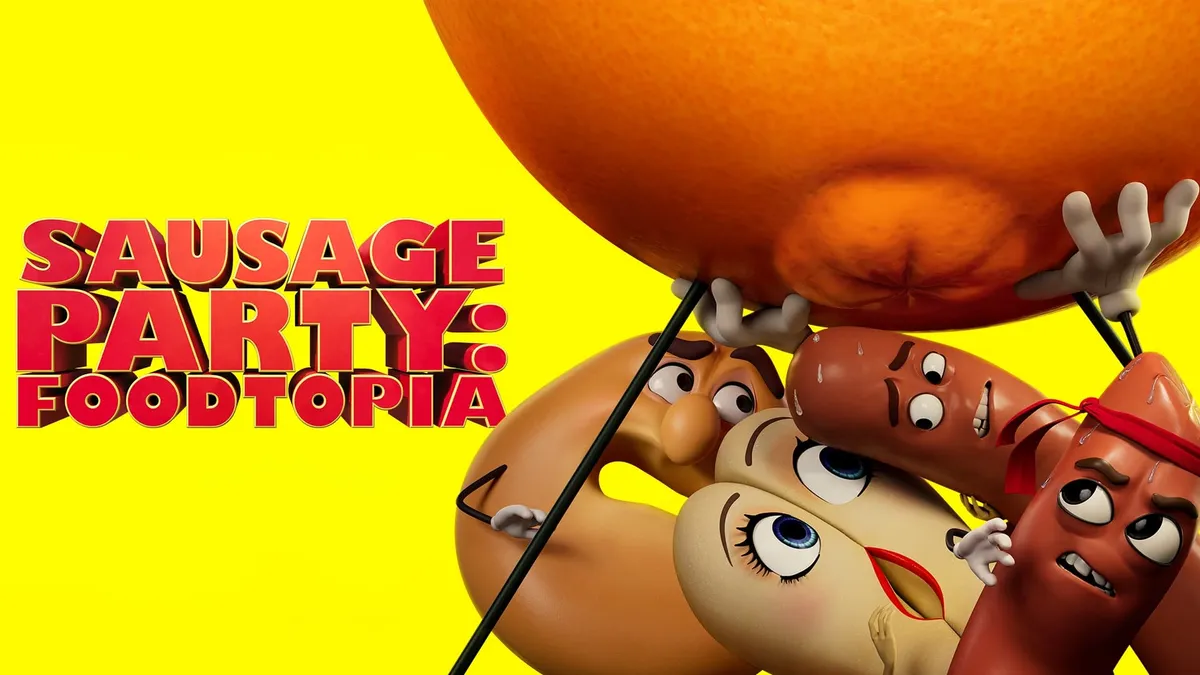

Sausage Party: Foodtopia returns to a world where the revolution is over and the difficult business of governing has begun. The first season ended with Frank the sausage establishing a society free from human consumption, yet the second season opens on the curdled reality of that dream. Foodtopia is not a paradise.
Resources, specifically precious refrigerated space, are scarce. The oppressive heat causes widespread suffering, and the citizens have grown resentful of Frank’s leadership. His authority is weakened by his unresolved grief for Brenda and his inability to deliver on his promises. The narrative wastes little time on this failing state.
The inciting incident is swift: Frank, along with his companions Barry and Sammy Bagel Jr., is unceremoniously banished from the very community he fought to build, forcing them into the unknown lands beyond the supermarket.
A More Perfect Union of Produce
After their exile, the trio stumbles upon Newfoodland, a society that serves as a direct structural counterpoint to the one they left. This new city, with its gleaming surfaces and efficient infrastructure, is technologically advanced, clean, and operates on a principle of structured harmony. Its core concept is the complete subjugation of humans, who are now “domesticated” and used as tools.
This is a stark evolution from the chaotic war of the first season, introducing a grotesque form of utility where food pilots humans like fleshy mechs by inserting themselves into their bodies. Upon arrival, the outcasts are not treated as such; they are celebrated as the god-like heroes of the great food revolution.
The story quickly integrates them into this new social fabric, tempting each with a taste of their ideal life. Frank is given a seat on a governing council, a position of political influence he craves. Barry is recruited into a military force where he finds action and a romantic connection with a warrior mustard named Dijon.
Sammy is supplied with the resources to pursue his filmmaking aspirations, finally getting an audience for his art. Even the human Jack finds a place within Newfoodland’s specialized program alongside another human, Jill. Yet, the mechanics of this perfect world feel almost too smooth, hinting at a hidden foundation that the narrative is poised to excavate.
Stale Jokes and Fresh Developments
The new setting provides fertile ground for character examination, though with mixed results. Frank’s rigid, top-down ideology immediately clashes with the collaborative structure of the Newfoodland council, exposing his own authoritarian leanings and making him an often-unlikable protagonist.
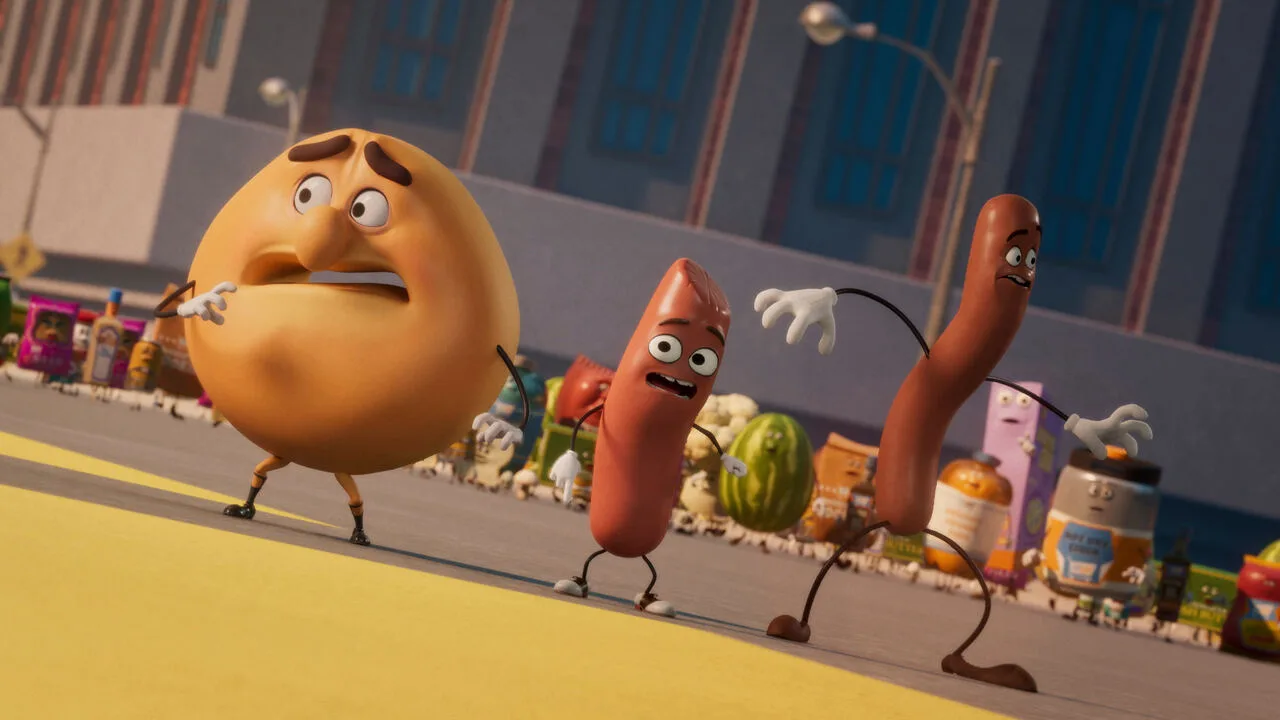
Away from Frank’s influence, Barry develops a welcome measure of confidence, and his arc is arguably the season’s most complete and engaging. Sammy’s plotline, which centers on his artistic endeavors with food-pun directors, functions as a meta-commentary on the franchise itself but feels disconnected from the primary narrative tension.
The season struggles with the palpable absence of Kristen Wiig’s Brenda; new female characters like Dijon and Jill are defined almost entirely by their relationships with Barry and Jack, leaving a void in the core cast’s dynamic. The season’s humor has also shifted. The initial shock of the premise has worn off, replaced by a reliance on food puns and pop culture parodies.
The comedic execution is inconsistent. For every clever visual gag or well-staged action sequence spoofing Top Gun, there is a dated reference to Will Smith’s Oscar slap that feels like it has passed its expiration date. The signature raunchiness is still present, though it feels less frequent. Often, the voice performances must carry the material, with Michael Cera’s delivery as Barry consistently elevating the comedic moments.
The Moral Cost of Paradise
The show’s satirical focus pivots this season toward a more complex target. Where the first chapter explored the messy creation of a society, this one questions the hidden costs of maintaining a perfect one. The central conflict is an ethical dilemma, revealing that Newfoodland’s stability is built on a ruthless form of “food colonialism.”
Its prosperity is fueled by sanitized military operations, called “fuel missions,” that systematically consume other, less developed food communities. This revelation forces Frank and Barry to confront the pioneers of a system far more monstrous than the one they escaped. The narrative cleverly underscores this power dynamic by revealing Frank’s illiteracy, positioning him as a relic from a less-developed culture, ripe for assimilation by a more sophisticated power.
The story uses its absurd characters to explore very real ideas about flawed political systems, exploitation, and the dark underpinnings of some utopian ideals. It is a surprisingly pointed observation delivered from a world of talking groceries.
A Slow Simmer Before the Boil
Structurally, the season suffers from uneven pacing. The initial episodes, particularly the second and third, slow to a crawl, focusing on the characters settling into their new roles in Newfoodland. While this methodical worldbuilding is necessary for the plot, it comes at the expense of narrative urgency.
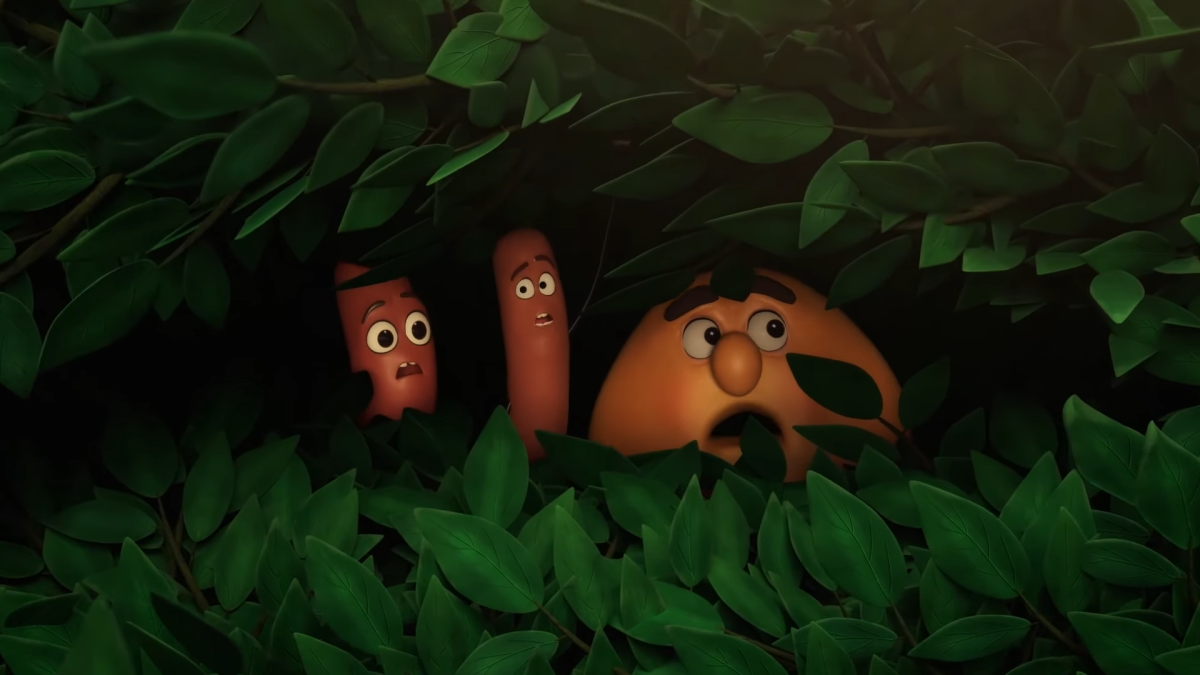
The story’s velocity increases substantially in its second half, once the city’s dark secret is exposed and the stakes become clear. The finale avoids a simple resolution, instead introducing a major narrative shift with the appearance of a new, powerful figure. This twist is so significant it reframes the entire series, expanding the world beyond the politics of food into something far more existential.
The character, voiced with gravity by the late Andre Braugher, brings an immediate weight to the proceedings, making his future absence a poignant note on which the season ends. It’s a bold narrative gamble that completely alters the board for a potential third season.
Full Credits
Director: Conrad Vernon
Writers: Seth Rogen, Evan Goldberg, Kyle Hunter, Ariel Shaffir, Ali Waller, Jennifer Kim, Jeremy Levick, Rajat Suresh
Producers: Matthew Bass, Jack Berigan, Madeline Blair, Theodore Bressman, Haiet Lakhouache, Dewayne Perkins
Executive Producers: Ariel Shaffir, Kyle Hunter, Seth Rogen, Evan Goldberg, Conrad Vernon, Jonah Hill, James Weaver, Alex McAtee, Megan Ellison, Patrick Chu, Andrew Millstein
Cast: Seth Rogen, Kristen Wiig, Michael Cera, Edward Norton, Will Forte, David Krumholtz, Sam Richardson, Natasha Rothwell, Yassir Lester, Scott Underwood, Grey DeLisle, Sugar Lyn Beard, André Sogliuzzo, SungWon Cho, Evan Goldberg, Darmirra Brunson, Dewayne Perkins
Director of Photography: Information not found
Editors: Jeff Seibenick, Will Moran-MacDonald
Composer: Christopher Lennertz, Alexander Bornstein
The Review
Sausage Party: Foodtopia Season 2
Sausage Party: Foodtopia’s second season trades shock value for a more ambitious, if uneven, narrative. While the satirical shift to explore the moral costs of a perfect society is sharp and intelligent, the story is hampered by sluggish early episodes and inconsistent humor. Barry’s character arc provides a genuine highlight, but the season’s structural flaws and a persistently grating protagonist make for a mixed, though fascinating, second course.
PROS
- Intelligent satirical shift to explore complex political themes.
- Ambitious world-building that successfully expands the show's premise.
- Strong character development for Barry, supported by an excellent vocal performance.
- A dramatic final twist that effectively sets up future seasons.
CONS
- Significant pacing issues, with the first half of the season feeling slow.
- The humor is inconsistent, with many jokes feeling dated or falling flat.
- Frank remains a difficult and largely unsympathetic protagonist.
- New female characters lack the dimension of the series' previous female lead.







