

























![Kingdom Hearts Collection [I-III] Review](https://gazettely.com/wp-content/uploads/2026/10/Kingdom-Hearts-Collection-I-III-1-360x180.webp "Kingdom Hearts Collection [I-III] Review: KHII Holds Steady as Newer Entries Fluctuate 37")



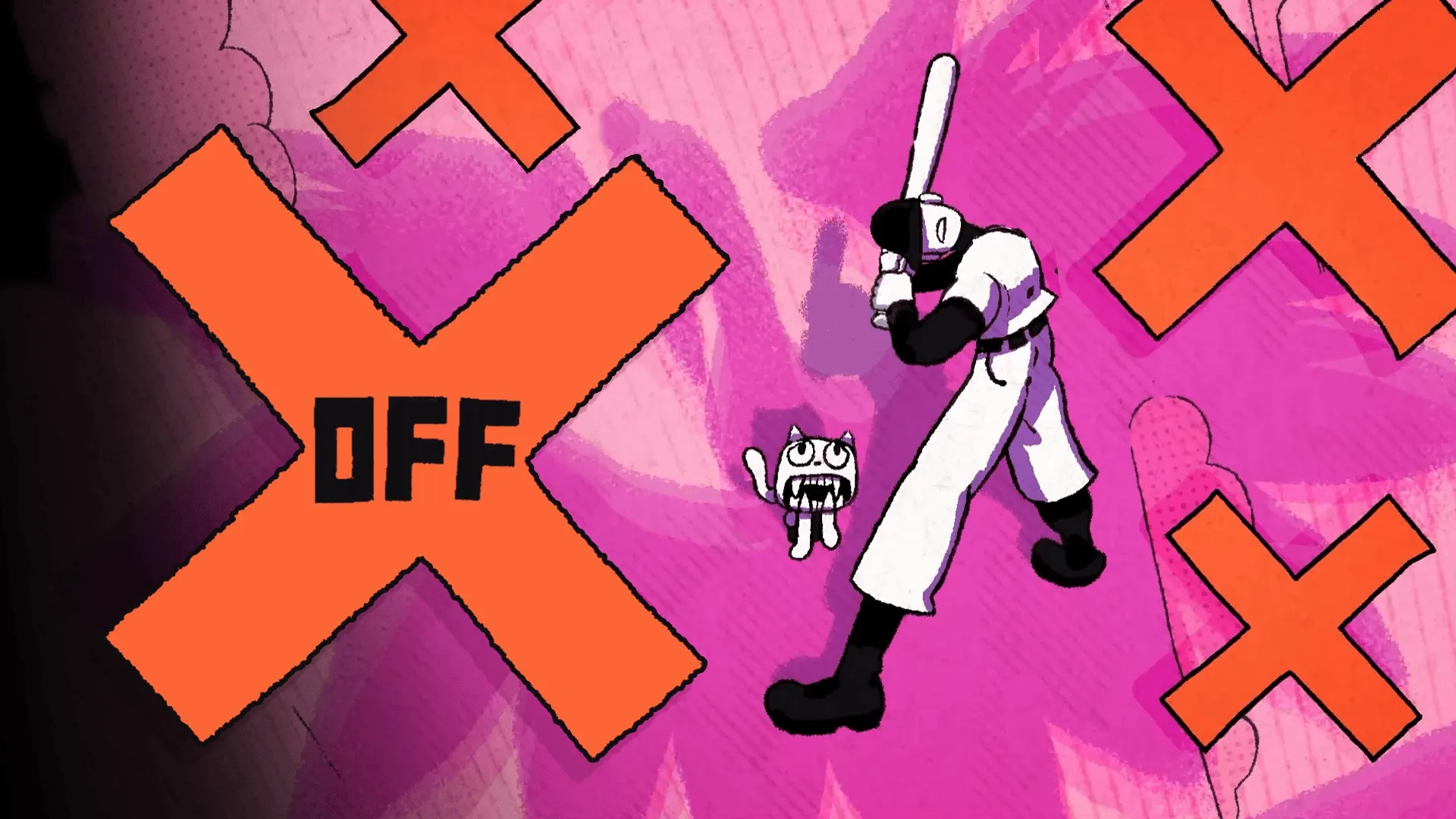

Some games hand you a sword and a noble cause. OFF hands you a baseball bat and a mission that feels sacred for all of five minutes. You are you, the player, and you are tasked with guiding a stoic figure in a clean baseball uniform known as The Batter. His purpose is to travel through a bizarre, fractured world and “purify” its distinct Zones by eliminating the specters that plague them.
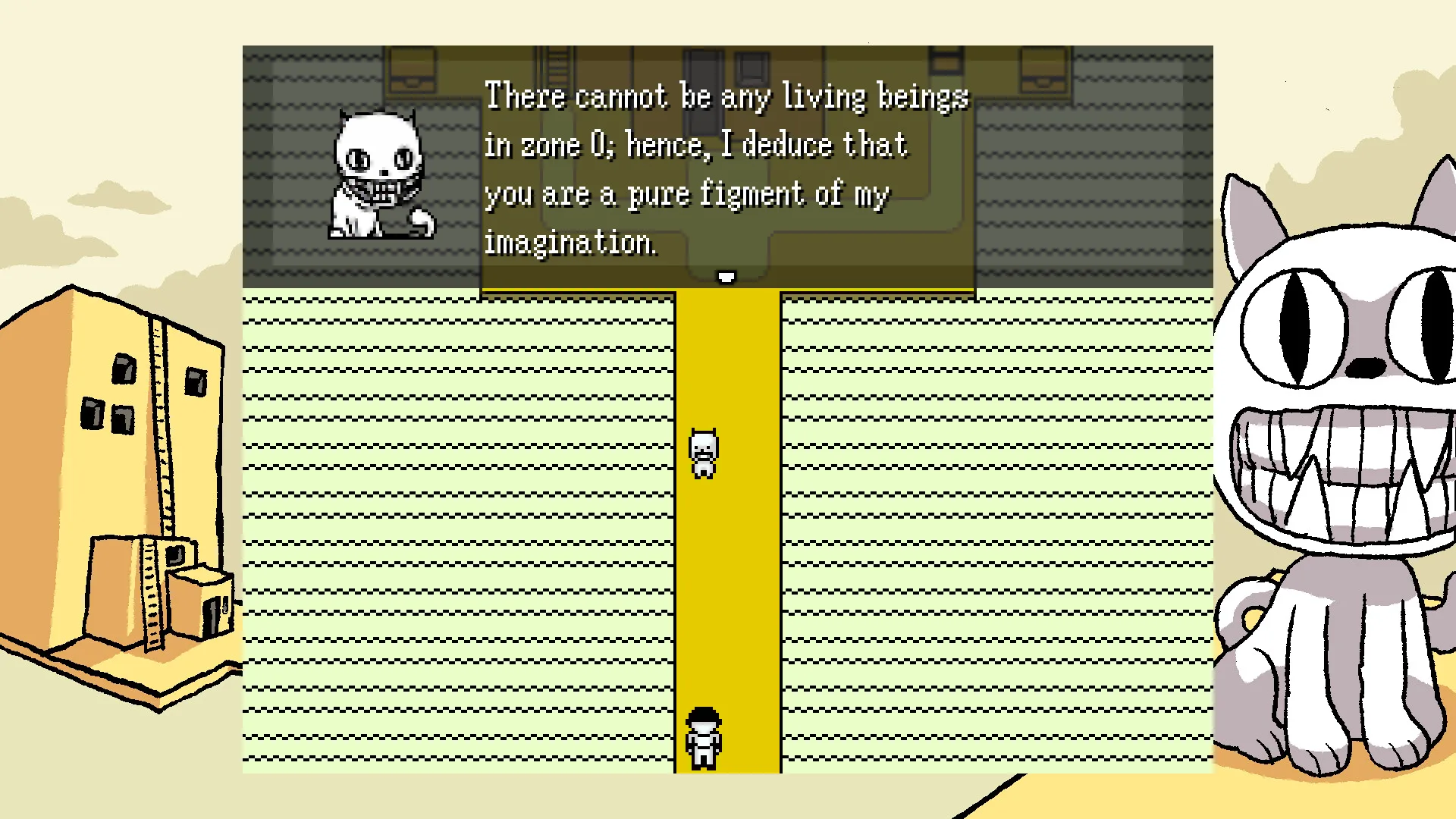
It sounds straightforward, like any other RPG. But your first real conversation is with a grinning, unnervingly eloquent cat named The Judge, whose teeth look a bit too crowded in his mouth. He informs you that The Batter’s very existence is an anomaly.
From that moment on, the game makes one thing clear: something is deeply, fundamentally wrong here. The central question shifts from “can I win?” to “what am I actually doing?”. That feeling of unease is the true starting point of your experience.
A Masterpiece of Unease
The game’s aesthetic, born from its RPG Maker origins, is a perfect example of limitations becoming a formidable strength. The lo-fi pixel art works much like the found-footage technique in horror films; its lack of polish creates a disturbing sense of authenticity. It doesn’t just suggest a world, it forces your imagination to fill in the horrifying gaps where high-resolution details would normally be.
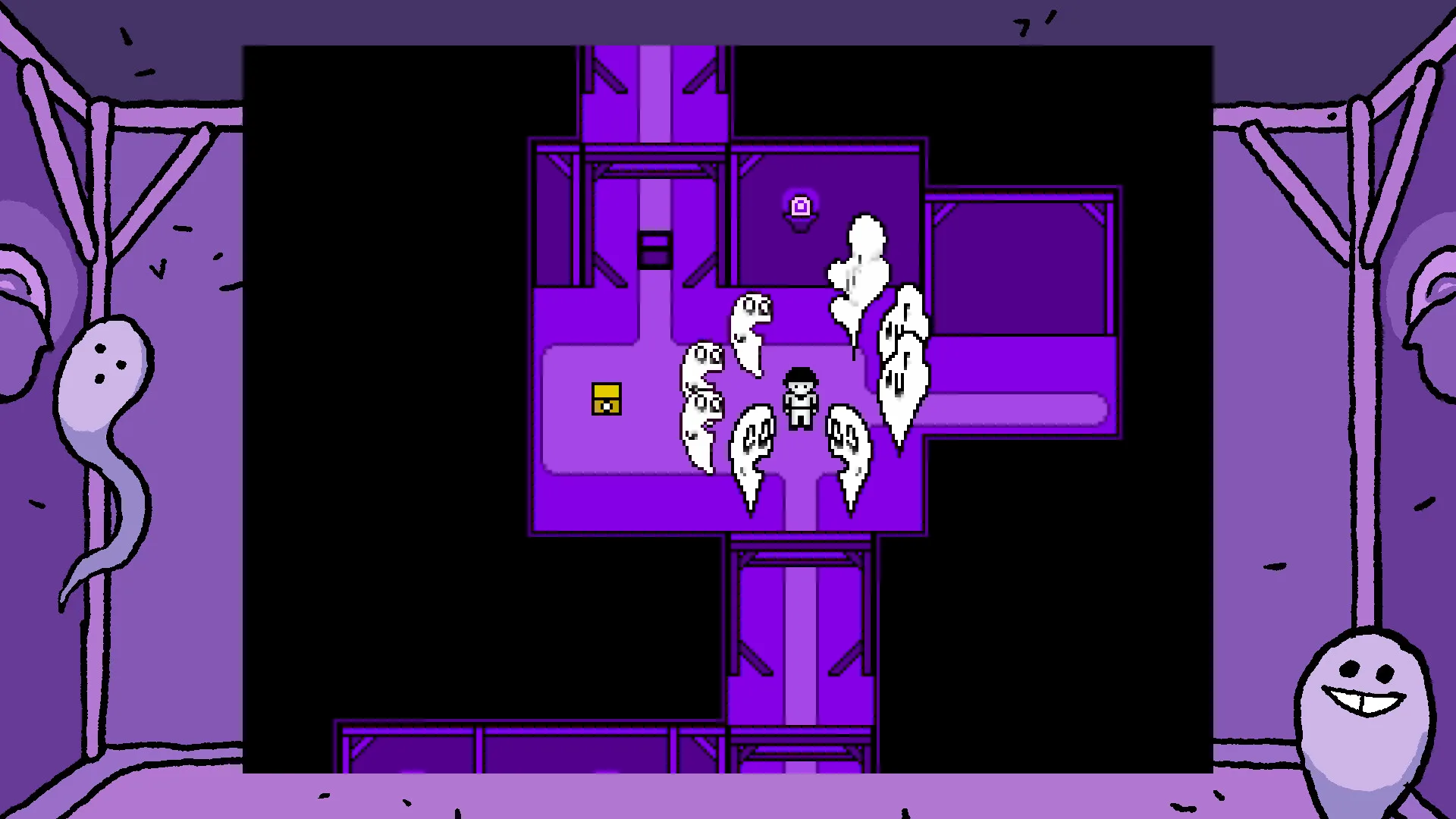
This stark visual language creates a foreboding atmosphere where simplicity feels sinister. This is most apparent in the design of the specters you fight. They appear as hand-drawn, distorted sketches, looking like they were ripped from a troubled artist’s notebook and pasted violently into the game world. One might look like a screaming, compressed photograph of a face, while another is a lanky, bird-like creature whose limbs bend at impossible angles.
This deliberate clash of styles, with simple world sprites existing alongside intricately grotesque illustrations, makes the enemies feel like true aberrations. They don’t belong, and their presence is a constant visual disruption that keeps you off-balance. The game’s palette reinforces this discomfort. Black-and-white characters move through desolate monochromatic halls or against the backdrop of strangely vibrant industrial zones made of smoke and plastic.
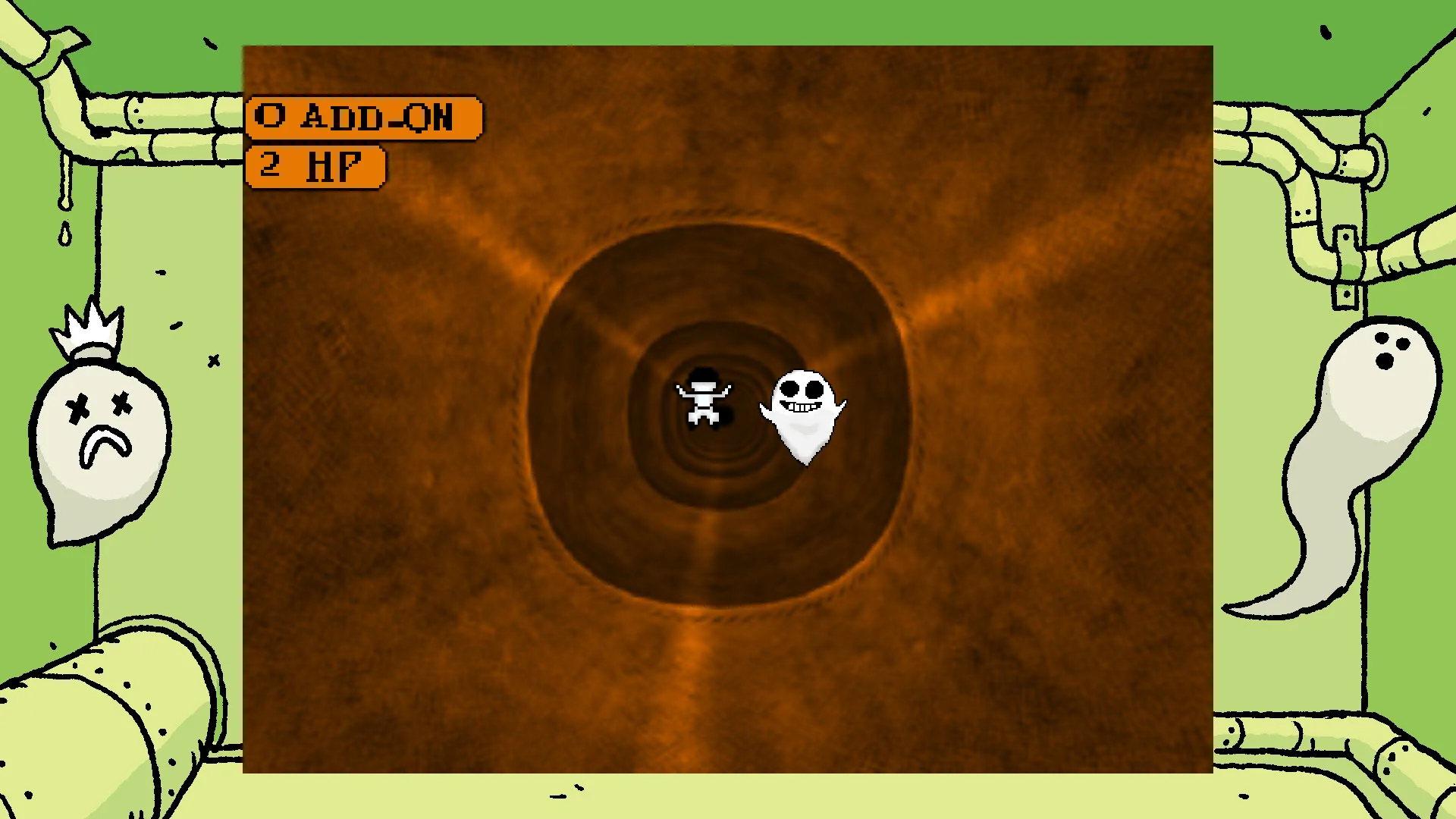
The world’s inhabitants, the Elsen, are identical figures in suits, their blank faces conveying a deep exhaustion. When frightened, their heads elongate into screaming, fleshy columns, a truly unnerving transformation that speaks volumes about their fragile state. The sound design is the final, crucial component of this oppressive atmosphere.
The music for populated areas is often a discordant, repetitive jingle that burrows into your brain, while the sounds of combat are wet and visceral. A successful hit doesn’t produce a satisfying chime but a sickening squish. After an area is purified, the world falls into an unnerving silence, an auditory void that is somehow louder than the chaos it replaced.
The Weight of the Bat
The narrative in OFF is abstract, operating on a metaphorical level that resists easy answers. You travel through five Zones, each based on a core element of its industrial society: plastic, metal, smoke, and meat. These are not fantasy kingdoms but dystopian complexes. Zone 2, for example, is a massive library where Elsen are forced to read documents until their minds break. Zone 3 is a series of meat-processing plants where living tissue is the primary resource.
Each location is ruled by a Guardian, a figure who represents a different form of societal control or decay. The game completely dismantles the traditional hero’s journey. The actions you take as The Batter, which seem heroic at first, feel progressively more destructive. The purification of a Zone doesn’t bring peace; it leaves behind an eerie silence, a profound emptiness that feels more like annihilation than salvation.
The game’s most brilliant technique is its explicit separation of you, the player, from the protagonist. It breaks the fourth wall from the opening moments to establish that you are a distinct entity controlling The Batter. This is not just a clever trick found in later titles like Undertale, which OFF directly inspired.
It is the core mechanism for exploring responsibility. When The Batter swings his bat, it is because you commanded him to. This creates a powerful sense of complicity that grows with every unsettling victory. His unwavering, emotionless focus on the mission stands in stark contrast to the player’s mounting horror. He never questions the path, leaving you to carry the full weight of your choices alone.
This dynamic is constantly reinforced by The Judge, who acts less as a simple guide and more as a philosophical observer, framing your actions with ambiguous commentary that forces introspection. The game masterfully paces its revelations, slowly making your initial confidence in the mission feel naive and foolish.
The Rhythm of Purification
The game’s combat system is a vehicle for its narrative, not its centerpiece. Battles unfold in a turn-based fashion, using a system reminiscent of classic Active Time Battle mechanics where a meter fills to determine a character’s turn. You command The Batter, the party’s primary damage dealer, who is supported by floating, halo-like beings called “Add-Ons.” These companions, named Alpha, Omega, and Epsilon, fulfill traditional RPG roles like healing, buffing, and executing elemental attacks.
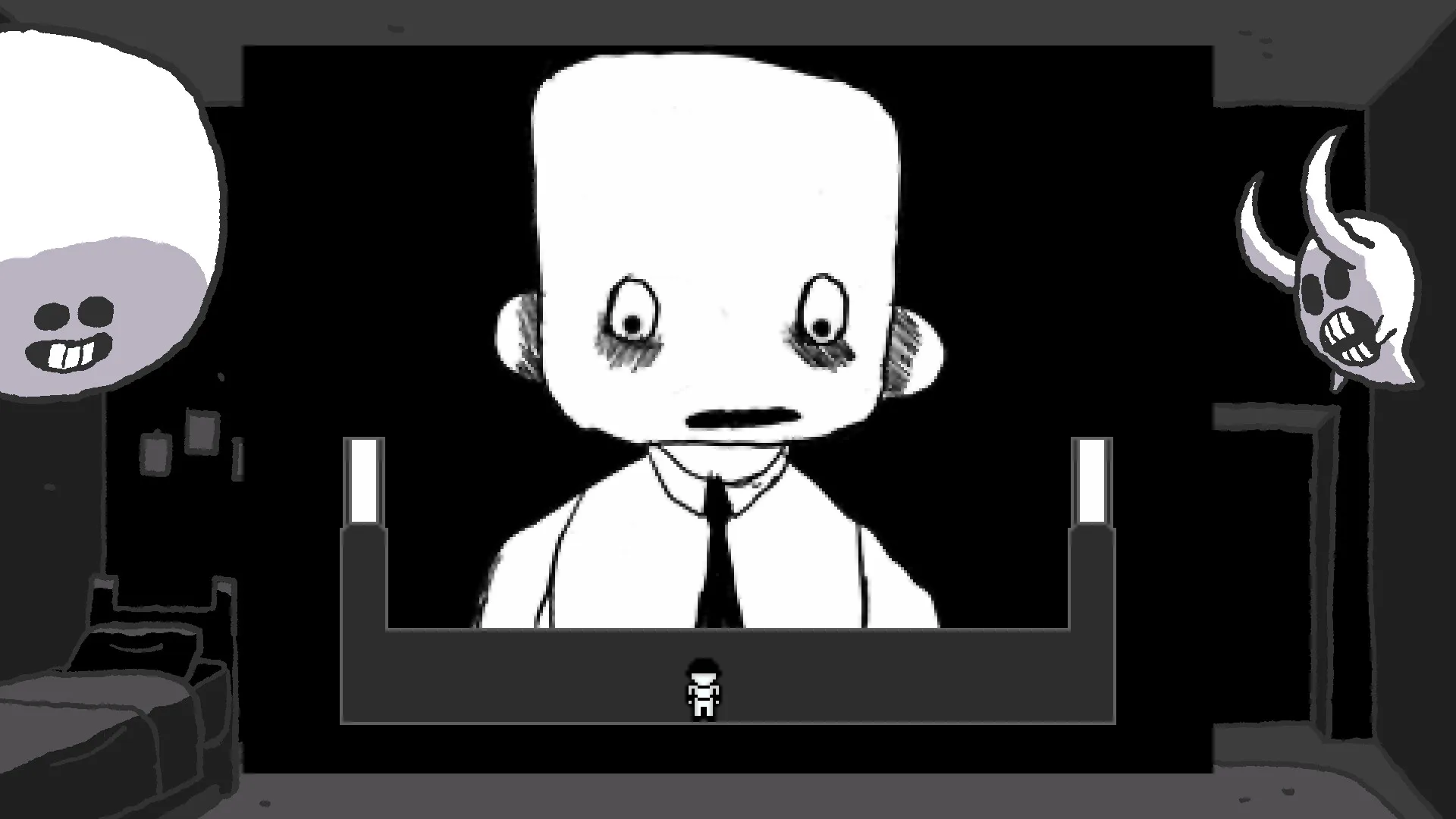
A typical encounter involves using The Batter for physical damage while directing the Add-Ons to exploit enemy weaknesses tied to the world’s four elements. The system has a light tactical layer, but its depth is limited. This is an intentional design choice. The combat, especially against common specters, often becomes a repetitive, joyless process. It reinforces the idea of The Batter’s mission as a grim, methodical slog.
It is a chore, and the game wants you to feel the weight of that repetition. The boss battles, however, serve as punctuation points in the narrative. These fights against the Zone Guardians are more complex, often requiring specific strategies to overcome their unique abilities. They are tests of your commitment to the mission, moments where the grim work becomes a genuine struggle. The 2025 remaster introduces some welcome revisions that polish this system without overcomplicating it.
The action bar now pauses when you select commands, removing the artificial time pressure of the original. This change allows for more thoughtful decision-making. A new visual indicator for critical hits also adds a satisfying tactical element. When a character’s turn meter glows yellow, you know a critical is coming, allowing you to strategically hold that attack for the most opportune moment. These changes make the combat feel more polished and deliberate, improving the pacing of the grim proceedings.
Decoding a Broken World
Progression in OFF is a linear path through madness, but the journey is filled with memorable environmental storytelling. Each of the game’s Zones is a self-contained industrial dystopia governed by its own bizarre logic. Navigating these spaces is an experience in itself. You might move through the suffocating smoke mines of Zone 1, the labyrinthine and sterile library corridors of Zone 2, or the fleshy, organic rooms of Zone 3.
The level design conveys a sense of oppression and confusion. After you “purify” a Zone and defeat its Guardian, you can return to find a remixed, empty version of the map. This is not simple backtracking. It serves a powerful narrative purpose, allowing you to uncover new information and see the stark consequences of your actions firsthand. The eerie silence of these purified areas is a haunting reward.
The puzzles you encounter are similarly integrated into the world’s strange atmosphere. They are straightforward in their execution, rarely acting as difficult roadblocks. Instead, they require you to engage with the world’s uncanny rules. One puzzle might have you deciphering a password from a nonsensical text, while another requires you to input a room-by-room directional code found on a wall in a completely different area.
Their purpose is to immerse you deeper in the game’s logic, forcing you to pay close attention to the disturbing details of your surroundings. The NPCs, primarily the identical and downtrodden Elsen, further enhance this immersion. Their dialogue is sparse and repetitive, reflecting a dehumanized society. Their reactions to your presence, shifting from caution to outright terror, act as a moral barometer for your violent quest.
A Fresh Coat of Paint on a Relic
The most significant and potentially divisive change in this remaster is the entirely new soundtrack. The original’s iconic, lo-fi score by Alias Conrad Coldwood, with its infamous battle theme “Pepper Steak,” was a huge part of its raw identity. That music has been completely replaced with new compositions from a team of artists. This new score is excellent, successfully capturing the unsettling and industrial vibe that is so central to the game’s identity.
The new battle themes are energetic, and the zone music is appropriately atmospheric. However, the tone is different. The original had a raw, almost amateur quality that felt perfectly aligned with its unsettling, home-brewed horror. The new music is more polished and “game-like,” which, while high quality, subtly shifts the game’s identity. The remaster also brings expanded content, most notably several new optional secret bosses.
These encounters are a fantastic addition, offering some of the game’s toughest challenges with mechanics that are more inventive than many of the main story fights. They provide a worthy goal for players who want to master the revamped combat system and offer small snippets of additional lore. Smaller additions, like a polished official English translation that preserves some of the charm of the original fan script, and modern features like widescreen support, complete the package.
For newcomers, this is the ideal way to play the game. The changes modernize the experience without compromising its core artistic vision. The remaster succeeds as an act of preservation, taking a foundational piece of indie game history that was once difficult to access and presenting it to a new generation, ensuring its strange, powerful light isn’t forgotten.
The Review
OFF
OFF is a masterclass in atmospheric design and subversive storytelling. While its gameplay mechanics are intentionally simple and can feel repetitive, they serve a profound narrative that forces players to confront their own role in a deeply unsettling world. This remaster successfully preserves the game's disturbing soul while adding welcome modern polish, making an essential piece of indie history more accessible than ever. It is a strange, unforgettable, and important experience that will linger in your thoughts long after the mission is complete.
PROS
- Exceptional and masterfully crafted unsettling atmosphere.
- A profound, subversive narrative that challenges the player's role.
- Unique and memorable art direction that leverages its limitations.
- Meaningful quality-of-life improvements in the remaster.
- A historically significant and influential indie RPG.
CONS
- Turn-based combat is simple and can become repetitive.
- Pacing can feel slow, particularly when backtracking.
- The abstract, metaphorical story may not resonate with everyone.
- The new soundtrack, while excellent, changes the original's raw tone.







