
























![Kingdom Hearts Collection [I-III] Review](https://gazettely.com/wp-content/uploads/2026/10/Kingdom-Hearts-Collection-I-III-1-360x180.webp "Kingdom Hearts Collection [I-III] Review: KHII Holds Steady as Newer Entries Fluctuate 37")



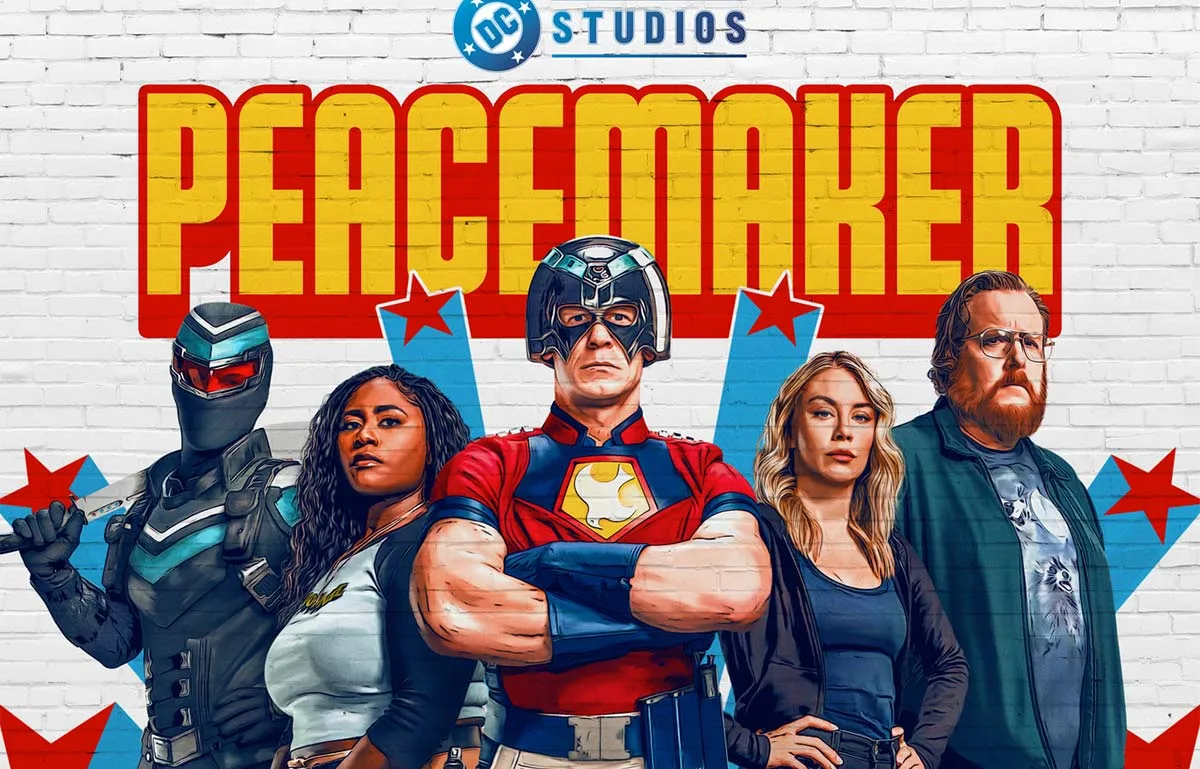

After an intermission of years, Peacemaker returns not to the world it left, but to one reborn from its ashes. It finds its place in James Gunn’s new cosmos, a satellite pulled into the orbit of a fresh Superman. Yet the gravity here feels older, heavier. The show’s impromptu family, the 11th Street Kids, is a constellation scattered.
They exist now as islands of private fallout, their shared purpose dissolved into the quiet anxieties of civilian life. Christopher Smith resides in the house of his dead father, a ghost haunting a mausoleum of memory. Within its walls, he finds a closet, a quantum unfolding chamber that opens not to other worlds, but to other selves.
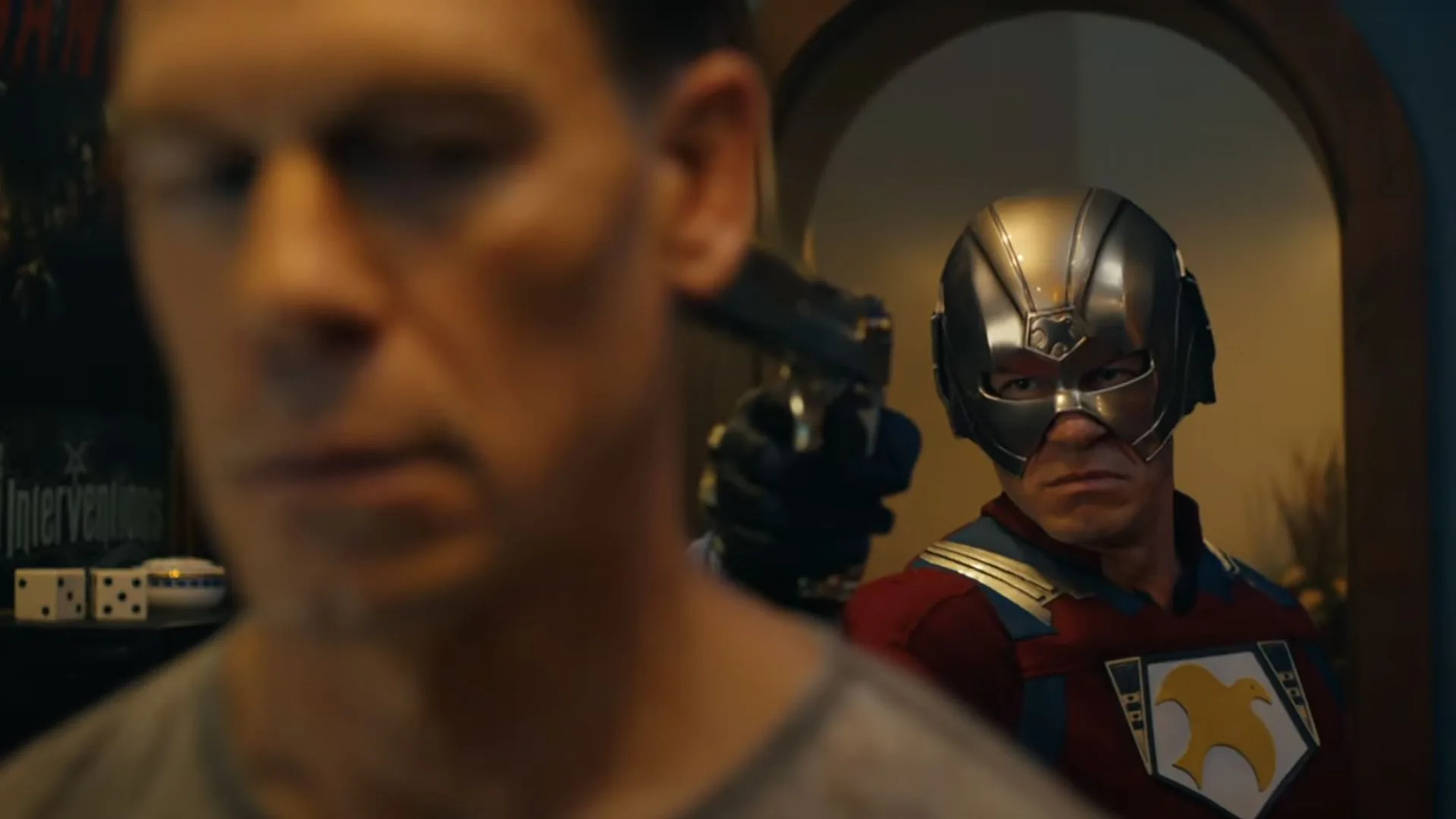
He discovers a reflection of his life polished to perfection, a reality where his father offers love and the world offers praise. This vision becomes a siren’s song, promising an escape from the man he is by presenting the man he could have been. The conflict is not one of good versus evil, but of the tormented self versus the perfect lie.
The Gravity of What Could Be
The season opens on a landscape of slow decay, a quiet study of entropy applied to human connection. Each member of the fractured team drifts in a solitary orbit, their personal velocity decaying into aimless motion. Leota Adebayo’s attempt to build a new life is a transparent fiction, her professional ambitions a flimsy wall against the gravitational pull of a past she claims to reject. Her marital strife is a symptom of this internal schism, a consequence of a soul unable to live peacefully in the mundane world after having touched a stranger, more violent one.
Elsewhere, Emilia Harcourt, denied the structure of her vocation, wages a war against herself. Her nightly brawls are not mere expressions of frustration; they are philosophical inquiries conducted with her fists. She is testing the limits of her own flesh, searching for the solidity of pain to prove she still exists in a world that has declared her obsolete. She punishes strangers for her own purposelessness.
The betrayal of John Economos is a uniquely modern tragedy. He sits at his desk at A.R.G.U.S., a man caught in the gears of an institution, his complicity measured in keystrokes and quiet acquiescence. His moral erosion is bureaucratic, the grand sin of treason reduced to the banality of a daily task. Even Adrian Chase, the grinning nihilist Vigilante, seems a figure of greater pathos. He is a man without history or consequence, a constant of absurd violence whose simplicity acts as a terrifying mirror. He shows the others how profoundly their pasts have imprisoned them.
Against this backdrop of atomized lives, the multiverse presents itself to Chris Smith. It is not a stage for cosmic adventure but a mirror for internal desolation. This is Plato’s cave reimagined as a suburban closet, where the shadow on the wall is a version of yourself freed from your sins. The other dimension is the physical manifestation of regret, a paradise built from the bricks of his own self-loathing.
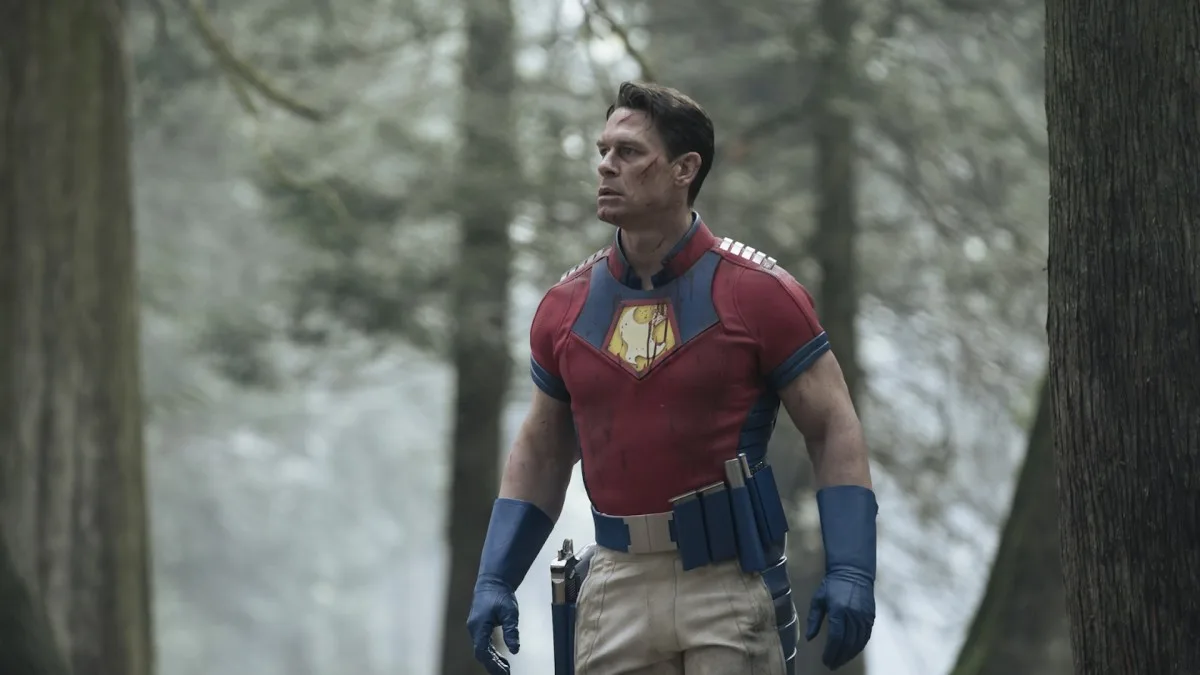
It offers the ultimate temptation: the chance to shed a past that defines him. John Cena’s performance is a masterpiece of contained implosion. His large physical form seems to house a vacuum, his bravado a brittle shell around a core of immense sorrow. He sheds the character’s muscular armor, revealing the hollowed-out man beneath. He plays Chris Smith as a soul weighed down by the ghost of Rick Flag Jr., a specter of his own creation. His struggle is the existential terror of becoming a better person while staring at a universe where he never had to try.
Portraits in Shrapnel
The ensemble is a study in fractured identities, each character a reflection of the central theme of a divided self. Jennifer Holland gives a sharp, painful duality to Harcourt, presenting two women born from the same wound. One cauterizes her pain with reflexive violence, the other lives in a world where the wound never festered. Meeting her alternate is a cruel trick of existence, a vision that both mocks her suffering and questions its necessity.
Through flashbacks, we see the architecture of her hardness, the specific moments of betrayal and loss that built her emotional walls so high. The plight of Economos is a quiet tragedy of impossible choices, a good man forced to serve a new master by persecuting an old friend. His is the agony of the compromised, a portrait of a soul slowly suffocating under the weight of small, necessary evils. His predicament is a meditation on the nature of loyalty in a world where systems demand allegiance over personal connection.
Vigilante remains the court jester in this tragedy, his absurd requests and simple violence a strange reprieve from the emotional weight carried by the others. His presence questions whether blissful ignorance is its own kind of salvation. The jarring nature of his comedy, which sometimes tests an audience’s patience, feels like a deliberate choice.
It is the intrusion of the absurd, a reminder that the universe is not a coherent drama but a chaotic collision of tones. The new figures are not antagonists so much as consequences given human form. Frank Grillo’s Rick Flag Sr. is a man animated by a righteous grief, his quest for vengeance possessing the cold, clean logic of a law of nature. He is the history Chris cannot outrun, a living embodiment of the blood on his hands.
Grillo plays him with a chilling stillness, a man who has already lost everything and is therefore terrifyingly free. Tim Meadows offers a different kind of disturbance as Langston Fleury, an agent whose banal indecency is a perfect picture of bureaucratic evil. His comedy is unsettling, a reminder of the petty cruelties that persist even in a world of gods and monsters. His subplot with Eagly, pursued by a grizzled eagle hunter played by Michael Rooker, becomes a surrealist fable about nature’s brutality, playing out in the margins of the main human tragedy.
Symphony of the Profane
The series conducts its peculiar aesthetic with unwavering confidence. James Gunn’s vision is one where visceral carnage and emotional sincerity are not opposing forces. The action is a messy, biological fact, each shattered bone and splatter of blood a reminder of the fragile flesh beneath the costume. It is a world where bodies break with sickening ease.
The humor is base, a celebration of the body in all its graceless functions, from an almost startlingly graphic orgy to the persistent idiocy of a running joke. Eagly, the avian sidekick, becomes a terrifying instrument of death, his attacks rendered with a technical precision that makes the bloodshed all the more effective. He is a force of savage, amoral nature injected into a world of costumed artifice. This season breathes more.
The pace is more meditative, allowing the silence in a room to carry as much weight as a gunshot. The narrative is a sequence of quiet, character-focused vignettes punctuated by bursts of chaotic noise, mirroring the internal states of the characters themselves. It is a story about the spaces between people, spaces filled with unspoken resentments and shared traumas. Gunn, as the writer of every episode, ensures a singular, unwavering voice.
The direction, even from other filmmakers, seems to favor the intimate landscape of a human face over the grand spectacle of a superheroic feat. The glam metal soundtrack is the show’s unapologetic soul, its power chords scoring moments of both ridiculous violence and profound vulnerability without a hint of irony. It is the perfect music for characters who hide their authentic pain behind a loud, theatrical performance of toughness.
A Sovereignty of Scars
The series establishes its place in the new DC Universe with a striking lack of ceremony. It absorbs characters from the larger cinematic world, like Hawkgirl and Guy Gardner, as if they were always there, treating the continuity reboot as a simple fact of life. This casual confidence allows the show to maintain its own stark identity.
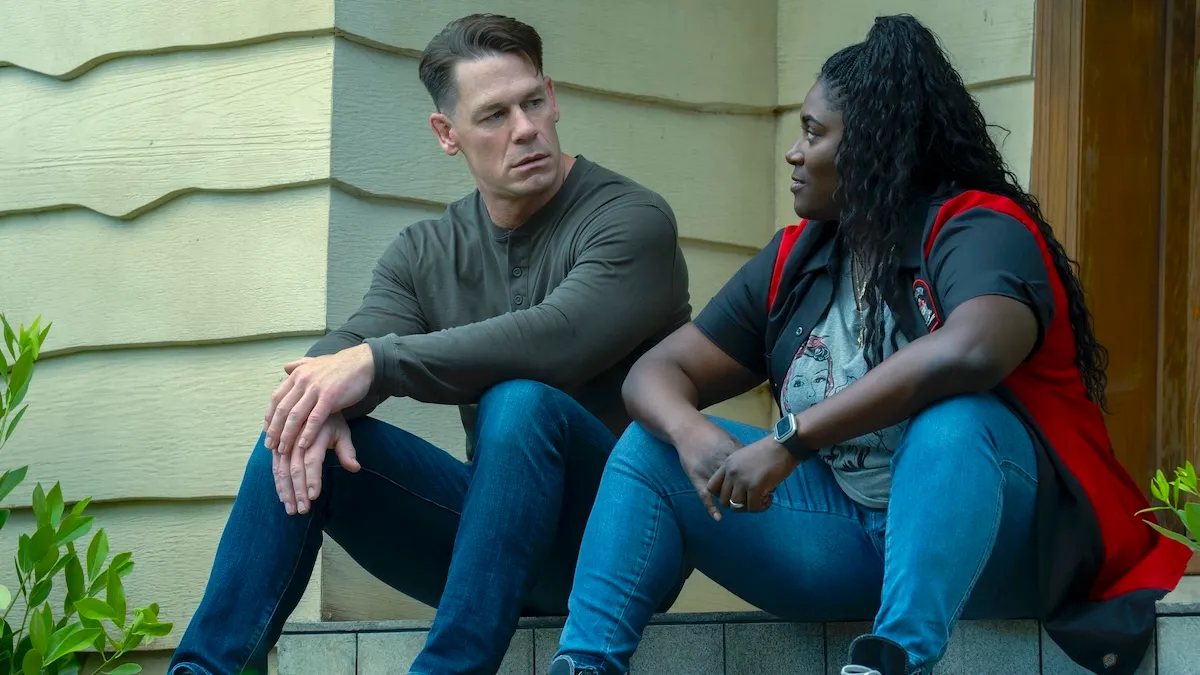
The integration feels like an act of grounding the fantastic in the mundane; the focus is less on their powers and more on their weary, cynical interactions with Chris. It is a story that happens to be set in a world of superhumans, not a story about that world. Its concerns are terrestrial, rooted in the messy soil of human failure and the desperate search for redemption.
Peacemaker is not required viewing to understand a grander cosmic narrative. Instead, it makes a case for the narrative of the individual. The show suggests a universe is defined not by its galactic scope but by the infinite, complex worlds contained within a single person. Its greatest contribution is its philosophical depth, a dark counterpoint that makes the brighter elements of the universe seem more earned and less naive.
Full Credits
Directors: James Gunn, Greg Mottola, Peter Sollett, Alethea Jones
Writers: James Gunn
Producers: James Gunn, Peter Safran, Matt Miller
Cast: John Cena, Danielle Brooks, Freddie Stroma, Jennifer Holland, Steve Agee, Robert Patrick, Frank Grillo, Sol Rodríguez, David Denman, Tim Meadows, Michael Rooker, Nhut Le, Isabela Merced, Nathan Fillion, Sean Gunn, Stephen Blackehart, Terence Rosemore, James Hiroyuki Liao
Director of Photography: Sam McCurdy
Composers: Clint Mansell, Kevin Kiner
The Review
Peacemaker Season 2
Peacemaker Season 2 transcends its comic book origins to become a profound and often painful meditation on regret and identity. It uses the multiverse not as a gimmick, but as a cruel mirror reflecting the abyss of self-loathing. While its signature blend of brutal violence and crude humor remains, the season’s heart is a quieter, more sorrowful exploration of broken people trying to find a reason to exist in a world they feel has discarded them. It is a messy, brilliant, and emotionally resonant piece of television that lingers long after the credits roll.
PROS
- The season shifts focus from plot to a deeply philosophical examination of Christopher Smith's psyche and the emotional fallout affecting the entire team.
- Cena delivers a career-best performance, showcasing incredible emotional range and vulnerability.
- The alternate reality serves as a powerful narrative device for exploring themes of regret, identity, and self-worth.
- The returning cast deepens their roles, and newcomers like Frank Grillo and Tim Meadows add significant depth and humor.
- Successfully blends graphic violence, crude humor, and genuine pathos into a cohesive and distinct authorial voice.
CONS
- The more reflective, character-focused pace might feel slow to viewers expecting non-stop action.
- Some comedic bits, particularly those involving Vigilante, can feel drawn out and test the audience's patience.
- The core team spends much of the season separated, which may disappoint viewers who enjoyed their group chemistry in the first season.







