







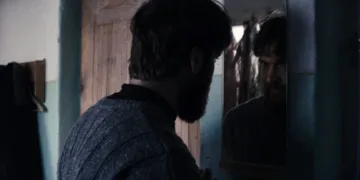
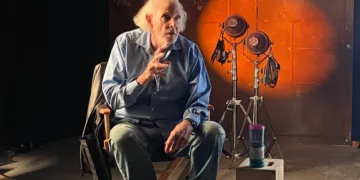











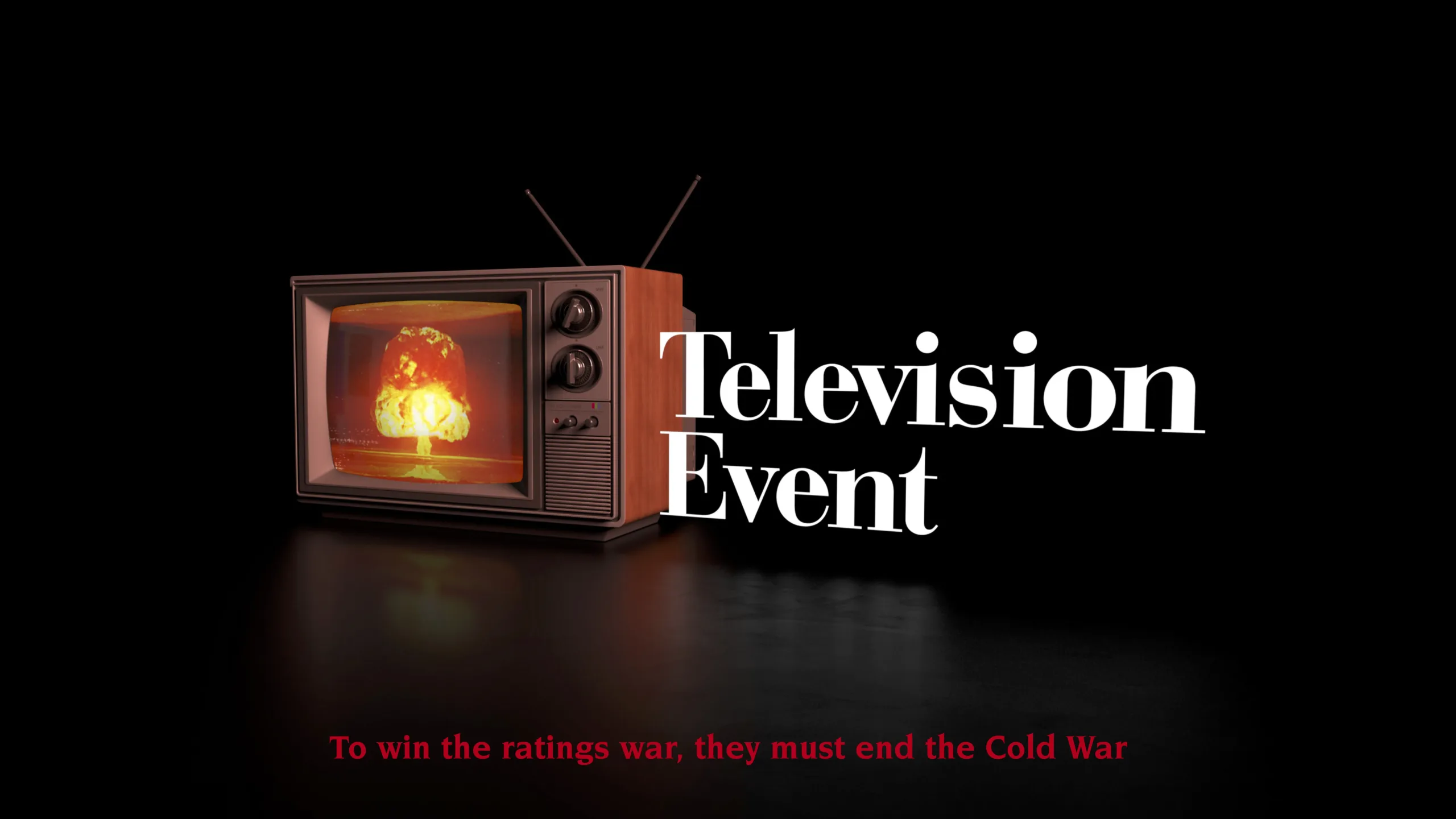

The documentary Television Event revisits a singular moment when the specter of nuclear apocalypse was beamed directly into the American living room. It chronicles the creation and broadcast of the 1983 ABC movie The Day After, a project born into a world defined by its anxieties.
The political air of the early 1980s was thick with Cold War hostility and the rhetoric of an “evil empire,” stoking a public fear that the end of the world was not a matter of science fiction, but of geopolitical inevitability. In this climate, the “TV movie” was a familiar, often disposable, form of entertainment, hardly the medium for a grim cautionary tale about atomic obliteration.
ABC’s decision to pursue such a bleak story was an exceptional risk. The result was a broadcast that shattered expectations, drawing an audience of 100 million people. This congregation of viewers, united in front of their screens for a shared nightmare, represents a scale of communal experience that has since vanished from the cultural landscape.
The Director’s Gambit
At the center of Television Event is the classic struggle between creative vision and corporate necessity. The documentary presents director Nicholas Meyer, fresh from his success with Star Trek II: The Wrath of Khan, as a filmmaker with a clear and serious purpose. He was not making a simple disaster picture; he was crafting a public service announcement about the unwinnable nature of nuclear war.
His cinematic sensibility was immediately at odds with the formulaic world of network television. Meyer’s goal was to create a sense of grim realism, a verisimilitude that directly conflicted with the very aesthetic of the medium. His conviction immediately collided with the commercial instincts of ABC executives and the rigid rules of their Standards & Practices department, a body that functioned as a powerful internal censor.
The network wanted a product that was “brighter,” both literally and figuratively, a request that baffled a director attempting to portray Armageddon. They objected to graphic depictions of burns and blood, fought against showing the full horror of bodies being vaporized in a blast, and even sought to censor specific words like “diaphragm.” Meyer viewed these demands as a betrayal of the project’s very purpose.
He fought to protect the film’s stark realism, a battle that escalated to the point of him being fired from the production, leaving him emotionally devastated. His eventual reinstatement came only after the network’s own cut proved incoherent. Television Event skillfully uses interviews with Meyer and his production team to frame this conflict as a high-stakes negotiation between art and commerce, where one man’s determination was pitted against an entire system built on avoiding discomfort.
A Message to the White House
The documentary shifts its attention from the film’s difficult birth to its profound public and political afterlife. The Day After was not merely watched; it was an event that sent shockwaves through the national consciousness and reached the highest office in the land. Its broadcast directly challenged the Reagan administration’s prevailing narrative of “peace through strength” and the notion that a nuclear conflict could be survived, let alone won.
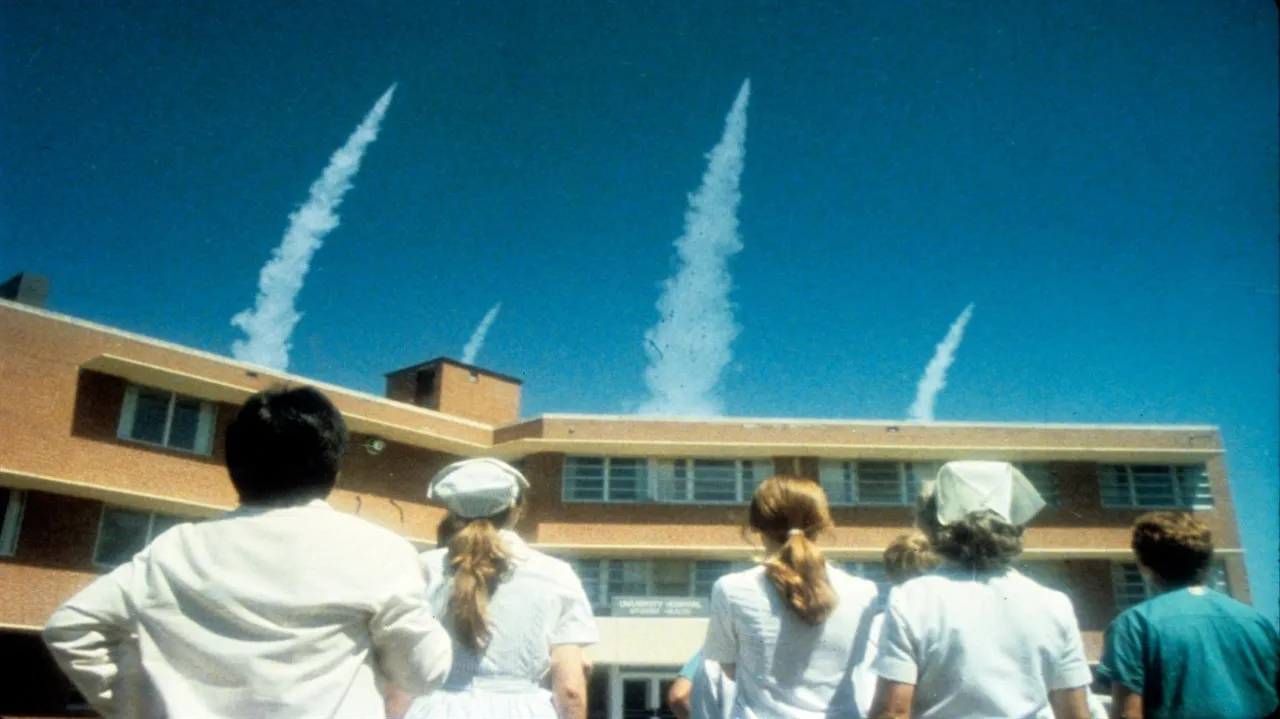
Alarmed by the film’s potential to sway public opinion against their military buildup, the administration reacted with a preemptive media campaign to blunt its potent anti-nuclear message. Figures like arms control director Ken Adelman appeared on television to soften the film’s impact. The movie’s power is perhaps best captured by its effect on President Ronald Reagan himself.
After a private screening at Camp David, he confided to his diary that the movie had left him “greatly depressed.” The documentary proposes a direct link between this emotional response and a subsequent change in policy, suggesting the television movie helped push a hawkish president toward nuclear disarmament negotiations with the Soviet Union.
This examination of influence is supported by details of the immense public reaction. Advertisers were notoriously skittish, and conservative critics engaged in red-baiting, yet the network held its ground. The gravity of the broadcast was cemented by the unprecedented live panel discussion, hosted by Ted Koppel and featuring luminaries like Carl Sagan and Elie Wiesel, that ABC aired immediately after to help a shaken nation process the grim spectacle it had just witnessed.
A Polished Echo Chamber
As a piece of filmmaking, Television Event is a slick and well-constructed narrative. Its pacing is swift, the editing is sharp, and it builds a tense story from its collection of archival footage and historical accounts. The interviews, particularly the articulate and witty recollections from Nicholas Meyer, give the documentary a lively and engaging quality.
Yet its primary strength is also its most significant limitation. The film is told exclusively by the people who made The Day After, resulting in a celebratory and one-sided history. It functions more like an affectionate reunion special than a piece of critical analysis. This insular approach means that the documentary avoids any difficult questions about the original film’s artistic weaknesses, such as its sometimes thin characterizations or melodramatic moments.
There are no film historians to place the movie in a wider context, a context that would include prior nuclear-themed works like Peter Watkins’ The War Game. Without this, the creators’ belief that they were breaking entirely new ground feels unexamined. Nor are there cultural critics or dissenting political figures to offer a different perspective on the film’s true influence.
This narrow focus creates a hagiography, presenting an admiring portrait without genuine inquiry. By choosing celebration over a more complex examination, the final product is a fascinating inside story, but its refusal to look beyond its own subjects leaves it feeling polished yet incomplete.
“Television Event” is a 2020 American-Australian documentary film directed and produced by Jeff Daniels. It chronicles the behind-the-scenes story of the making and release of the 1983 American television film The Day After, which depicted the aftermath of a nuclear war. The Day After was highly controversial upon its release and sparked significant public discussion about nuclear conflict. “Television Event” premiered at DOC NYC on November 11, 2020.
Full Credits
Director: Jeff Daniels
Writers: Jeff Daniels
Producers: Jeff Daniels, Ozzy Inguanzo, Amanda Spain
Executive Producers: Leslie Berriman, Dan Cogan, Geralyn White Dreyfous, John Driscoll, Lauren Driscoll, Pierre Hauser, Nion McEvoy, Jenny Raskin, Katrina vanden Heuvel
Cast: Nicholas Meyer, Ted Koppel, Stephanie Austin, Ellen Anthony, Stu Samuels, Robert A. Papazian
Director of Photography: Nick Higgins
Editors: Eileen Meyer, Aaron Wickenden
Composer: T. Griffin
The Review
Television Event
Television Event is a polished and highly engaging documentary that successfully captures the tension and audacity behind a landmark moment in broadcast history. It tells a fascinating inside story of creative conviction against corporate pressure. However, by relying exclusively on the memories of its creators, the film becomes a celebratory, self-congratulatory piece. It offers a compelling oral history but stops short of providing a truly critical examination, making it an entertaining yet incomplete record of a cultural phenomenon.
PROS
- A fast-paced and skillfully edited narrative.
- Features witty, articulate interviews, especially from director Nicholas Meyer.
- Effectively reconstructs the political and cultural anxiety of the early 1980s.
- Tells a compelling story of artistic integrity clashing with commercial interests.
CONS
- Presents a one-sided, hagiographic account from the creators' perspective.
- Lacks critical analysis from outside film historians or cultural critics.
- Fails to examine the artistic weaknesses of the original film, The Day After.
- Feels more like a "making-of" featurette than a serious documentary.