

























![Kingdom Hearts Collection [I-III] Review](https://gazettely.com/wp-content/uploads/2026/10/Kingdom-Hearts-Collection-I-III-1-360x180.webp "Kingdom Hearts Collection [I-III] Review: KHII Holds Steady as Newer Entries Fluctuate 37")





In the American South, college football is not merely a sport; it is a cultural institution with the fervor of a secular religion. The Southeastern Conference (SEC) sits at the apex of this world, a powerhouse league where Saturday games dictate regional mood and identity.
Netflix’s SEC Football: Any Given Saturday wades directly into this cauldron of passion, offering a behind-the-scenes look at the demanding 2024 season. The series premise is to chronicle the journeys of several high-profile teams, but its true subject is the immense, often crushing, pressure placed upon its central figures.
We follow the young men, many just 18 to 21 years old, who carry the weight of entire towns on their shoulders, and the celebrity coaches whose multimillion-dollar livelihoods depend on their performance. The series aims to capture the complete spectacle—the deep-seated rivalries, the hallowed team traditions, and the razor-thin margins between victory and defeat that define a season in this unforgiving arena.
The Million-Dollar Coaches and the Boys They Depend On
The series constructs its emotional core by focusing intently on the personalities who populate the sidelines and locker rooms. Head coaches are presented as central strategists and father figures, their authority and anxiety given equal screen time. They are the modern CEOs of a peculiar sort of corporation, one that runs on the physical labor of an unpaid workforce.
LSU’s Brian Kelly, for example, is shown wrestling with the challenge of rebuilding a defense. In a moment of unguarded reflection, he wryly notes, “I have my life, mortgage, and everything associated with 18- to 21-year-olds,” a statement dripping with irony from a man with a ten-million-dollar annual salary. This line, perhaps unintentionally, exposes the stark economic contradictions at the heart of major college sports.
It lays bare the uncomfortable reality hidden behind the romantic notion of the “student-athlete,” a term created specifically to shield universities from liability and compensation claims. The series does not explicitly critique this system, but by placing Kelly’s lament alongside shots of young men pushing their bodies to the breaking point for a scholarship, it creates a powerful, unspoken tension.
Players are also given space to build their own identities, though these are often filtered through recognizable archetypes. LSU linebackers Whit and West Weeks are presented through the lens of Southern “country-boy charm,” shown duck hunting while discussing their motivation to defend regional football pride. This is effective character-building, but it also reinforces a specific, marketable vision of Southern masculinity—rugged, traditional, and deeply rooted in the land.
This portrayal serves as a comforting, easily digestible counterpoint to the high-tech, high-finance world of modern college football. The series gives these players a voice, allowing them to speak of sacrifice and personal drive. What remains largely unsaid is the precariousness of their position. Their value is tied directly to their physical health in a violent sport, and their dreams of a professional career are a long shot for most.
By weaving together the high-stakes anxieties of coaches like South Carolina’s somber Shane Beamer with the personal drives of the players, the series successfully elevates the games beyond mere athletic contests.
It argues that the outcomes are deeply meaningful because we are invested in the people, not just the jerseys. The show wants us to feel the weight of every missed tackle and celebrated touchdown as a personal victory or failure for these individuals, whose lives are, for a brief period, entirely public property.
Turning Regional Ritual into Global Content
Any Given Saturday employs a production playbook that has become a defining trend of the streaming era, a style perfected by its sports-doc predecessor, Drive to Survive. The aesthetic is purely cinematic, using dramatic scores, slow-motion montages, and intimate on-field camerawork to transform Saturday afternoons into epic events.

This is the Netflix formula in action: identify a subculture with a passionate, built-in audience, and then repackage its rituals and dramas into a universally accessible narrative product. This method is designed to manufacture drama and commodify regional passion for global consumption.
The sound design is a critical component of this transformation; the crunch of helmets is amplified, the roar of the crowd swells to a crescendo at key moments, and the sideline whispers between coaches are captured with a clarity that creates a false sense of intimacy. This is not reality; it is a carefully constructed hyper-reality, engineered for maximum emotional impact.
The episodic structure reinforces this approach, typically building a story around a single pivotal matchup. The game between LSU and South Carolina becomes a tense, 50-minute drama that culminates in a thrilling 36-33 finish. Through surgical editing, a three-hour contest is distilled into its most dramatic moments, ensuring a brisk pace that holds the attention of even a casual observer. This narrative efficiency, however, comes at a cost.
The storytelling often becomes one-sided, granting one team the role of protagonist while their opponent is reduced to a temporary obstacle, their own struggles and hopes left on the cutting room floor. This is not a flaw but a deliberate choice, a narrative shortcut that streamlines the story to tell a newcomer precisely who to root for within the confines of a single episode.
This simplification reflects a broader trend in digital media, where nuance is often sacrificed for the sake of engagement and emotional clarity. The show’s producers act as modern mythmakers, sifting through hours of footage to find the moments that best fit their pre-selected themes of redemption, rivalry, and resilience. The result is a compelling story, but one that sands away the messy, often contradictory, realities of a full season.
Recruiting New Fans, One Stream at a Time
The series is engineered to serve a dual audience with remarkable precision, a testament to Netflix’s data-driven understanding of its subscribers. For viewers unfamiliar with the intricacies of college football, it functions as a highly effective primer.
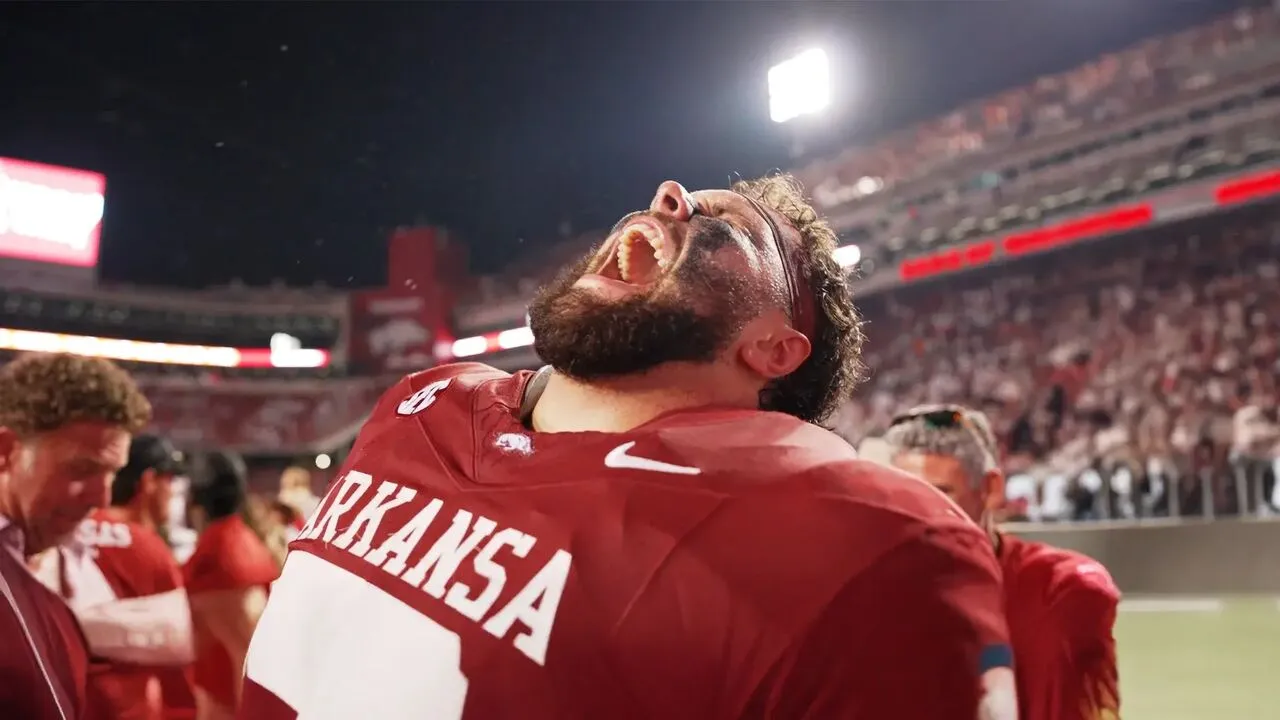
The focus on human drama, the clear explanations of rivalries, and the digestible game action provide an accessible on-ramp to a sport that can often feel impenetrable. It gives newcomers a reason to care and a foundation to build fandom upon, effectively expanding the total addressable market for the SEC brand.
The show is not just entertainment; it is a sophisticated marketing vehicle, turning a regional American obsession into a product with global appeal. By translating the complex language of football into the universal language of human struggle, it invites outsiders into the fold.
For the existing legions of devoted followers, the show is a satisfying look behind the curtain. It offers fresh context on familiar teams and allows them to relive key moments from the 2024 season, such as Vanderbilt’s shocking upset of Alabama or the high-stakes final Saturday of the season. For this group, the show validates their passion, affirming that the games they care so deeply about are worthy of this level of grand, cinematic storytelling.
The series’ ultimate cultural function may be this act of recruitment. It represents a shift in how sports leagues cultivate their next generation of supporters. Instead of relying on geographic loyalty or family tradition, they can now use the power of global streaming platforms to tell their own stories, creating emotional bonds that transcend borders. Any Given Saturday successfully captures the raw intensity and heartbreak of the sport, all while expertly packaging it for a new generation of potential fans. It demonstrates a future where the narrative around a sport may become as important as the sport itself.
“SEC Football: Any Given Saturday” is a sports documentary series that offers an exclusive, unfiltered look into the lives of players and coaches within the Southeastern Conference during the 2024 college football season. It provides behind-the-scenes access to practices, games, locker rooms, team buses, and more, showcasing the passion and drama of college football in the SEC. The series was produced by Box To Box Films, known for other successful sports documentaries like “Formula 1: Drive to Survive”. “SEC Football: Any Given Saturday” premiered on Netflix on August 5, 2025, and all seven 45-minute episodes are available to stream globally on the platform.
Full Credits
Director: Kensaku Kakimoto, Kotaro Goto
Producers: Box To Box Films
Executive Producers: James Gay-Rees, Paul Martin, Hillary Olsen, Collin Orcutt
Cast: Brian Kelly, Spencer Arrighetti, Josh Heupel, Bru McCoy, Diego Pavia, Clark Lea, LaNorris Sellers, Cam Coleman, Whit Weeks, Ethan Wilson, Graham Mertz, Billy Napier, La’Damian Webb, Shane Beamer, Clark Lea
Director of Photography: Kensaku Kakimoto
The Review
SEC Football: Any Given Saturday
While expertly produced and emotionally engaging, Any Given Saturday functions more as a masterful piece of marketing for the SEC than a true documentary. It successfully packages the passion of college football into a slick, consumable product for a global audience, using a proven formula to recruit new fans. However, its polished narrative sidesteps deeper critiques of the very system it glorifies, leaving the uncomfortable truths of college athletics largely unexamined. It's compelling television that understands its purpose is to sell a brand, and it does so brilliantly.
PROS
- High-quality, cinematic production that makes the sport look thrilling.
- Effectively builds emotional investment in the stories of individual players and coaches.
- Serves as an excellent and accessible entry point for viewers new to college football.
- Provides existing fans with compelling behind-the-scenes access and new perspectives.
CONS
- Relies heavily on the established and somewhat formulaic Drive to Survive template.
- Storytelling can feel one-sided, sacrificing nuance for a more straightforward, dramatic narrative.
- Avoids a meaningful critique of the complex economic and social issues inherent in college sports.
- Presents a highly polished and curated version of reality.







