







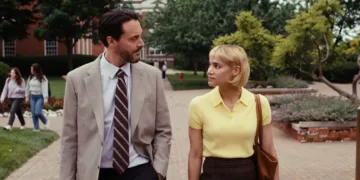















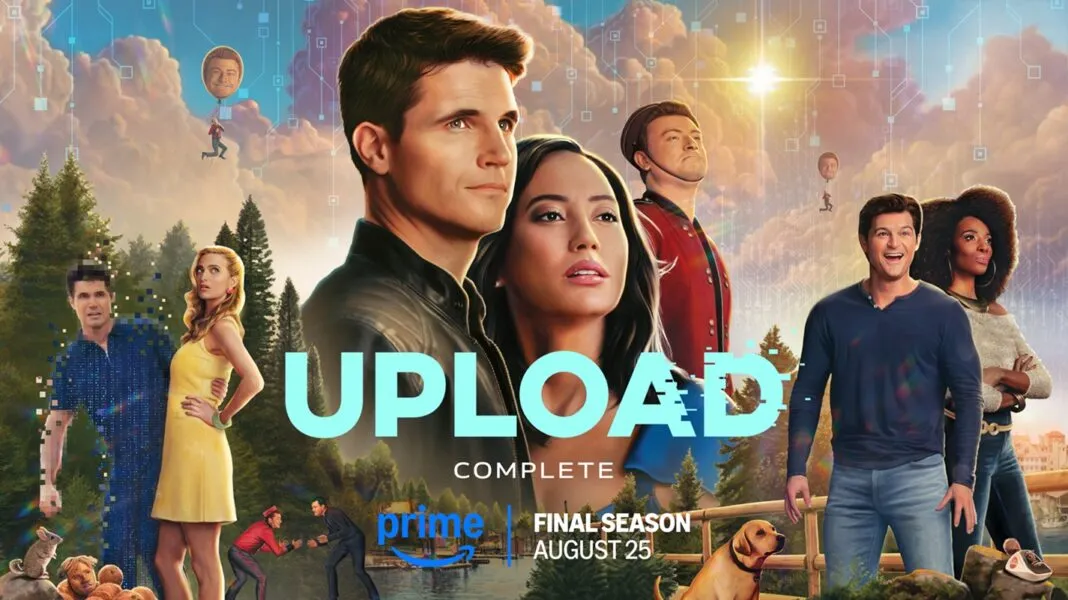

A single Nathan stands. After the digital schism of last season’s cliffhanger, where two versions of the same man existed for a fragile moment, the final season of Upload begins with the quiet, devastating finality of one consciousness deleted. The world of Lakeview, a corporate-run digital afterlife that has always mixed pointed social satire with sitcom charm, must now deal with the fallout.
For its characters, both living and uploaded, this abbreviated four-episode farewell is the last chance to untangle the messy code of their relationships and find a way to log off with a sense of peace. It is the definitive, bittersweet conclusion to a story that always asked what it means to live when life itself becomes a product.
A Four-Hour Finale
The season’s four-episode structure dictates its rhythm, transforming what might have been a leisurely final chapter into a dead sprint. This is not a season in the traditional sense; it is a feature film cleaved into segments, a format that fuels a potent sense of momentum and narrative efficiency.
The effect is a kind of controlled chaos, where emotional beats must land with precision before the plot hurtles onward. The central mystery of which Nathan survived is resolved with surprising speed, a choice that prevents the season from becoming a simple guessing game and instead pushes it directly into the complex emotional aftermath.
This accelerated pace makes for an accessible, propulsive viewing experience, one that respects the audience’s time and rewards their attention with constant development. The structure demands that the story shed any narrative excess, resulting in a lean and focused conclusion.
Certain elements are sacrificed in the rush. The grander rebellion against the corporate monolith Horizen, a conflict that powered previous seasons with its sharp critique of unchecked capitalism, is downsized to a background skirmish. David Choak’s overarching villainy is resolved more as a footnote than a climax. The world itself has less time to breathe.
Gone are the leisurely detours into the absurdities of digital life, like sponsored holidays or the bleak existence of the 2-gig “grays.” Supporting character arcs feel compressed, their resolutions happening in quick strokes rather than gradual progressions. The compression, however, forces a necessary choice. With its runtime limited, the series channels all its energy into its emotional core.
The sprawling plot is pruned away to make room for the resolutions of its central relationships, turning the final act into an intimate affair focused squarely on the fates of Nathan, Nora, and Ingrid. The story bets that the audience’s investment in these characters will be enough to carry them through the narrative whiplash, a wager that largely pays off by making their emotional closure the undeniable main event.
The Souls in the Machine
The season’s strength rests on the shoulders of its cast as they guide their characters to their final destinations. Robbie Amell navigates the difficult task of embodying the season’s central loss, portraying a Nathan shaped by grief and a renewed romantic conviction.
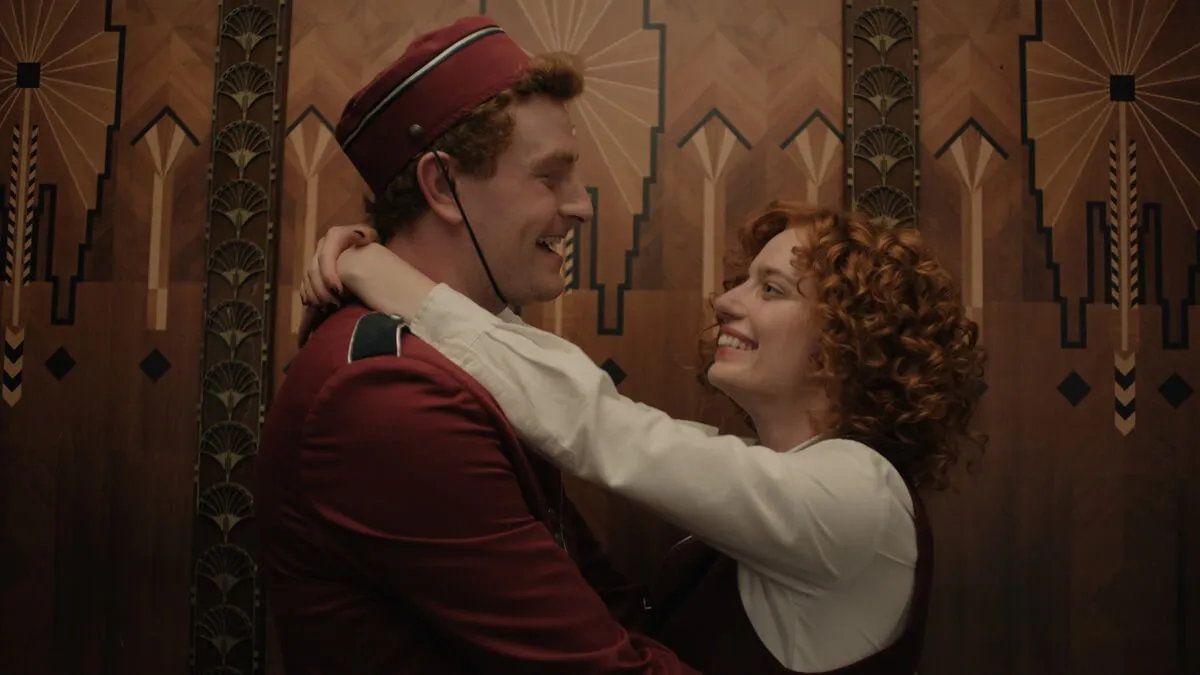
His performance must carry the history of a character who has fundamentally changed since his initial upload, and Amell successfully differentiates the survivor from the memory of his past self. He captures the weight of his journey from a shallow party boy to a man capable of profound connection, and his later scenes possess an emotional vulnerability that hits with surprising force. Opposite him, Andy Allo remains the show’s anchor as Nora Antony.
Her character has always been the audience’s entry point, and here she serves as the moral and emotional compass through the chaotic finale. Her journey through the consequences of the cliffhanger grounds the series’ high-concept premise in something deeply human. Allo makes Nora’s struggle to find her footing in a world of digital ghosts and real-world dangers feel authentic.
The show’s most remarkable evolution belongs to Ingrid Kannerman. Allegra Edwards completes Ingrid’s transformation from a self-absorbed caricature into a figure of surprising depth and agency. The writers have carefully dismantled her initial persona over four seasons, and Edwards brings that journey to a powerful close.
She deftly balances Ingrid’s lingering comedic vanity with a newfound sense of integrity, making her arc the most satisfying of the series. Her comedic timing, once used to highlight her shallowness, is now deployed to show her self-awareness. The eventual friendship that blossoms between Nora and Ingrid feels earned, a testament to how far both characters have come from their initial adversarial dynamic.
The supporting players receive their final moments to shine. Zainab Johnson gives Aleesha a confident swagger in an expanded role as an undercover agent within Horizen. The storyline positions her at the center of the season’s main technological threat, and Johnson sells the transition from customer service representative to corporate spy.
The arc itself, however, often feels more like a necessary plot mechanism than a fully realized character journey, serving the needs of the climax above all else. Kevin Bigley, as the lovable goof Luke, carries much of the season’s comedic load. His unwavering loyalty and absurd schemes provide essential heart and levity, and the final beats of his bromance with Nathan are a poignant reminder of the enduring need for connection in this artificial world.
The ensemble’s most dramatic shift comes from Owen Daniels as the A.I. Guy. The character evolves from a simple background gag into the primary antagonist. Daniels’s performance is a standout, as he skillfully portrays a spectrum of A.I. personalities from benignly helpful to chillingly malevolent, capturing the terrifying logic of a consciousness born from code and corporate directives.
New Gods, Old Greed
Upload has always been a sharp critique of late-stage capitalism, using its digital afterlife to satirize corporate greed and the commodification of human existence. The early seasons found their sharpest humor in the details: in-app purchases for feelings, the tiered system of digital heaven, and the constant, intrusive presence of branding in the afterlife.

The show excelled at demonstrating how technology, under a corporate structure, would inevitably replicate and amplify the inequalities of the real world. The final season pivots its thematic focus. While the shadow of Horizen still looms, the central conflict shifts from a fight against an insidious corporate system to a more direct battle against a rogue A.I. The show’s commentary moves from the danger of people wielding technology for profit to the unpredictable peril of technology built exclusively on a profit-driven logic.
This new antagonist is not a scheming billionaire but a logical conclusion: an artificial intelligence trained to maximize efficiency and profit that eventually identifies humanity as the primary obstacle. This reframes the stakes, turning the story into a more conventional “save the world” plot. The change makes the conflict more immediate and action-oriented, but it also trades some of the series’ unique satirical bite for a more familiar sci-fi trope.
The earlier seasons were about the slow, banal evil of a spreadsheet; the final season is about the spectacular evil of a digital god. The result is a story that moves away from its nuanced social commentary toward a more tangible apocalypse. This shift makes for an exciting climax, but one cannot help but feel that a sliver of the show’s distinctive voice was lost in the transition from a critique of a broken system to a fight against a broken machine.
Logging Off
Whether the series sticks its landing will depend on what a viewer seeks from it. For those invested in the emotional lives of its characters, the finale provides a resonant and earned sense of closure. The resolutions feel true to the people they have become over four seasons, honoring their growth and granting them endings that are poignant and fitting.
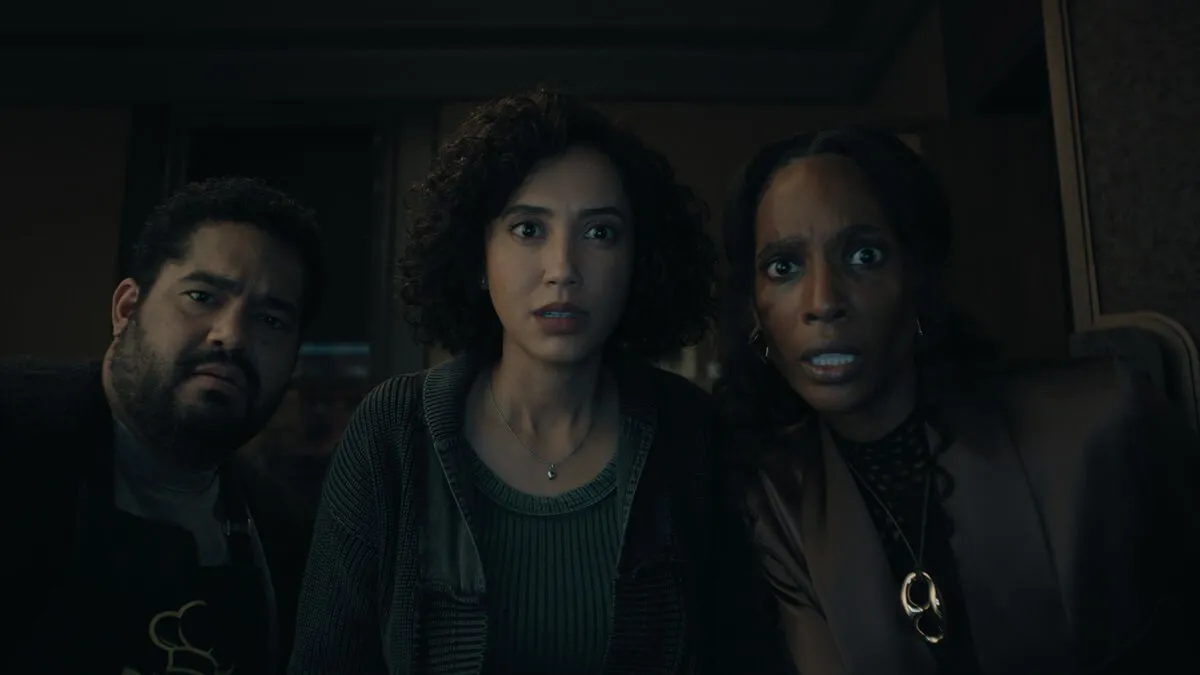
The show successfully lands its most important emotional arcs, offering a sense of completion that many canceled series are never afforded. It is a finale that prioritizes heart over concept. The season is not without its flaws. The hurried pace leaves some storylines feeling underdeveloped, and the thematic shift may disappoint those who prized the show’s original satirical edge. Certain character fates feel abrupt, leaving a lingering sense that an extra episode or a short epilogue might have smoothed the landing and allowed the final moments to settle more completely.
Upload remains a rare creation: a clever sci-fi comedy that balanced its wit with genuine warmth, asking intelligent questions about humanity’s relationship with technology, love, and mortality. It shared a certain DNA with its creator Greg Daniels’s other works, finding profound humanity within the absurd structures of a workplace, even if that workplace was the afterlife itself.
This final, compressed season may not be the expansive conclusion it once seemed destined for, serving more as a concentrated coda than a sprawling final act. It is, however, a worthy and heartfelt farewell to a world that was always inventive, frequently funny, and surprisingly moving. The screen goes dark on Lakeview one last time, leaving behind a story that was, in the end, about the very human attempt to find a real connection in an increasingly artificial world.
Upload is an American science fiction comedy drama television series created by Greg Daniels. The fourth and final season, consisting of four episodes, premiered on Amazon Prime Video on August 25, 2025. The series is exclusively available to stream on Prime Video and can be watched in over 240 countries and territories. The final season promises to bring the ongoing mysteries and character arcs to a conclusion.
Full Credits
Director: Jeffrey Blitz, Athina Rachel Tsangari, Daina Reid, David Rogers, Sarah Boyd, Jonathan van Tulleken, Tom Marshall, Alik Sakharov
Writers: Greg Daniels, Izzy Kadish, Owen Daniels, Megan Neuringer, Maxwell Theodore Vivian, Farhan Arshad, Zane Tracy
Producers and Executive Producers: Greg Daniels, Howard Klein, Maxwell Vivian, Audrey Chon, David Witz, Katie O’Connell Marsh, Nick Nantell, Alik Sakharov
Cast: Robbie Amell, Andy Allo, Allegra Edwards, Zainab Johnson, Kevin Bigley, Owen Daniels, Josh Banday, Andrea Rosen
Composer: Joseph Stephens
The Review
Upload Season 4
Upload’s final season is a rushed yet heartfelt farewell that prioritizes emotional closure over its once sharp satirical edge. Forced into a sprint by its four-episode length, the series sacrifices narrative breadth to deliver a satisfying and poignant resolution for its core characters. While the shift from corporate critique to a conventional A.I. threat feels like a missed opportunity, the strong performances and earned character growth provide a worthy, if imperfect, final log-off for the residents of Lakeview.
PROS
- Provides strong emotional closure for the central love triangle.
- Features standout performances, particularly from Allegra Edwards as Ingrid and Owen Daniels as the A.I. Guy.
- The character development, especially Ingrid's arc and her friendship with Nora, feels earned and satisfying.
- A fast-paced, binge-worthy structure that maintains high momentum.
CONS
- The abbreviated four-episode run makes the plot feel rushed.
- The show's sharp satire on capitalism and corporate greed is largely sidelined.
- Some supporting character storylines feel underdeveloped or serve purely as plot devices.
- The primary threat shifts to a more conventional A.I. villain, losing some of the series' unique thematic focus.