
























Two years is a long time in television, and an eternity after an alien invasion. Invasion returns for its third season by leaning into this passage of time. Humanity, it seems, has declared victory. A global holiday called “M-Day” marks the sacrifice that supposedly ended the war, and a fragile new world order has emerged from the rubble.
Nations collaborate, research teams study downed alien ships, and people are trying very hard to pretend everything is normal again. This is the eerie peace of a world holding its breath, a society desperate to believe the nightmare is over. The quiet feels less like a resolution and more like a pause screen.
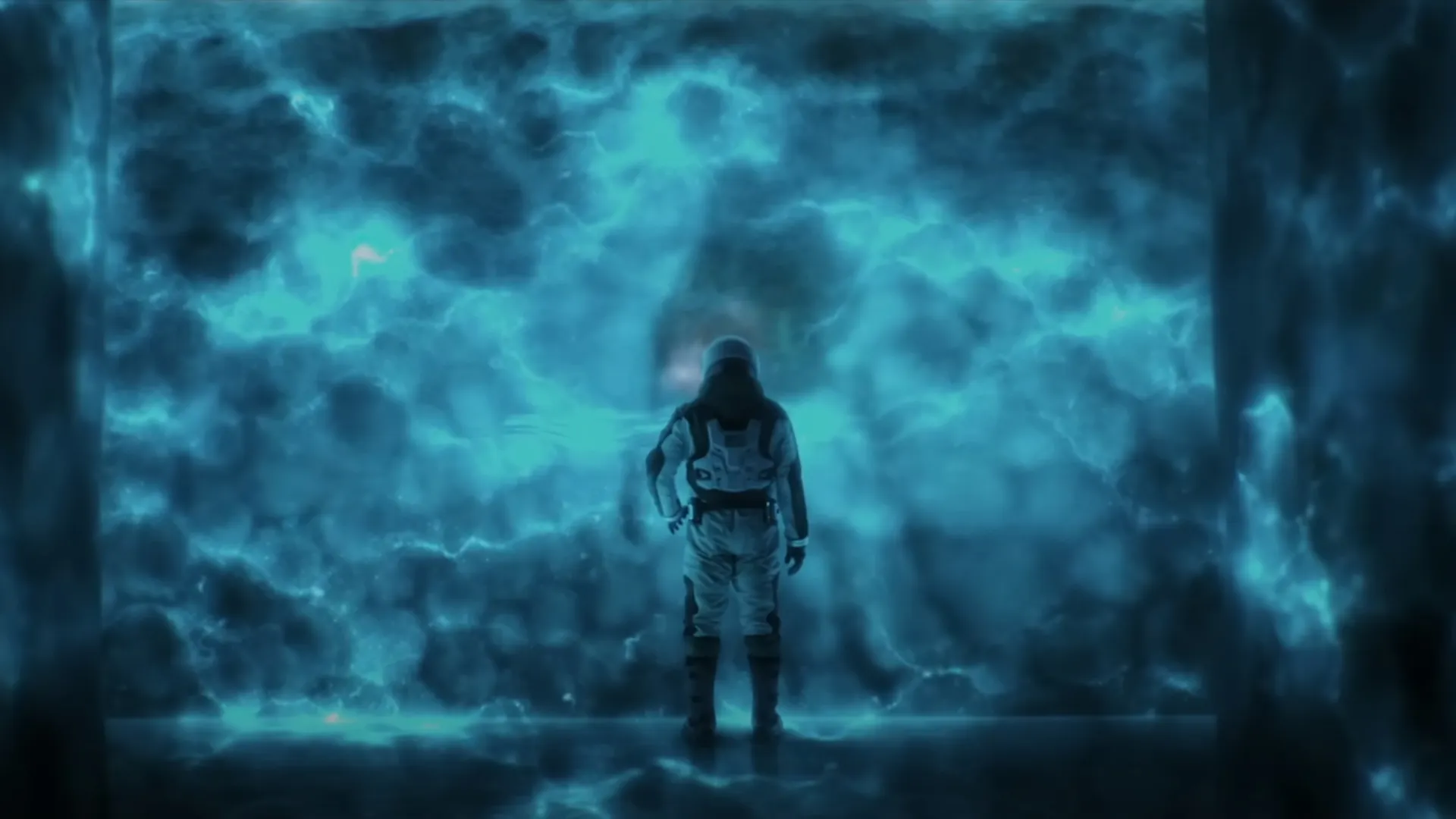
The show expertly builds a sense of unease within this new status quo, showing us a world that has papered over its cracks without ever fixing the foundation. Then, right on cue, a ghost from the war reappears. Trevante Cole, presumed dead on the mothership, stumbles out of an alien portal. His return is not a celebration; it is an alarm bell signaling the end of humanity’s short vacation from terror.
Our Heroes, Now with More Baggage
The season wisely places its narrative weight on the shoulders of Shamier Anderson, whose Trevante Cole returns as a man fractured by an experience he cannot remember. His trauma is not a simple plot point; it is the engine of the early episodes. Anderson’s physical performance is remarkable, conveying a constant state of high alert through a coiled posture and eyes that never stop scanning for threats.
The psychic visions that assault him are depicted as debilitating sensory attacks, forcing him to his knees and leaving him disoriented. The World Defence Coalition’s diagnosis of PTSD is technically correct but contextually blind; they see a broken soldier, not a harbinger. His mission to warn a world that has already printed its victory banners places him in direct conflict with the new order.
His dynamic with Jamila Huston, who approaches him with a mix of awe and desperation for answers about Caspar, provides a crucial emotional anchor. She is his first believer, and their relationship evolves into a partnership of weary experience and youthful resolve.
While Trevante’s story propels the central plot, the other protagonists operate in their own distinct orbits, a structural choice that yields mixed results. Mitsuki Yamato remains the show’s most fascinating enigma, investigating a new alien signal from a remote outpost. Her storyline is a meditative piece of science fiction, filled with stark, lonely visuals and a soundscape of electronic hums and static.
Shioli Kutsuna is magnetic, communicating volumes through stillness and intense focus. Yet this isolation often feels like a completely different show has been spliced into the main narrative. While ambitious, this separation recalls the early seasons of shows like Game of Thrones, but without the clear sense of eventual convergence. Her solo journey stalls the main story’s pace, a risky move that tests viewer patience.
Similarly, Aneesha Malik’s arc feels like a character in search of a purpose. Her attempt at a quiet suburban life, complete with a new partner, feels tonally jarring. Golshifteh Farahani performs the internal conflict of a warrior forced into domesticity with great skill, but the script struggles to make her relevant to the primary alien threat.
Her son’s psychic abilities are a dangling plot thread, a constant reminder of a connection the show seems hesitant to explore. The series only truly finds its footing when these disparate characters finally begin to move toward one another. When they eventually share the screen, their combined chemistry and complementary skills offer a powerful glimpse of the focused, dynamic show Invasion can be.
Hurry Up and Wait
Invasion has always favored atmosphere over action, and its third season fully commits to this philosophy, for better or worse. The season’s first half is a masterclass in deliberate, almost provocative slowness. The narrative unfolds not in bursts of action but in long, quiet conversations held in sterile government facilities and shadowy apartments.

The camera lingers on characters grappling with their internal states, building a mood of pervasive dread rather than immediate danger. This approach stands in stark contrast to the spectacle-driven tradition of alien invasion stories. Where a film like Independence Day offers immediate explosions, Invasion offers a sustained, simmering anxiety. The show demands an unusual level of patience, betting that the eventual payoff will justify the slow-burn investment. For many, this will feel less like a burn and more like a damp fuse.
When the pace finally accelerates in the season’s second half, the shift is dramatic and rewarding. The preceding character work gives the eventual action sequences a genuine weight. This structure allows for a serious exploration of the season’s core ideas: the nature of collective trauma and the psychological difficulty of adjusting to a post-catastrophe world.
The show taps into a distinctly modern unease about what happens after the crisis passes. It reflects a world familiar with the rush to declare a “new normal” while the emotional and societal wreckage is still smoldering. This thematic depth is most powerfully realized in the season’s standout sixth episode.
Deviating entirely from the main plot, this standalone flashback tells a contained story of survival centered on a new character, played with raw intensity by Erika Alexander. Its success is a testament to the power of focused storytelling. It also serves as an implicit critique of the main narrative’s more languid, scattered approach. The episode proves that Invasion possesses the tools for riveting television, even if it does not always choose to use them.
New Monsters, Same Problems
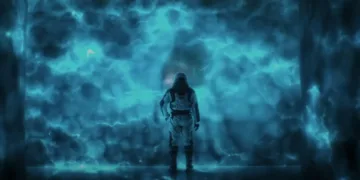
This season succeeds in making its alien threat feel genuinely alien again. The familiar “Hunter-killer” drones are replaced by a far more insidious and visually arresting presence. The invaders now manifest as a rapidly growing, crystalline lifeform, spreading through the environment in beautiful yet terrifying patterns.

These new forms are often bioluminescent, pulsing with an otherworldly light that blurs the line between organism and art installation. This design choice is a brilliant subversion of genre expectations. It moves the antagonists away from being simple bug-eyed monsters and into the realm of the sublime and incomprehensible.
Their beauty makes them more unnerving than a more conventional creature ever could. The sound design complements this, replacing aggressive roars with unsettling chimes and resonant hums. The lore is also deepened, hinting at a complex hive-mind intelligence with motives far more intricate than simple conquest.
As the extra-terrestrial threat becomes more complex, the human obstacles become depressingly familiar. The season introduces “Infinitas,” a burgeoning cult that has interpreted the alien arrival through a lens of religious fervor.
They represent the societal fracture that often follows a world-shaking event, a faction that sees salvation where others see only doom. While a common trope in post-apocalyptic fiction, their presence adds another layer of conflict for the heroes to manage. More effective is the institutional opposition from the World Defence Coalition.
The WDC is not evil, just dangerously bureaucratic. Led by the pragmatic and deeply skeptical Jack Hollander, the organization embodies a systemic refusal to accept a reality that contradicts its official narrative. Eric Lange plays Hollander with a perfectly calibrated venom, making him a formidable antagonist. This focus on internal human conflict reinforces a classic genre theme: sometimes the most dangerous monsters are the ones sitting across the table.
All the Money in the World
The cast continues to be the series’ strongest asset. Shamier Anderson’s central performance as Trevante is a tour de force of controlled physicality and emotional turmoil, particularly in scenes where he struggles against the psychic intrusions of the alien consciousness.

In her isolated storyline, Shioli Kutsuna delivers a nuanced and minimalist performance, conveying Mitsuki’s intellectual curiosity and profound loneliness with subtle gestures and intense focus. Golshifteh Farahani skillfully navigates the difficult task of grounding Aneesha’s emotional arc even when the character feels adrift from the main plot. The supporting cast is equally strong, with Erika Alexander delivering an unforgettable performance in her single-episode appearance and Eric Lange providing a perfectly detestable bureaucratic foil.
This is a show that looks and feels expensive, and the investment is evident in every frame. The production values are on par with any major sci-fi blockbuster. The special effects seamlessly blend the practical and the digital to create the season’s awe-inspiring new alien forms.
The cinematography paints a world that is both vast and intimate, using wide, sweeping shots to establish the global scale of the threat and tight, handheld work to capture the characters’ personal anxieties.
The musical score is a crucial element, shifting from ambient, unnerving tones to propulsive, orchestral pieces that heighten the tension during key sequences. It is a technical marvel of a television show. Yet for all its visual polish, thematic ambition, and powerful acting, the season’s inconsistent pacing and fractured narrative structure remain. Three seasons in, Invasion is a beautiful, expensive, and thoughtful piece of science fiction that still seems to be figuring out exactly what kind of story it wants to tell.
Invasion Season 3 is a ten-episode science fiction drama series created by Simon Kinberg and David Weil for Apple TV+. It premiered on Apple TV+ on August 22, 2025, and is available to stream exclusively on that platform.
Full Credits
Director: Alik Sakharov (Episode 1), and others TBA
Writers: Simon Kinberg (Episode 1), Dan Dietz, Aditi Brennan Kapil, Glenise Mullins, Donald Joh, Vivian Barnes, Demetrios Cokinos
Producers and Executive Producers: Simon Kinberg, David Weil, Audrey Chon, David Witz, Alik Sakharov, Dan Dietz, Katie O’Connell Marsh, Nick Nantell
Cast: Golshifteh Farahani, Shamier Anderson, Shioli Kutsuna, Billy Barratt, Azhy Robertson, Erika Alexander, India Brown, Shane Zaza, Enver Gjokaj, Ashton Sanders, Eric Lange
Composer: Max Richter, The Haxan Cloak
The Review
Invasion Season 3
Invasion remains a visually stunning and thematically ambitious piece of science fiction, anchored by a powerful lead performance from Shamier Anderson. Its third season deepens the alien mythology in fascinating ways. However, the show's deliberate, often sluggish pacing and fractured narrative structure keep it from achieving its full potential. It is a frustratingly uneven experience: a beautiful, thoughtful show that is often less exciting than it should be. It demands immense patience for a payoff that feels perpetually just over the horizon.
PROS
- A commanding and emotionally resonant lead performance from Shamier Anderson.
- Exceptional production values, with cinematic visuals and impressive special effects.
- An intelligent evolution of the alien threat, moving beyond standard sci-fi tropes.
- Thoughtful exploration of trauma, grief, and societal adjustment after a catastrophe.
- A brilliant standalone flashback episode that showcases the series' potential.
CONS
- The narrative pace is extremely slow, especially in the first half of the season.
- Character storylines often feel disconnected, stalling the overall momentum.
- Some key characters feel underwritten or peripheral to the main plot.
- The show's commitment to atmosphere can come at the expense of narrative urgency.